

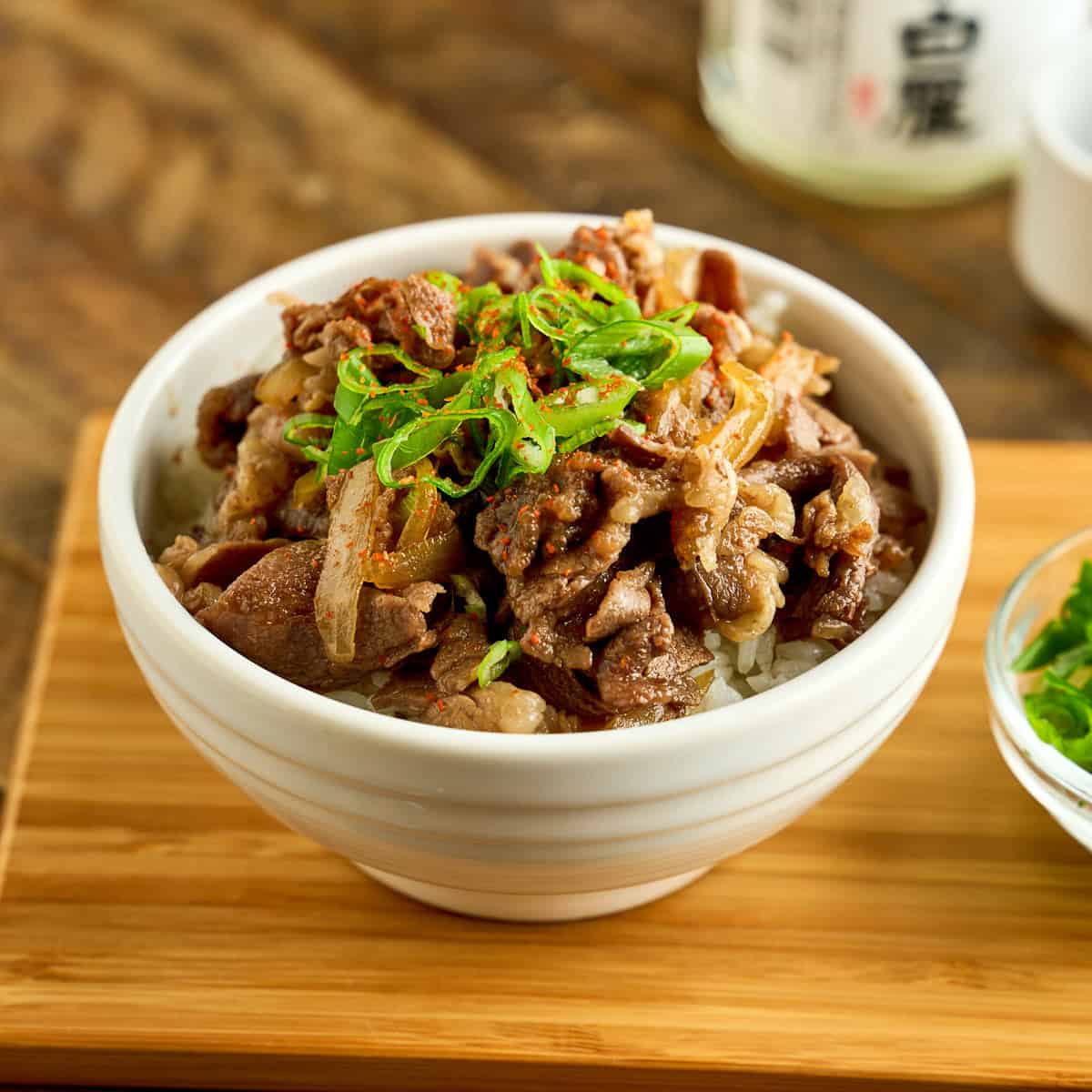
Gyudon is a simple Japanese recipe - beef and onions simmered in a sweet and salty broth of soy sauce, sake, and mirin, and then served over rice. It's a great example of the art of simple food - if you use quality ingredients, you get amazing results. (Quality shaved ribeye, with a lot of marbling, is amazing in this dish.) Looking for a simple weeknight rice bowl? Give gyudon a go.
Would you like to save this recipe?
Jump to:
The teacher had my attention when he said:
...and you can also use this broth to make gyudon - just add onions!
Sho, cooking instructor at Samurai Chef, Osaka
I learned about gyudon while I researched my recent trip to Japan. It's a mainstay of budget-friendly Japanese "-ya" restaurants. (The "ya" nickname comes from three popular chain restaurants - Yoshinoya, Sukiya, and Matsuya - all with names ending in -ya, and all are known for their gyudon.)
But, before I could visit a "-ya", I accidentally learned how to make gyudon in a cooking class. We were simmering beef in a sweet dashi, soy, and mirin mix for a bowl of ramen. The instructor tossed off the "this is also gyudon" comment as an afterthought.
Now that I've made it myself, I can't believe it hasn't caught on in the US. It's a simple dump-and-simmer recipe, ready in under half an hour (the rice to serve it on actually takes longer to cook.) The only tricky part is having a couple of specialty Japanese ingredients, but they're available in the international aisle of almost every grocery store. The actual hard part for me was finding good shaved ribeye; my local grocery store usually carries it for Philly cheesesteaks, but they were out, so I went to a nearby Asian market to get ultra-thin-sliced ribeye steaks.
It was worth the extra trip to the market. Gyudon is fantastic. Sweet, savory, salty, a little tart from the mirin and sake, with the beef, onions, and sauce flavoring the rice.
Oh, and Gyudon means "beef bowl" in Japanese. Gyu is beef, and Don is short for donburi, a rice bowl.
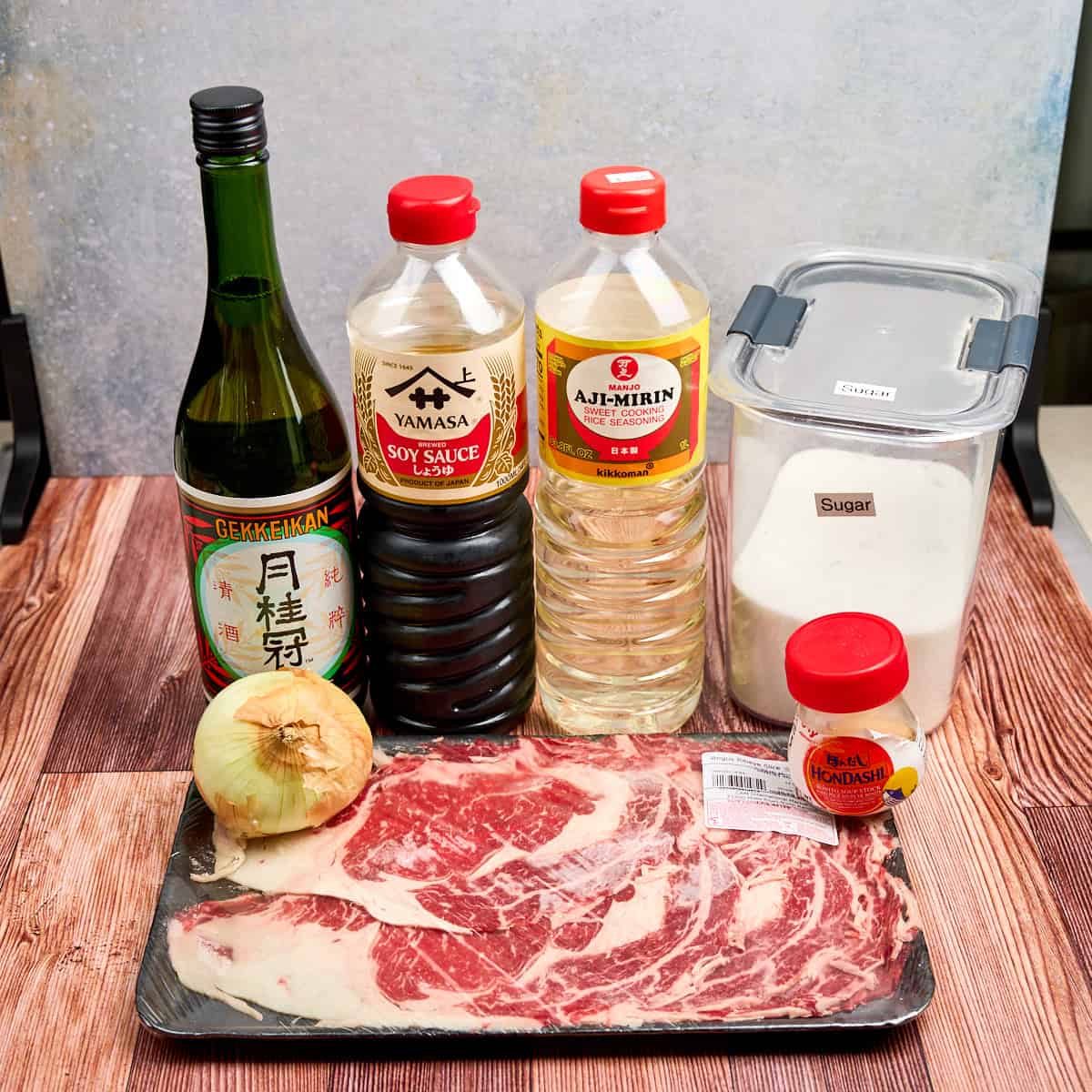
Ingredient notes and substitutions
- Shaved ribeye: The key to this recipe is ultra-thin sliced fatty beef. Ribeye is the easiest for me to find - shaved ribeye for Philly cheesesteaks at my grocery stores, and ultra-thin sliced ribeye for Chinese hot-pots and Korean bulgogi at my local Asian markets. (Ribeye is also my favorite cut of beef - it is expensive, but tastes fantastic in this recipe.) Shaved chuck is my second choice. That said, any thin-sliced beef cut is a good substitute, preferably a fatty cut of beef. (If the beef is too lean, it can get tough during the simmering.)
- Frozen Beef: Frozen beef works fine in this recipe. Add the frozen beef to the simmering liquid, and work the pieces apart as they thaw, or they will cook into a big, stuck-together lump. Also, the simmering time will be longer with frozen beef; when I used frozen beef, it took closer to 10 minutes to cook the beef - especially reducing the sauce - instead of the usual 5 minutes.
- Dashi: Dashi is not absolutely necessary for this dish, but helps add extra depth to the sauce. Hondashi (instant dashi granules) makes for quick work, and it stays fresh in your pantry for a long time. Or you If you don't have dashi, water or low-sodium beef broth are good substitutes.
- Sake and mirin: To get the best depth of flavor in this dish, use both sake (rice wine) and mirin (sweet cooking wine with added sugar). If you don't have sake, replace it with mirin, and reduce the sugar to 1 tablespoon. Or, substitute dry sherry for the sake. If you don't have mirin, replace it with more sake, and add another tablespoon of sugar.
How to make Gyudon in pictures
Prep the beef and onion
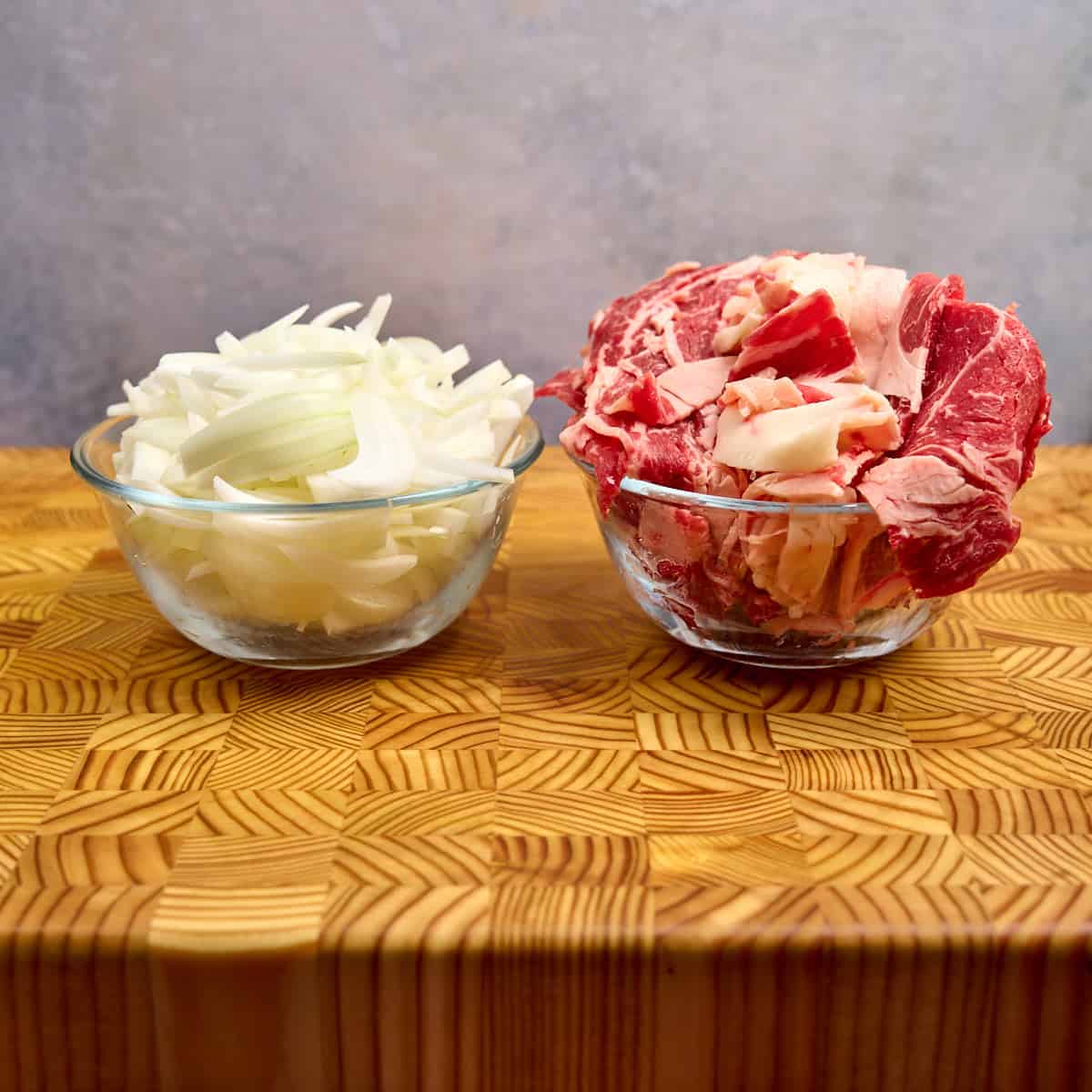
Slice the beef and onion into strips.
Simmer the onion for 5 minutes
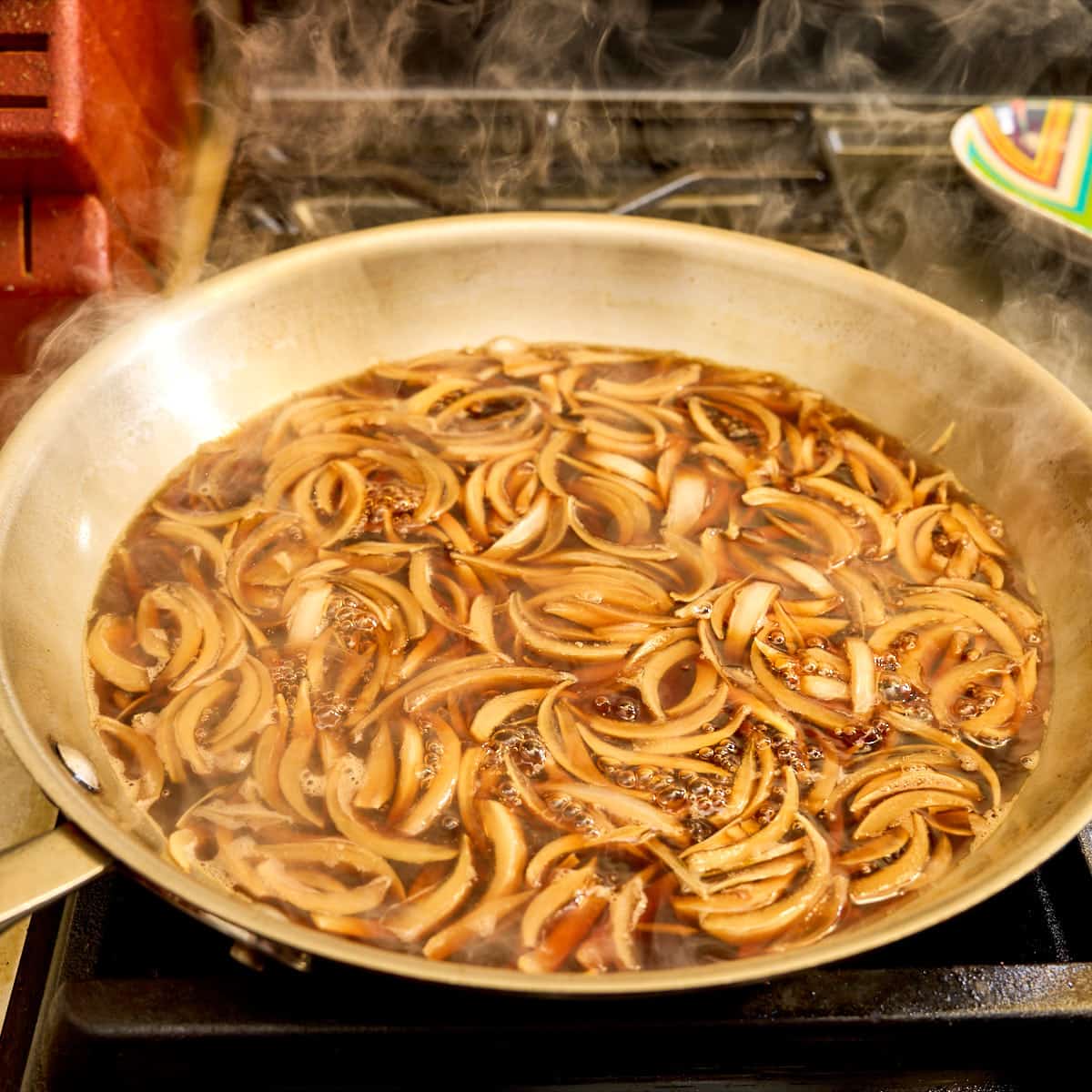
Put the dashi, soy, sake, mirin, and sugar in a fry pan with the onions and simmer until the onions are tender.
Simmer the Beef for 5 minutes
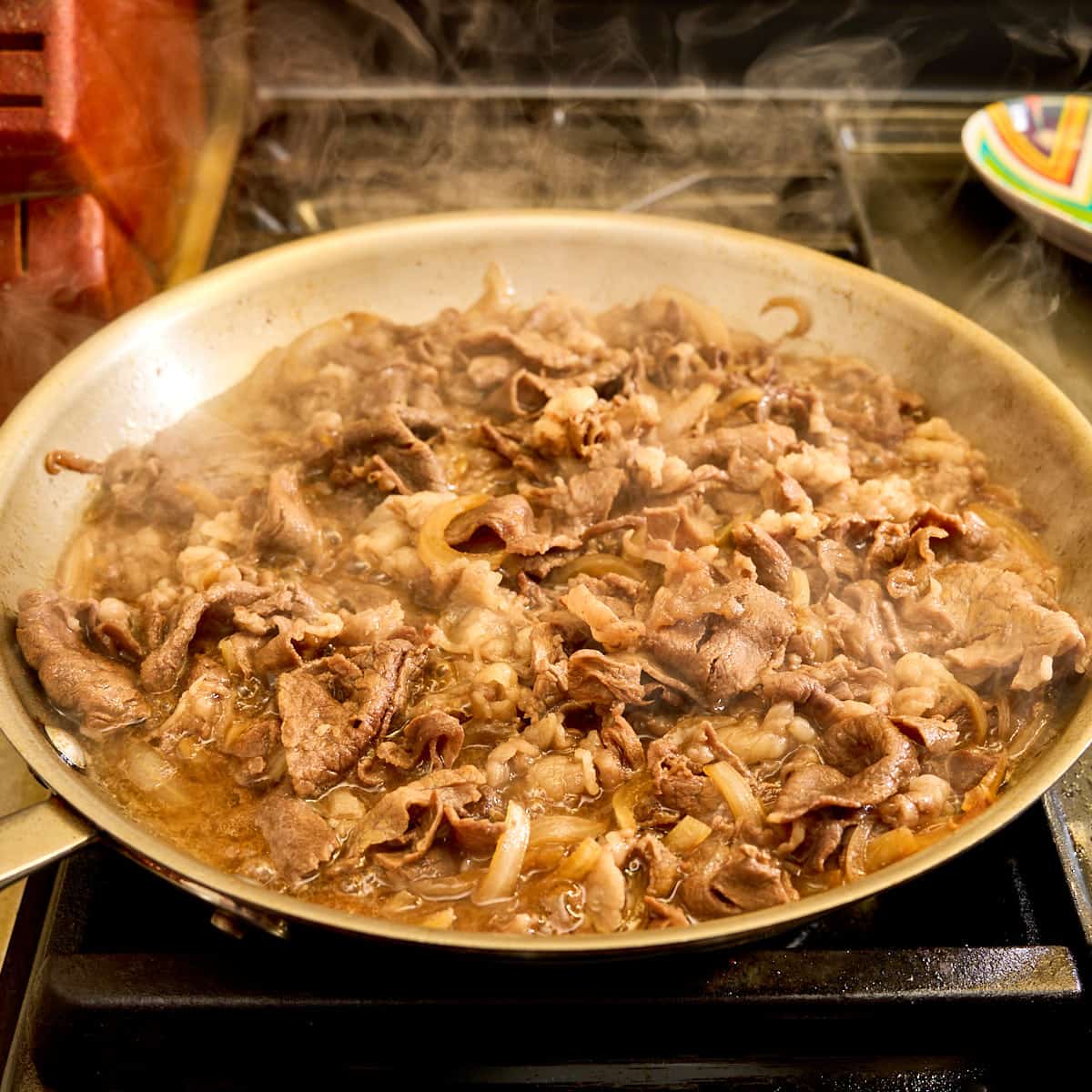
Add the beef and stir often, breaking up the beef as it cooks, until the beef is cooked through and the sauce is reduced by half.
Serve and Enjoy
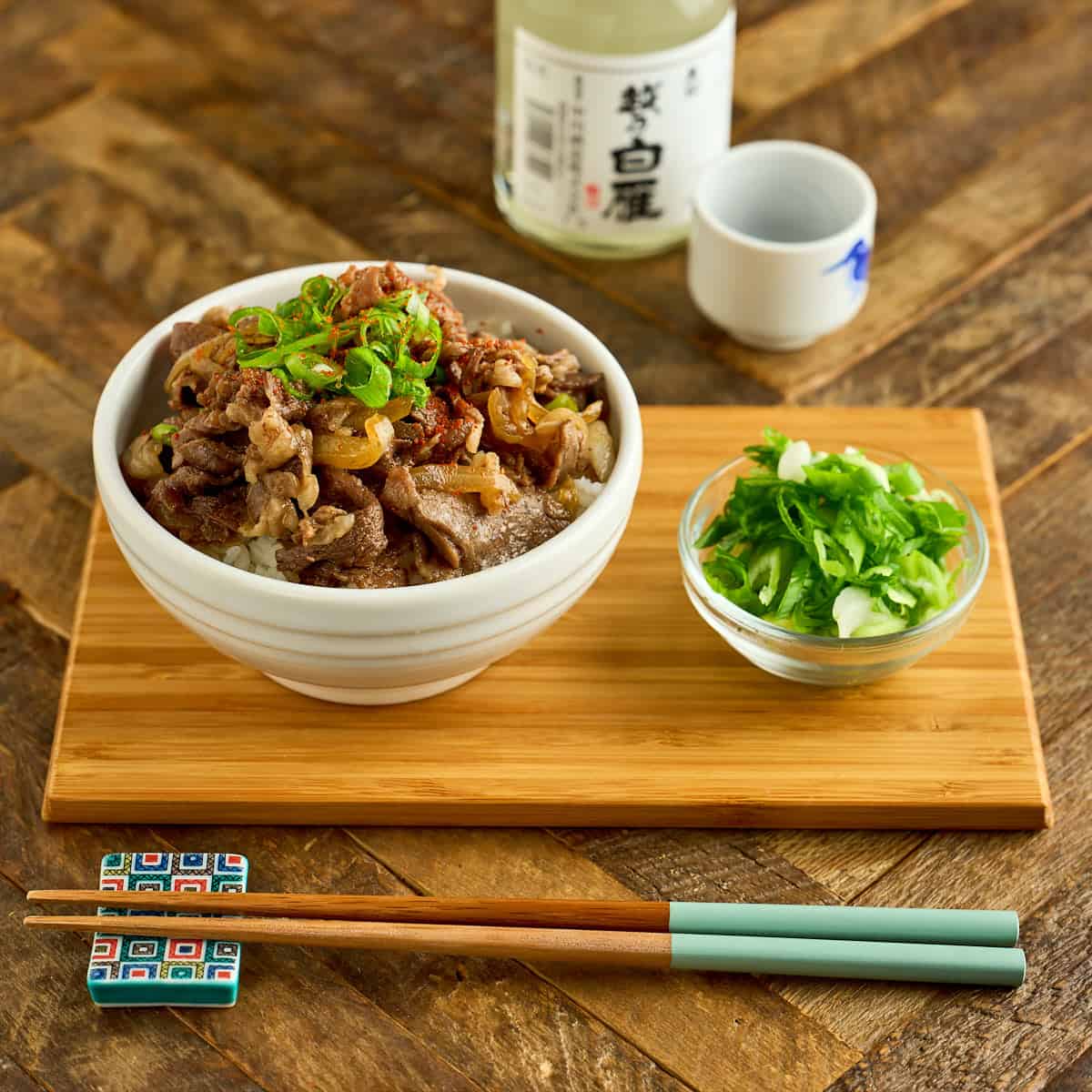
Scoop the beef and sauce onto a bowl of rice. Top with sliced green onions, shichimi, and pickled ginger. Enjoy!
Print📖 Recipe Card
Gyudon (Japanese Beef and Rice Bowl) Recipe
- Total Time: 20 minutes
- Yield: 6 servings 1x
Description
Gyudon is a simple Japanese recipe - beef and onions simmered in a sweet and salty broth of soy sauce, sake, and mirin, and then served over rice.
Ingredients
- 1 cup warm water + 1 teaspoon hondashi (or 1 cup of dashi, or water, or beef broth)
- ¼ cup soy sauce
- ¼ cup sake
- ¼ cup mirin
- 2 tablespoons sugar
- 1 medium onion, sliced ¼-inch thick, separated into individual strips
- 1 pound very thin-sliced ribeye beef, cut into 3-inch wide strips (aka shaved ribeye, or shaved beef)
- White rice for serving
- Sliced green onions for garnish (optional)
-
Pickled Red Ginger (Beni Shōga) for garnish (optional)
Instructions
- Simmer the onion: Stir the hondashi in the warm water to dissolve. Add the dashi (or water + hondashi), soy sauce, sake, mirin, sugar, and sliced onion to a 12-inch skillet or sauté pan over medium heat. Bring the liquid to a simmer, then reduce the heat and simmer, stirring occasionally, until the onion softens and looks translucent, about 5 minutes.
- Simmer the beef: Stir in the sliced ribeye. Simmer, stirring often and breaking up the beef, until the beef is cooked through and the liquid reduces by half, about 5 minutes.
- Serve and enjoy: To serve, fill individual bowls with rice, then top with the beef, onions, and a healthy scoop of the sauce.
Equipment
 Buy Now →
 - Prep Time: 5 minutes
- Cook Time: 15 minutes
Nutrition
- Serving Size: 1 cup gyudon
- Calories: 309
- Sugar: 10 g
- Sodium: 447.5 mg
- Fat: 16 g
- Carbohydrates: 21.6 g
- Fiber: 0.4 g
- Protein: 15.8 g
- Cholesterol: 52.9 mg
Storage and leftovers
Leftover gyudon is fantastic - a quick meal, just make some rice and reheat the leftovers. Gyudon will last in the refrigerator for 3 days, or up to 6 months in the freezer. (I freeze it in 1-cup containers for single-serving sized portions.)
What to Serve with Gyudon
In Japan, Gyudon is served with Beni Shōga (pickled ginger), Shichimi Togarashi (Ground chili pepper and spices), and sliced green onions for topping.
If you want to be extra, serve it with an egg on top. In Japan, they serve it with a raw egg - Japan tests their chickens for salmonella, so their eggs are safe. Here in the US, use a pasteurized egg if you want to put a raw egg on it. (Or, use a poached, soft boiled, or fried egg instead of the raw egg.)
Gyudon is often served with a side of miso soup (or my Instant Pot Kabocha Miso Soup), and a vegetable side like a cucumber salad or simple greens salad.
Related Posts
Instant Pot Kabocha Miso Soup
Okonomiyaki Recipe (Japanese Savory Cabbage Pancake)
Instant Pot Chashu Pork Shoulder (Japanese Braised Pork)
Yakitori Chicken Thighs (Momo) and Thighs with Green Onions (Negima)
Instant Pot Japanese Egg Salad Sandwich (Tamago Sando)
If you're looking for something else, here is my All Recipes Index.
Enjoyed this post? Want to help out DadCooksDinner? Subscribe to DadCooksDinner via email and share this post with your friends. Want to contribute directly? Donate to my Tip Jar, or buy something from Amazon.com through the links on this site. Thank you.

Mike Vrobel says
Looking for a quick rice bowl dinner? Give gyudon a try.