Rotisserie Baby Back Apple Ribs


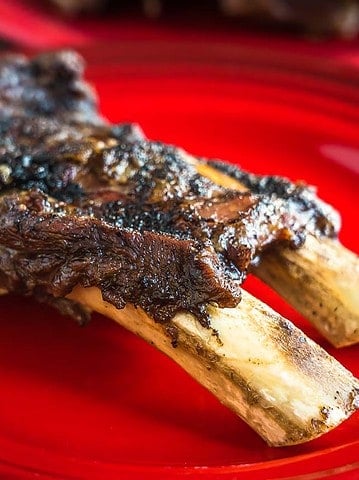
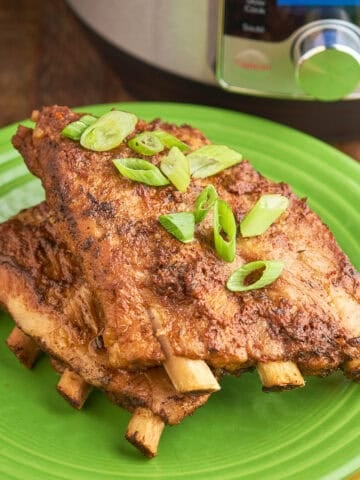
Pork chops with applesauce are a comfort meal from my youth. When my kids asked for ribs the other day, pork and apples went through my head, quickly followed by the memory of Mike Mills’ recipe for apple baby back ribs.

Mr. Mills layers the apple flavor into his award winning ribs - they’re smoked with apple wood, sprayed with apple juice, and the barbecue sauce contains grated apples. I’m not following the recipe faithfully - rotisserie ribs are sacrilegious in the world of low-and-slow barbecue.

Nor am I apologizing for my heresy. I love the bark I get with the rotisserie, slowly spinning the ribs, basting them in their own juices. I’m borrowing layers of apple flavor, that’s all.

I was surprised how easy it was to get two slabs of ribs onto the Weber kettle rotisserie spit. If you’re feeding a lot of big eaters, people who polish off a slab of ribs as an appetizer, this is not the recipe for you. But then, if you feed ribs to that kind of a crowd, I’m sure you already own a catering sized smoking rig.


Recipe: Rotisserie Baby Back Apple Ribs

Espresso Chipotle Barbecue Sauce


Barbecue sauce is easy to make at home. The basic flavor profile is:
  • 4 parts ketchup
  • 1 part vinegar (usually cider vinegar)
  • 1 part sweetener (molasses, brown sugar, honey, or a mix)
  • spices and seasonings
The spices and seasonings are where you can make the sauce your own. Pull out a bottle of your “secret recipe” barbecue sauce, and your friends will think you’re a barbecue savant. My problem? My secret recipes never stay secret. I can’t help myself. I have to share the ingredients, even if you’re just feigning interest to be polite. Is it any wonder I have a food blog?

So, what is my secret ingredient? A shot of espresso.
I need my espresso in the morning. NEED. And I’m not up to grinding and tamping first thing in the morning. I want my 2 shots of espresso, and I want them now. That’s why I use a Nespresso. No muss, no fuss, and surprisingly good espresso. I know the pods are expensive. I know the pods are not environmentally friendly. Though Nespresso is working on that. This is one of my extravagances, and I try to make up for with the rest of my (admittedly typical suburban dad) life.

Oh, and I add chipotle en adobo to the sauce, for a hint of smoke and heat. Not too much; this is barbecue sauce, not hot sauce.


Recipe: Espresso Chipotle Barbecue Sauce

PicOfTheWeek: Glazing grilled shrimp


Photo by my 8 year old daughter - which explains the low angle.

Grilled Asparagus with Whole Grain Mustard Vinaigrette


When you’re in a CSA, spring is the toughest season. The weather has finally turned, green leaves are appearing everywhere…but mother nature is teasing. There’s nothing for the CSA box yet. It’s too soon.

The first CSA box of spring is kind of sad. Sure, there are a couple of big bags of mixed greens. And turnip greens, and beet greens, and maybe some radishes or green onions. I appreciate them after a winter of storage vegetables. But they rattle around in the bottom of a box that will be overflowing come July.

When is spring really here? When the asparagus appears. Suddenly, I don’t care what else is in the box; the star of spring vegetables has arrived.

Here’s my favorite way to cook asparagus - grilling. (Of course.) I toss the asparagus in a whole grain mustard vinaigrette, both before and after it’s cooked. The grains of mustard cling to the asparagus, and add little bursts of flavor and heat.

Special thanks to Amy, Liz, Nate, Nikki, Hyungmo, and Alysha, my farmers at the Crown Point CSA, for the wonderful asparagus.

Recipe: Grilled Asparagus with Whole Grain Mustard Vinaigrette

Spring Grill Cleaning 2013

The inside of my grill. Yikes.


A question from a reader:

Do you have any tips on cleaning your Weber Summit 650? I have the 450 version, and it looks pretty gross, but still works like the day I got it 5 years ago. The smoker leaves some pretty nasty brown stains on the front lid.

For day to day cleaning, I clean the grill grate part of my preheating routine. I turn the grill to high, let it heat up for 15 minutes, then scrub off the charred remains of my last dinner with a grill brush. I use the grill often enough that a post-grilling burn off isn’t necessary, unless I made something really, really messy.
Like, say, cheeseburgers that dripped cheese into the bottom of the grill. But I'm getting ahead of myself.

Once a year, in the spring, I do a deep cleaning. I buy a new grill brush, a pair of cleaning gloves, and a nylon paint scraper. Then I mix up a bucket of soapy water, get some garbage bags, and spend an afternoon going after the gunk in my grill. It's amazing how much better it seems to work after a thorough cleaning.

...

OK, I have to confess. I'm a grill slob. I forgot to clean my grill last year. My excuse is my rotisserie cookbook - I was still working on it when I usually clean my grill. I put off grill cleaning to work on recipe testing. Then pictures. Then came summer vacation. Pretty soon the leaves were turning, suddenly it was snowing, and a year had slipped by.

I got away with it for a while...but the lack of maintenance was catching up to me. I've had more dripping grease catching fire than usual. I tried to cook last week's butterflied chicken recipe using indirect high heat. It was medium at best. It was time to clean the grill.

Here's what I thought:
Great! At least I'll get a blog post out of it - a pictorial on cleaning a grill. Let's get started, and...oh my goodness. There are drifts of greasy, carbonized stuff on the bottom of the grill. Those look like...onions? Is that a runaway asparagus spear? And, what's that smell - oh, yuck, the grease pan is growing fuzz.

I gave up on the pictorial the moment I saw the bottom of the grill. I had too much work to do.

That's the bottom of my grill,
not the mouth of an active volcano.


So, what do I do when my Weber Summit is a real mess? (With commentary.)
  1. Make a trip to the hardware store. Pick up:
    1. "Reusable" kitchen gloves (Only using once, but I need the thick ones)
    2. Narrow nylon paint scraper
    3. New grill brush
    4. Bottle of cleaner
    5. Paper towels
  2. Start on the outside: spray the outside of the grill with a grease cleaner, and wipe it clean with paper towels. (Repeat three times, then give up on the grease stains that are left, with a plan of coming back with serious cleaning products, like Bar Keeper's Friend. Or maybe napalm.)
  3. Clean the inside of the grill, working from the top to the bottom:
    1. Use a nylon putty knife to scrape lose the flakes of soot that accumulate on the top of the lid, letting them fall into the bottom of the grill.
    2. Brush the grill grate clean with my old grill brush - this is the one time of year I flip the grates over and brush the underside. Remove the grates. (Regret cooking cheeseburgers the night before cleaning the grill. Mental note: do a burn the night before cleaning the grill.)
    3. Brush the flavorizer bars (burner covers) with my old grill brush. Brush them over the grill, so anything that comes loose drops into the pan for later cleaning. Once a flavorizer bar is clean, put it back and move on to the next one, and work over the other burner covers, not the uncovered burner - we don't want the stuff coming off the covers from clogging the burners. Once all the flavorizer bars are clean, remove them to get at the burners. (There is stuff on the underside of the flavorizer bars that needs to be brushed off. How in the world did it get UNDER v-shaped bars?)
    4. Brush the burners, using the brand-new grill brush for the first time. Brush across the burners, so anything worked loose doesn't just move to a different burner opening. (Keep brushing and brushing on a burner hole - why won't that stuff in there work loose?)
    5. Scrape the bottom of the grill with the nylon paint scraper. Scrape top to bottom, left to right, pushing everything into the drip pan in the bottom of the grill. (Holy cow, this stuff is at least a half an inch thick. No wonder I had grease fires. Is that an orange peel? No, can't be. Maybe it's an onion skin. Yuck.)
    6. Slide the drip pan full of debris from below the grill, put the opening for the grease pan over a garbage bag, and scrape the debris through the hole and into the garbage. (There's so much carbonized food in here...No, I'm wrong. It's half grease, half carbon. How is that even possible?)
    7. Remove the aluminum foil pan from the grease pan holder, discard, and replace with a new one. (DETAILS REDACTED - potential biohazard.)
    8. Reassemble the grill. Slide the drip pan back under the grill, put the flavorizer bars in place, and put the grates back. Discard the old grill brush, hang the new one from the hook on my grill, and I'm done. The grill looks like new. (Like new? No, but at least it's clean...ish. The burner tubes are clear, and I can almost see the metal on the inside of the grill.)
The bottom of my grill, after scraping everything down into the drip pan.
I couldn't work any more of the burnt stuff off the body of the grill (top and bottom of the pic).

Pictures and Videos

Since I got distracted by the actual cleaning, here is a pictorial from my friend Mike at Another Pint Please, using the exact grill I own:

And here are cleaning videos from Kevin Kolman, Weber’s Grill Master.
Yes, that’s Kevin’s job title, “Grill Master”. I talked with him last year; his job is traveling the country, demonstrating how to use Weber grills. Forget what I said in the grilling cookbooks post a few days ago; I have a new dream job. If Kevin wasn’t such a nice guy, I’d be jealous.


Spring Grill Cleaning, [Weber.com/blog]

Don’t have a Weber grill? These instructions are useful for any grill, but check if your manufacturer has specific instructions for your brand. And have I mentioned recently that customer support is one of the reasons I always recommend Weber grills?

The outside of my grill. Again, yikes.

Weber Cleaners

Weber is looking out for me again - they introduced a range of grill cleaning products this year. They have grate cleaner and degreaser, grill exterior cleaner, a stubborn stain remover, and stainless steel cleaner. I used the exterior cleaner on the outside of the grill, then followed up with the grate cleaner as a degreaser for the tough spots. It cut through most of the mess on the outside of my grill, but I think I need a bottle of the stainless steel cleaner to get the soot stains off of the hood, and the stubborn stain remover for the burnt on grease around the edge of the grill.

Here’s a link to the Weber Cleaners website, and videos on how to use them, again by Kevin Kolman. [WeberCleaners.com]

FTC Note - this post was not sponsored by Weber, no matter how much I gush about them. If you buy something through my Amazon links, I get a small commission. Thank you. And, buying something or not, get out there and clean your grill!

What do you think?

How often do you clean out your grill? Questions? Leave them in the comments section, below.

*Enjoyed this post? Want to help out DadCooksDinner? Subscribe to DadCooksDinner using the RSS or Email options on the right, recommend DadCooksDinner to your friends, buy something from Amazon.com through the links on this site, or donate through my tip jar. Thank you.