
DadCooksDinner

  • Home
  • Rotisserie
  • Recipes
  • Tools
  • Books
  • Merch
menu icon
go to homepage
  • Recipes
  • Books
  • Tools
  • Merch
  • About
subscribe
search icon
Homepage link
  • Recipes
  • Books
  • Tools
  • Merch
  • About
×
Home » Recipes

Road Trip - Market District - Grand Opening in Green, OH

November 12, 2013 by Mike Vrobel 2 Comments

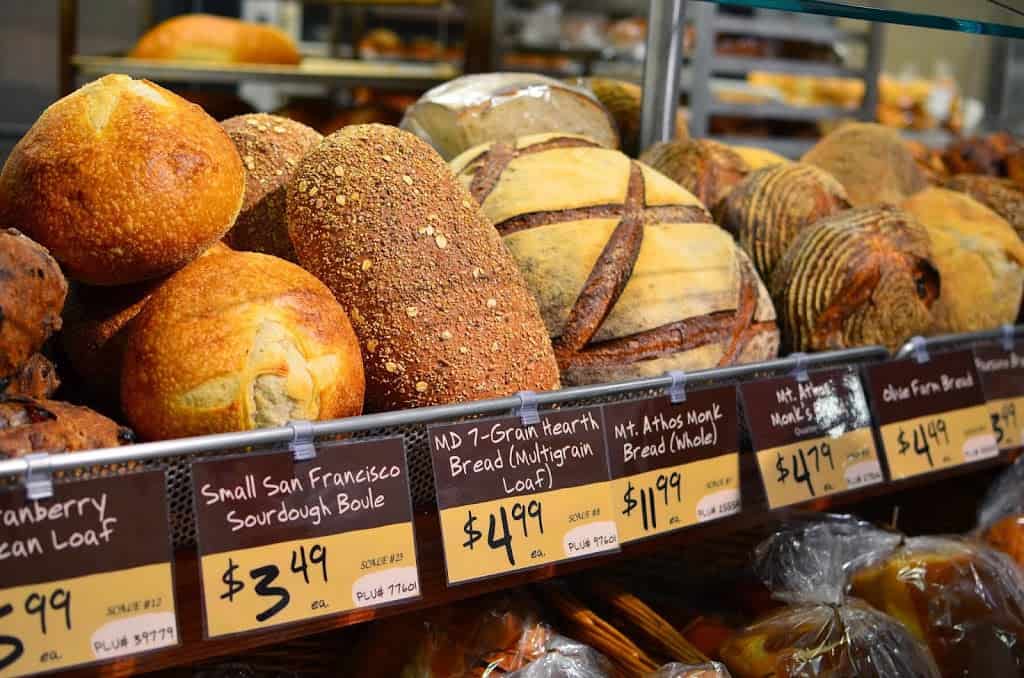
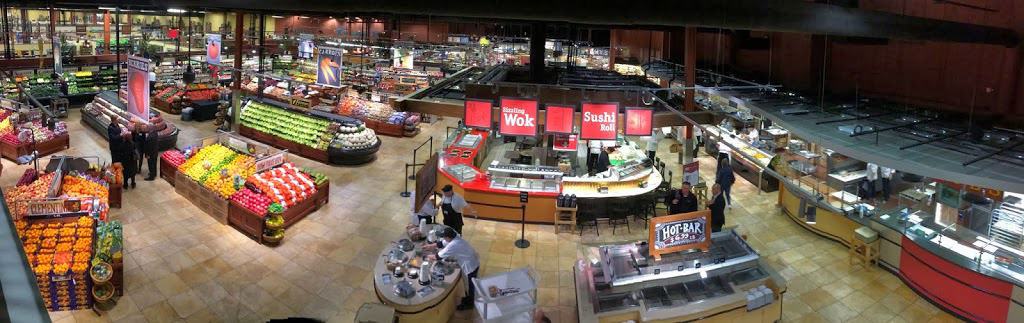
Market District is a new type of grocery store. Start with a normal Giant Eagle store. Add a wide selection of specialty and gourmet cooking supplies. Include a cafe, and a food court with a wok station, sushi bar, pizzeria, and wine bar. Then stand back, and try to avoid being trampled by the lucky people in Green, Ohio, as they rush in to see what happened to their neighborhood grocery store.

I read about Market District stores opening in our area, and I was itching to go see one. I'm a sucker for specialty cooking ingredients. When I was invited to the grand opening of the Market District in Green, Ohio, I jumped at the chance. I was part of a group of local bloggers - we arrived at 8AM, connected to the store wi-fi, grabbed our complimentary cups of coffee, and warmed up the digital cameras. We were ready for the tour.

Market District Green

1700 Corporate Woods Parkway
Uniontown, OH 44685
Open 24 hours
Website: MarketDistrict.com
Phone: (330) 896-4456
 

Dinner is served

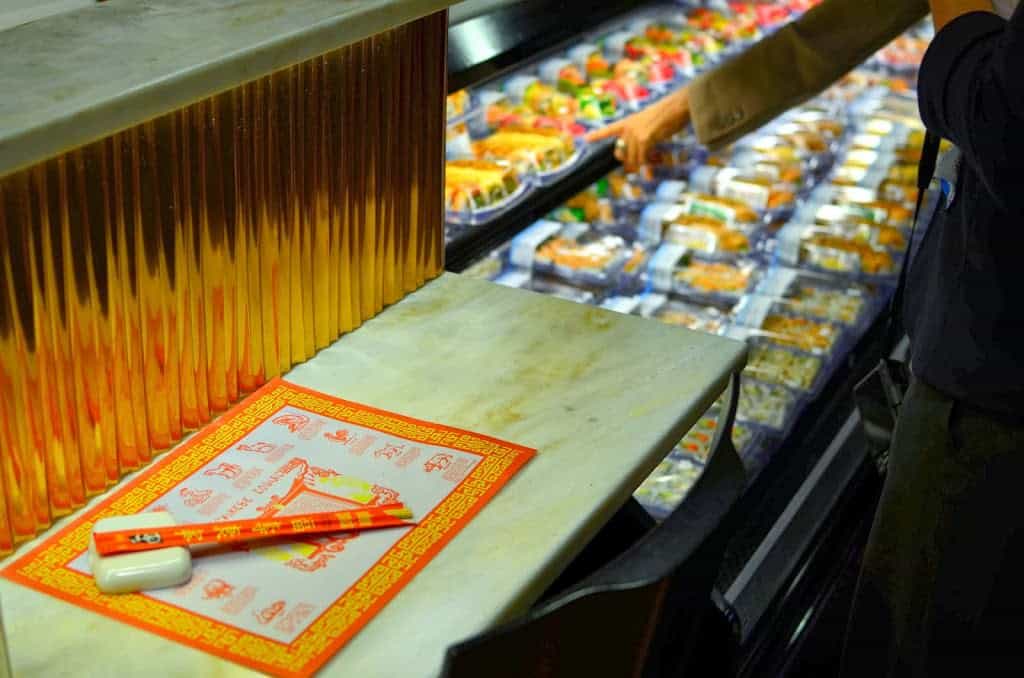
One side of their store is the prepared food area. It's set up like a food court, with separate stations:

  • Coffee shop and juice bar
  • Prepared foods
  • Sub shop
  • Pizza shop
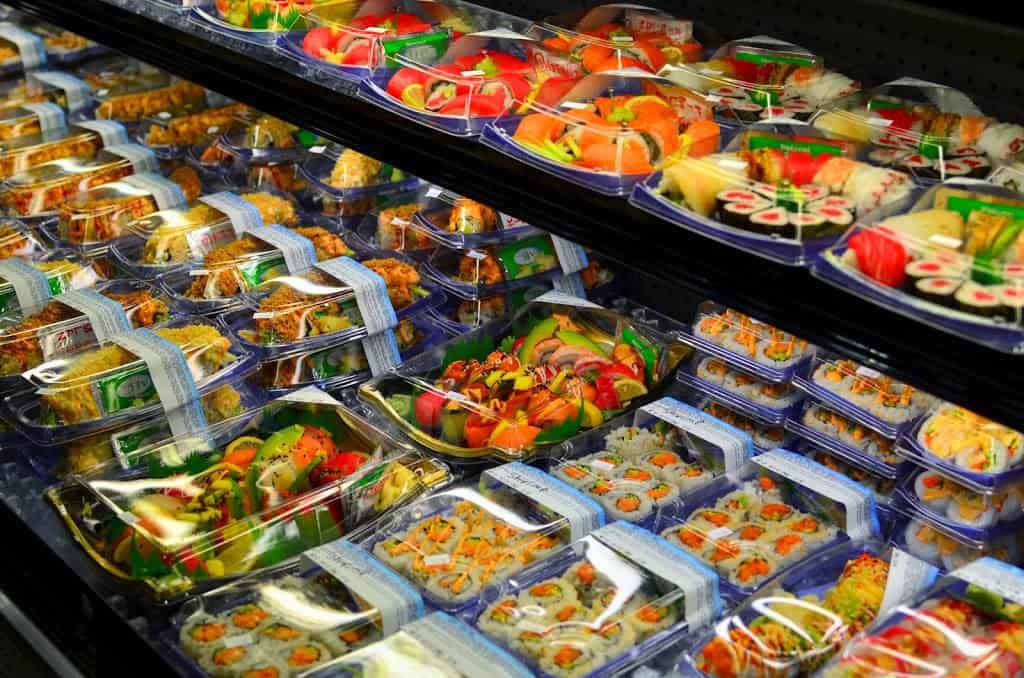
  • Sushi bar
  • Asian noodle bar
  • Wok station - stir fried to order

…and two levels of cafe seating - I recommend the upstairs seating, where you can look out over the whole store.

Oh, and did I mention that one of the stations is a bar, serving draft draft beer and wine by the glass? I didn't get a chance to taste - I know it's five o'clock somewhere, but I was still working on my morning coffee. They had a nice selection of wines in wine dispenser, waiting to be poured. They also have 6 for $6 Food & Wine Fridays - wine tastings at 6PM every Friday, with six wines matched with small plates of food. An evening at the grocery store never sounded so relaxing.
One of my fellow bloggers put it all together: "Wait, they have all this food, and wine, and an Eagle's Nest to watch the kids for me?" Unfortunately, my kids are too old for Eagle's Nest child care any more, but…wow. Instant night out for the parents. Drop the kids off at the Eagle's Nest and head over to the food court to relax with a glass of wine and a bowl of noodles.

 

Gourmet Store

Now, all those prepared foods were interesting. And, I must say, delicious - the samples tasted great. (If you ever want to taste something, ask - they can give out samples of most of their prepared food.)

But I'm a dedicated home cook - I don't buy prepared foods that often. I'm here for the specialty food items I can use in my own kitchen.

When I first started cooking, grocery stores were limited. The International aisle was where the ramen noodles, pasta sauce, and salsa were stocked. If I needed an ingredient for an authentic recipe, I usually had to find the small, local market that specialized in that cuisine.

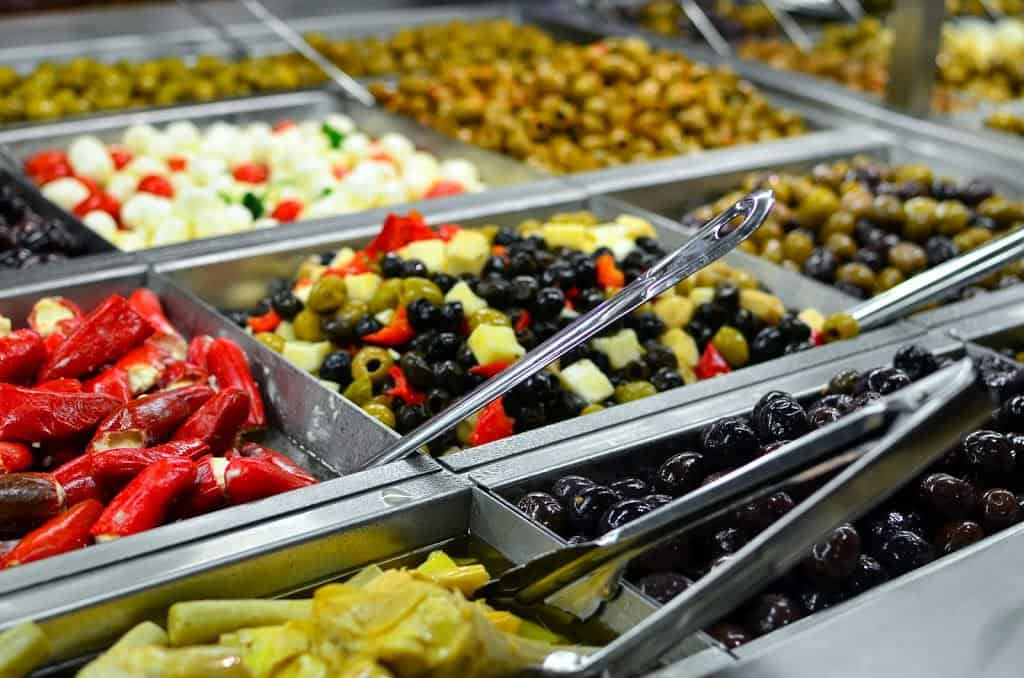
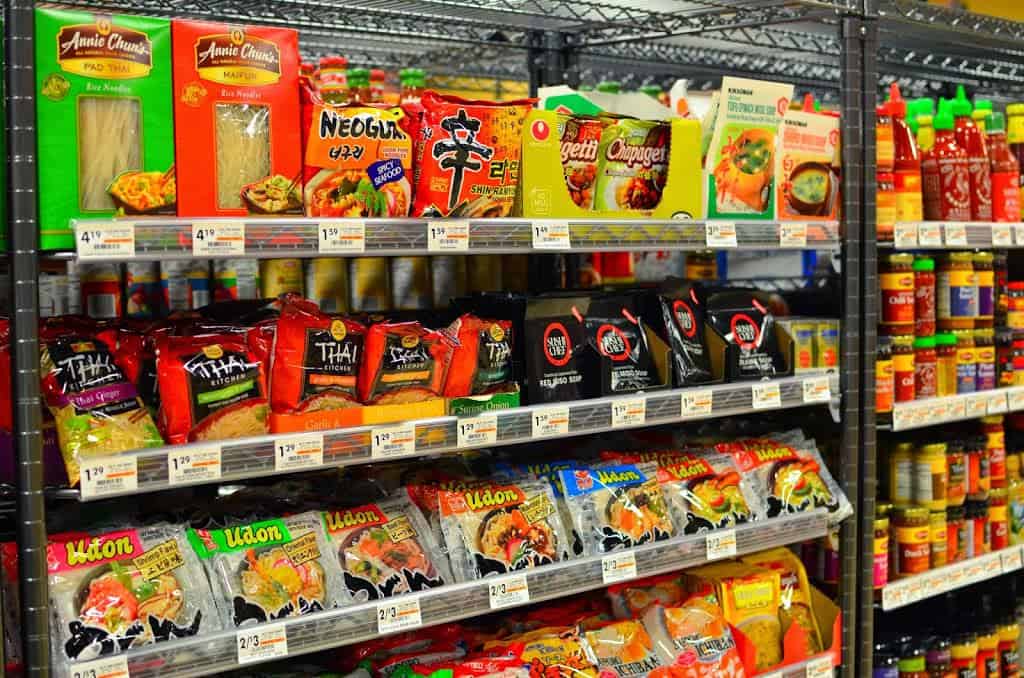
Now, almost every grocery store has a well stocked international section. I can get chipotle peppers and masa harina, sriracha and plum sauce, Kalamata olives and hummus.

So, what does Market District do to improve on that? They're going out of their way to stock exotic ingredients. I felt like a kid in a candy store. (And I'm not just talking about their in-house candy store.) Everywhere I looked, something else was shouting for my attention:
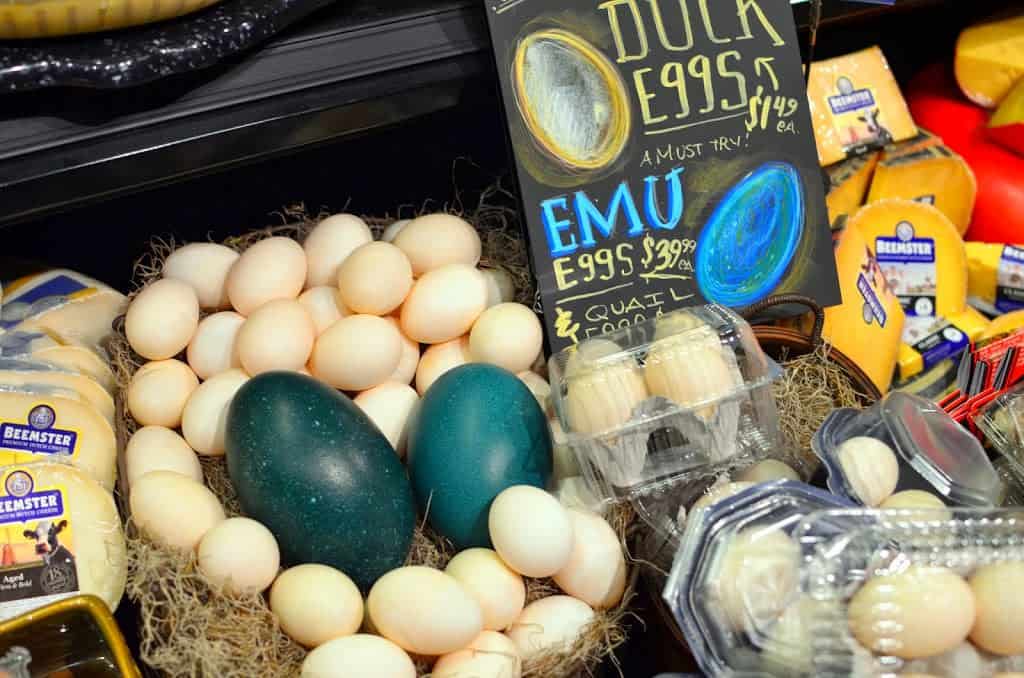
 

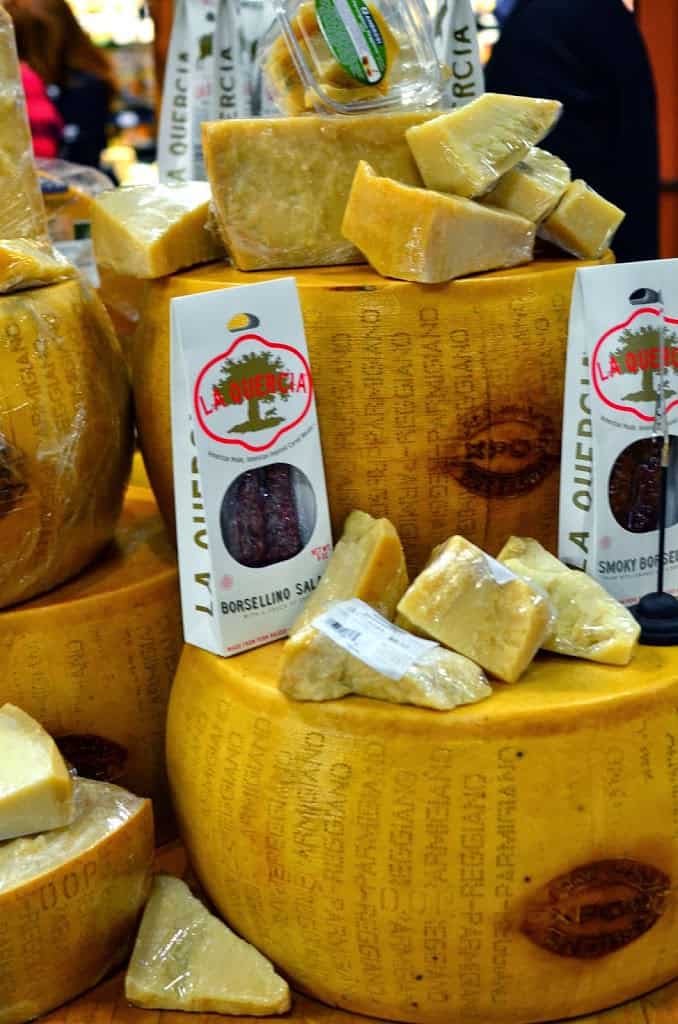
The deli and cheese shop has whole wheels of parmesan, duck leg confit, and Emu eggs. Dark blue, bigger than my fist, and $40 an egg.
I'm not sure what you do with them, but they look like one egg would make an omelet for three people.
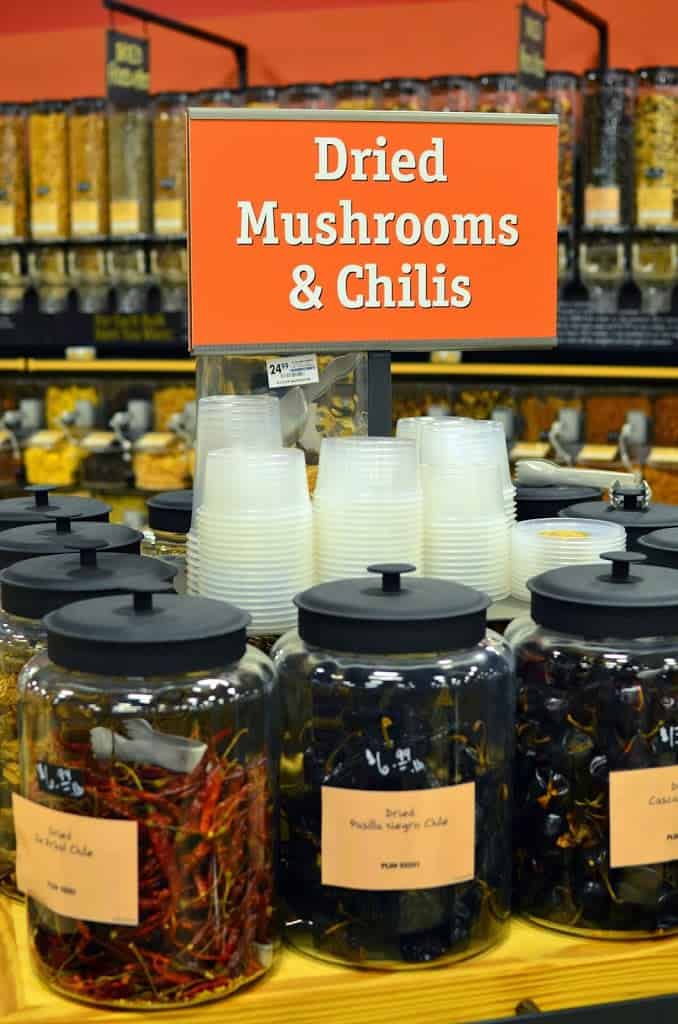
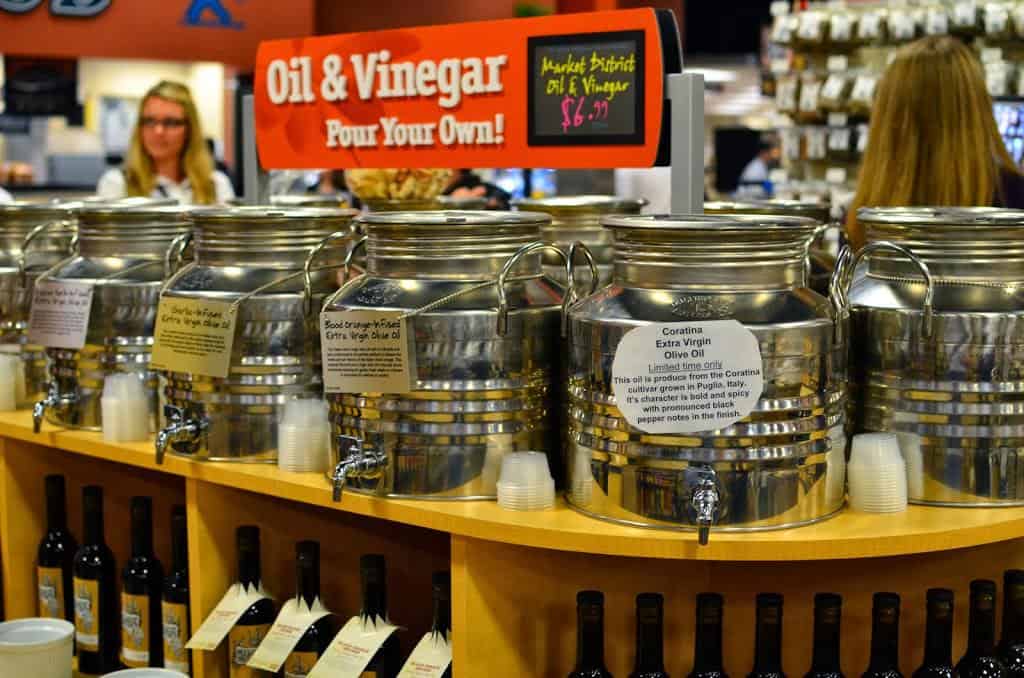
The bulk section has a good selection of beans, spices, and nuts. But it also has loose leaf tea, fill your own olive oil and vinegar, a variety of dried Mexican peppers, and specialty dried mushrooms - including dried morel mushrooms at $200 a pound.
$200 a pound? Yes. You only need one or two at a time, and they are dried, they weigh almost nothing.
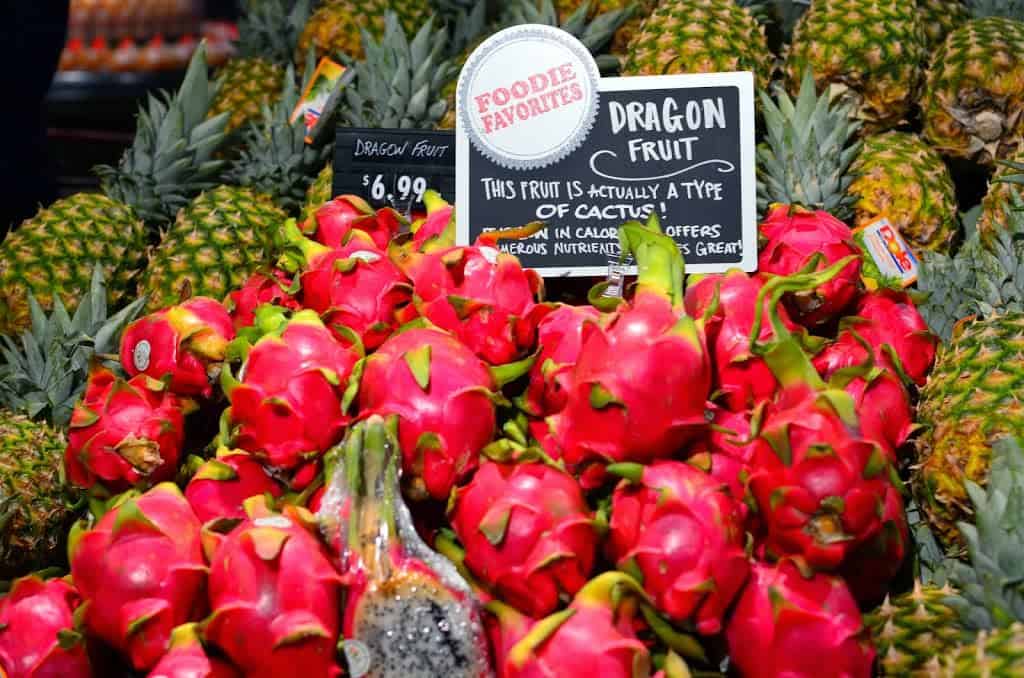
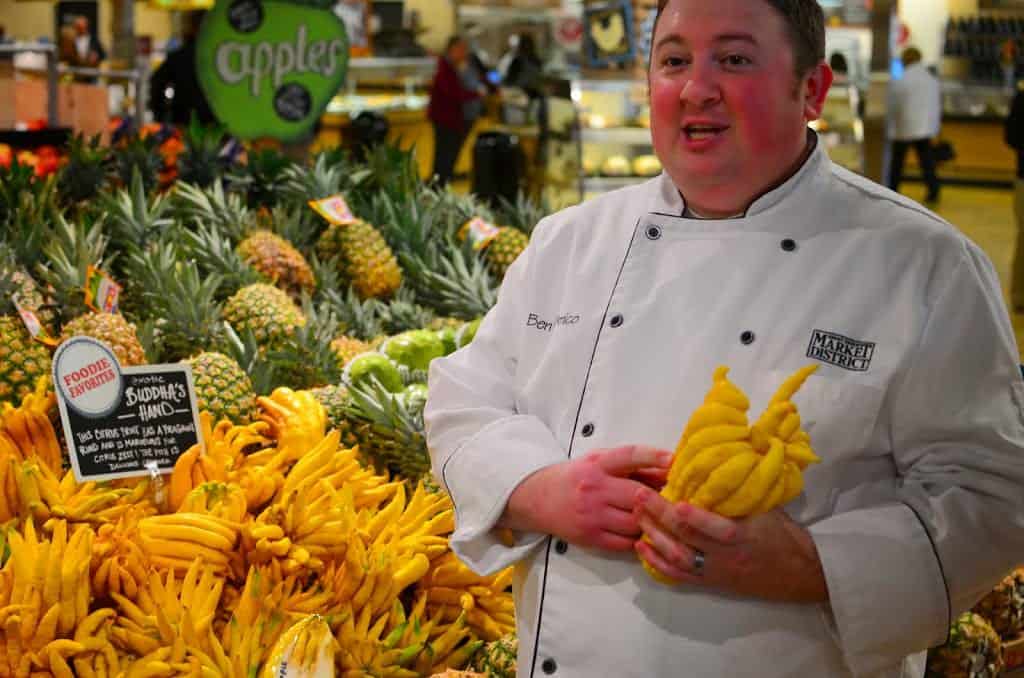
The fresh produce section includes dragon fruit (eat it like a huge kiwi fruit) and Buddha's hand (a kind of citrus, use its peel like you would lemon peel.)
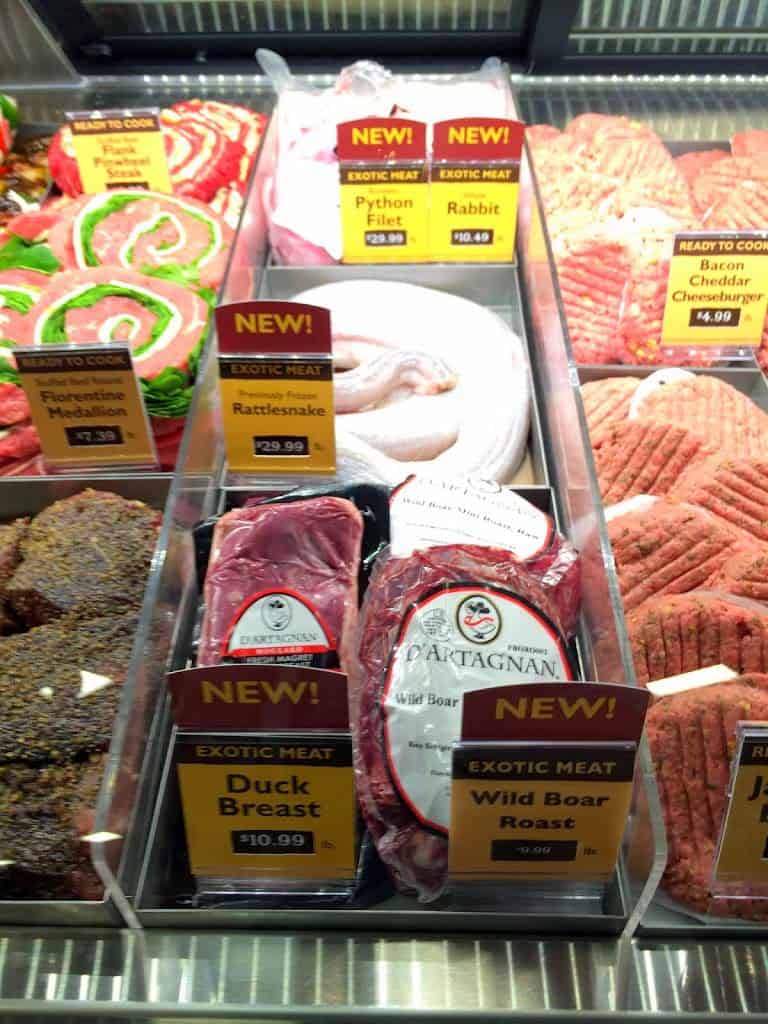
The meat department has an exotic meats section in the meat case, right next to the hamburgers. They stock duck breast…and rabbit, rattlesnake, python, and wild boar. Chef Ben, our tour guide, recommended the python, because it has more meat on the bone than the rattlesnake.
I have to admit, I'm going back to buy wild boar. I've always wanted to cook with it.
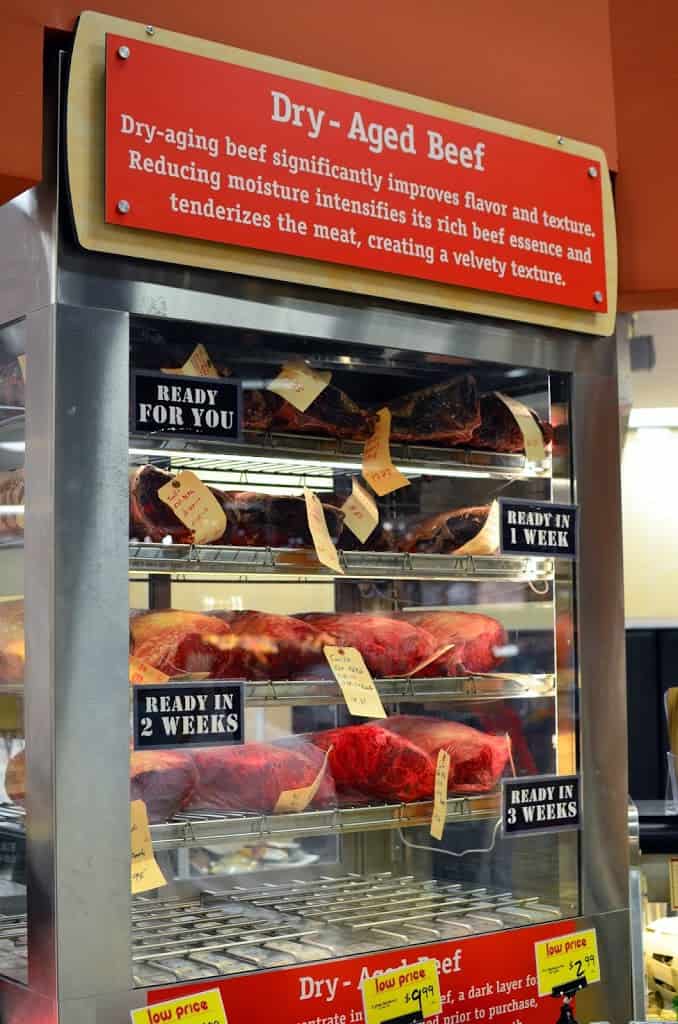
The highlight of the meat department...the highlight of the whole store, in my opinion...was the dry aged beef case. Four levels of rib roasts, dry aging in front of me. Each level is one week older than the one below, from "ready in three weeks" on the bottom to "ready for you" at the top. I was fascinated - I've never seen dry aged beef before, and here it was in a real life time-lapse picture, getting darker and darker as you went up the case.

Other home cook resources

They have two other great resources for home cooks. The first is the Demo station, where a on-staff chef gives cooking demonstrations every day. The demo chef is also available for recipe help - if you have problems, bring the recipe to the demo chef, and he'll work with you to try to straighten things out.
Not that I ever have problems with recipes. Oh, no, not me.

Also, their housewares section stocks much higher quality cookware than a typical grocery store. I saw Kuhn Rikon, Oxo, and Zyliss gadgets, and Victorinox knives - my favorite "inexpensive but good" knife brand.
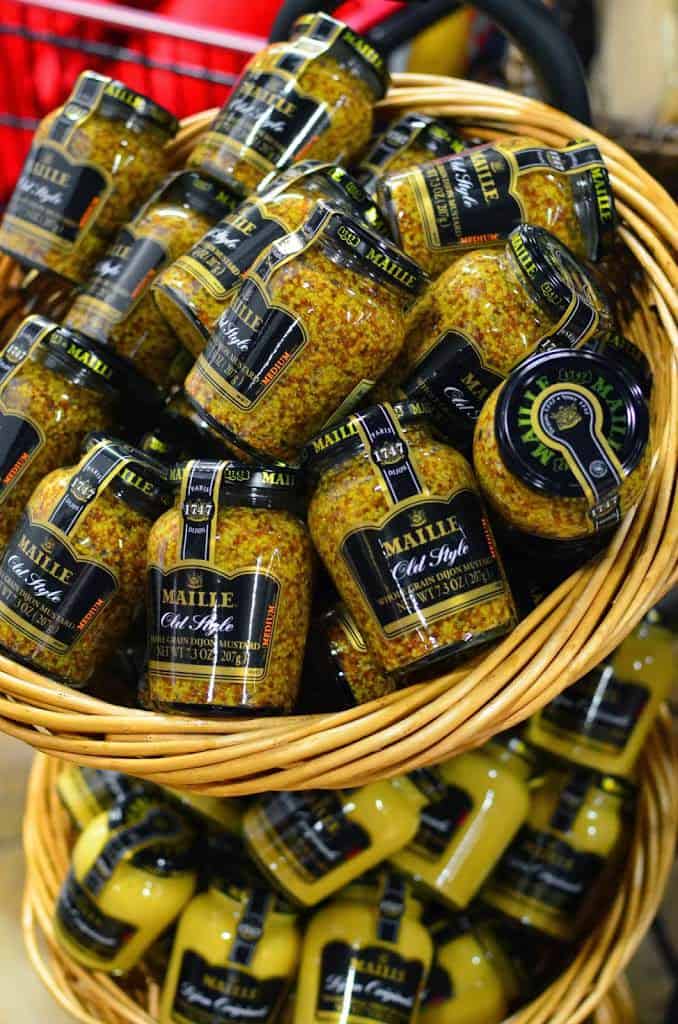
 

Regular grocery store

These gourmet ingredients are surrounded by a Giant Eagle grocery store. The exotic meats and dry aged beef are part of the meat department, right next to the sale on hamburgers. The Dragon fruit is sitting next to the pineapples. Everything in a normal grocery store is there…with Giant Eagle's everyday prices. It's the best of both worlds - I can buy my specialty gourmet ingredients (at specialty gourmet prices), but kitchen staples are at their usual prices, with their usual Giant Eagle sales (buy one get one free!). I don't have to spend my whole paycheck to do one stop shopping.

 

Tyler Florence

Market District brought chef Tyler Florence in to celebrate the grand opening. He signed books for hundreds of fans - and for each book signed, Market District donated a turkey to a local hunger center. But us lucky bloggers got to talk with him beforehand in a small group. I expected a Tyler to tell us some professional chef war stories, a few anecdotes about being a television personality on Food Network, plug his California Crush wine. Then I'd get a few quick words with him while he signed a copy of his cookbook for me.

Boy, was I in for a surprise.

Tyler arrived the day after speaking at the Design Leadership Summit, where he gave a talk about what it takes to be a name brand, and how he built his own brand. He grilled us. where were we at, as bloggers? Where did we want to go? What are our strengths and weaknesses? What is our point of view? Who is our audience, and are we writing to them, or just to ourselves? Did we want to be local to Akron, or go national?

It wasn't just a lecture. He was asking questions, pushing us to answer, then following up with more detailed questions. He told us to think big, and imagine our best case scenario - everything goes right, we're as successful as we can possibly be - and starting with that in mind, to work backwards. "Reverse engineer your success." Don't take no for an answer. "Flow around roadblocks and gatekeepers like water", then keep moving towards our goal.

I expect a signed cookbook and a picture. I get a motivational seminar and a kick in the pants. Tyler, thank you!

Shout out to my fellow bloggers

Blogging is solitary work. We communicate through retweets and, if absolutely necessary, email. So, it was fun to meet a group of fellow bloggers in person, and talk shop while we toured the store. Hi, everyone!
AkronOhioMoms.com
CouponingWithRachel.com
HallOfFameMoms.com
OneMommySavingMoney.com
ABusyMomOfTwo.com

Thank you Market District

My only regret? Green is a half hour drive from where I live. They're taunting me. Giant Eagle, can you convert one of your two Copley/Fairlawn area stores into a Market District? Soon? Thank you.
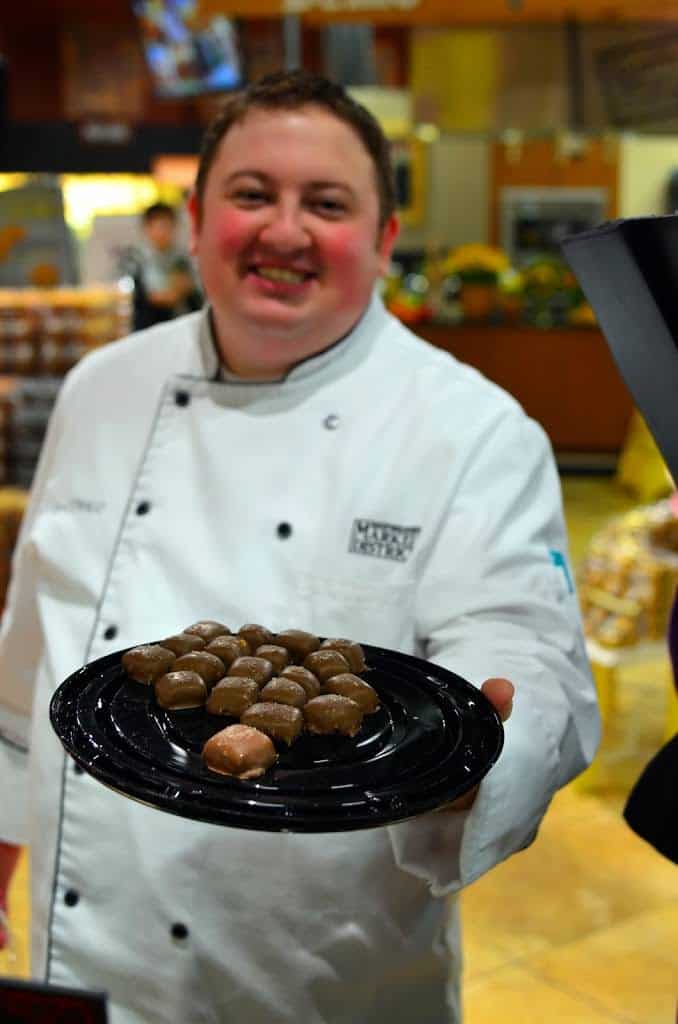
Chef Ben, insisting I try a truffle. Twist my arm.

But seriously, thank you to Troy Detter, Social Media Manager, for inviting me and being a gracious host, and to chef Ben D'Amico for leading our tour of Market District. I had a great time, and will be back, even with the 30 minute drive.
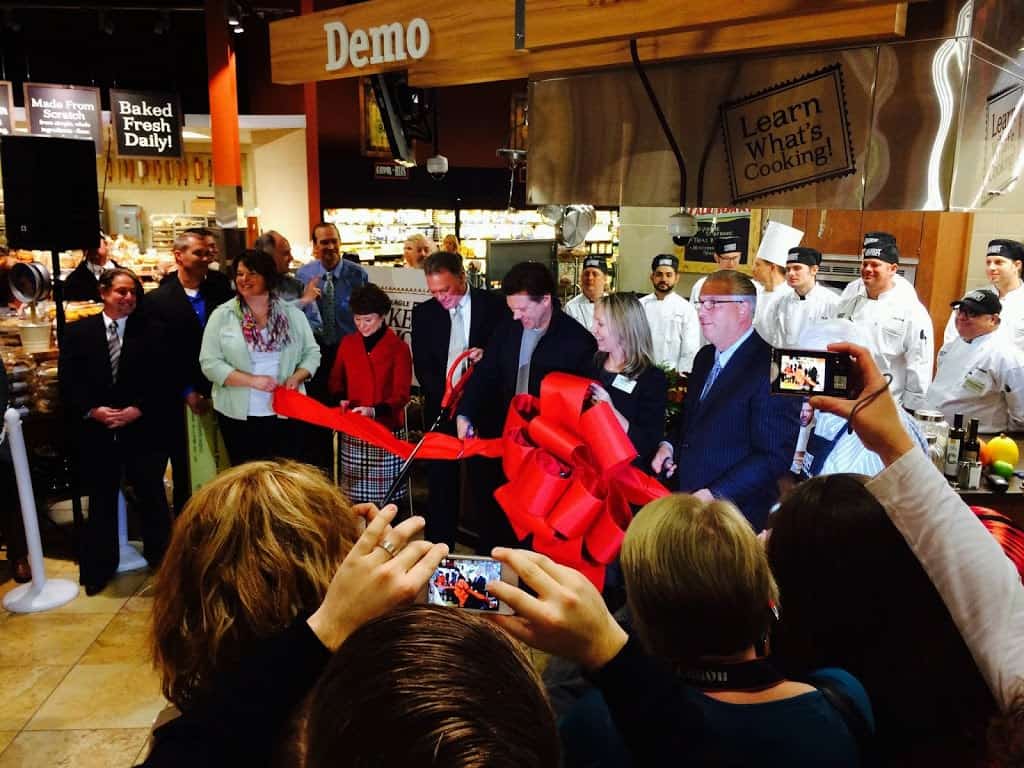
That is, as soon as the crowds die down - I wasn't kidding about the stampede by the locals. By the time the ribbon cutting ceremony was done, the place was packed.
 

Map

View Larger Map

What do you think?

Any questions? Ever been to a Market District? Talk about it in the comments section, below.

*Enjoyed this post? Want to help out DadCooksDinner? Subscribe to DadCooksDinner using the RSS or Email options on the right, recommend DadCooksDinner to your friends, buy something from Amazon.com through the links on this site, or donate through my tip jar. Thank you.
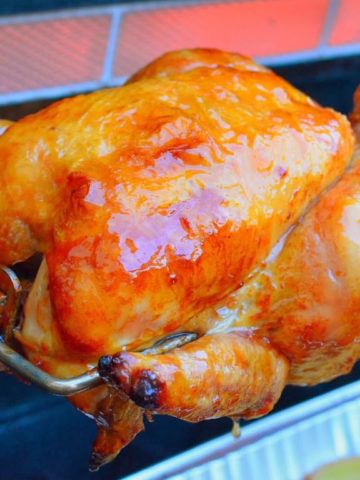
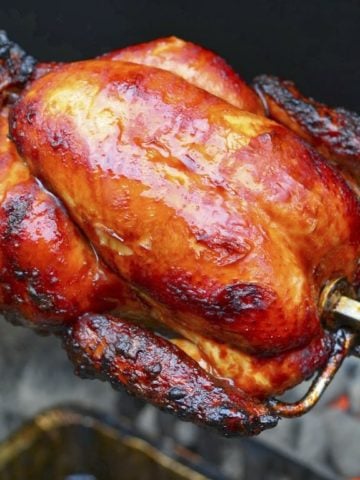
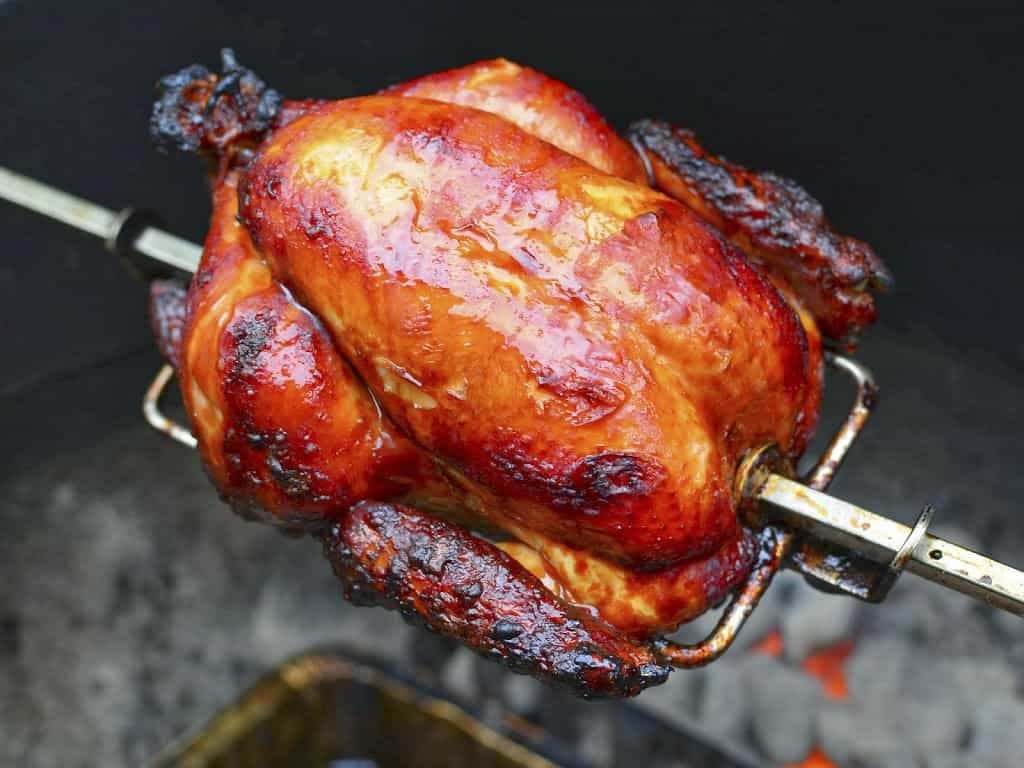
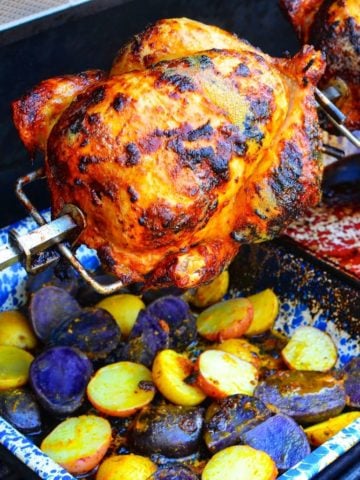
Rotisserie Chicken with Knob Creek Maple Glaze and Drip Pan Potatoes

November 7, 2013 by Mike Vrobel 4 Comments

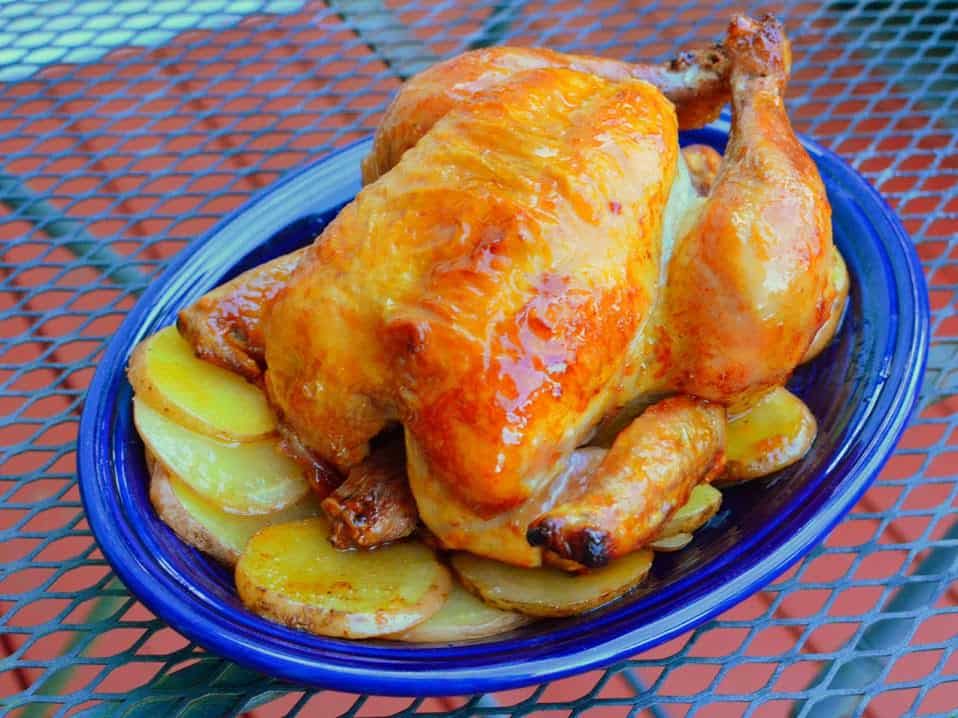
Rotisserie Chicken with Knob Creek Maple Glaze and Drip Pan Potatoes

This recipe is sponsored by Knob Creek Bourbon - they kindly sent me some bottles of their product, and are featuring this recipe on the Brothers of Bourbon site. Give them a visit, and tell them DadCooksDinner sent you!


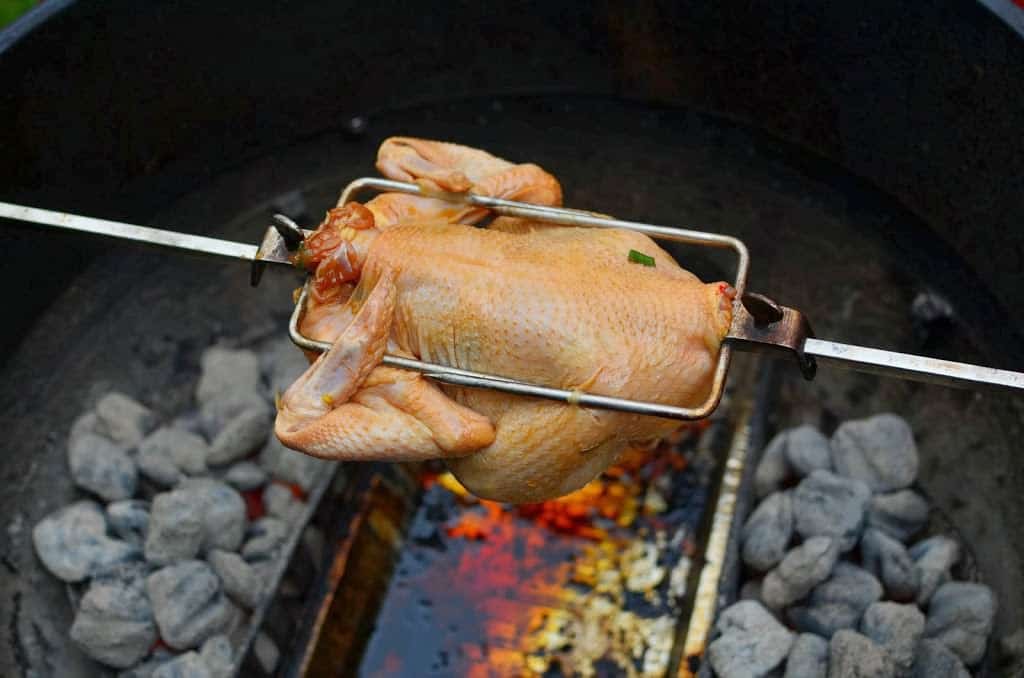
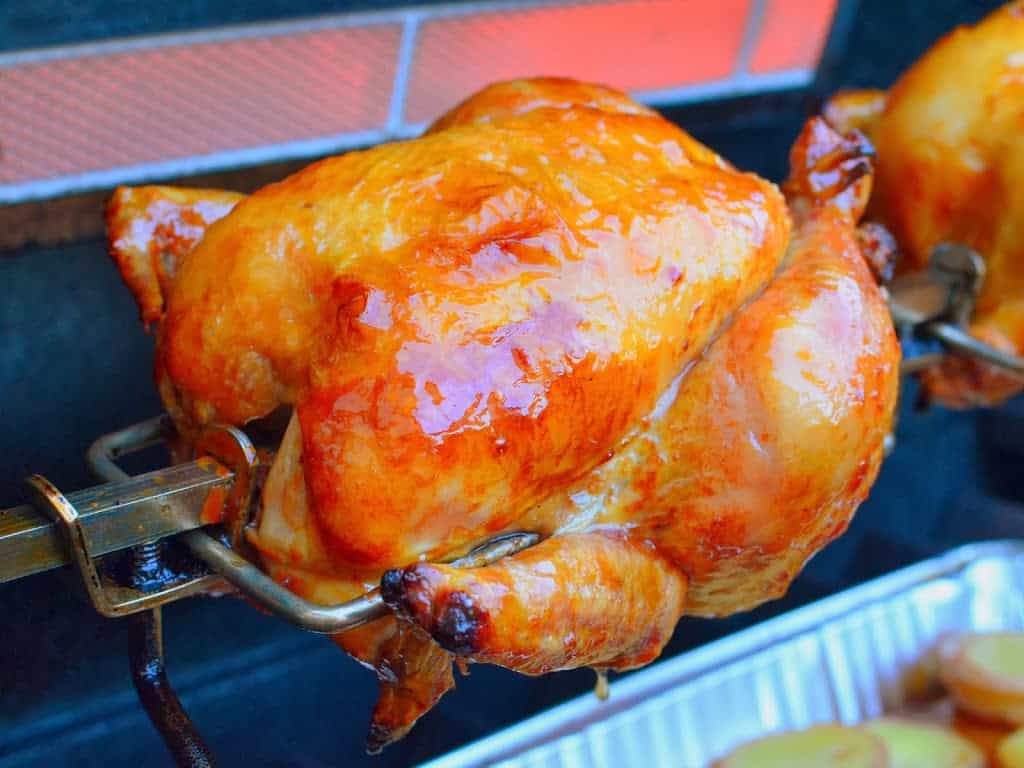
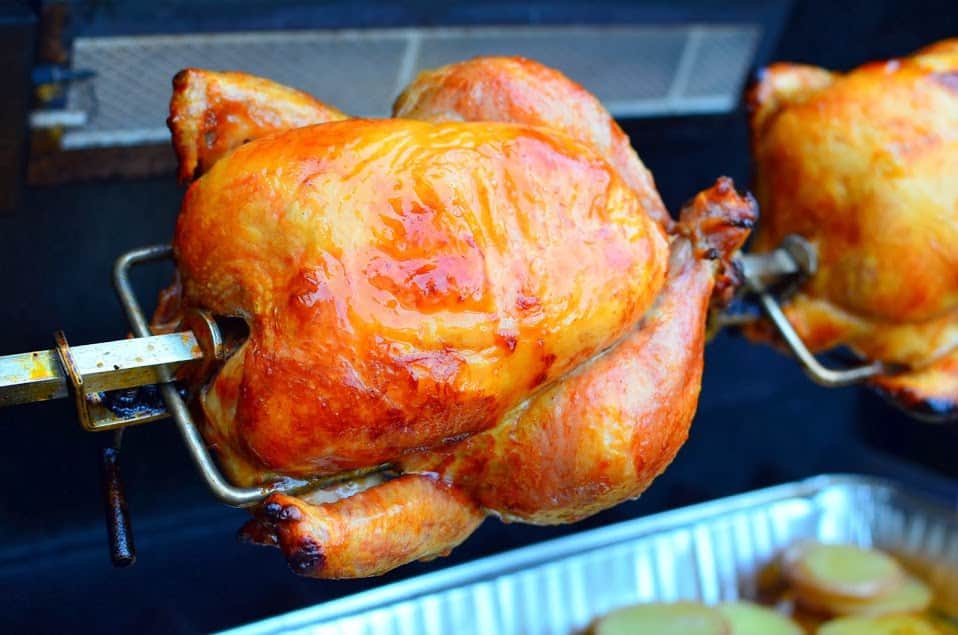
Rotisserie grilled chicken is the ultimate roast chicken. The high heat of the grill browns the skin. The constant spinning bastes the chicken in its own juices. And the trussed bird pushes the knobs of the drumsticks away from the body, cooking the bird evenly - juicy breast meat and tender, well cooked legs.

I was working on this recipe for the Brothers of Bourbon website when my Knob Creek contact emailed me. "We have a new limited edition bourbon - Knob Creek Smoked Maple. Would you like to try it?"

Oh, Yes. Yes, I would. I was already planning a maple syrup and Knob Creek glaze for the chicken; the extra smoked maple flavor makes it the ideal match for this recipe.

So, without further ado, Here's how I make my perfect chicken.

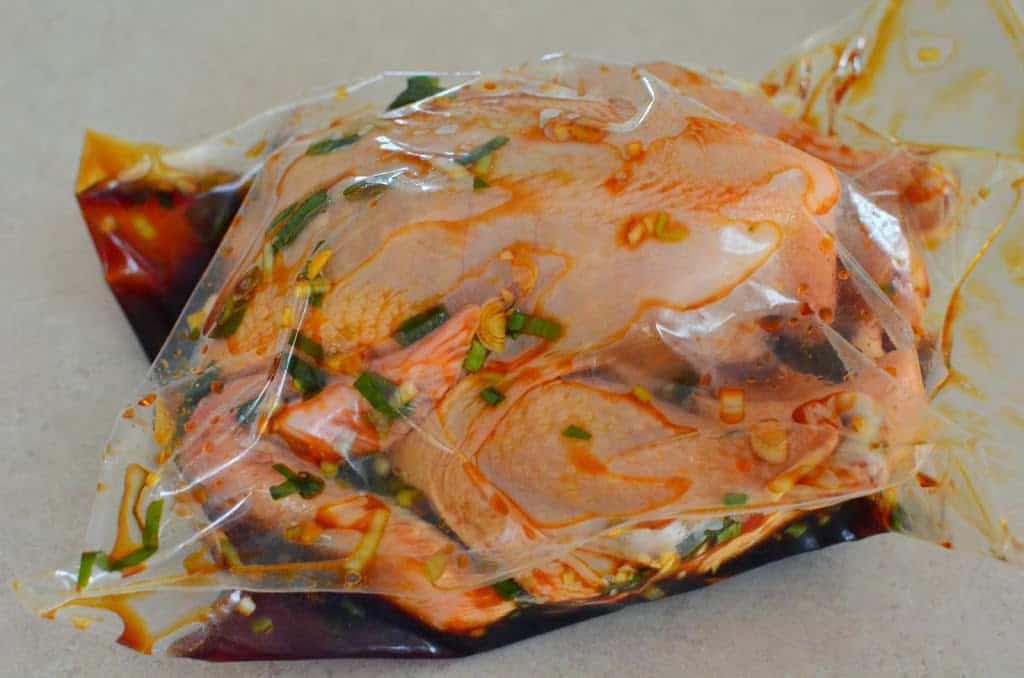
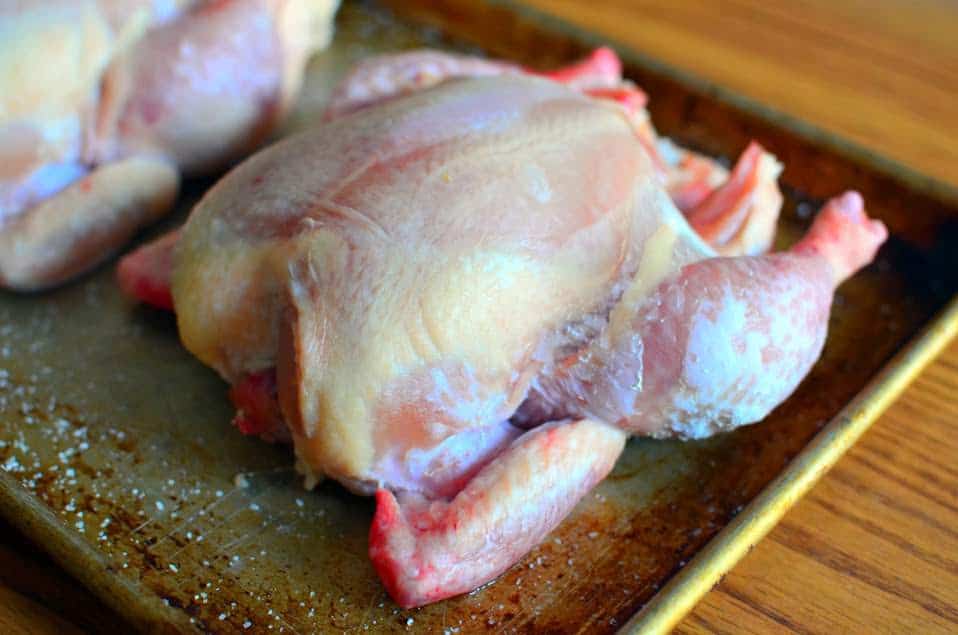
I start by dry brining my chicken. The chicken is salted the night before, and it rests in the refrigerator. The early salting brines the chicken in its own juices, seasoning the chicken all the way through. And yes, I do know that "dry brine" is an oxymoron. By definition, a brine is water and salt. But "brining" is such an established cooking term that I can't think of a better way to describe it. "Early salting" is technically correct, but sounds weird.

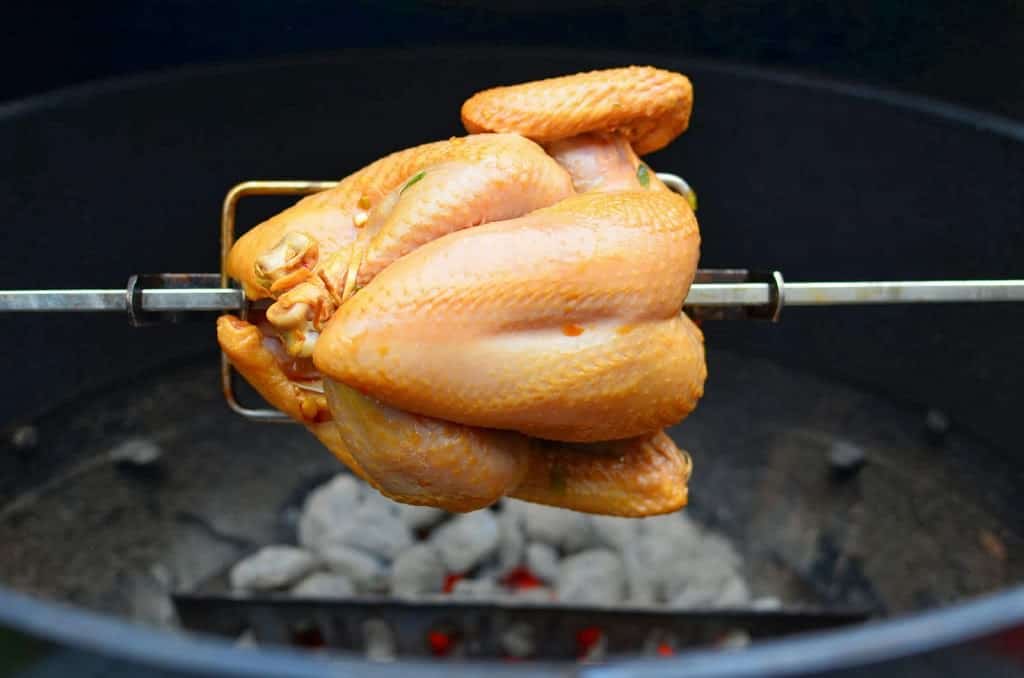
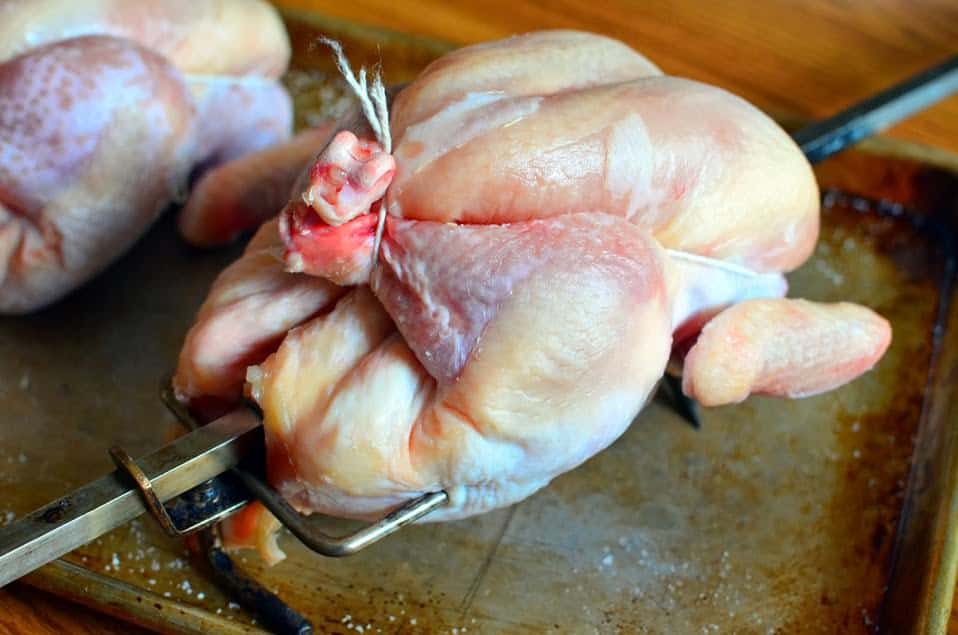
The next day, it's time to cook. I truss the chicken and secure it on the rotisserie spit with the spit forks, then start preheating the grill. When the grill is ready, I set it up for indirect heat, with a drip pan in the middle and the heat on the edges. (My grill's infrared rotisserie burner gets turned on now - it's a great accessory for rotisserie chicken.) The spit plugs into the rotisserie motor, the chicken starts spinning, and I close the lid.

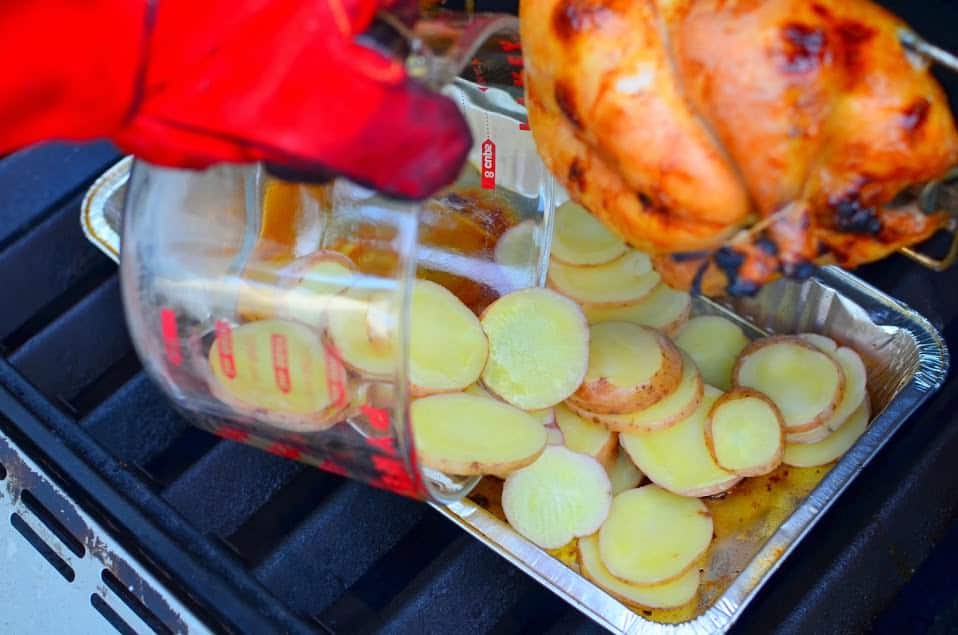
After a half an hour, halfway through the cooking time, I put par-cooked potatoes in the drip pan under the chicken. The potatoes soak up chicken drippings and brown in the heat of the grill.

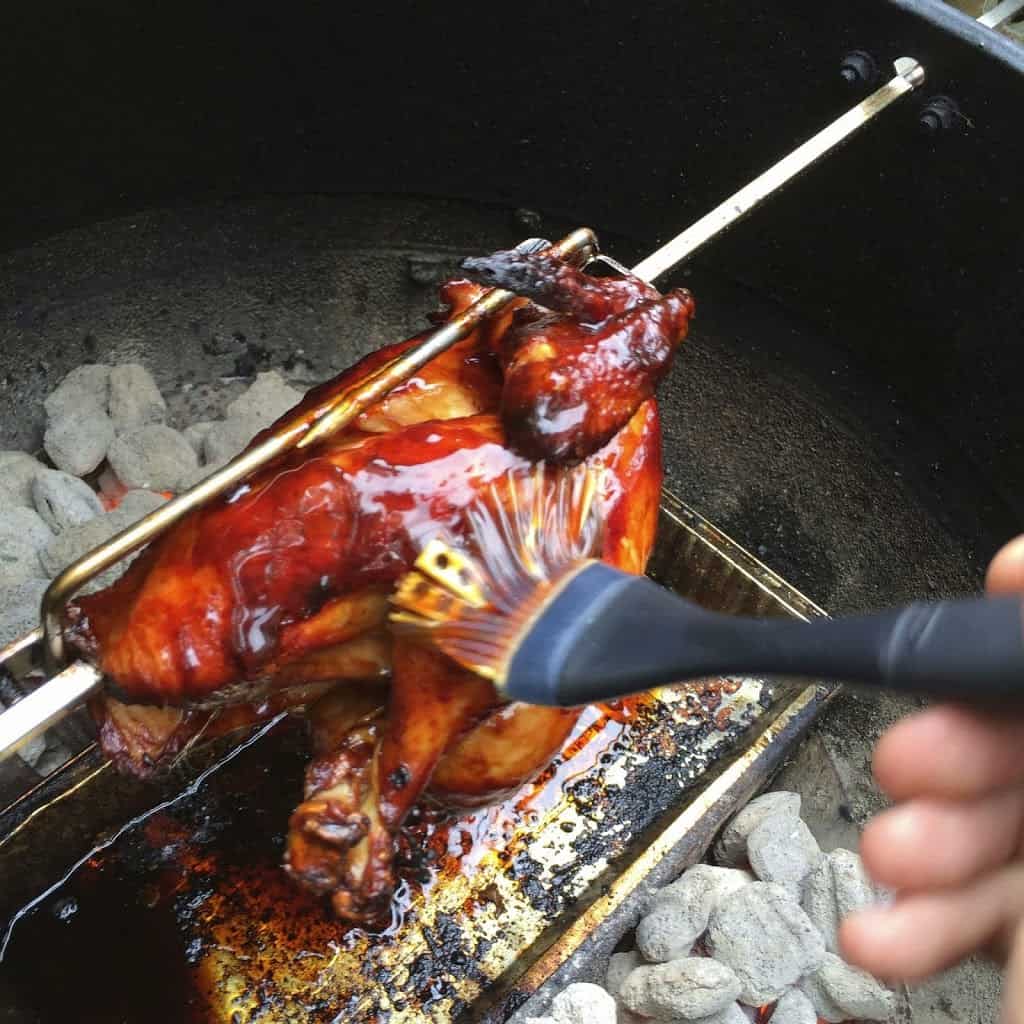
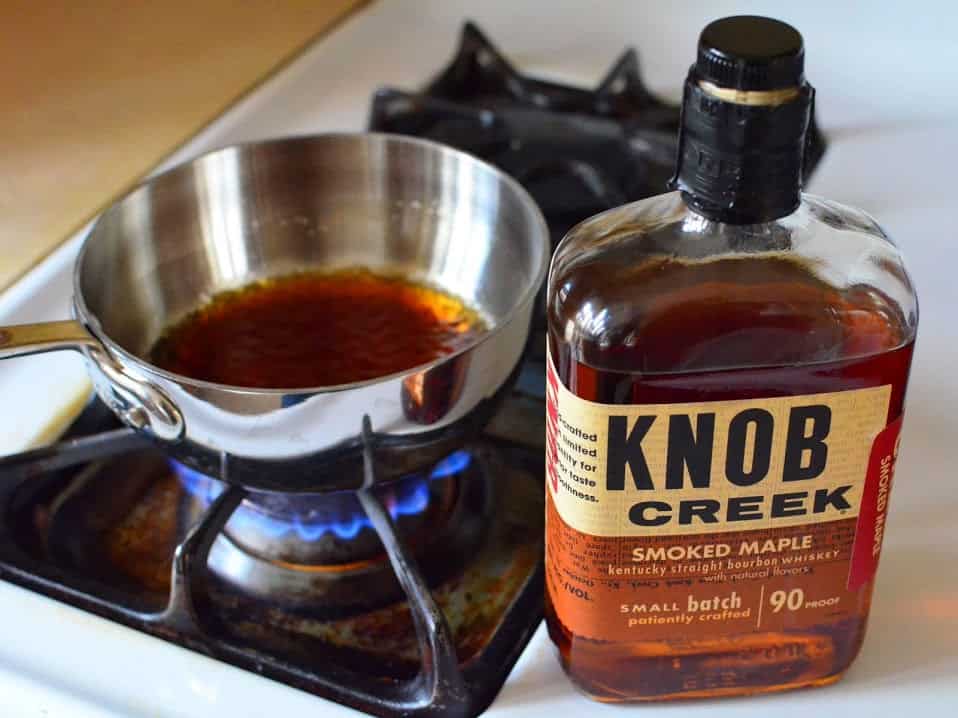
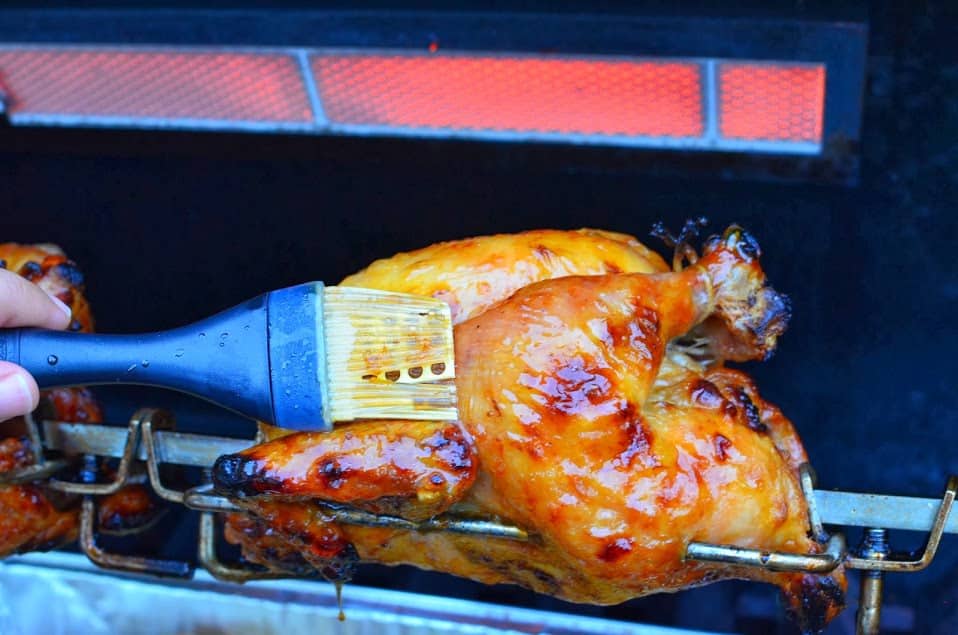
When the chicken is almost done, I brush it with a glaze of maple sugar, a pinch of chipotle powder, and Knob Creek Smoked Maple bourbon. Knob Creek builds on the sweet maple flavor, and adds an hint of complex, smoked oak.

Would you like to eat the ultimate roast chicken? Try this recipe. You won't be disappointed.

Recipe: Rotisserie Chicken with Knob Creek Maple Glaze and Drip Pan Potatoes

Equipment

  • Grill with Rotisserie (I use a monster Weber Summit)
  • Aluminum foil drip pan (9"x13", or whatever fits your grill. I use an enameled steel roasting pan or Weber Extra-Large aluminum foil drip pans.)
  • Butchers twine
  • Instant Read Thermometer
A little something for the cook...
Dry brined chicken - refrigerate overnight
Trussed, spit, and ready for the grill
Simmering the Knob Creek Maple Glaze
Chicken spinning on the grill
Adding potatoes to the drip pan
Brushing with maple glaze
Serve!
Serve!

Notes

  • This recipe doubles easily - two chickens cook as fast as one on the rotisserie. (If you look closely at the pictures, you can see that's exactly what I did - I had two chickens going at the same time.) Two pairs of spit forks makes this easy - secure each chicken to the spit with its own set of forks. If you only have one pair of spit forks, put one fork on the spit, and push one chicken onto that fork. Slide the other chicken on the spit, both chickens facing in the same direction, then use the second spit fork to push the chickens together as tight as possible.
  • I like the hint of smoke and heat that the chipotle powder adds, but it's optional if you really don't like heat in your recipe. Or, if you can't find chipotle powder, substitute cayenne powder - it will give you the heat, but not the smoky flavor.
  • The side burner on your grill is the perfect place to simmer the glaze - you can reheat it right before brushing it on the chicken.

What do you think?

Questions? Other ideas? Leave them in the comments section below.

Related Posts:

Rotisserie Peruvian Chicken (Pollo A La Brasa) with Drip Pan Purple Potatoes
Rotisserie Chicken with Fennel, Coriander, and Red Pepper Rub
Rotisserie Chicken with Chinese Oyster Sauce Glaze
Click here for my other rotisserie recipes.


Check out my cookbook, Rotisserie Grilling.

Everything you could ask about the rotisserie,
plus 50 (mostly) new recipes to get you cooking.

It's a Kindle e-book, so you can download it and start reading immediately!


*Enjoyed this post? Want to help out DadCooksDinner? Subscribe to DadCooksDinner using the RSS or Email options on the right, recommend DadCooksDinner to your friends, buy something from Amazon.com through the links on this site, or donate through my tip jar. Thank you.
Rotisserie Grilling is Now Available Through Kindle Matchbook

November 6, 2013 by Mike Vrobel Leave a Comment


A question I get from time to time:

Do you offer the Kindle version of your cookbook at a discount for people that already have the softcover version?

Until today, no. There was no way for me to do it - the only thing I could think of was buying an Amazon gift card (out of my own pocket), and sending it to them, and…well, that's too much work, and too expensive.
I make a little under $3 for each book sold; a discount that came out of my pocket would wipe out the profit on the book.

Amazon fixed this for me with their new Kindle MatchBook service.
Get it? Kindle? Matchbook? Someone at Amazon loves their puns. Kindle, Fire, Matchbook. Or they have a pyromaniac in the marketing department.

Kindle Matchbook lets authors offer discounted copies of the Kindle edition to anyone who bought the paper version through Amazon. So, now if you buy a paperback copy of Rotisserie Grilling from Amazon, you can get the Kindle edition for $1.99.

Even better: this offer is retroactive. If you ever bought a paperback copy of Rotisserie Grilling, the discounted Kindle edition is now available to you. Go to the Kindle Edition on Amazon and you should see see "Kindle Matchbook" pricing - "$1.99 because you've purchased the print edition".

And, as an aside - there are a lot of books signed up for MatchBook. You can check if any other books you've bought from Amazon are available through MatchBook on this page:

Kindle Matchbook Landing Page

Click on the "Find your Kindle MatchBook titles" button on that page, and it brings up a list of all the books you've ever bought on Amazon that are eligible for Kindle Matchbook.

If you already bought both a paperback copy and the Kindle edition…sorry, there's no way I can make the Kindle discount retroactive. All I can say is thank you for supporting me and my writing!

Why would you want the ebook if you already have the paperback? Well, other than the points I brought up in my Kindle Cookbooks vs Real Cookbooks post, I can think of two reasons:

  • Color pictures in the Kindle edition. I had to print the paperback in black and white to keep the price at $10 - it would cost roughly $25 if I printed it in color. But, the Kindle edition (and other e-book editions) don't have that problem, so if you want to see the pictures in glorious color, get the Kindle edition
  • Kindle edition is searchable - looking for that witty turn of phrase I put in there? Or that recipe that includes chipotle powder? Search is your new best friend. I'm constantly using text search in my Kindle cookbooks.

And, if you haven't already bought Rotisserie Grilling, now would be a great time…hint, hint…


Check out my cookbook, Rotisserie Grilling.Everything you could ask about the rotisserie,
plus 50 (mostly) new recipes to get you cooking.

It's available in paperback, or as a Kindle e-book, so you can download it and start reading immediately!


*Enjoyed this post? Want to help out DadCooksDinner? Subscribe to DadCooksDinner using the RSS or Email options on the right, recommend DadCooksDinner to your friends, buy something from Amazon.com through the links on this site, or donate through my tip jar. Thank you.

Vitamix Reconditioned Month

November 5, 2013 by Mike Vrobel 4 Comments

My reconditioned Vitamix 5200

Vitamix has announced a sale on reconditioned blenders! Now through December 2nd, you can get up to 30% $30 off any reconditioned blender you buy on their website:
Vitamix Certified Reconditioned Blenders

The blender I own, the "standard" model (a Vitamix 5200) is on sale for $299, (down from the $329 price I paid for a refurbished model, and $449 for a brand new one):
Vitamix Certified Reconditioned - Standard

If you want to buy their newer, quieter, and more powerful model (the Pro 300 series), it's on sale for $439:
Vitamix Certified Reconditioned - Next Generation

They have some other models on sale as well, but I'd recommend one of the two models above. Their cheapest least expensive blender only has two speeds; I prefer the variable speed knob, so I can slowly turn the speed up to 10. The other models come with programmable settings; I just crank the blender up instead of needing a dedicated "smoothie" button.

Why buy a Vitamix?

Read all about it (and my visit to their outlet store) in Road Trip: Vitamix Factory Outlet Store
(And, if you live in Northeastern Ohio, you can visit the outlet store and get these same sale prices.)

FCC note:

I'm a Vitamix affiliate. If you use affiliate code 06-007986, I'll get a commission for sending you their way, and you'll get free shipping. (If you use any of the links on this page, you should automatically get the affiliate code, and the free shipping. Look for them on the checkout page.) Thank you for your support!

Pressure Cooker Pumpkin Chili

October 31, 2013 by Mike Vrobel 12 Comments

Pressure Cooker Pumpkin Chili
Pumpkin chili is the most Halloween recipe ever. Chili at Halloween is a tradition in my house...to try to balance out all the sugar the kids are gobbling down.
My annual ChiliFest is coming at work, and I need a chili for a friend who turned militant vegan after reading Forks over Knives. I usually make a vegetarian multi-bean chili, but I wanted to try something new. I saw a recipe for Pumpkin and Black Bean Chili in the newsletter for my local farmers market, was intrigued, did some Googling, and found yet another Internet sensation that I completely missed. 1I mean, pumpkin chili is everywhere - how did I miss it? I feel so uncool.
The easy way to make pumpkin chili is with a can of pumpkin puree (see the Notes section). I had a pie pumpkin from my CSA, so I did a lot of peeling, scraping, and chopping. 2A *lot* of scraping and peeling - see the notes section about substituting butternut squash, especially if your local grocery store carries fresh, pre-peeled, and pre-cut squash.
Once the pumpkin was ready, I made my own pumpkin puree using Modernist Cuisine's pressure roasting technique. That's where they combine the high boiling point you get under pressure with the fact that food browns at lower temperatures if it's a little alkaline. Sprinkle the pumpkin with some baking soda and it will brown as it cooks in the pressure cooker. Science!
After that, the recipe is straightforward - stir everything into the pot, pressure cook for five minutes to bring it together, taste for seasoning, and serve.

Recipe: Pressure Cooker Pumpkin Chili

Inspired by: Larkin Rogers, Pumpkin and Black Bean Chili
and Modernist Cuisine at Home's pressure browning technique

Seeding the pumpkin
Seeding the pumpkin
Pumpkin and spices, ready to pressure cook
Stirring in the beans and tomatoes

DSC_0614

What do you think?

Questions? Other ideas? Leave them in the comments section below.

Related Posts:

For a similar recipe with sweet potatoes, try my Instant Pot Sweet Potato Chili.
Pressure Cooker Pork Chili with Beans
Pressure Cooker Turkey Chili with Chorizo and Pinto Beans
Pressure Cooker White Chicken Chili
Click here for my other pressure cooker recipes

*Enjoyed this post? Want to help out DadCooksDinner? Subscribe to DadCooksDinner using the RSS or Email options on the right, recommend DadCooksDinner to your friends, buy something from Amazon.com through the links on this site, or donate through my tip jar. Thank you.
What Do I Do With: The Winter Squash Issue

October 29, 2013 by Mike Vrobel 14 Comments

Fall has arrived - I picked up my last CSA box of the season. All the produce from late summer, the tomatoes, corn, and peppers are gone. We're left with potatoes, parsnips, carrots, and winter squash.

Every year, I accumulate a few winter squash. An acorn squash from the CSA, a butternut squash from the farmers market, a pie pumpkin from the grocery store. And then…they sit. And sit. And sit some more.

How do they last so long? They've been cured for a couple of weeks before they get to the store, or the market, which dries them out and hardens the skin, preparing them for long term storage on my kitchen counter. They're good for a few months if they're bruise free and kept dry.

Months pass. Why are they still on my counter? I feel guilty every time I see them. But…cleaning squash is a hassle. That hard skin, protecting them from rot, is also a lot of work to cut. Scraping out the seeds is messy, and each squash doesn't yield much meat. I have good intentions, but when push comes to shove, and dinner needs to get on the table, I reach for something easier to prepare.

I'll use the squash tomorrow, I promise.

Denial is not just a river in Egypt. This post is my cry for help.

What do you do with winter squash?

How do you prep them? How do you cook them? What type do you prefer - Butternut, Acorn, or some other squash? (Delicata? Kabocha? Red Kuri? I love squash names.)

I'll start. Here are the two lonely winter squash recipes on DadCooksDinner:

  • Pumpkin and Squash Soup
  • Pressure Roasted Butternut Squash

OK, as written, the second recipe uses sweet potatoes. But it's based on the Modernist Cuisine technique for butternut squash. That counts, doesn't it? (No?)

Like I said. I'm in Denial…

What do you think?

Squash recipes? Leave them in the comments section below. (Please!)

Related Posts:

What do I do with: The Bok Choy issue
What do I do with: The Kohlrabi issue
What do I do with: The Asparagus Issue

*Enjoyed this post? Want to help out DadCooksDinner? Subscribe to DadCooksDinner using the RSS or Email options on the right, recommend DadCooksDinner to your friends, buy something from Amazon.com through the links on this site, or donate through my tip jar. Thank you.
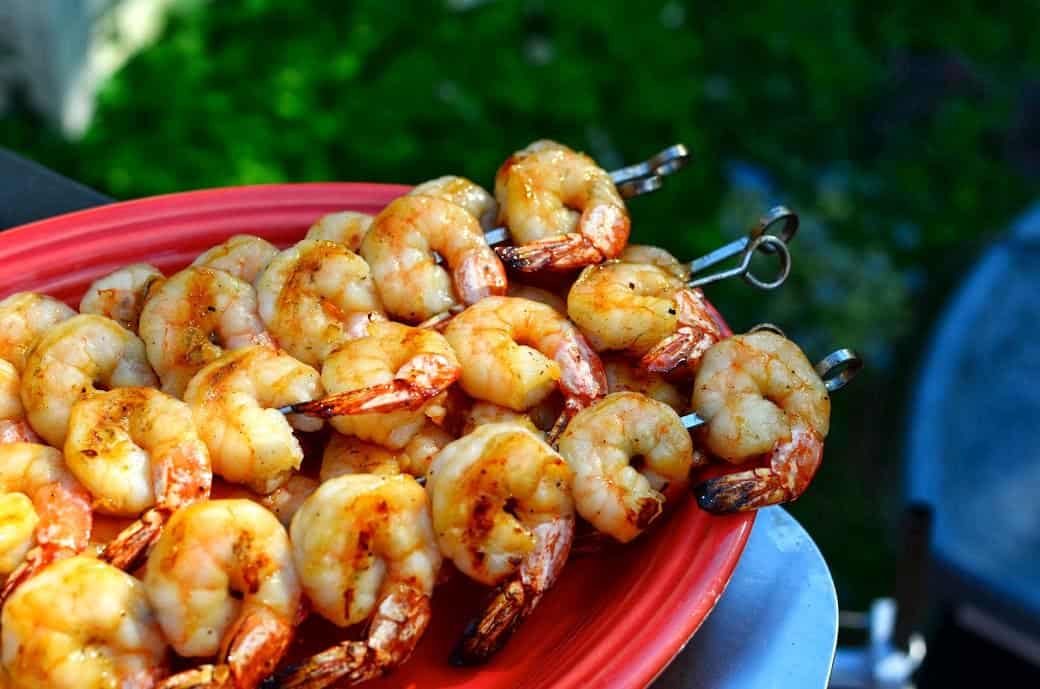
Grilled Peel and Eat Shrimp With Smoked Paprika Spice Paste

October 24, 2013 by Mike Vrobel 4 Comments

Grilled Peel and Eat Shrimp With Smoked Paprika Spice Paste

Shrimp are quick and easy to cook, perfect for a weeknight dinner…except for the peeling.

Scene: The Infomercial alternate universe, where even simple tasks are impossible. Overhead shot in black and white - DadCooksDinner wrestling with a shrimp in its shell. The shrimp appears to be winning.

Two pounds of 26-30 count shrimp on a weeknight? Ugh. Dinner will be late, everyone.

Of course, there's a simple way around this - make everyone peel their own shrimp at the dinner table. Years ago, Cooks Illustrated explained the beauty of peel and eat shrimp. As people peel their shrimp, they get the spices all over their fingers, and then onto the peeled shrimp as they pull them out of the shell. Genius!

This is a simple weeknight recipe - but a large grill pan is a requirement. You don't want to lose any of these little guys through the grill grate. If you don't have a grill pan, then it's time to start peeling and skewering. I use this one from Weber, and really liked this one from Lodge before the cast iron started rusting.

The other great thing about this recipe? I can thaw a bag of frozen shrimp in ten minutes, so it doesn't require any planning ahead. Pour the frozen shrimp in a bowl, set it in your sink, and start a trickle of cold water running over the shrimp. Every couple of minutes, swish the water around in the bowl, and break apart any shrimps that are frozen together. As soon as the shrimp are thawed, drain them, add the and start tossing with the spice paste.

Recipe: Grilled Peel and Eat Shrimp With Smoked Paprika Spice Paste

Cooking time: 10 minutes

Equipment

  • Large grill pan - at least 11" by 15" (I use this one from Weber)

Ingredients:

  • 2 pounds "extra large" (16-20 count) shell-on shrimp, shell split down the back and vein removed (aka "Easy Peel"), thawed

Spice paste

  • ¼ cup paprika (preferably Spanish smoked paprika)
  • 2 tablespoons brown sugar
  • 1 tablespoon kosher salt
  • 1 teaspoon ground coriander
  • 1 teaspoon garlic powder
  • 1 teaspoon fresh ground black pepper
  • ⅓ cup vegetable oil

Directions

1. Toss the shrimp in the spice paste

Stir the spice paste ingredients in a medium bowl. Add the shrimp and toss until the shrimp are evenly coated with spice paste. Let the shrimp rest while the grill preheats.

2. Preheat the grill for direct medium heat

Set the grill up for cooking with direct medium heat. I preheat the grill for 15 minutes with all the burners on high, brush the grill grate clean, then turn the burners down to medium.

3. Grill the shrimp

Put the grill pan on the grill grate over direct medium heat. Spread the shrimp in a single layer on the grill pan. Cook the shrimp until the shells have turned pink and are blackened in spots on the bottom, about 5 minutes. Flip the shrimp and grill on the other side until the shrimp are no longer pink in the middle, about 5 more minutes.

4. Serve

Remove the shrimp to a platter, let them cool for five minutes, then serve.

Done!

Notes

  • I buy "easy peel" shrimp from the grocery store. They come frozen, with the shell already split down the back, and the shrimp already de-veined. Hey, like I said, the less work on a weeknight, the better.
  • If you can't find extra large shrimp, this recipe works with 21-25 or 26-30 count shrimp as well. They take a few minutes less per side to cook - say, 4 minutes a side for 21-25 count, and 3 minutes a side for 26-30 count.

What do you think?

Questions? Other ideas? Leave them in the comments section below.

Related Posts:

Grilled Shrimp and Pineapple Skewers
Grilled Shrimp Skewers with Knob Creek Pineapple Glaze
Pan Grilled Bratwurst and Sauerkraut

*Enjoyed this post? Want to help out DadCooksDinner? Subscribe to DadCooksDinner using the RSS or Email options on the right, recommend DadCooksDinner to your friends, buy something from Amazon.com through the links on this site, or donate through my tip jar. Thank you.
Road Trip: Le Creuset Outlet Store

October 22, 2013 by Mike Vrobel 7 Comments

Never trust a pot you can lift.
- Tom Johnson

Back in the late 90's, when I was first starting out as a home cook, I stumbled across a Le Creuset outlet store in St. Augustine, Florida. I bought a ton of cookware. OK, maybe not an actual ton, but I'm sure it felt that way to the UPS guy when the boxes arrived at my house. Now, I got crazy, and bought some things I shouldn't have - enameled cast iron Windsor pot, anyone? - But there were a couple of pieces I really loved. Like Big Blue, my 7 Quart round dutch oven, and the smaller 3.5 quart red oven that comes out every time I make no knead bread.

For a while, I've wanted to pick up some more enameled cast iron, especially some of the larger pots. That 7 quart dutch oven is a little small when I'm making a big pot of chili. But the prices for large pieces? Yowch. I love Le Creuset, but I couldn't bring myself to spend upwards of $379 for a single pot.

Then I found out there's a Le Creuset Outlet Store in Grove City, Pennsylvania, only an hour and a half drive from my house.

Road trip!

Discounts

I got there first thing in the morning, and spent a pleasant hour chatting with Mark, the friendly store manager. The outlet stocks two types of merchandise - first quality, which sell for 5% to 10% less than list price, and second quality, with minor defects, that are 15% off list price. For example, my $379 9.5 quart oval pot was available as a second for $322.

Sales on top of the discounts

What makes the trip to the outlet store worthwhile are the sales they offer on top of the discounted, outlet store prices.

First, certain colors were on clearance, for 35% to 40% off the listed price; when I was there, they had a discount on Aubergine (deep purple) and Coral.

Next is Le Creuset's "create your own set" sale, which I think is always available. The sale price is based on the number of pieces you buy. The deal started at 20% off if you buy five pieces, and built up to 30% off if you bought 15 pieces. (This is a better discount than it sounds, because they count lids as pieces. Two pots with lids, plus one other item, and you're already at 20% off.)

Finally, they had a "Buy More, Save More" sale going on. Spend $125, get 20% off; spend $200, get 25% off; spend $300, get 35% off. So, my $379 pot, that listed for $322, got an additional 35% off and cost me $209. I don't think this sale is always available - I think they only run it during certain months.

Buy More, Save More was such a deal that I…well, I kind of went berserk. I walked out with a 9.5 quart oval french oven in blue, a 6.75 quart wide french oven in purple, and a 5 quart braiser in yellow. And when I say "walked out", I mean "staggered out under the weight of" - that's a lot of cast iron.

Other things I learned

Signature vs Traditional

Le Creuset has a new style of enameled cast iron pots. The Signature pots have larger, easier to grab side handles, and the knob is oven safe to 500°F. The knobs on Traditional Le Creuset are only safe to 375°F. Now, there weren't many Signature pots in the store; they have a full line of Traditional, and only a handful of the Signature pots. But I was able to get my 9.5 quart oval and 6.75 quart wide in the Signature style.

Order over the phone

Mark the manager told me they're happy to take orders over the phone and ship them to you. (This is a big deal for me - the drive is long enough that I won't make the trip without a very good reason.)

Sign up for their mailing list

The outlet store has different sales throughout the year, and they send out postcards about them to their mailing list. Mark mentioned a free shipping sale, if you want to order over the phone, and said they have a very good Black Friday sale on the day after Thanksgiving.

Le Creuset tableware is gorgeous

Now I'm lusting after a set of Le Creuset plates and platters. I was already over my budget from all the cast iron I bought, so I had to restrain myself. I hate being responsible(ish). I'll have to make another trip once I've saved up some money. (Or follow my own advice and call them…)

Le Creuset Outlet Store #48
Grove City Premium Outlets
1911 Leesburg-Grove City Rd., Space #835
Grove City, PA 16127
Phone: 724.748.4455
Web: lecreuset.com

View Larger Map

What do you think?

Questions? Other ideas? Leave them in the comments section below.

*Enjoyed this post? Want to help out DadCooksDinner? Subscribe to DadCooksDinner using the RSS or Email options on the right, recommend DadCooksDinner to your friends, buy something from Amazon.com through the links on this site, or donate through my tip jar. Thank you.
Sous Vide Grilled Sirloin with Tex-Mex Rub (from the freezer)

October 17, 2013 by Mike Vrobel 4 Comments

Molecular Gastronomy for a time pressed home cook? Absolutely.

When I did my sous vide testing earlier in the year, one of the questions in the back of my head was "when will I have the time to use this?" The meat was perfect, but the one hour cooking time? Most of my cooking is done on weeknights, trying to get dinner on the table while chaos erupts around me…ahem, sorry. I meant to say while my angelic kids sit quietly at the table doing their homework.

How could I work in the hour long sous vide process? It turns out the answer is in the vacuum sealing - just freeze it. Sous vide cooking is now in my weeknight rotation, because I can do all the work ahead of time. I buy steaks and chops in bulk, season them, vacuum seal them, and put them in the freezer. Then…they wait.

Later that week, I need a quick dinner. As soon as I walk through the door I pull a bag out of the freezer and drop it in the sous vide. Then I go about my business; an hour and a half later, the steaks are perfectly cooked - a quick sear in a pan, a toss of a salad, and dinner's ready. I have to do it the moment I get home, or dinner will be late, but it takes two minutes, and then I can go relax. Or mediate a dispute between -the Hatfields and McCoys- my kids. Or ignore the civil war in the TV room and go relax - whatever works.
Frozen steaks or chops need an extra half hour to cook through - one and a half hours total cooking time is good - but they can't overcook; that's the beauty of sous vide. If dinner gets delayed, they'll be fine - sitting and waiting for me to need them.

Here's a specific example, using a large sirloin steak from Brunty Farms. It came frozen and vacuum sealed. But it wasn't ready for a weeknight dinner. I cut the bag open, seasoned it with a simple Tex-Mex rub, and sealed it in a new bag. A few days later it was taco night - I pulled the bag out of the freezer, and a half an hour later I had fajitas ready. (Just add tortillas, salsa, sour cream, olives, shredded lettuce, and pickled jalapeños.)

Recipe: Sous Vide Grilled Sirloin with Tex-Mex Rub (from the freezer)


Adapted From: SousVide Supreme, Meal Planning Tips: How to Cook Sous Vide from Frozen

Cooking time: 94 minutes

Equipment

  • Sous Vide water bath (I used a SousVide Supreme Demi, but you can improvise one with a beer cooler)
  • Vacuum sealer
  • Grill (I use a Weber Summit. Here is the current version of my grill.)

Ingredients

  • 1 inch thick (1 ½ pound) sirloin steak
  • 1 teaspoon kosher salt
  • ½ teaspoon ground ancho chili pepper
  • ½ teaspoon fresh ground black pepper
  • ½ teaspoon granulated garlic (or garlic powder)

Directions

1. Season, vacuum seal, and freeze the steaks

Sprinkle the steak evenly with the salt and spices. Put the steak in a small (quart) vacuum pouch, and vacuum seal the bag. Put the bag in the freezer for later. (Up to a year, according to the USDA)

2. Sous Vide the steak

Remove the bag from the freezer, put it in the sous vide machine, and sous vide at 140°F/60°C for at least 1 ½ hours, up to 6 ½ hours. Use 130°F/54.5°C for medium-rare. The kids like their steak medium, so that's how I cooked this one.

3. Set the grill for direct high heat

Set the grill up for cooking on direct high heat, and clean the grill grate. For my gas grill, I preheat with all the burners on high for 15 minutes, then brush the grate clean with my grill brush.

4. Sear the steaks over direct high heat

Remove the steaks from the vacuum bag. Pat the steaks dry with paper towels, then put the steaks on the grill over direct high heat. Sear, flipping every minute or two, until the steaks are well browned on both sides, about 4 minutes total.

5. Rest and serve

Let the steak rest on a plate for ten minutes, then slice thin on the bias and serve with tortillas, salsa, sour cream, and other fajita toppings.

Notes

  • Of course, you don't have to freeze the vacuum sealed bag with the steak - it can go straight into the sous vide cooker if you're in a hurry, or it can be refrigerated for a couple of days if you know you'll be cooking it soon.
  • Why use the grill? Because it's the quickest way for me to warm up 20 flour tortillas - I spread them out on the grill over medium heat, about 1 minute a side, and wrap them in a clean kitchen towel to keep them warm. After the tortillas were ready, I upped the heat to high and seared the steak, and threw on some peppers and onions as an additional topping.
  • Don't feel like grilling? Get a pan ripping hot, add a teaspoon of oil, and sear the steak quickly, about 1 minute per side.
  • Don't have a sous vide cooker, but want to cook the sirloin on a weeknight? Skip the sous vide. Grill the steak over direct high heat for 8 minutes total cooking time to cook it to medium-rare, flipping and rotating the steak every two minutes. (10 minutes total cooking time for medium. Beyond that…don't tell me about it.)
  • Don't have a sous vide cooker, but want to try out sous vide cooking? You can sous vide in a beer cooler full of hot water.

What do you think?

Questions? Other ideas? Leave them in the comments section below.

Related Posts:

Sous Vide New York Strip Steaks with Herbs
Sous Vide Grilled Chicken Breasts with Japanese Glaze and Dipping Sauce
Click here for my other Sous Vide recipes.

*Enjoyed this post? Want to help out DadCooksDinner? Subscribe to DadCooksDinner using the RSS or Email options on the right, recommend DadCooksDinner to your friends, buy something from Amazon.com through the links on this site, or donate through my tip jar. Thank you.
Things I Love: Dalton-Ruhlman Wooden Paddles

October 15, 2013 by Mike Vrobel Leave a Comment

A few years back, I wrote about how much I love flat edged wooden spoons. My long-time favorite, a cheap bamboo wok paddle, had finally cracked. I was looking for a new favorite spoon, and bought a bunch of different spoons to see if I could find a replacement for my trusted wok paddle.

I realized I had my new favorite as I was rooting through my utensil crock, pushing aside other wooden spoons, and hoping that Michael Ruhlman's flat edged wooden paddle wasn't in the dishwasher.
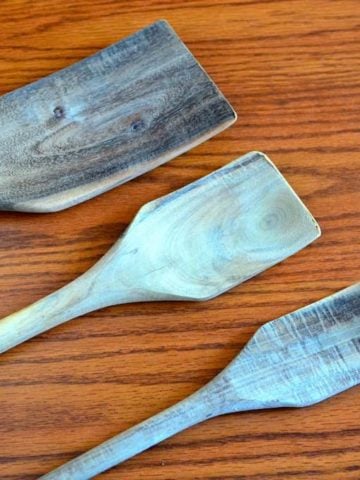
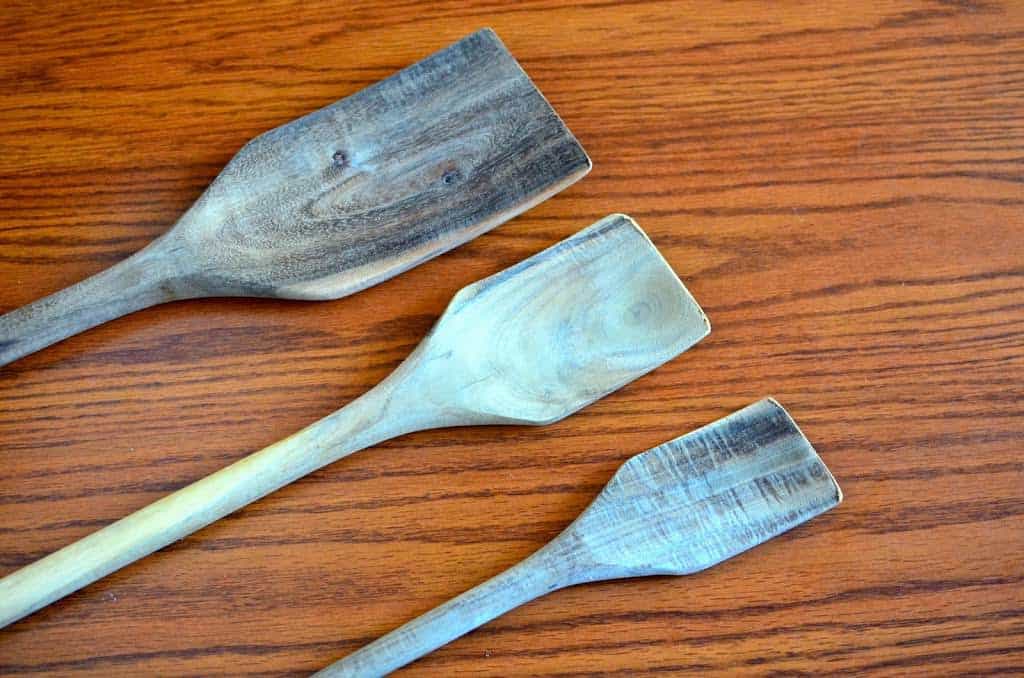
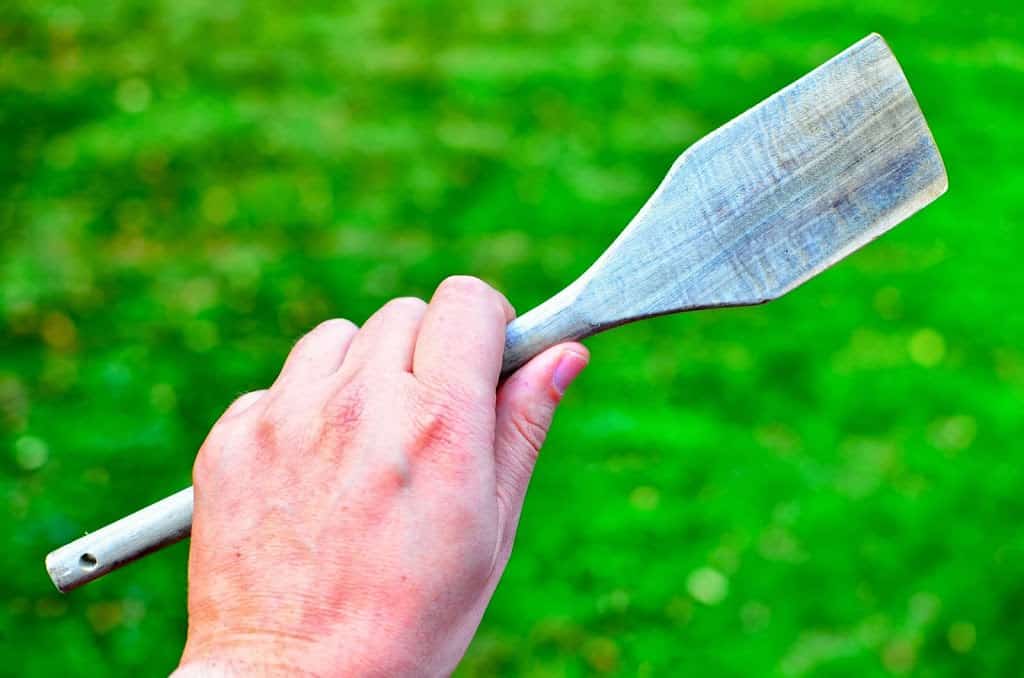
Ruhlman's paddles come in three sizes, and I have the set. My favorite is the spankette "spankie" flat edged wooden paddle - 12 inches long, with a 2 ¾ inch wide head, made of acacia wood. It fits into all my pots, and is the one I reach for the most. I only use the medium "spankette" size when my spankie is being washed, and I save the jumbo "spanker" for when I'm stirring a huge pot of chili. Or when I need to get the kids attention.

The winner - spankette.

Why a flat edged wooden spoon? If my love letter to flat edged spoons didn't convince you, here's Mr. Ruhlman's ranting about how useless round spoons are in the kitchen:
Stupid Kitchen Tools from michael ruhlman on Vimeo.

Dalton-Ruhlman flat edged paddles are only available through OpenSky, and they're kind of expensive; the prices work out to about $15 a spoon, plus shipping. I think they're worth it at twice the price.
Two spankies on OpenSky.com
Set of all three paddle sizes on OpenSky.com

(And, while you're there, check out Ruhlman's offset metal spoons. I have the perforated egg spoon, and I'm lusting after the others - they look so useful. But I can't bring myself to spend that kind of money on more spoons. Yet.)

FTC Disclosure

All my "Things I Love" posts are about products I use and purchased myself. I did not receive any form of compensation to write this. I do not get any compensation from OpenSky if you buy through the links (they don't have an affiliate program), but If you buy something through one of my Amazon links, I do get a small commission.

What do you think?

Questions? Other favorite wooden spoons? Indignant defenses of round edged spoons? Leave them in the comments section below.

*Enjoyed this post? Want to help out DadCooksDinner? Subscribe to DadCooksDinner using the RSS or Email options on the right, recommend DadCooksDinner to your friends, buy something from Amazon.com through the links on this site, or donate through my tip jar. Thank you.
Pressure Cooker Chickpeas with Toasted Parmesan Bread Crumb Crust

October 10, 2013 by Mike Vrobel 2 Comments

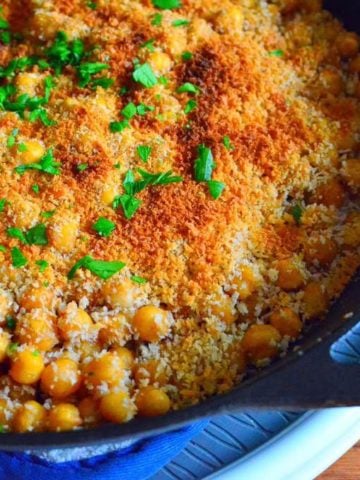
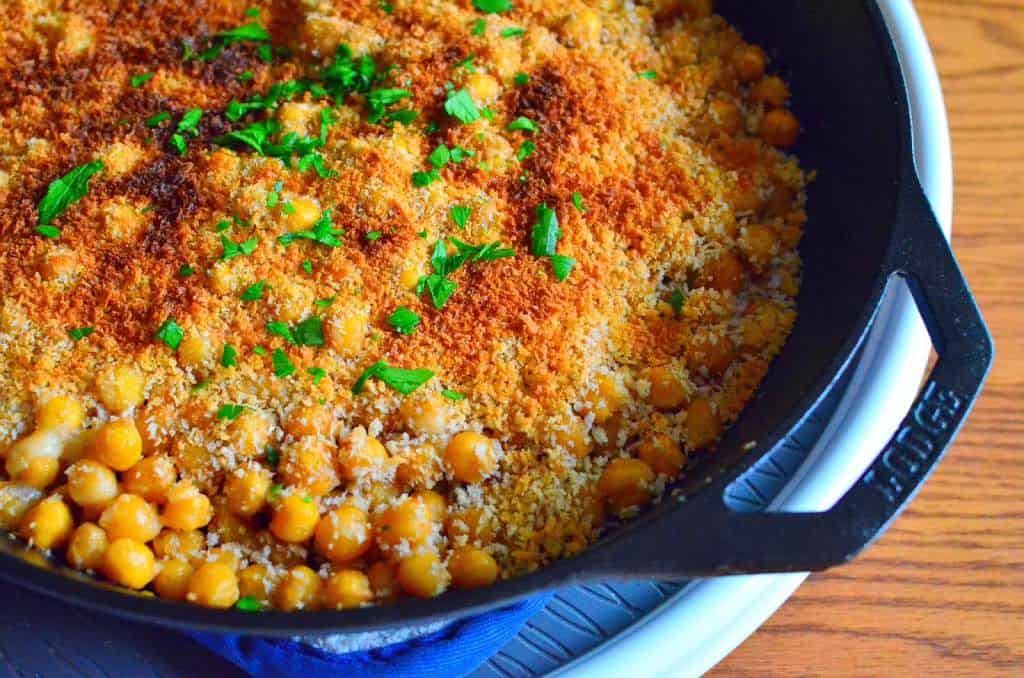
A frypan full of chickpeas, topped with a toasted bread crumb crust and a few parsley leaves

I'm a loyal subscriber to Canal House Cooking by Melissa Hamilton and Christopher Hirsheimer. It is one of my favorite…magazines? Quarterlies? Series of small cookbooks? I'm not sure what to call it, exactly; they publish three issues a year. Except when they don't; they took a sabbatical last year to finish their cookbook.
I'm not the most patient person - it seems like it's been over a year since I got an issue of Canal House. I'm starting to show signs of withdrawal.

Hamilton and Hirsheimer are back with Canal House Cooking Volume 8: Pronto!, and it was worth the wait. As usual, it is stuffed with simple, spectacular recipes (Why, hello, grilled butterflied chicken alla diavola. Where have you been all my life?).

A frypan full of chickpeas, topped with a toasted bread crumb crust and a few parsley leaves
Pressure Cooker Chickpeas with Toasted Parmesan Bread Crumb Crust
[feast_advanced_jump_to]

Today, I was inspired by the combination of two ingredients - chickpeas and breadcrumbs - in one of their pasta dishes. Chickpeas and breadcrumbs sounded like a great combination. (Maybe too good of a combination - I didn't bother reading the rest of the recipe and went straight for the bag of dried chickpeas in my pantry.)

Now, this recipe may seem like a lot of steps - pressure cook the chickpeas, sauté the chickpeas, broil the breadcrumb crust. It's not that bad, really - especially if you pressure cook the chickpeas ahead of time, like I suggest in the notes section. (See my pressure cooker chickpeas recipe here.)

I'm not a vegetarian, and I don't pretend to that I'll ever become one. But if I ever do, dishes like this are what will make it possible. The creamy chickpeas, salty Parmesan, and crunchy bread crumbs give me everything I get out of a good cut of meat.

🥫Ingredients

  • Dried Chickpeas
  • Baking soda
  • Onion
  • Bay Leaf
  • Olive oil
  • Lemon
  • Shredded parmesan
  • Panko bread crumbs
  • Parsley

See recipe card for quantities.

🥘 Substitutions

Chickpeas are also called Garbanzos in Spanish, or Ceci in Italian.

No dried chickpeas? Substitute 2 (15-ounce) cans of chickpeas, drained, and start with the sauté step.

You can replace the onion with a couple of unpeeled cloves of garlic, or skip it altogether.

You can also skip the bay leaf if you don't have any. Beans, water, and a little salt are enough for cooking the beans - but the onion and bay add a subtle extra flavor to the beans.

I like olive oil in this recipe - it adds some extra Mediterranean flavor to the dish - but a neutral vegetable oil will work, too.

Shredded pecorino Romano is a less expensive substitute for the shredded parmesan, with a similar (though slightly stronger) taste.

I like the extra crunch from Japanese-style Panko bread crumbs, but regular bread crumbs will work too.

🛠 Equipment

A 6-quart pressure cooker. (Or larger - this recipe was originally cooked in my 10-quart stovetop pressure cooker, but I switched to full time Instant Pot use years ago.)

Pressure cooker dried beans are one of the reasons I became a pressure cooker convert. Try them - you'll never go back to canned beans. (OK, maybe you will, for convenience - but see the Storage section for tips on make ahead freezer beans.)

I switch to a 12-inch frypan for the sauté step - the chickpeas crisp up quicker in a single layer- and it needs to be a broiler-safe pan to toast the bread crumbs.

📏Scaling

This recipe scales down easily - cut everything in half if you don't need as many beans, or have a 3-quart pressure cooker. Scaling up runs into space issues; if you have an 8-quart pressure cooker, or larger, you can double this recipe, but it's too much to fit in a 6-quart pressure cooker. (And you'll need a second frypan, too.)

🤨 Soaking chickpeas?

I get the "to soak, or not to soak?" question all the the time. I don't soak my chickpeas in this basic recipe. They don't need an overnight soak, and cook to tenderness with 45 minutes at high pressure.

That doesn't mean you can't soak the beans. They turn out fine, though the bean broth isn't quite as full bodied. Soaked beans cook much quicker, 20 minutes at high pressure. I use that when I'm cooking the beans with other ingredients, where the shorter cooking time keeps me from overcooking the whole dish just to get the beans tender.

Sorting Beans

Beans are an agricultural product, and stuff tends to creep in when they are processed. Beans should always be sorted and rinsed before using, to get rid of any twigs, stones, clumps of dirt, or broken beans.

To sort the beans, I pour them out on one side of a rimmed baking sheet (a half-sheet pan), to keep the beans from escaping. Then I slowly run my fingers through the pile of beans, pulling them towards me on the sheet. I watch the beans as they move, looking for anything that doesn't seem right. If I see something, I poke around in the beans until I find what caught my eye, and discard it. I repeat this a couple of times, until I'm satisfied everything is out of the beans.

Then I dump the beans into a fine mesh strainer and rinse them under cold running water, to wash off any dirt or dust still on the beans.

Now the beans are sorted, rinsed, and ready for soaking or cooking.

💡Tips and Tricks

  • Salt your bean water! "Salt toughens beans" is a myth. Salting before cooking helps season the beans all the way through as they cook.
  • If your beans are still tough when the cooking time is over, especially any "floaters" at the top of the pot, give the beans a stir, lock the lid, and pressure cook for another five minutes. Older beans take longer to cook, and if the beans have been sitting in the shelf at your store for a while, they may need extra time.

Inspired by: Canal House Cooking Volume 8: Pronto! by Hamilton and Hirsheimer

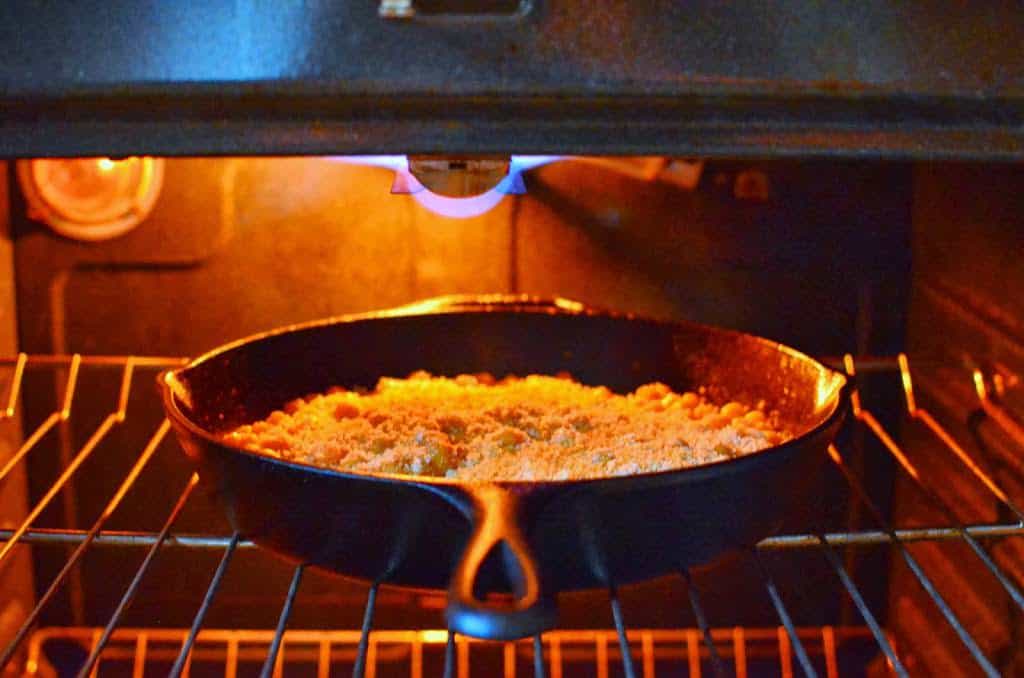
Toasting the bread crumbs

☃️ Storage

A 2-cup container of cooked chickpeas, with cooking liquid, replaces a 15-ounce can of beans from the grocery store. They'll last in the refrigerator for a few days, and freeze for up to 6 months. I always make extra beans, and freeze the leftovers for use in other recipes. Freezer beans are ready to use with about 5 minutes in the microwave, and are so much better than canned.

🤝 Related Posts

Pressure Cooker Hummus
Pressure Cooker Chickpeas
Sauteed Chickpeas

My complete list of pressure cooker recipes

*Enjoyed this post? Want to help out DadCooksDinner? Subscribe to DadCooksDinner using the RSS or Email options on the right, recommend DadCooksDinner to your friends, buy something from Amazon.com through the links on this site, or donate through my tip jar. Thank you.
Pork Chili with Beans For a Crowd

October 3, 2013 by Mike Vrobel 3 Comments

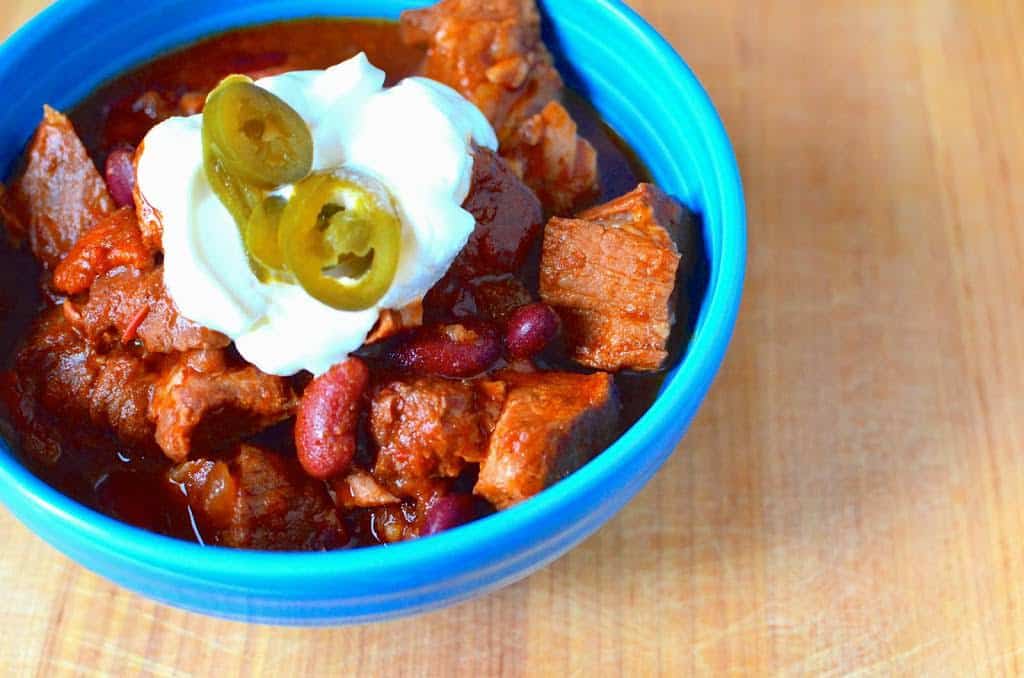
Pressure Cooker Pork Chili with Beans

This post is sponsored by the National Pork Board as part of the Tailgating with Pork and Kroger Program. Score big at your next tailgate party with Kroger - from tailgating to backyard BBQs, game day gatherings with friends and family can be simply delicious with juicy, tender and versatile pork - the MVP of championship-worthy spreads this fall season. (And, if you're looking to make this recipe, a little birdie told me Kroger will have a special on pork shoulder and blade roasts the week of October 6th...)


Chili is my favorite thing to serve for the big game. I can finish it ahead of time, leave it simmering on the stove, and everyone can serve themselves and LEAVE ME ALONE I’M WATCHING THE GAME!Ahem.

Sorry.

As I was saying, chili is the perfect meal for entertaining a crowd. It gets better after sitting for a while. Making it early, even the day before, is the right thing to do. Then all you need to do is reheat it, and set out bowls, spoons, and napkins. Put out a bunch of add-ins so people can customize their bowl of chili - I always add sour cream, diced onions, and pickled jalapeños. And you’re ready to watch the BALL! BALL! FUMBLE! YES! No. Darn. Overturned on replay review.

Where was I? Oh, yes. You can watch the game while your guests serve themselves.

This is a big pot of chili. Ten pounds of pork shoulder, eight cans of beans. You’ll need your biggest pot for this one. My eight quart dutch oven is too small; I use the pot from my 12 quart pressure cooker (as a regular pot - it’s too full to come up to pressure). If you don’t have that big of a pot, split it across two pots, or cut the recipe in half, depending on the size of the crowd you’re feeding. If you do have a big of a pot with a thin bottom (like a pasta pot, or a granite ware canning pot), it will work. But…brown the pork and sauté the onions in a large frypan; they will burn on a thin bottom pot. Transfer everything to the big pot when it’s time to start simmering.
Someday I’ll own a Le Creuset 13 quart enameled cast iron dutch oven, just to hold chili for a crowd. It costs $500, and I’m not sure I can lift it, even when it’s empty. But, oh, do I want one. Someday…

Recipe: Pork Chili with Beans For a Crowd

Cooking time: 3 ½ hours

Equipment

  • Large pot (12 quarts or larger)
  • Fry pan (if the large pot has a thin bottom)

Ingredients

  • 10 pounds boneless pork shoulder, cut into 1 ½ inch cubes
  • 1 ½ tablespoons kosher salt
  • 2 tablespoons vegetable oil
  • 2 large onions, diced
  • 1 teaspoon kosher salt
  • 6 cloves garlic, minced
  • 2 tablespoons pureed chipotle en adobo, or 4 diced jalapeno peppers
  • ½ cup chili powder
  • ¼ cup ground cumin
  • 2 tablespoons ground coriander
  • 2 tablespoons dried oregano
  • ¼ cup brown sugar
  • 1 (12 ounce) bottle of beer (preferably an amber ale, or substitute chicken broth or water)
  • 2 cups chicken broth (or water)
  • 2 tablespoons soy sauce
  • 2 (28 ounce) cans crushed tomatoes
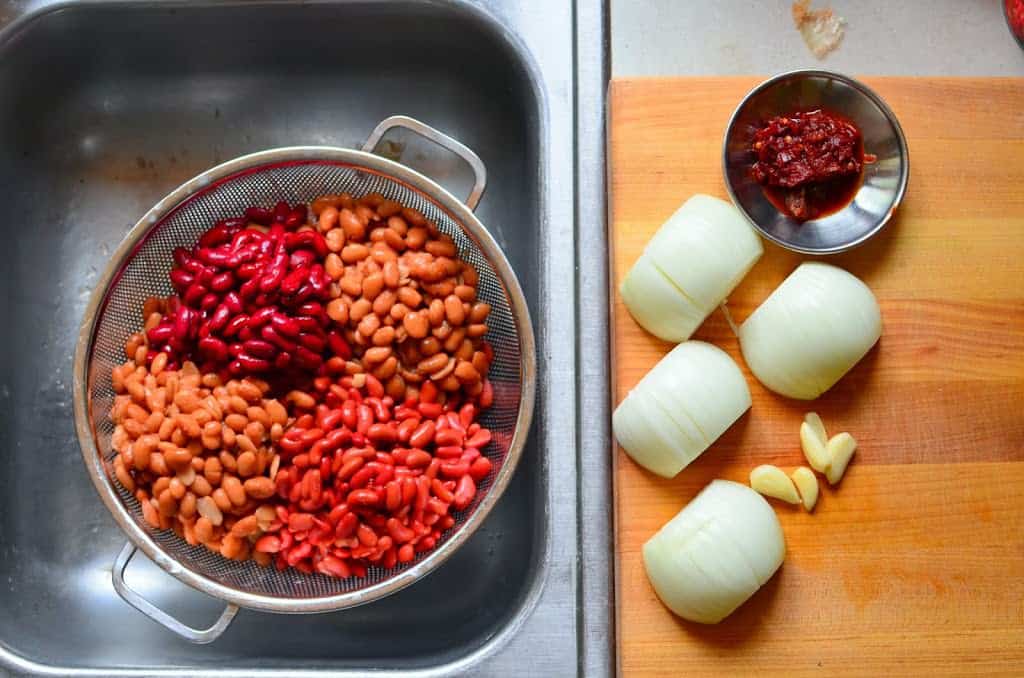
  • 4 (15 ounce) cans kidney beans, drained (or 1 pound dried kidney beans, cooked and drained)
  • 4 (15 ounce) cans pinto beans, drained (or 1 pound dried pinto beans, cooked and drained)
  • 1 tablespoon apple cider vinegar
  • salt and pepper to taste

Accompaniments

  • Diced onions
  • Sour cream
  • Shredded cheese
  • Minced cilantro
  • Hot sauce
  • Tortilla chips
  • Pickled jalapeños

Directions

1. Brown one batch of the pork

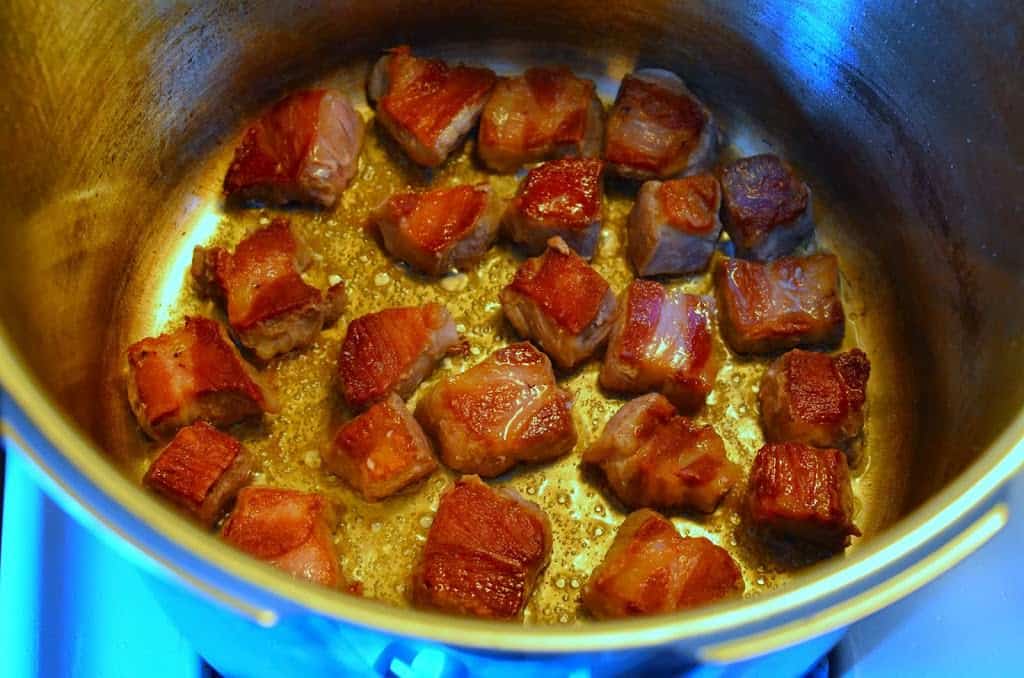
Put the pork in a large bowl, sprinkle the pork with 1 ½ tablespoons kosher salt, and toss to coat. Heat the 2 tablespoons of oil in pot (or a large frypan if the pot has a thin bottom) until the oil is shimmering. Brown one batch of the pork - just enough to cover the bottom of the pot without crowding. Brown the pork on two sides, about 4 minutes per side. Remove the browned pork with a slotted spoon, leaving as much fat behind as possible, and put it back in the bowl with the uncooked pork.

2. Saute the aromatics and toast the spices

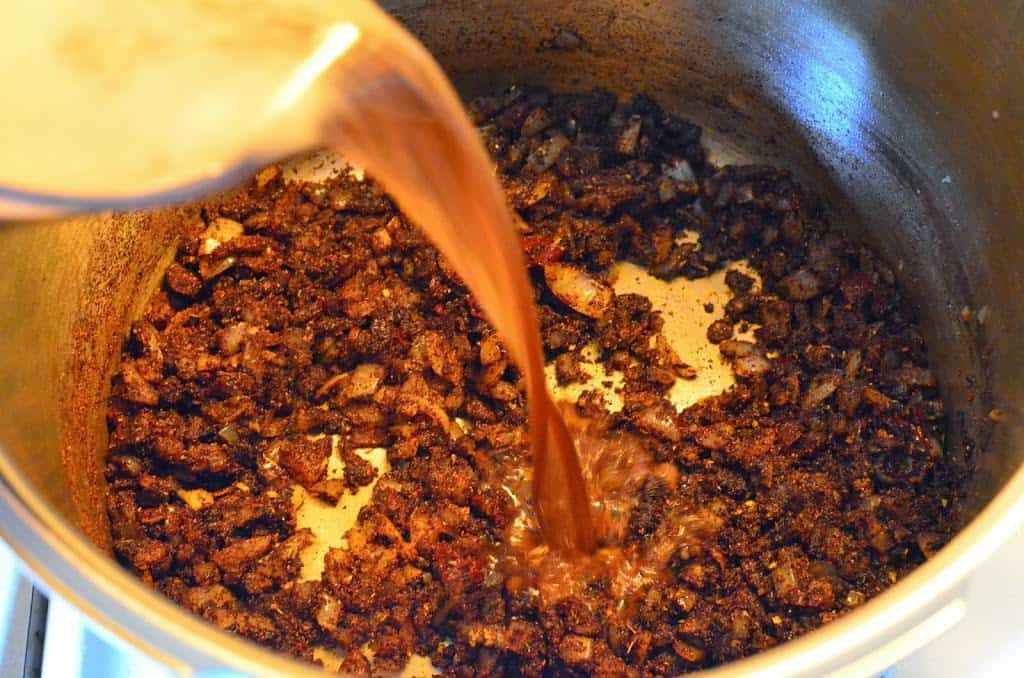
Reduce the heat to medium and add the onions and 1 teaspoon kosher salt to the pot or frypan. Saute the onions until softened, about 5 minutes, scraping occasionally to release any browned pork bits or onions stuck to the bottom of the pot. Add the garlic and chipotle en adobo, and saute for one minute. Make a hole in the middle of the aromatics, and add the chili powder, cumin, coriander, oregano and brown sugar. Cook for one minute, or until fragrant, then stir the spices into the onions. Add the beer to the onions and spices, bring to a simmer, and simmer for one minute, scraping the bottom of the pot to release any browned onions.

3. Cook the chili

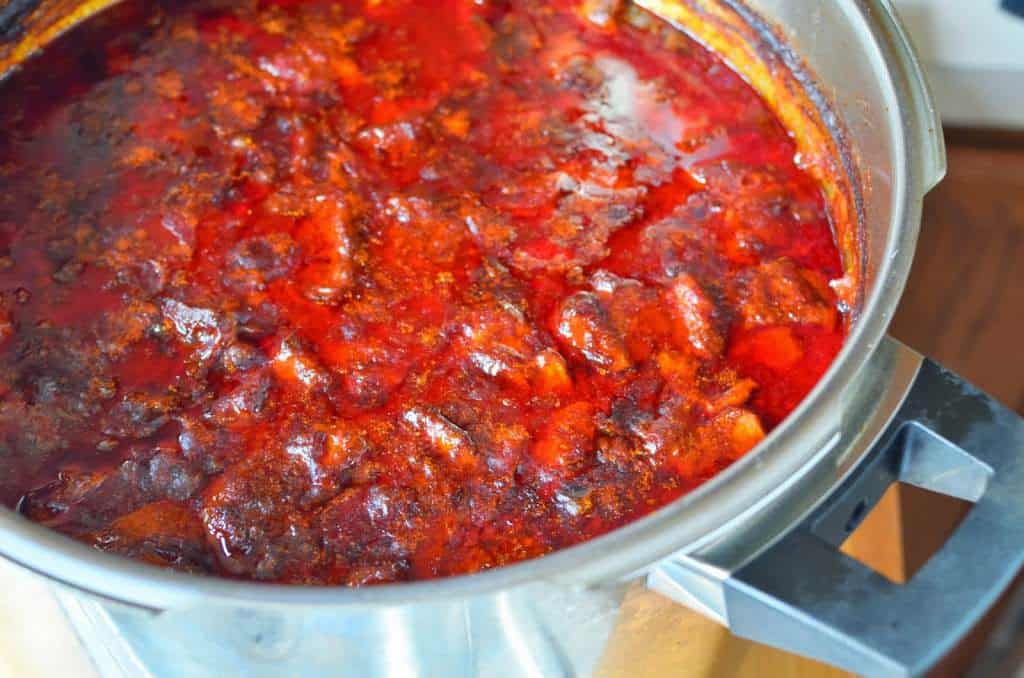
If you were browning in a frypan, scrape the onions, spices, and beer into the big pot. Add the pork (and any juices in the bowl) to the pot, then stir in the chicken stock, tomatoes, and beans. Increase the heat to high and bring the chili to a simmer. Put the lid on the pot. If the big pot will fit in your oven, set the oven to 325°F, move the pot into the oven, and bake with the lid on for 2 hours. Remove the lid, and bake for another hour, 3 hours total in the oven. (If the pot won’t fit in the oven, simmer on the stovetop: reduce the heat to low and simmer the chili for 3 hours with the lid slightly ajar, scraping the bottom of the pot with a flat edged wooden spoon occasionally to keep the chili from scorching.)

4. Season and serve

Remove the pot from the oven, Stir in the apple cider vinegar, then taste the chili and add more salt, pepper, and vinegar as necessary. Serve the chili straight up, or with diced onions, sour cream, shredded cheese, minced cilantro, hot sauce, tortilla chips, pickled jalapenos…whatever you like as toppings for your chili.

Notes

  • To Bean or not to Bean, that is the question. If you don't like beans in your chili, that's OK, leave them out. (And then you can probably fit this in an 8 quart pot - see the next item)
  • No big pot - if you don't have a huge pot, cut the recipe in half, and use a 6 quart or larger pot. If you have an 8 quart pot, you can make the recipe with all the pork, as long as you leave out some of the beans. Put everything except the beans in the pot in step 3, then add beans until the pot is almost full. Continue with the rest of the recipe.
  • Make ahead: chili is better the day after it was made, but with this huge pot, it's hard to cool down safely. I make it ahead of time in the fall or winter, when I can leave the pot out on the deck and let Mother Nature cool it off overnight with below 40 degree temperatures. I reheat it on the stove, covered, over medium heat, starting about an hour before game time. Once it starts simmering I lower the heat and let it barely simmer until game time.

What do you think?

Questions? Other ideas? Leave them in the comments section below.

Related Posts:

Texas Red Chili
Frito Pie with Buffalo Chili

*Enjoyed this post? Want to help out DadCooksDinner? Subscribe to DadCooksDinner using the RSS or Email options on the right, recommend DadCooksDinner to your friends, buy something from Amazon.com through the links on this site, or donate through my tip jar. Thank you.

Rotisserie Chicken with Chinese Oyster Sauce Glaze

September 26, 2013 by Mike Vrobel 7 Comments

Rotisserie Chicken with Chinese Oyster Sauce Glaze

Thinking about rotisserie chicken on a beautiful fall day…

I have a chicken from Brunty Farms, and I’m itching to spin it on the rotisserie - it’s a gorgeous out there. How should I cook it? Let’s ask the kids.

Kids, in unison: Chinese stir fry!

Um…no, I don’t feel like breaking the whole chicken down, skinning it, and cutting it into strips. I’m sticking with the rotisserie. Let’s see what I can do.

Soy sauce marinade? Sure, I can do that.

What about a sweet glaze? I’ll go with my secret weapon - hoisin sauce. Wait, darn it, I’m out of hoisin sauce. I need to make a trip to the Asian market. But, I do have a couple extra bottles of oyster sauce in the pantry. Hmm….

What do you think?

Questions? Other ideas? Leave them in the comments section below.

Related Posts:

Rotisserie Chicken with Teriyaki Sauce
My Rotisserie Recipe Index


My Cookbooks


*Enjoyed this post? Want to help out DadCooksDinner? Subscribe to DadCooksDinner using the RSS or Email options on the right, recommend DadCooksDinner to your friends, buy something from Amazon.com through the links on this site, or donate through my tip jar. Thank you.

Rotisserie How To: Using a Counterweight (And why I don't)

September 24, 2013 by Mike Vrobel 9 Comments

A question I get from time to time:

How do I use the counterweight that came with my rotisserie?

My answer? Skip the counterweight. You don’t need it.

Why? I’ll get to that in a minute. First, here is how to use the counterweight.

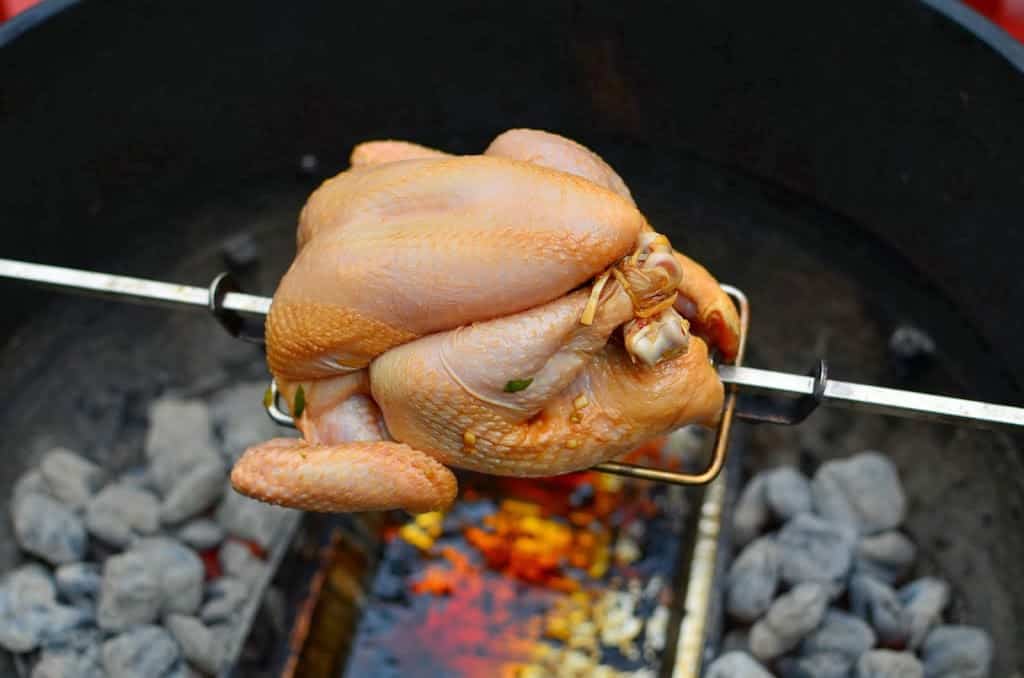
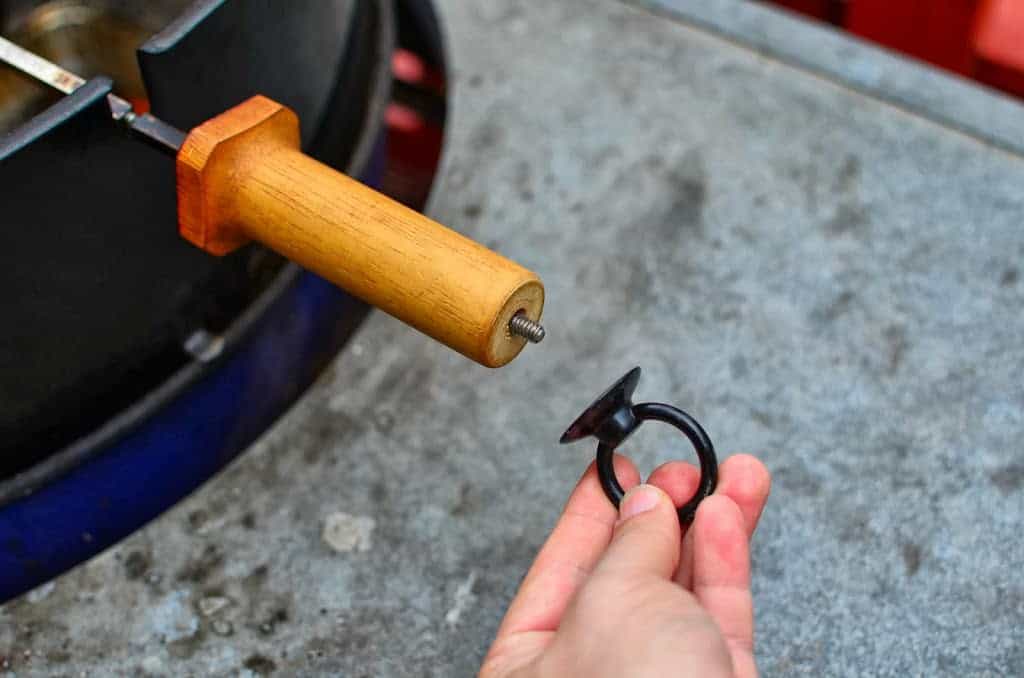
  1. Set the loaded rotisserie spit in the notches on the rotisserie, then let go. Gravity will take over, and after some rocking, the spit will settle with the heaviest part facing straight down.
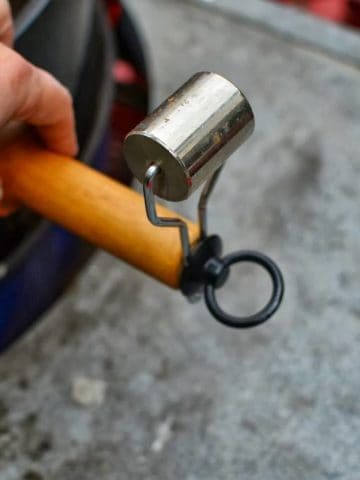
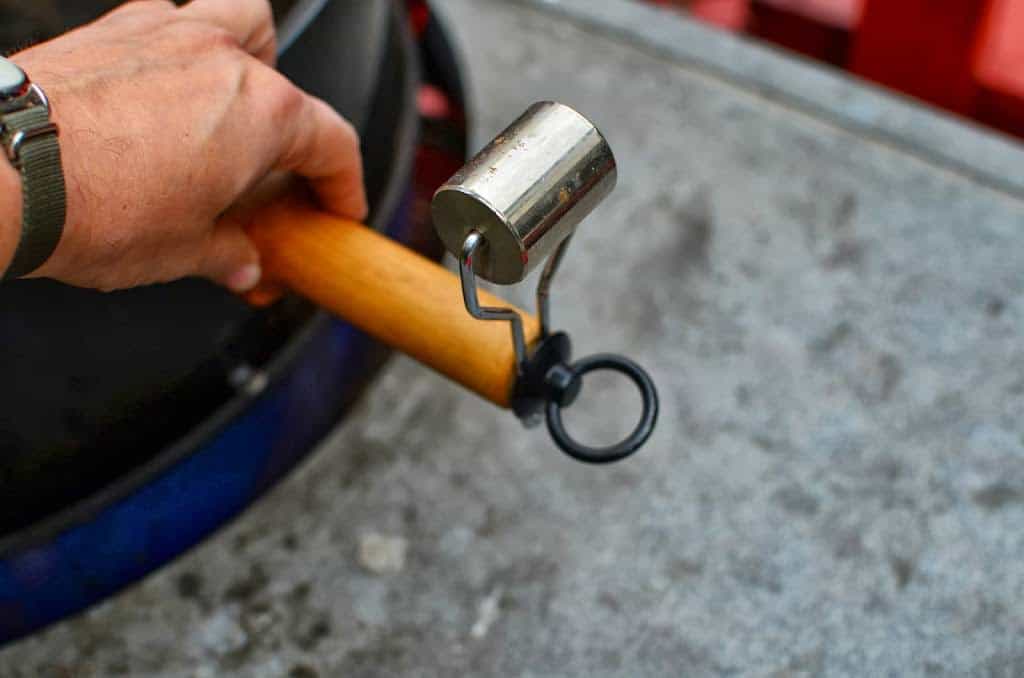
  2. Attach the counterweight pointing straight up. That way, it balances out the weight of the meat.
Put the spit in the rotisserie bracket, and let go...
...and it will eventually settle, weight at the bottom
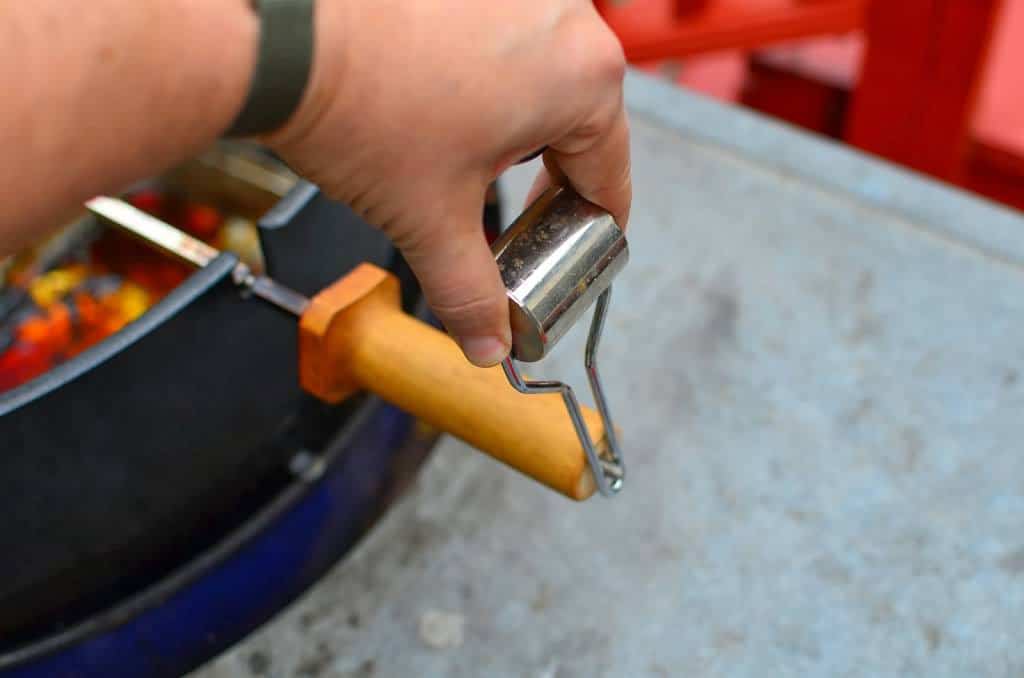
Attach the counterweight...
...pointing straight up

Note that the motor itself will make this harder - the motor's gearing will try to resist the weight of the meat, and will hold the meat in place unless the roast is very heavy. So, I leave the motor off of the grill at first. I rest the spit in the notches on the grill and let it settle. Then I attach the counterweight, pull the spit back a bit, put the motor on the bracket on the grill, and plug the point of the spit into the motor.

Here's a video of the chicken settling without the motor attached. I should have started it closer to "weight down" - it takes a while to settle.

Video: If the chicken's rocking, don't come a'knocking. Or counterweighting. Or something. (Sorry. It sounded funnier in my head.)

Now that I’ve shown you how to use a counterweight, I have to confess - I never use it.

When I first got the rotisserie ring for my Weber kettle, I would carefully set up the counterweight, rotating the spit back and forth to try to get the weight “just so.”

Then I got the much larger spit with my Weber Summit…and it didn’t come with a counterbalance, just a loop handle. And it came with the same Weber rotisserie motor that I got with the kettle rotisserie.

I worried about this at first - what’s going to happen to the motor? Then I used it for a while without the counterweight, and it always worked. Sure, it struggles a bit lifting heavier pieces of meat on the upswing, and then flops a bit on the downswing. After the motor dealt with everything I could throw at it - turkeys, pork shoulders, and rib roasts, I stopped using the counterweight on the Kettle. Why bother, when I didn't need it on the other grill?

That was over five years ago, and I’m still using the same rotisserie motor with no ill effects. In fact, I’m using the same rotisserie motor on both the kettle and the Summit - I have two identical motors, and I always grab the one in front.

The only time I think about the counterweight is when I have a huge hunk of meat, like the massive 24 pound turkey I cooked last year…um, wait, never mind. I cooked that on the Summit, so I couldn’t use a counterweight. And it worked fine.

So, once again - don’t worry about the counterweight. Everything will be fine.

What do you think?

Questions? Other ideas? Leave them in the comments section below.

Related Posts:

Video: Rotisserie Grilling Two Chickens
Video: How to Truss and Spit Turkey for the Rotisserie
Click here for my other rotisserie recipes.


Check out my cookbook, Rotisserie Grilling.

Everything you could ask about the rotisserie,
plus 50 (mostly) new recipes to get you cooking.

It's a Kindle e-book, so you can download it and start reading immediately!


*Enjoyed this post? Want to help out DadCooksDinner? Subscribe to DadCooksDinner using the RSS or Email options on the right, recommend DadCooksDinner to your friends, buy something from Amazon.com through the links on this site, or donate through my tip jar. Thank you.

Grilled Pork Shoulder Kebabs with Peppers, Onions, and Spice Rub (with Tailgating Tips)

September 19, 2013 by Mike Vrobel 8 Comments

| DadCooksDinner.com

Grilled Pork Shoulder Kebabs with Peppers, Onions, and Spice Rub| DadCooksDinner.com
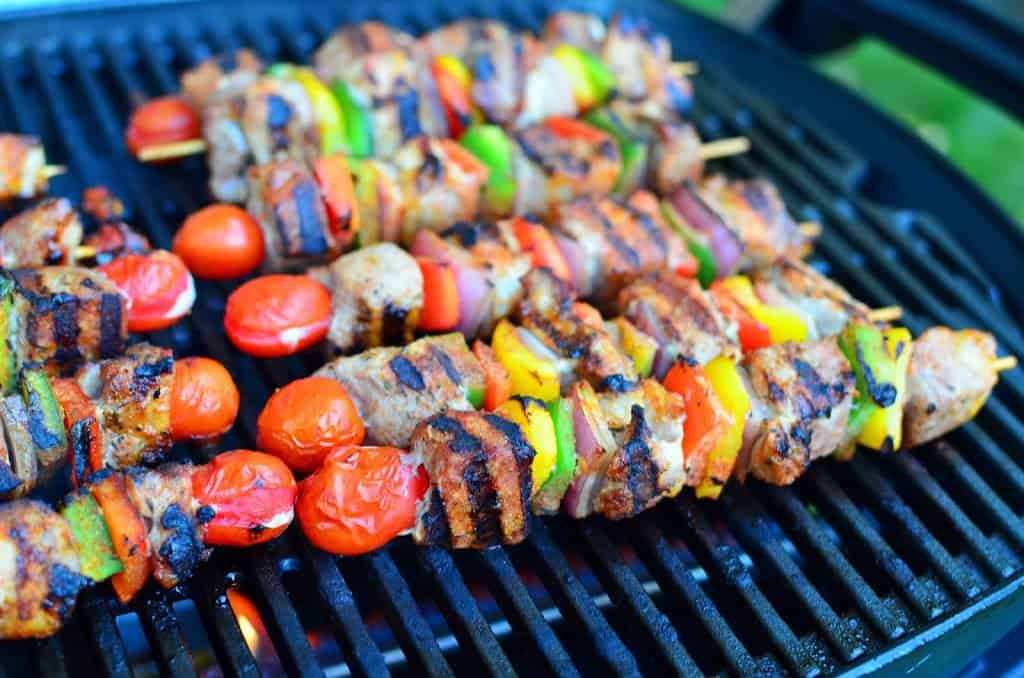
Grilled Pork Shoulder Kebabs with Peppers, Onions, and Spice Rub


This post is sponsored by the National Pork Board as part of the Tailgating with Pork and Kroger Program. Score big at your next tailgate party with Kroger - from tailgating to backyard BBQs, game day gatherings with friends and family can be simply delicious with juicy, tender and versatile pork - the MVP of championship-worthy spreads this fall season.


I’m an enthusiastic tailgater, but I’m not a tailgating expert. I’ve seen the experts. Recreation vehicles, wrapped with photos of hall of famers. Pop up tents in team colors, banners flapping in the wind. Fold out kitchens, covered with football themed snacks.
I’m a little more low key than that. But that doesn’t mean we don’t have a good time. We show up about four hours before gametime, pop up our tent, grill our lunch, toss a football around, relax with some beverages, catch some of the early game on a portable TV, then head over to the stadium for football.

Now, I may not be a tailgating expert, but I have learned a few things over the years.

Protect the food…and the drinks

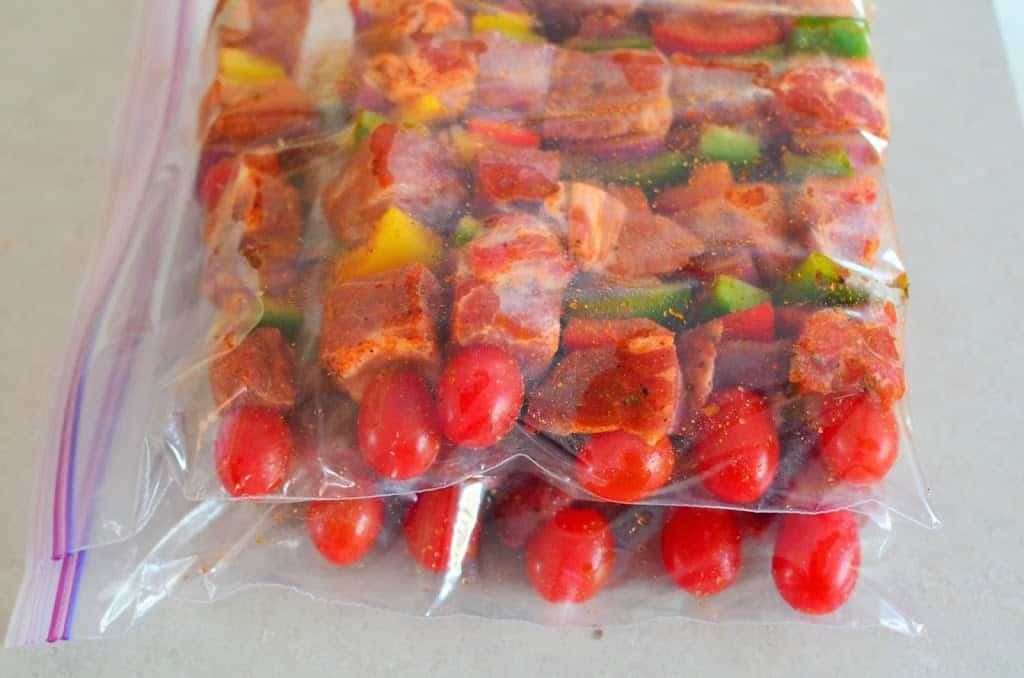
No matter how secure it looks, a package of plastic wrapped meat is not waterproof. Make sure the food is in sealed zip top bags or waterproof food storage containers, especially if your drinks are going in the same cooler. You don’t want waterlogged food and drinks soaking in meat juices. If you’re using kebab skewers (like I am in the recipe below), use a hard-sided food storage container or double up on the zip-top bags to prevent holes.

Food you can eat with one hand

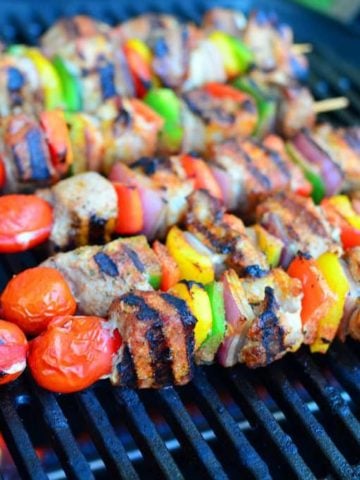
There’s no such thing as sitting down at the table for a tailgate. If the food needs a knife, or even a fork, is it really worth the effort? Something you can eat with one hand is perfect. That’s why I have a kebab recipe down below - you can grab the skewer and start eating.

Essential supplies

Beyond the usual list of supplies, I always make sure I bring: * Paper towels - easier to deal with than napkins, especially on a windy day * Antibacterial Wipes - as close to sanitation as I can get in the parking lot * Roll of heavy duty aluminum foil - the duct tape of cooking, aluminum foil has (lots of uses) * Salt - there’s nothing worse than getting to the stadium and finding out you’re having unseasoned food * Extra beer and water - unless I buy twice as much as I think I need, I run out of both

Leave enough time

You don’t want to rush through the day; this is supposed to be relaxing. Arrive early, and start cleaning up a half hour before you think you need to. It’s no fun throwing everything back in the van with kickoff coming closer and closer; better to be ready to go, and have time for one more beverage.

Tailgate after the game, too

Why get caught in the rush for the exits? While everyone else snarls themselves in a traffic jam, fire up the grill again. Have dinner, and enjoy another beverage. (If you’re the driver, make that beverage a water, please.)

Grilled Pork Shoulder Kebabs with Peppers, Onions, and Spice Rub| DadCooksDinner.com
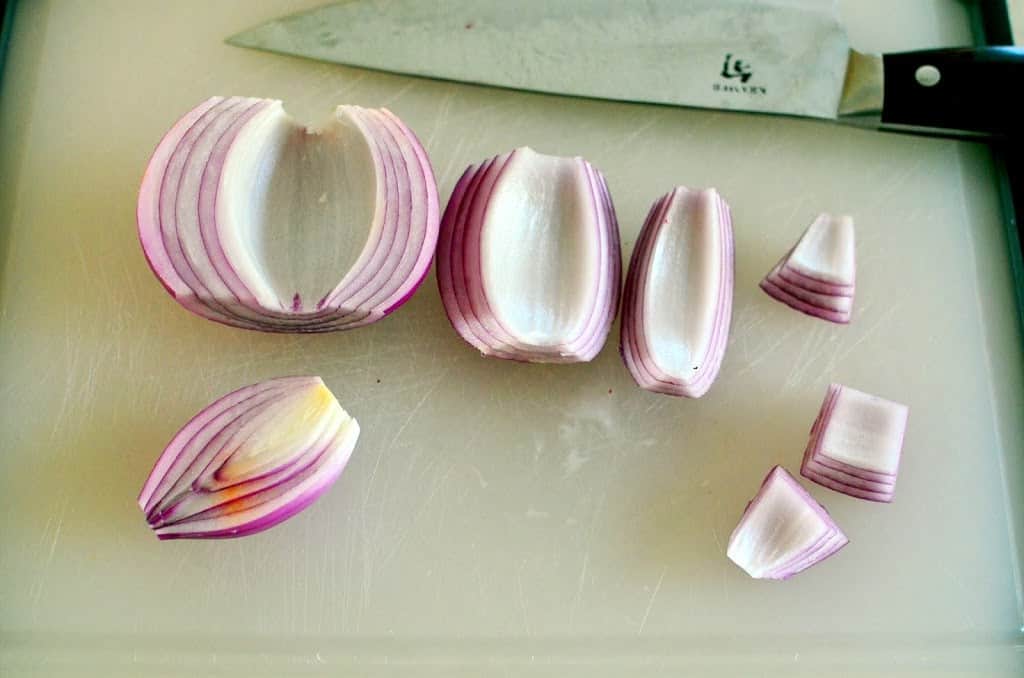
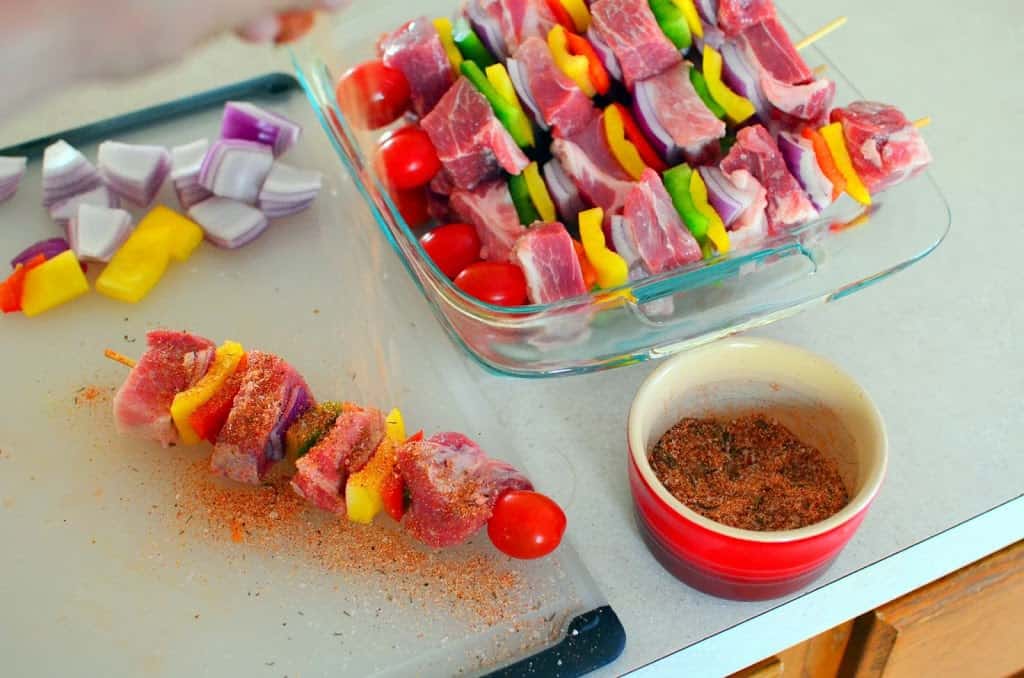
Cut the outer layer of the onion into 1 inch cubes. L to R - half onion with core removed, cut into strips, strips cut into 1 inch cubes.


Grilled Pork Shoulder Kebabs with Peppers, Onions, and Spice Rub| DadCooksDinner.com
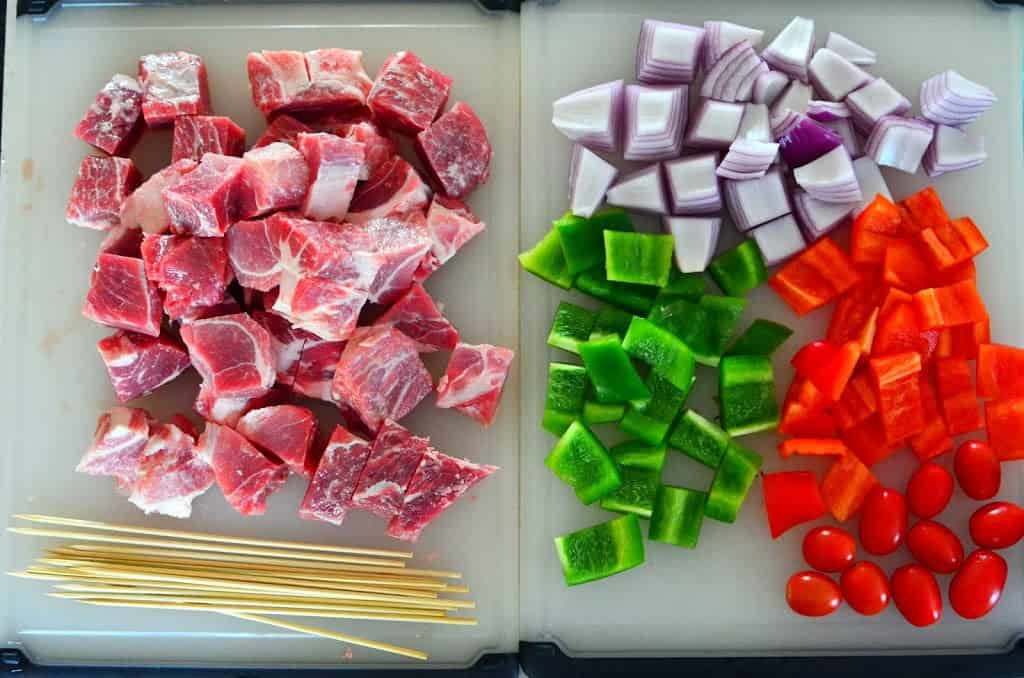
Pork, onions, and peppers, ready to skewer


Grilled Pork Shoulder Kebabs with Peppers, Onions, and Spice Rub| DadCooksDinner.com
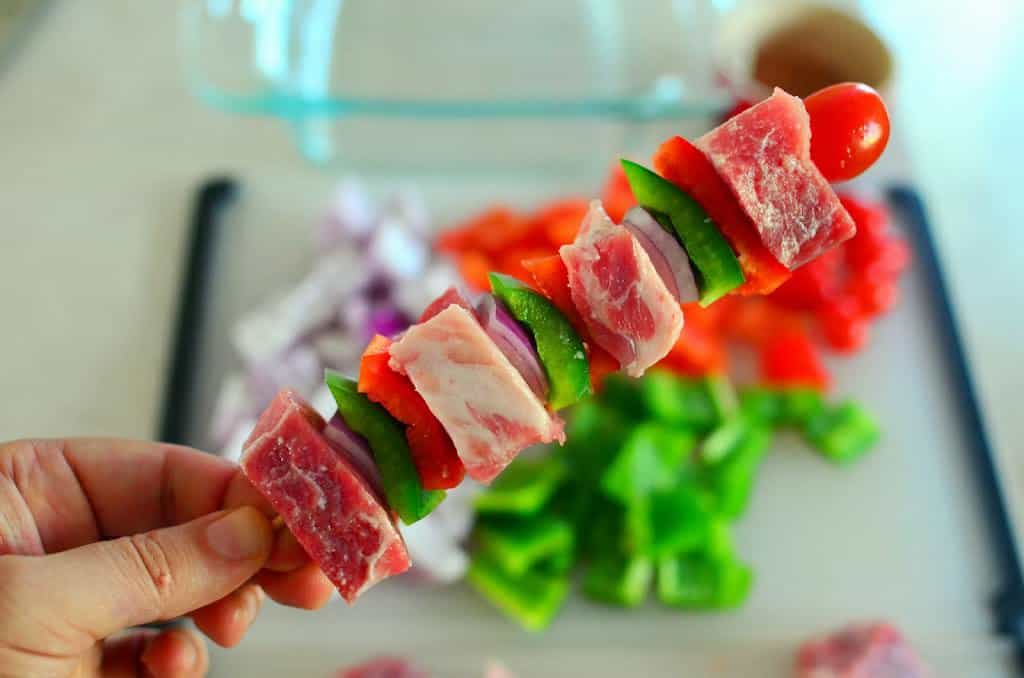
Skewer pattern: pork, onion, peppers, repeat.


Grilled Pork Shoulder Kebabs with Peppers, Onions, and Spice Rub| DadCooksDinner.com
Sprinkling kebabs with spice rub


Grilled Pork Shoulder Kebabs with Peppers, Onions, and Spice Rub| DadCooksDinner.com
Bagged and ready


Grilled Pork Shoulder Kebabs with Peppers, Onions, and Spice Rub| DadCooksDinner.com
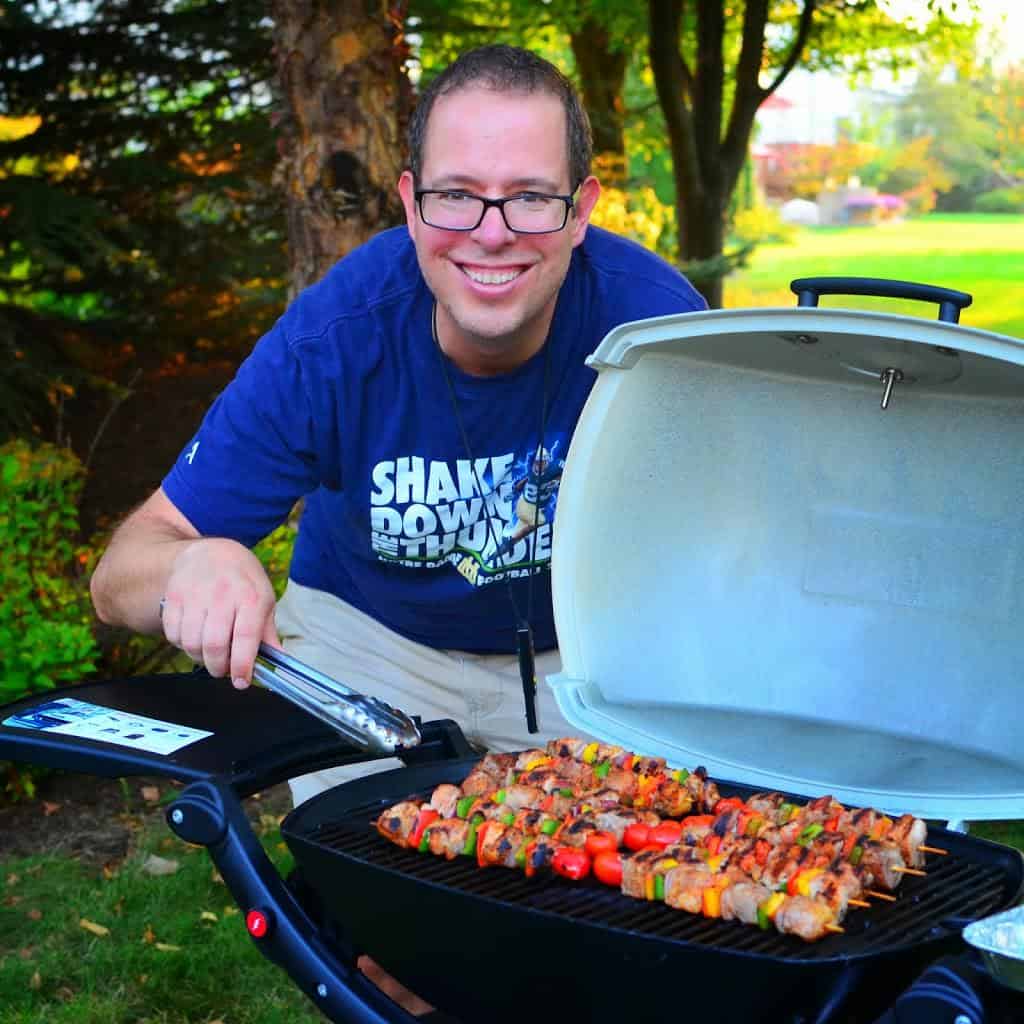
Grilling! (Pay no attention to my mugging for the camera.)

Recipe: Grilled Pork Shoulder Kebabs with Peppers, Onions, and Spice Rub

Cooking time: 16 minutes

Makes about 12 skewers

Equipment

  • Grill (I bought a Weber Q portable grill this year, just for tailgating.)
  • 12 - 8 inch bamboo skewers
  • Gallon zip-top bags

Notes

  • If you can find pork shoulder "Western Ribs", they're already cut into 1 ½ inch strips - cut them crosswise into chunks to finish the job.
  • Pork shoulder should be cooked past well done. Like I said in the notes, when in doubt, cook it some more.
  • Normally I prefer metal skewers for kebabs, but bamboo skewers are better for tailgating. You don't have to worry about branding your fingertips if you grab a kebab straight off the grill, and the skewers are disposable, making cleanup easier.

Grilled Pork Shoulder Kebabs with Peppers, Onions, and Spice Rub| DadCooksDinner.com
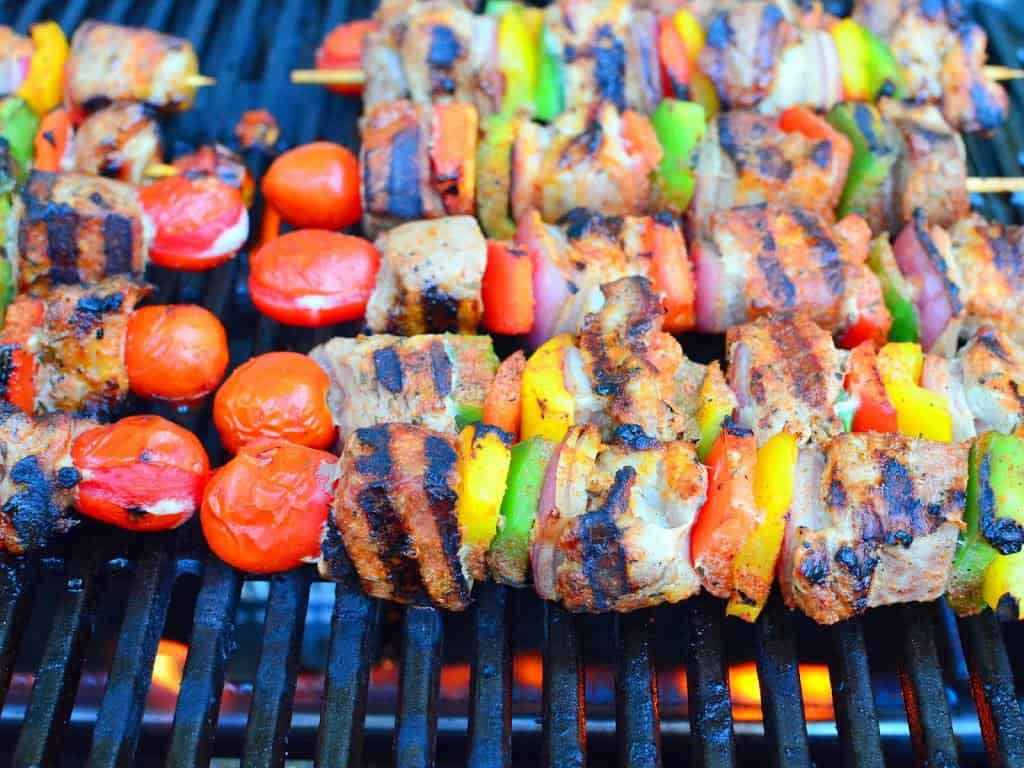
On the grill

What do you think?

Questions? Favorite tailgating tips? Leave them in the comments section below.

Related Posts:

Grilled Beef Kebabs with Tomato, Onion, Lemon and Thyme Marinade
Grilled Pork Souvlaki Kebabs

*Enjoyed this post? Want to help out DadCooksDinner? Subscribe to DadCooksDinner using the RSS or Email options on the right, recommend DadCooksDinner to your friends, buy something from Amazon.com through the links on this site, or donate through my tip jar. Thank you.

Selling out to The Man

September 9, 2013 by Mike Vrobel 16 Comments


It's like people only do these things because they can get paid. And that's just really sad.
Garth Algar, Wayne's World

Incoming!

So, to give everyone a heads-up, I have another sponsorship opportunity on top of my current one with Knob Creek. A major US meat promotion group and grocery store have a fall tailgating promotion, and I’ve been asked to join in.
I’m not naming names, yet, in case it falls through.

The good part is, it’s a topic I was already planning to cover this fall - tailgating recipes. And, as a bonus, they want me to do a giveaway for my readers (that’s you). Now that I have deadlines an incentive to post, you’ll see a lot about tailgating over the next month.

The downside is sponsored posts and tweets, written by the groups. You’ll know them when you see them; they want appropriate notification of the sponsorship. That’s kinda the point - promoting their type of meat and grocery store for tailgating.

Five hundred dollars? Would you consider a bear in a frog suit?
Fozzy Bear, The Muppet Movie

On the one hand, I feel like apologizing. On the other hand, I shouldn't apologize. I hope this is the first of many sponsorships…as long as the sponsor’s ideas for posts line up with my own. For this one, it’s like they were reading my mind when I planned out my fall schedule.
If I start promoting cream of mushroom soup recipes, you’ll know I’ve gone over to the dark side.

Oh, and as another heads up - this week’s posts are not sponsored, no matter how much it looks like I’ve been co-opted by a major snack food conglomerate. (You’ll know what I mean when you see the recipes.)

What do you think?

Am I going too far? Selling out to The Man? Whining? (Yes. Yes, I am whining.) Talk about it in the comments, below.

Fresh Tomato Gazpacho (in a Vitamix)

September 5, 2013 by Mike Vrobel 7 Comments

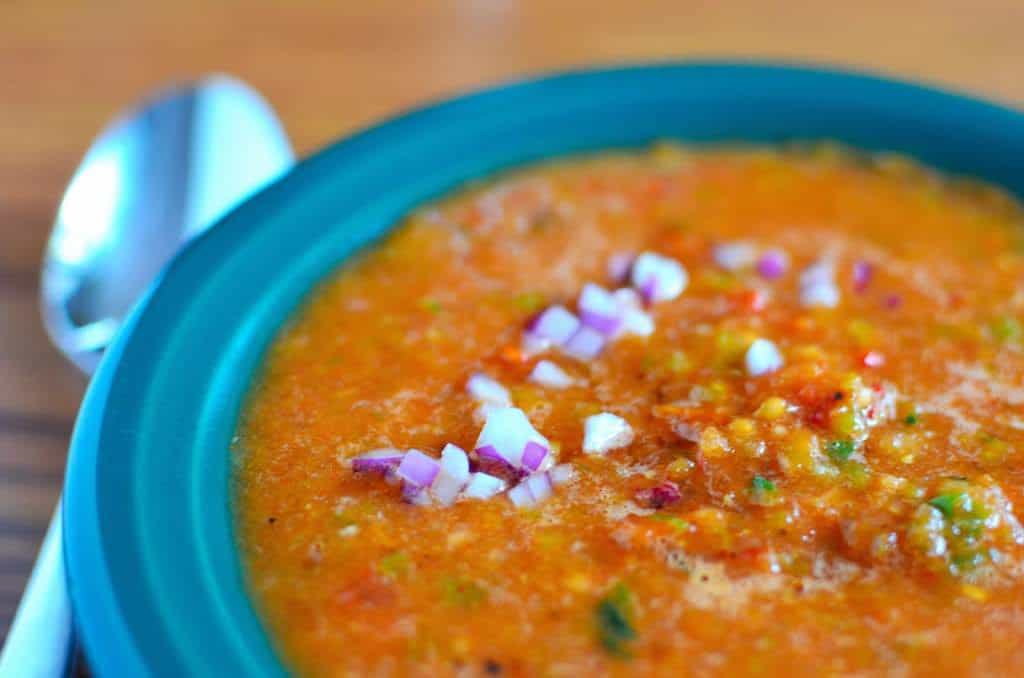
Gazpacho is in season. Everything in gazpacho is ripe right now - garlic, peppers, cucumbers, onions, and especially tomatoes. If I dumped my CSA box in the blender and hit “frappe”, the result would have been gazpacho.

Did I mention I’m drowning in tomatoes? I share a CSA box with my friend Pam, and she’s out of town this week. That means another 7 ½ pounds of tomatoes for me. So, on top of being a great way to showcase ripe summer tomatoes, this recipe will use up some of summer’s bounty. Everybody wins.
Except Pam. She picked the wrong week to go on vacation. Unless she’s running out of tomato recipes, and is trying to avoid them.

This is also the first gazpacho from my Vitamix. It did a great job; everything was minced ultra-fine by the time it was done. The resulting soup was much smoother than my usual Food Processor version. Now, depending on your tastes, that could be a bad thing. I know some people like a chunky gazpacho. I prefer the smoother version from the blender; it’s less like salsa that way.

Which brings me to the trick of the week, getting kids to eat gazpacho. Don’t tell them it’s a cold tomato soup. “Cold soup” doesn’t sell with kids - at least not with my three. But when I called it a “Spanish salsa”, I got them to try it…and one was willing to admit it didn’t taste bad.
Now, eating an entire bowl of it? That’s still a bridge too far. But we’re getting there. I hope.

Recipe: Fresh Tomato Gazpacho (in a Vitamix)

Equipment

  • Blender with a 48 ounce or larger canister (I love my Vitamix) , or a 11 cup or larger food processor

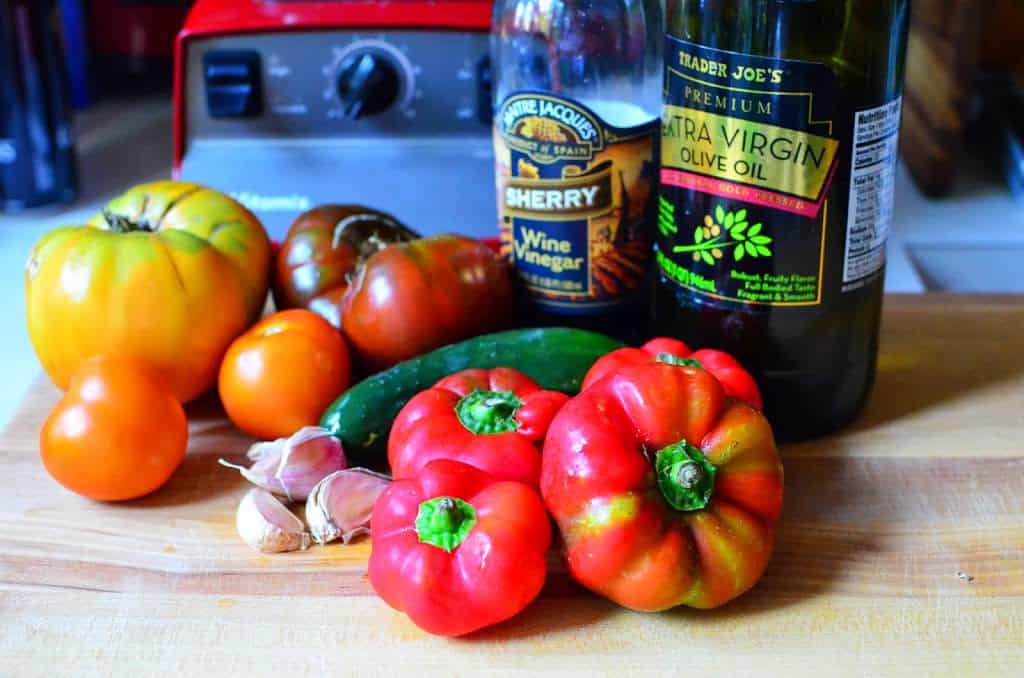
Ingredients

  • 4 cloves garlic, peeled
  • 2 large bell peppers, cored and seeded
  • 1 small cucumber
  • ½ medium red onion
  • 2 pounds ripe tomatoes, cored
  • ¼ cup sherry vinegar
  • ¼ cup olive oil
  • 1 teaspoon kosher salt
  • ½ teaspoon fresh ground black pepper
  • 1 teaspoon pimenton de la vera (Spanish smoked paprika), or sweet paprika
  • minced red onion for garnish

Directions

1. Mince the garlic, prep the vegetables

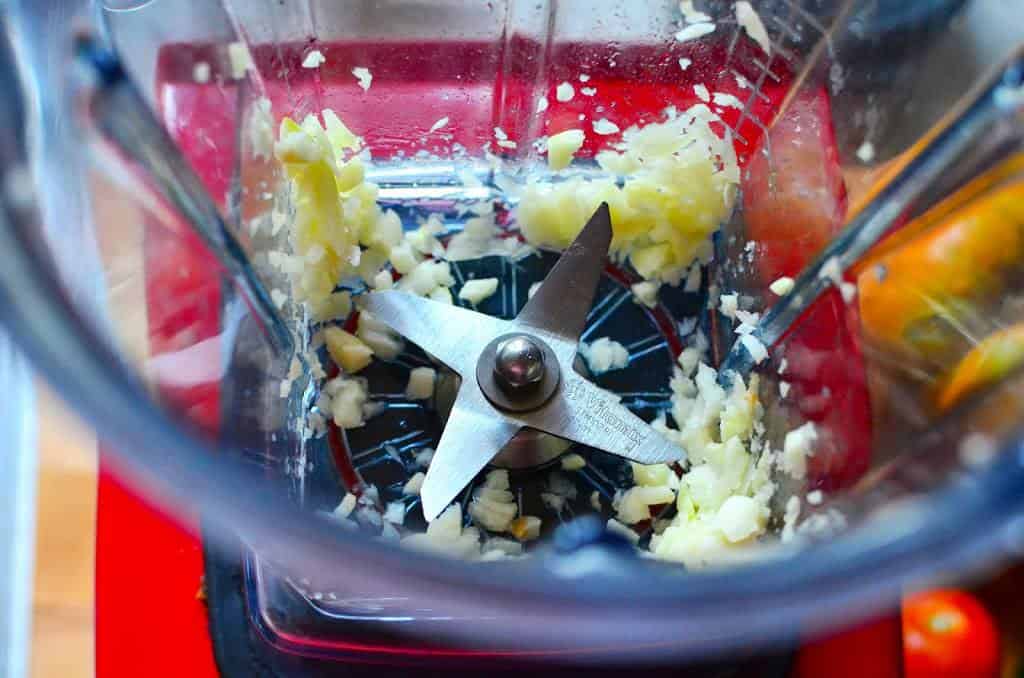
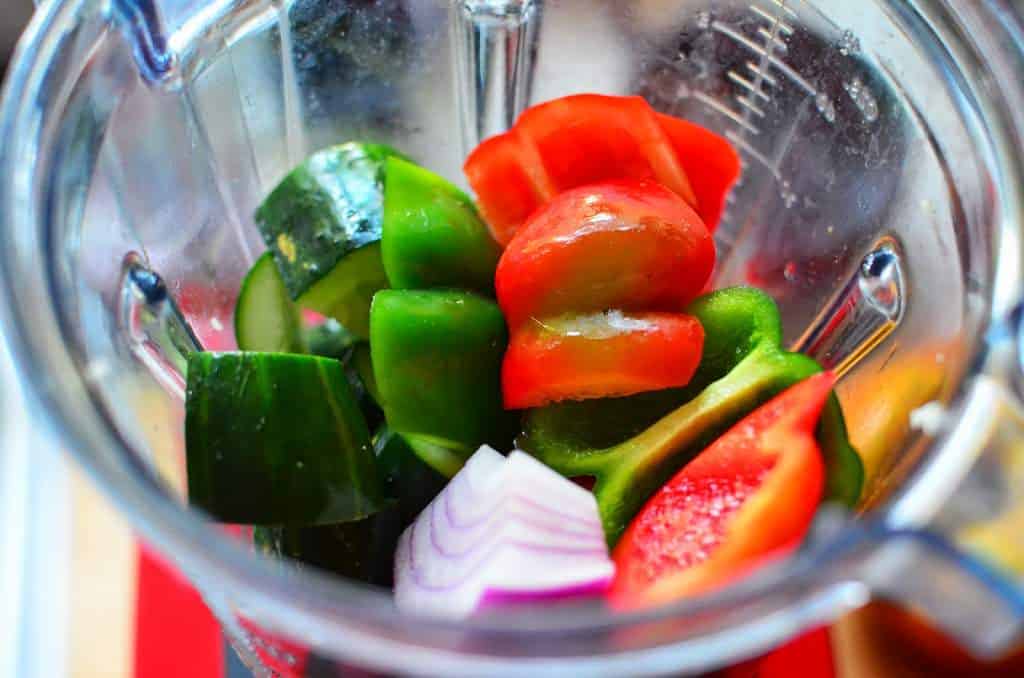
Put the lid on the blender and remove the center plug from the lid. Turn on the blender, drop in the garlic, and let it run until completely minced. While the garlic is mincing, chop the rest of the vegetables into 2 inch pieces.

2. Blend the soup

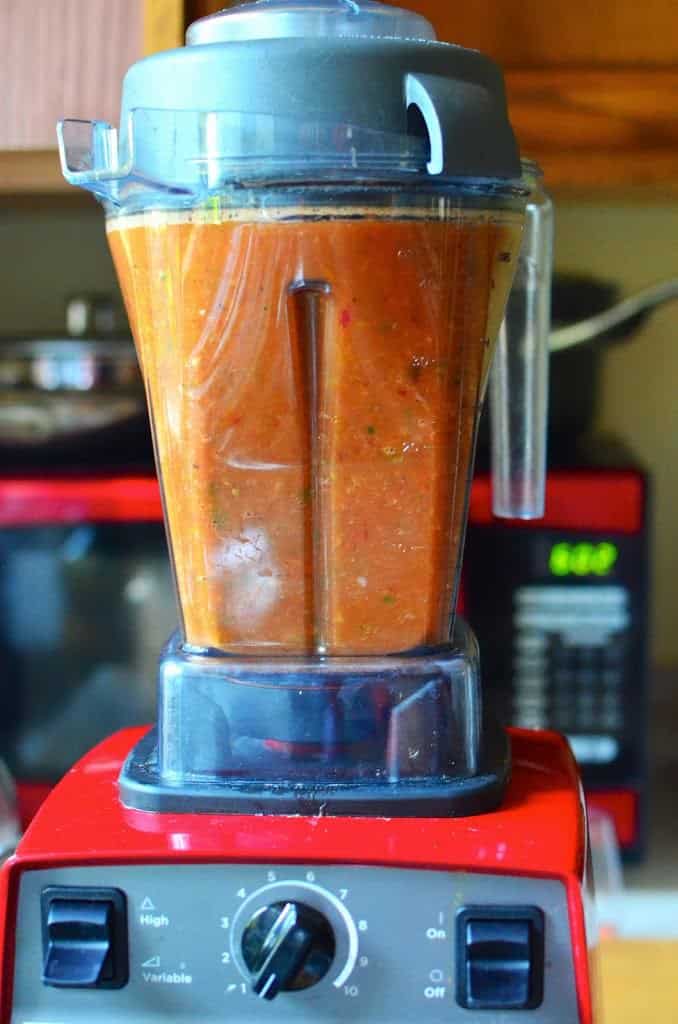
Add the rest of the ingredients to the blender. Turn the blender on low, and slowly bring it up to medium speed (Variable 5 on my Vitamix). Blend on medium speed until the ingredients turn into a chunky soup, about 30 seconds. Taste for seasoning, adding more salt, pepper, or sherry vinegar if needed. Pour into bowls, garnish with minced red onion, and serve.

Notes

  • Making this recipe outside of tomato season? Use canned tomatoes or, if you're desperate, cherry tomatoes. Grocery store tomatoes don't have enough flavor to carry this recipe. (See the Related Posts section for a canned tomato gazpacho.)
  • If you have time, let the soup rest in the refrigerator for an hour or two before serving. Leftovers will keep for a couple of days in the refrigerator.

What do you think?

Questions? Other ideas? Leave them in the comments section below.

Related Posts:

Quick Gazpacho (with canned tomatoes)

*Enjoyed this post? Want to help out DadCooksDinner? Subscribe to DadCooksDinner using the RSS or Email options on the right, recommend DadCooksDinner to your friends, buy something from Amazon.com through the links on this site, or donate through my tip jar. Thank you.
Food Blog Photography - My Tools and Workflow

September 3, 2013 by Mike Vrobel 4 Comments

Note: This post started as one of the five point lists in my year five update last week…but it got away from me. After it grew to a thousand words, I realized it was its own post.

An inquisitive reader asked me what type of camera I use to take pictures for the blog. They weren’t the first to ask, so I thought I’d share with everyone. Here’s my photography equipment, and the software I use for my photography workflow.

But first

A disclaimer. Cameras don’t take pictures - people take pictures. A SLR with a good lens will help your photography, but not as much as learning about composition, lighting, depth of field, focus, taking lots of pictures, and editing ruthlessly. Oh, and looking at lots of pictures, seeing the ones you like, and trying to figure out why they work. I’m a decent photographer, if I say so myself; I was obsessed about photography before I became obsessed about food, and I’ve been taking pictures for a while now. But there are photographers who are head and shoulders above me, and it’s not because of their equipment. They can use a Soviet era film camera and create pictures that leave me stunned.

Camera

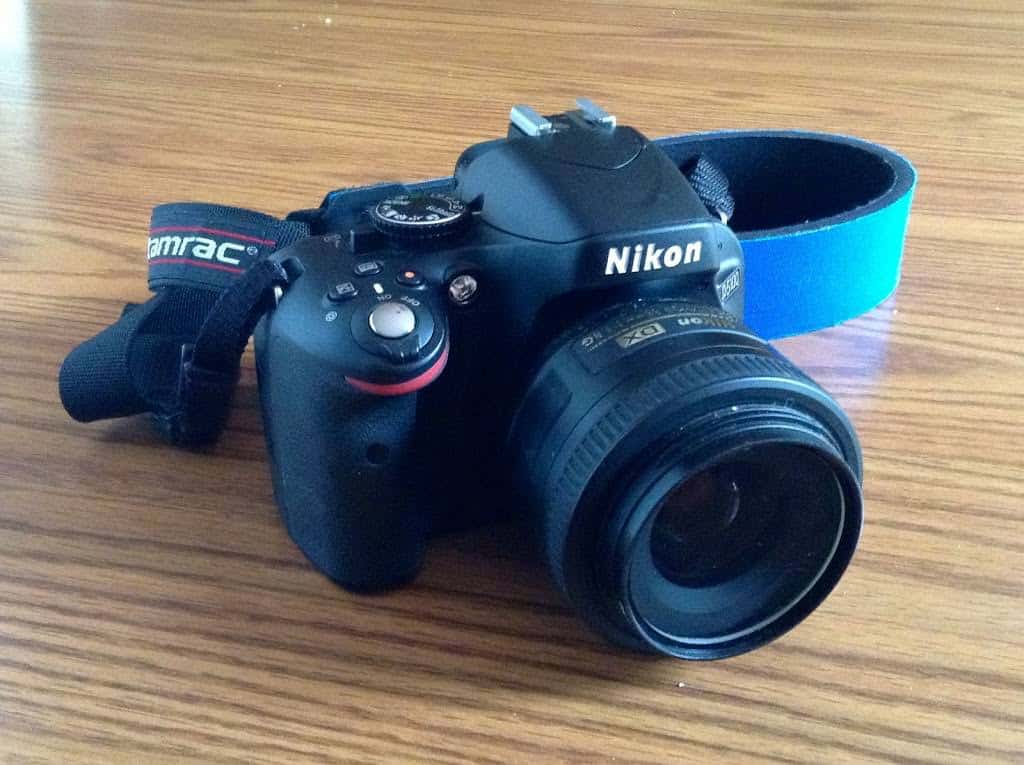
Nikon D5100 SLR with Nikon’s 35mm f/1.8 lensI use a fast, fixed lens (that is, no zoom) for all my pictures. I love the shallow depth of field I get from shooting with smaller apertures - that wonderful, blurred background effect. Most of the shots on this blog are somewhere between f/2.8 and f/5.6. I love the 35mm f/1.8. I just wish Nikon would make an image stabilizing version of this lens. I do all of my shooting hand-held, and my hands aren’t as steady as they once were. I could use an extra stop or two of vibration reduction.
Why no zoom lens? A few reasons. First, zooms that can open as wide as f/2.8 (or even f/4) are really expensive. Second, I don’t need to sneak up on food to get a picture - if I need to zoom, I use my feet. It’s not going anywhere, unless I drop the plate. Finally, fixed lenses can focus a lot closer than zooms, and I need to get close to my food for good pictures. Now, if someone could make a f/2.8 zoom that has close focus, I’d consider it…but I probably couldn’t afford it. Nikon has a lens that is close - their 24–120 f/4 VR lens. It’s a little too slow at f/4, and the close focus (1 ½ feet) is a little too far. My real issue is the price - at $1200, it costs about 6 times as much as my little 35mm f/1.8.
That said, I’d love to try the 24–120. After I wrote this, I started to think…maybe I can rent the 24–120 for a week, to play with it. I hate it when I start to upsell myself. Resist. Resist!
TKPic Nikon D5100 with lens, flash, and Lowel EGO and bounce card

Photo Lighting, during the summer

Natural light, often with a bounce reflector to fill in the shadows.
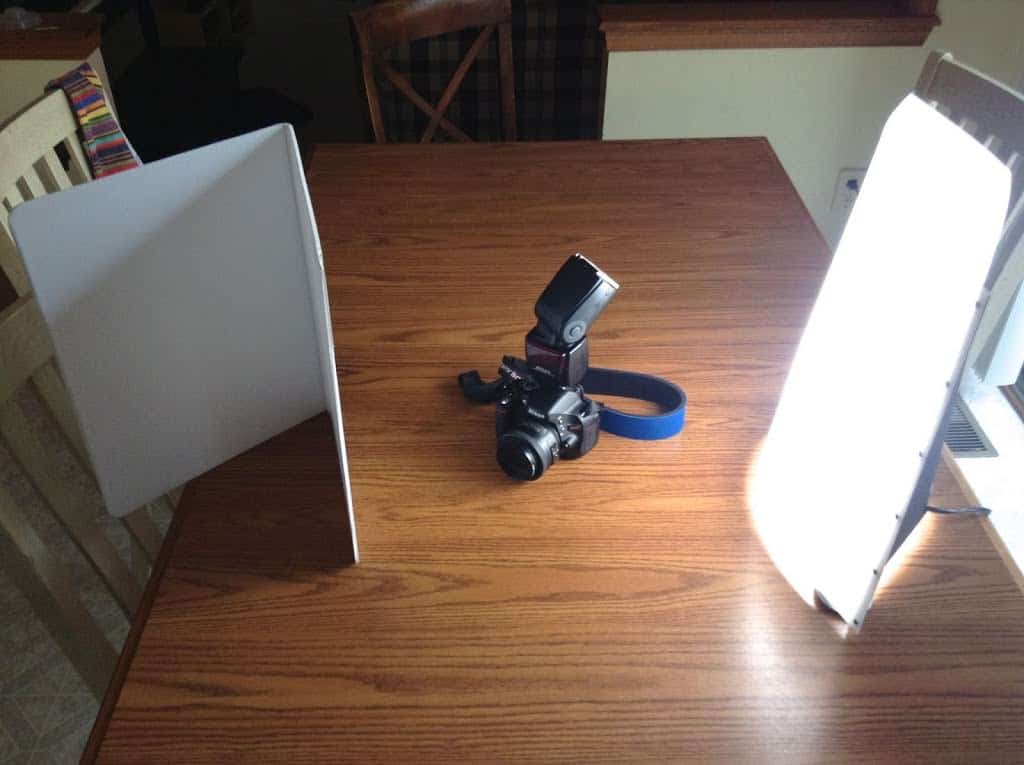
“Bounce reflector” sounds fancy, but all it has to do is reflect light. Any large, rigid, white surface will work. For years my bounce reflector was a piece of white styrofoam…until I held it a little too close to the grill and it melted. Now I use the bounce reflector that came with the Lowel EGO light (see below). It is a large piece of folded foam core, so I can open it up into a “V” shape and set it next to my plate - no need to hand-hold it. (And I keep it away from the grill as much as possible.)

L to R: Bounce card, Nikon with flash, Lowel EGO light


Photo Lighting, during the winter

Nikon SB–700 Flash, occasionally a Lowel EGO tabletop photography light.
Darkness falls early in my neck of the woods. (Sounds like there should be a pack of wolves out back, doesn’t it?) I have to use artificial lighting for pictures when the daylight gets short - or I’d have to switch to blogging about DadCooksLunch. From October through April, I leave the SB–700 attached to the camera, with the head turned to bounce the flash off the ceiling.
When I have time for a composed shot of a finished dish, I use a Lowel EGO light set. It’s a single unit photography light, and a bounce card. I set them up on my front room table, do some set design with napkins, forks, and the main course, and take the picture.

Photography Software

Eye-Fi memory card, iPhoto, Photoshop Elements, Picasa
Here’s where I share my photography workflow. The Eye-Fi should probably go in the Camera section of this post, but I think of it as the start of my photo workflow. I take a picture, and when I’m in range of my wifi network, it automatically uploads the pictures to my computer. No removing cards, finding a connection cable or plugging in the card reader. Next, I go into iPhoto, which is what I use to manage my photos. I sort through the pictures, deleting any that didn’t work, and picking out my favorites.
Next, I edit the pictures. I try to compose in camera, setting up the framing exactly how I like it, so most of the time, iPhoto’s built in editing software is enough for my needs - occasional cropping, photo straightening, and basic color adjustments. When I need more drastic editing, I switch to Photoshop Elements and its more powerful set of tools.
Finally, I export from iPhoto to Picasa, and upload from Picasa to PicasaWeb albums. (I think they’re now Google+ albums, actually.) I don’t like the extra step, but my blog is hosted on Google’s Blogger.com platform, and Picasa is their tool for uploading pictures. I should probably switch to using Picasa as my photo manager, and cut iPhoto out of the loop, but I’m used to iPhoto, and it’s where all the family photos are stored.
*Which, thinking about it, is another good reason for me to switch - I really should break the blog photos into their own library. The kids are tired of the flood of pictures of rotisserie chicken in the photo stream.

What do you think?

Questions? Other ideas? Leave them in the comments section below.

*Enjoyed this post? Want to help out DadCooksDinner? Subscribe to DadCooksDinner using the RSS or Email options on the right, recommend DadCooksDinner to your friends, buy something from Amazon.com through the links on this site, or donate through my tip jar. Thank you.
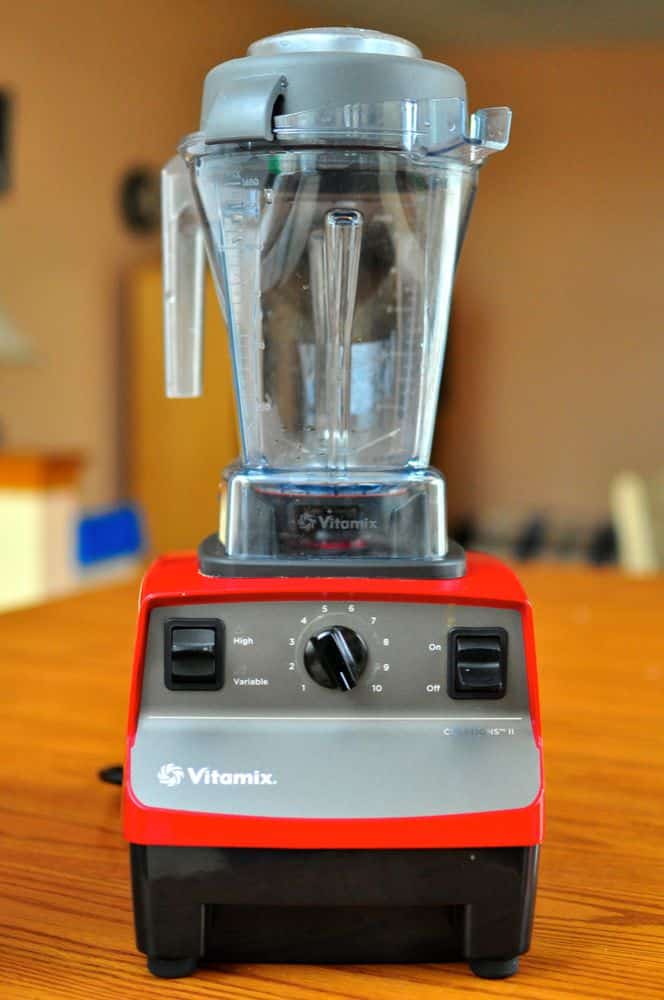
Rotisserie Pork Shoulder with South Carolina Mustard Barbecue Sauce

August 29, 2013 by Mike Vrobel 32 Comments

Rotisserie Pork Shoulder Roast with Carolina Mustard BBQ Sauce

Rotisserie Pork Shoulder with South Carolina Mustard Barbecue Sauce - tangy mustard sauce is the ideal match for rotisserie shredded pork.

Question from a reader:

Can I do low and slow barbecue style cooking on a rotisserie?

Rotisserie Pork Shoulder Roast with Carolina Mustard BBQ Sauce
[feast_advanced_jump_to]

Of course! Let's cook a bone in pork shoulder until it is fall off the bone tender. And I mean fall off the bone. My first go around with this recipe used a 16 pound pork shoulder roast…and it was so tender that it dropped off the spit and fell into my drip pan. Whoops.

Also, this is my chance to share South Carolina's mustard BBQ sauce. The heat and vinegar in mustard sauce cuts through the rich, fatty pork. Those South Carolinians know what they're doing. No disrespect to North Carolinians, Kansans, or Tennesseans, or anyone else who knows their barbecued pork.

Equipment

  • Grill with Rotisserie attachment (I use a Weber Summit with an infrared rotisserie burner. Here is the current version of my grill.)
  • Aluminum foil drip pan (9"x13", or whatever fits your grill. I use an enameled steel roasting pan.)
  • Butchers twine
  • Instant Read Thermometer
  • 4 cups wood chips (divided into 2 (2-cup) servings), soaked for an hour
Rotisserie Grilling by Mike Vrobel

I wrote a cookbook!

Rotisserie Grilling Cookbook

New to your rotisserie and need help with the basics? Love your rotisserie and looking for new ideas? Grab a copy of Rotisserie Grilling! You'll get 50 of my favorite rotisserie recipes and expert tips on how to set up and use your rotisserie.

Click here to buy →
Rubbed, trussed, and secured to the spit
Homemade mustard BBQ sauce
On the grill, ready to spin
Shred and serve
Shred and serve

Notes

  • If you want to use an entire pork shoulder, make sure you truss it! (I think trussing hold it together on the spit.) It will take a little longer - 6 hours instead of 5 hours - for the larger roast. I'll try an entire pork shoulder again soon…but I need to invite a crowd over to eat it.
  • If any of your dinner guests are put off by the thought of yellow barbecue sauce (*cough* my kids *cough*), finish the recipe through "season the shredded pork with salt and pepper to taste", then pass the mustard BBQ sauce and a regular tomato based BBQ sauce at the table and let them choose.
  • Bonus Video: Stephen Colbert talking up South Carolina barbecue…while turning his back on the state for not supporting his sister in a recent election.
Anyone want a sandwich?

What do you think?

Questions? Other ideas? Leave them in the comments section below.

Related Posts

Rotisserie BBQ Baby Back Ribs
Rotisserie Barbecued Pork Belly
Rotisserie Barbecued Chicken
Sous Vide Pork Shoulder Steaks
Click here for my other rotisserie recipes.

*Enjoyed this post? Want to help out DadCooksDinner? Subscribe to DadCooksDinner using the RSS or Email options on the right, recommend DadCooksDinner to your friends, buy something from Amazon.com through the links on this site, or donate through my tip jar. Thank you.
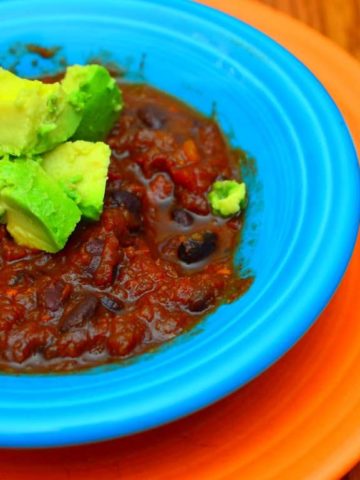
Year Five of DadCooksDinner

August 27, 2013 by Mike Vrobel 9 Comments

Pollo a la brasa - a rotisserie chicken on the spit in a grill, with a drip pan full of multi-colored potatoes beneath it

"I never look back, darling. It distracts from the Now."
Edna Mode, The Incredibles

Thank you for another great year at DadCooksDinner. Five years. Five years? That seems like forever, and on the other hand, not that long. My readership keeps trending upward, slow and steady. And, really, that’s why I write - because you’re out there reading. To celebrate five years of posting, here are a set of top five lists from the last year’s posts on DadCooksDinner.

Top five events in year five of DadCooksDinner

1. I got into Sous Vide cooking in a big way

…to the point where the kids said “Dad, sous vide steak again? Seriously?”

2. My rotisserie cookbook keeps on selling

I earned my expenses on the book, and then the sales took off as grilling season started this summer. At last count, I sold a (a little) over 3000 copies. Thank you to everyone who bought my book!

3. I passed 600 posts on DadCooksDinner

Now up to post 667 - the neighbor of the beast!

4. DadCooksDinner "as seen in…"

I was interviewed for the New York Times,
wrote recipes for Knob Creek Brothers of Bourbon,
and was featured in Buzzfeed Food (scroll down to #18)

5. DadCooksDinner on the road

I took a road trip to Cleveland’s West Side Market
and to the Vitamix Factory Outlet Store.

Top five favorite pictures

  1. Rotisserie Chicken with Purple Potatoes From Rotisserie Peruvian Chicken (Pollo a la Brasa) with Drip Pan Purple Potatoes
  2. Oxo Mini Beaker Set
    From Things I Love: Oxo 4 Piece Mini Measuring Beaker Set
  3. Grill in Winter From Loneliness of the Midwinter Blogger
  4. Clevelands West Side Market From Road Trip: West Side Market
  5. Grilled Teriyaki Top SirloinFrom PicOfTheWeek: Grilled Teriyaki Top Sirloin

Top five most popular recipes I published in the last year

  1. Pressure Cooker Garlic Confit
  2. Pressure Cooker Macaroni and Cheese
  3. Pressure Cooker Cincinnati Chili
  4. Slow Cooker Braised Chicken Thighs
  5. Pressure Cooker Refried Pinto Beans

…wow, you guys really like my pressure cooker recipes. I can’t believe Pressure Cooker Garlic Confit is the favorite. Are any of you using that recipe? (Links from Reddit are half the traffic to that post, so I don’t know if it was “he’s doing what?” versus actual interest in using the recipe.) This list is pressure cooker heavy, so here are the other favorites from the last year:

Most popular recipes from the last year, non-pressure-cooker edition:

  1. Grilled Mini Sweet Peppers
  2. Grilled Kofta Kebabs
  3. Rotisserie Turkey wrapped with Bacon
  4. Grilled Butterflied Chicken with Garlic Butter
  5. Grilled Cowboy Chop (Double Cut Ribeye, Reverse Seared)

Recipes my wife and kids loved

Diane: Grilled Pizza with Egg and Pepperoni
Ben: Rotisserie Baby Back Apple Ribs
Natalie: Pressure Cooker Refried Pinto Beans
Tim: Baked Italian Meatballs
…my definition of a successful recipe is when one of the kids begs me to make it again. It doesn’t happen that often. They would rather have Banquet chicken nuggets most of the time. Sigh.

Thanks again for reading, everyone!

What do you think?

Questions? Other ideas? Leave them in the comments section below.

*Enjoyed this post? Want to help out DadCooksDinner? Subscribe to DadCooksDinner using the RSS or Email options on the right, recommend DadCooksDinner to your friends, buy something from Amazon.com through the links on this site, or donate through my tip jar. Thank you.
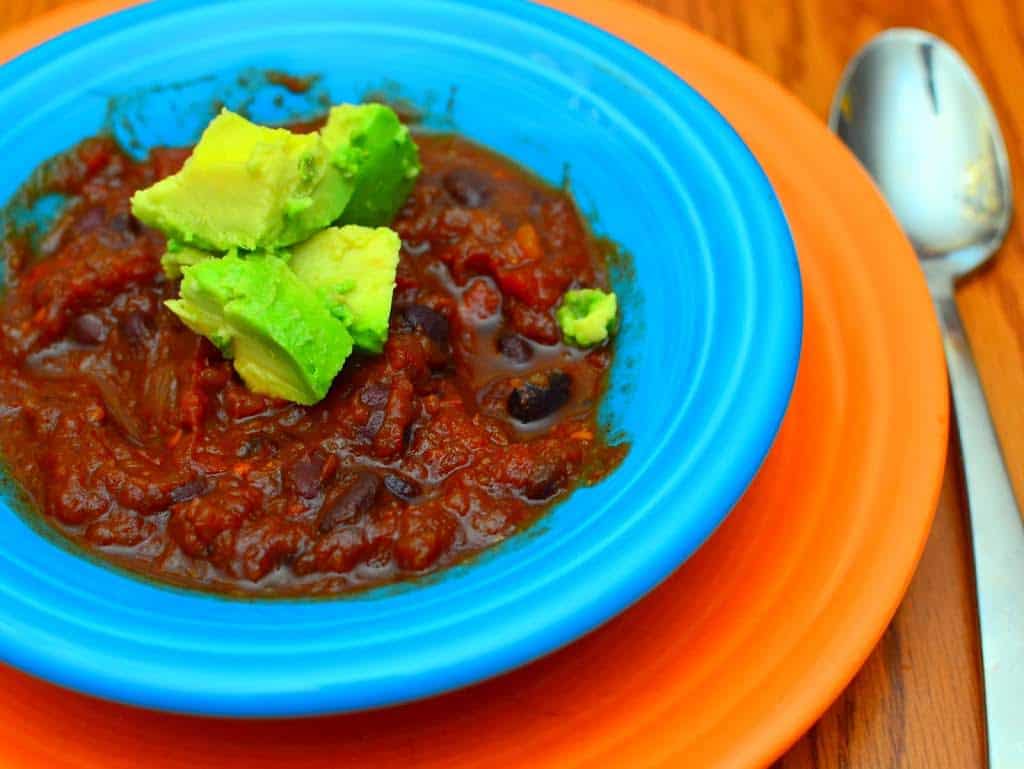
Pressure Cooker Braised Lamb Shoulder Tacos (Cordero Guisado)

August 22, 2013 by Mike Vrobel 11 Comments

I don’t use my pressure cooker much during the summer. Pressure cookers are best at soups, stews, and braises - food that warms me up during cold winter months.

A hot summer day at the Wholly Frijoles Food Truck changed my mind. Three Corona braised beef tacos, washed down with a bottle of Mexican Coca-Cola, were the perfect dinner on a July evening.

DSC_0096I was rummaging through the freezer, planning our meals for the week, when I saw the lamb shoulder chops I bought a few months ago from my friends at Sherman Provision. Beer braised tacos immediately came to mind, and the pressure cooker was the easy way out for a weeknight meal.

DSC_0100

My goal was guisado style, with shreds of meat in a thick sauce. This meant shredding the cooked meat, blending the cooking liquid, and then putting them back in the pot to simmer and thicken. The extra work was worth it - this is saucy, meaty taco filling, and was a big hit with the family.

DSC_0116

I like to serve these tacos with pinto beans in broth or refried beans.

Recipe: Pressure Cooker Braised Lamb Shoulder Tacos (Cordero Guisado)

Equipment

  • 4 quart or larger Pressure Cooker (I use a 6 quart electric Instant Pot)
  • Blender (I love my Vitamix, but you don't need that much power - any blender will do.)

DSC_0139

Notes

  • Pureeing the hot liquid: Hot liquid plus a blender can lead to blender overflows. Why? Because steam trapped in the liquid is released by the blender. "Released" is an understatement - it practically explodes, pushing the lid off the blender and spraying liquid all over the kitchen. Removing the cap from the lid gives the steam somewhere to escape, and holding the lid down with a towel keeps the steam from pushing the lid off.
  • This recipe is even easier if you can get boneless lamb shoulder - no bones to worry about while you shred. Replace the lamb shoulder chops with 3 pounds of boneless lamb shoulder cut into 1 inch cubes.
Please don't explode...
Please...

What do you think?

Questions? Other ideas? Leave them in the comments section below.

Related Posts:

Pressure Cooker Cochinita Pibil (Yucatecan pit cooked pork)
Pressure Cooker Mexican Short Ribs
Click here for my other pressure cooker recipes.

*Enjoyed this post? Want to help out DadCooksDinner? Subscribe to DadCooksDinner using the RSS or Email options on the right, recommend DadCooksDinner to your friends, buy something from Amazon.com through the links on this site, or donate through my tip jar. Thank you.
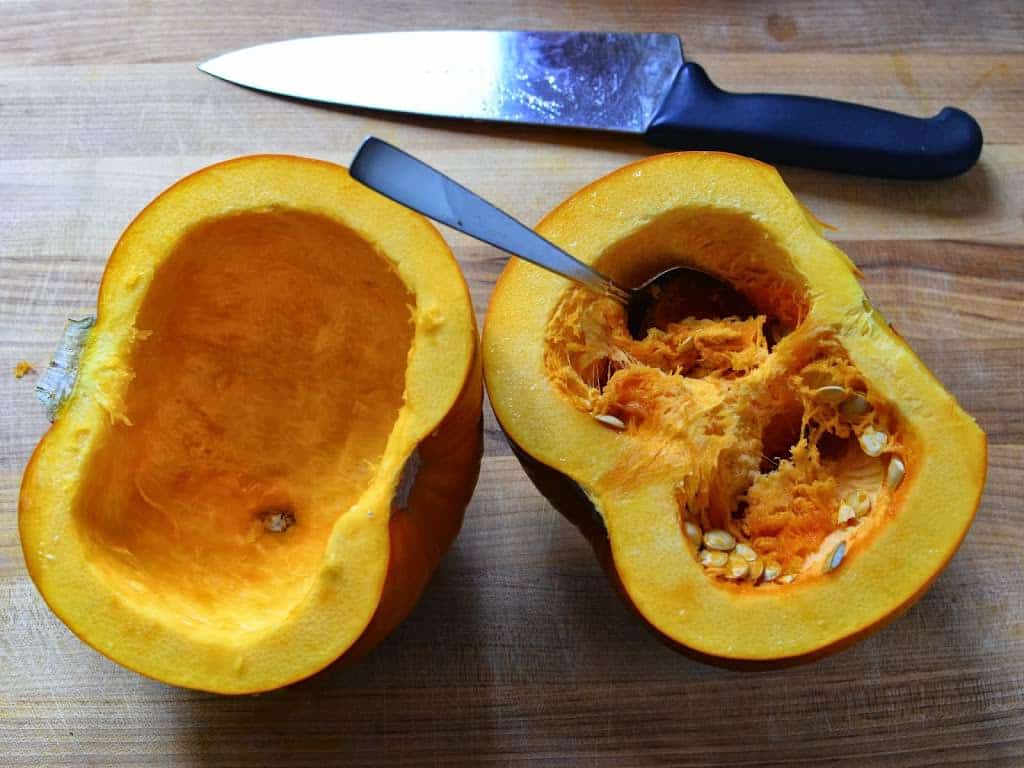
Grilled Tomato-Tomatillo Salsa

August 20, 2013 by Mike Vrobel 4 Comments

August means local abundance. Every year I make it through my first few months of CSA and the farmers market season, excited about the fresh, local vegetables I was waiting for all winter.
Local storage vegetables are great…but they get old by the time June rolls around.

July is when things really start to roll. Local corn starts to come in, green beans are in season, and the variety at the market starts to pick up.

And then, suddenly, TOMATOES.

The chalkboard at my CSA says things like “take five pounds”, “take six pounds”, or one glorious year, “take eight pounds”. And it’s not just that week - the entire month of August is like that. Week after week, pounds of tomatoes.

And, since tomatillos and hot peppers come in at the same time, salsa is the obvious way to use them up. This year the tomatillos were a little sparse - only a pint of them - so I combined them with tomatoes for a tomato-tomatillo salsa.

Recipe: Grilled Tomato-Tomatillo Salsa


Adapted From: Rick Bayless, Salsas That Cook

Cooking time: 8 minutes

Equipment

  • Grill (I love my Weber Summit, but it's overkill for a batch of salsa at medium heat. Now, if I'm using the rest of the grill for fajitas, then I'm actually using the extra space.)
  • Grill Pan (not absolutely necessary, but it helps keep from chasing vegetables all over the grill, or losing them through the grate)
  • Food processor

Ingredients

  • 1 ½ pounds fresh tomatoes
  • 1 ½ pounds fresh tomatillos, husk removed and sticky coating rinsed off
  • 2 jalapeno peppers
  • 2 cloves garlic, still in their peel
  • ¼ cup cilantro
  • salt to taste

Directions

1. Preheat the grill for direct medium heat

Preheat the grill, then set it up for direct medium heat. On my Weber Summit, I preheat the grill with all burners on high for 15 minutes, brush the grate clean with my grill brush, then turn the burners down to medium.

2. Grill the vegetables over direct medium heat

Put the tomatoes, tomatillos, jalapenos, and garlic cloves on the grill over direct medium heat. (This is easier of you have the grill pan - put everything on the pan, and plop it on top of the grill grate). Grill until blackened in spots on the bottom, about 4 minutes. Flip everything and grill until the other side is blackened and the tomatoes and tomatillos are softened, about 4 more minutes. Remove the vegetables from the grill. (Again, if working with a grill pan, just pick it up - but watch out for drips through the holes in the grate.)

3. Process the salsa until smooth

Peel the garlic, then drop it through the tube of a running food processor, and let it process until it is completely minced. Turn off the processor, stem the jalapenos, then put the jalapenos and cilantro in the food processor and process in one second pulses until minced. Pour in the tomatoes, tomatillos, and any juices, turn the processor on, and process until smooth, about 1 minute.

Notes

  • Process the salsa longer than you think you should. I usually wind up with one stubborn tomatillo that won't break down like the others. Of course, I don't notice it in the food processor - I notice it as I pour the salsa into a bowl to serve, and I have to fish it out. Or pour the salsa back into the food processor and process it some more. (And by "pour the salsa back into the food processor", I mean "pour the salsa back into the food processor…and down the sides, and onto the counter, and make a big mess.")
  • If you can choose your tomatoes, get Roma tomatoes - they're less watery than regular tomatoes, and make a thicker salsa.

What do you think?

Questions? Other ideas? Leave them in the comments section below.

Related Posts:

Grilled Skirt Steak Tacos with Grilled Onions and Jalapenos
Quick Red Salsa
Chiltomate - Grilled tomato and habaerno salsa

*Enjoyed this post? Want to help out DadCooksDinner? Subscribe to DadCooksDinner using the RSS or Email options on the right, recommend DadCooksDinner to your friends, buy something from Amazon.com through the links on this site, or donate through my tip jar. Thank you.
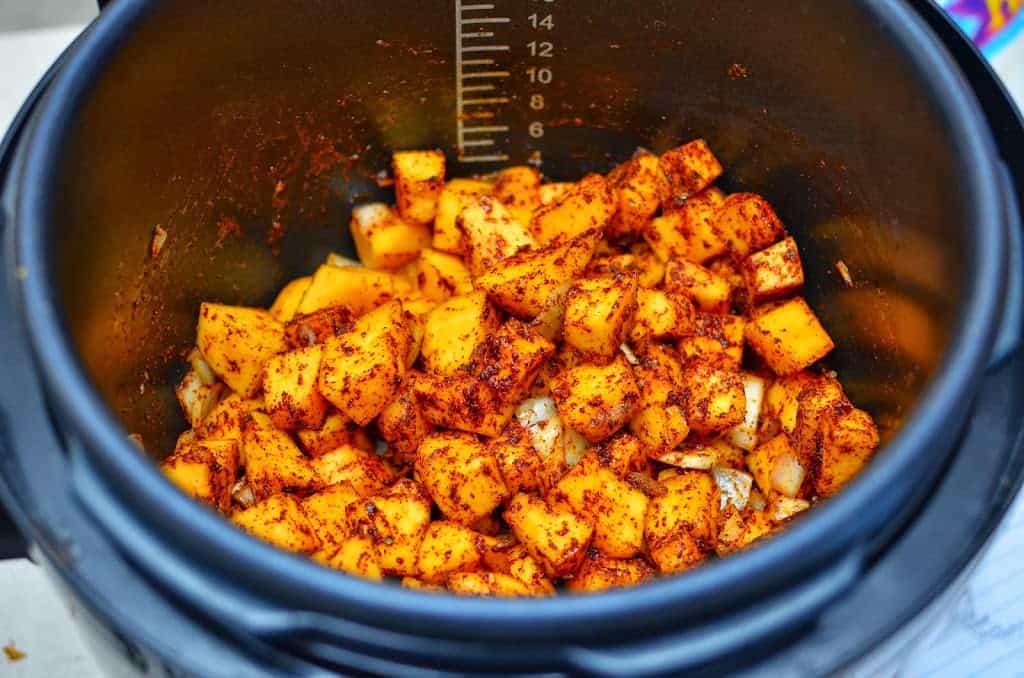
Pickled Dill Carrots

August 15, 2013 by Mike Vrobel 1 Comment

When I put a jar of hot giardiniera on the table, my wife digs in, pushing aside the cauliflower, jalapeños, and other vegetables so she can get at the carrots. Pretty soon all the carrots are gone, and it’s up to me to finish the rest of the jar.

Unfortunately, I can ignore things that are right in front of my nose. I spent weeks looking for a hot giardiniera recipe that was canning compatible. I didn’t find one with the same mix of vegetables we get in the grocery store version. I told Diane this, and she said “can you make pickled carrots? That’s my favorite part.”

Well, Duh. I knew she only ate the carrots. Why didn’t I start there?

This is another recipe that I’m revisiting. My pickled carrot technique has changed, and I wanted to share the new, simplified version of the recipe.

Recipe: Pickled Dill Carrots


Adapted from: Judi Kingry and Lauren Devine, Ball Complete Book of Home Preserving
Cooking time: 10 minutes (more at altitude)

Equipment

  • 6 pint canning jars and lids
  • Giant pot for water bath, with a rack to keep the jars off the bottom
  • Large sauce pot for vinegar brine
  • Canning tongs
  • (Other canning equipment, like lid lifters and canning funnels are helpful, but you can work around not having them)

Ingredients

  • 5 pounds carrots, ends trimmed, peeled, and sliced into ¼ inch rings
  • 3 large jalapeño peppers, stem trimmed and sliced into ¼ inch rings

Vinegar brine

  • 6 cups white vinegar
  • 2 cups water
  • ½ cup canning salt

Spices

  • 6 cloves garlic, peeled
  • 3 teaspoons dill seed (½ teaspoon per jar)

Directions

1. Prep the carrots and jalapenos

Peel the carrots, the slice into ¼ inch thick slices. (A mandoline makes quick work of the slicing, but be careful. Carrots are tough, and take some force to slice - watch your fingers.). Slice the jalapeños into ¼ inch thick slices.

2. Pack the jars

Sterilize the pint jars in a pot full of boiling water (or running through the dishwasher). Into each jar put 1 clove of garlic, ½ teaspoon of dill seed, and three jalapeño slices (about half a jalapeño pepper per jar). Tightly pack the jar with carrots. In a large saucepan, bring the vinegar, water, and pickling salt to a boil to make the brine. Carefully ladle the hot brine over the beans, leaving at least ¼ inch of headroom in each jar.

3. Process the jars

For an overview of canning, see Using Boiling Water Canners and Principles of Home Canning [pdf][uga.edu/nchfp]Wipe the edge of the jars clean with a damp cloth, then put the lids and rings on the jars. Process the pickles in a boiling water bath for 10 minutes (more at higher altitudes). Let the pickles cool overnight, then remove the rings and test the seal on the lids. Wait 2 days before opening to let the beans pickle; a week would be better.

Notes

  • Want to take the easy way out, and skip all the peeling and slicing? Use baby carrots from the grocery store.
  • Intimidated by the boiling water bath part of canning? No worries. Do everything through step 2, then refrigerate the pickles. They'll be ready to eat in two days, and they'll last for about a month in the refrigerator.
  • Six jars is an approximation - if you wind up with extra, that's a bonus. If you wind up with one more jar than will fit in your canning pot, treat it as a jar of refrigerator pickles, and eat it first.
  • If any of the jars don't seal, don't worry - they just became refrigerator pickles. Refrigerate them and eat them within a month.
  • I try to be careful when changing canning recipes. They recipes must have specific levels of acidity and salinity to preserve the food. Pickles are pretty safe; the acidity in vinegar lets me play around with the spices and a little with the ingredients, but I am careful to follow the brine and vegetable proportions from tested recipes. (That is, recipes tested by a state extension office to be safe for canning.)
  • Unlike green beans, Ball's heritage blue canning jars do NOT make carrot pickles look good. The blue tint makes the carrots look green. Stick with clear jars for these pickles.

What do you think?

Questions? Other ideas? Leave them in the comments section below.

Related posts

Spicy Pickled Carrots
Pickled Asparagus with Hot Peppers and Garlic
Things I Love: Canning Jars

*Enjoyed this post? Want to help out DadCooksDinner? Subscribe to DadCooksDinner using the RSS or Email options on the right, recommend DadCooksDinner to your friends, buy something from Amazon.com through the links on this site, or donate through my tip jar. Thank you.
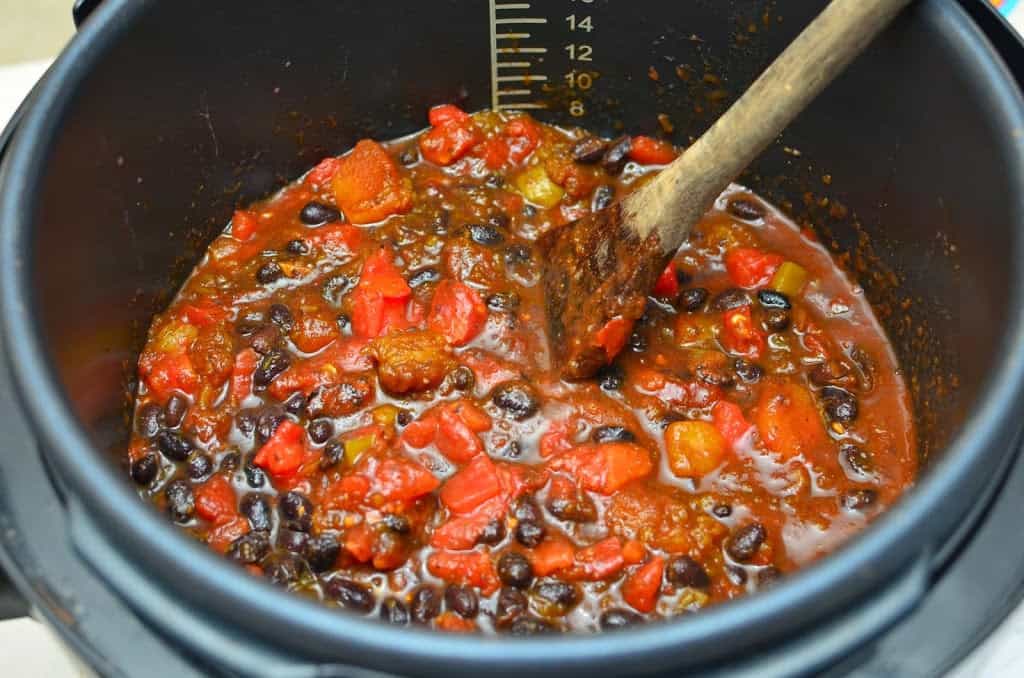
Pickled Dill Beans

August 13, 2013 by Mike Vrobel 3 Comments

This week, I’m updating my favorite canning recipes.
Late summer vegetables are here! Whoo hoo!

My wife devours pickled green beans. I used to make refrigerator pickled dilly beans, but it felt like the jars would be empty before I got them into the refrigerator. I doubled the recipe, then doubled it again, and switched to canning the pickled beans. I finally got ahead of her - the pickled green beans last into the fall.

While I was at it, I switched to a recipe without sugar in it. The traditional “Dilly Bean” recipe is just too sweet for me. (And that’s why I’m calling these Pickled Dill Green Beans - they seem closer to dill pickles than dilly beans.)

The only problem with this recipe? There’s a lot of chopping to trim five pounds of green beans. I try to sign the rest of the family up for a pickling party…and the kids run for the exits like I set off the smoke alarm. At least Diane is willing to help, with visions of pickled beans dancing in her head.

Recipe: Pickled Dill Beans


Adapted From: Ball Blue Book

Processing time: 10 minutes (more at altitude)

Equipment

  • 6 pint canning jars and lids
  • Giant pot for water bath, with a rack to keep the jars off the bottom
  • Large sauce pot for vinegar brine
  • Canning tongs
  • (Other canning equipment, like lid lifters and canning funnels are helpful, but you can work around not having them)

Ingredients

  • 5 pounds green beans

Vinegar Brine

  • 4 cups white vinegar
  • 4 cups water
  • ¼ cup canning salt

Spices

  • 6 cloves garlic, peeled
  • 3 teaspoons crushed red pepper flakes (½ teaspoon per jar)
  • 3 teaspoons dill seed (½ teaspoon per jar)

Directions

1. Prep the beans

Rinse the beans, then trim the stem ends from the beans and discard. Cut the beans into 4 inch long pieces, so they fit in the jars with a ½ inch of headroom.
Save the leftover ends of the beans for another meal.

2. Pack the jars

Sterilize the pint jars in a pot full of boiling water (or running through the dishwasher). Into each jar put 1 clove of garlic, ½ teaspoon of crushed red pepper flakes, and ½ teaspoon of dill seed. Tightly pack each jar with beans, tips pointing down. In a large saucepan, bring the vinegar, water, and pickling salt to a boil to make the brine. Carefully ladle the hot brine over the beans, leaving at least ¼ inch of headroom in each jar. If any of the beans are too tall and poke out of the brine, snip the exposed end with a pair of kitchen scissors.

3. Process the jars

For an overview of canning, see Using Boiling Water Canners and Principles of Home Canning [pdf][uga.edu/nchfp]
Wipe the edge of the jars clean with a damp cloth, then put the lids and rings on the jars. Process the pickles in a boiling water bath for 10 minutes (more at higher altitudes). Let the pickles cool overnight, then remove the rings and test the seal on the lids. Wait 2 days before opening to let the beans pickle; a week would be better.

Notes

  • Intimidated by the boiling water bath part of canning? No worries. Do everything through step 2, then refrigerate the pickles. They'll be ready to eat in two days, and they'll last for about a month in the refrigerator.
  • Six jars is an approximation - if you wind up with extra, that's a bonus. If you wind up with one more jar than will fit in your canning pot, treat it as a jar of refrigerator pickles, and eat it first.
  • If any of the jars don't seal, don't worry - they just became refrigerator pickles. Refrigerate them and eat them within a month.
  • I try to be careful when changing canning recipes. They recipes must have specific levels of acidity and salinity to preserve the food. Pickles are pretty safe; the acidity in vinegar lets me play around with the spices and a little with the ingredients, but I am careful to follow the brine and vegetable proportions from tested recipes. (That is, recipes tested by a state extension office to be safe for canning.)
  • I leave the pointy end on the beans. Some people (like my Mom) believe beans should be trimmed on both ends. If you agree with Mom, make sure you get longer beans, to add a little extra height when you trim the other end.
  • Ball's heritage blue canning jars make pickled green beans look good - the blue tint makes the olive gray pickled beans look more green. Compare the beans in the picture at the top of the page - the blue jar is in front, regular clear jars are in back.

What do you think?

Questions? Other ideas? Leave them in the comments section below.

Related Posts:

Pickled Asparagus with Hot Peppers and Garlic
Canning Jar Margaritas
Things I Love: Canning Jars 

*Enjoyed this post? Want to help out DadCooksDinner? Subscribe to DadCooksDinner using the RSS or Email options on the right, recommend DadCooksDinner to your friends, buy something from Amazon.com through the links on this site, or donate through my tip jar. Thank you.
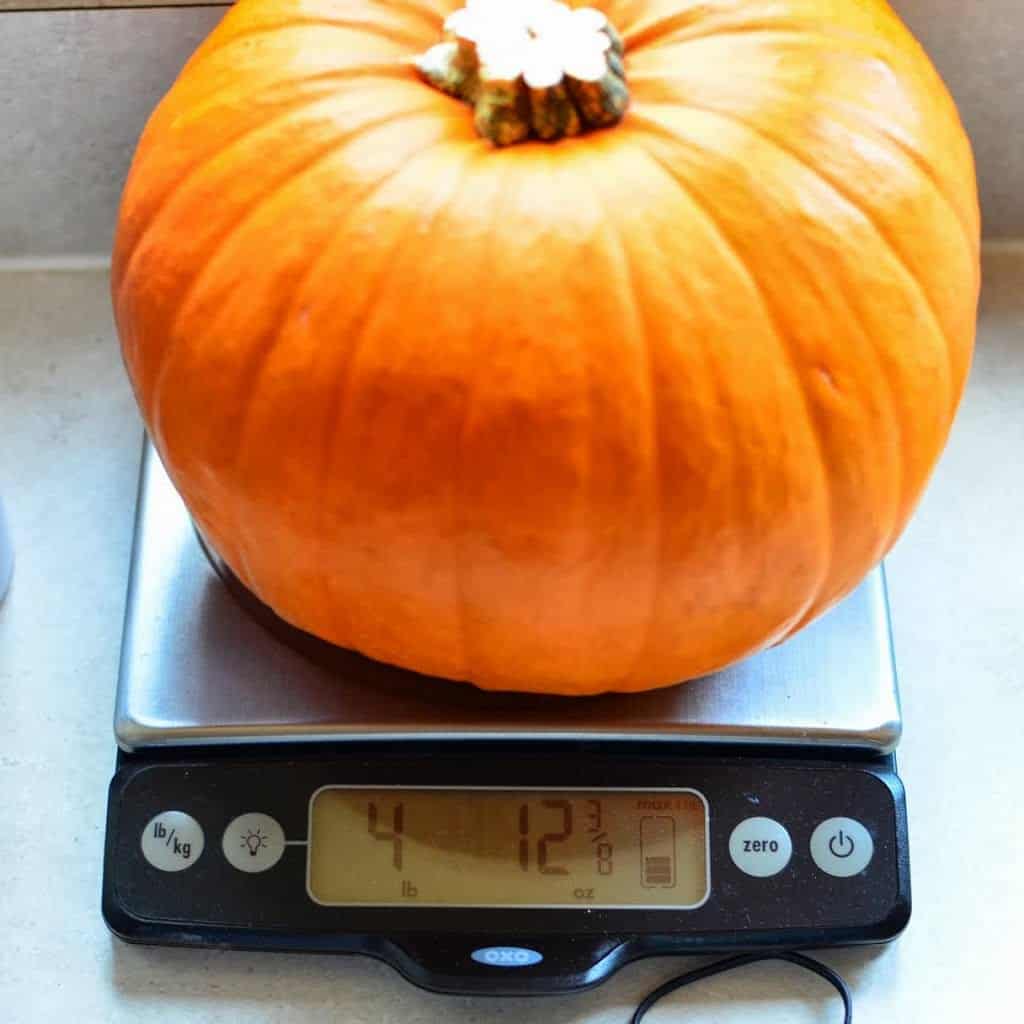
Grilled Shrimp Skewers with Knob Creek Pineapple Glaze

August 8, 2013 by Mike Vrobel 4 Comments

Grilled shrimp skewers on a red platter

Grilled Shrimp Skewers with Knob Creek Pineapple Glaze. Pineapple and bourbon make a great glaze for grilled shrimp.

Knob Creek and pineapple? Absolutely! Knob Creek plays particularly well with pineapple - the big bourbon flavor is a great match for the sweet and sour fruit. I layer those flavors on grilled shrimp, first as a marinade, then as a grilling glaze. Bland shrimp? Not when I'm done with it.These shrimp can be an appetizer or main course. If I'm serving the shrimp as an appetizer, I use short skewers, with three shrimp per skewer. I serve the skewers hot off the grill.

Grilled shrimp skewers on a red platter
Grilled Shrimp Skewers with Knob Creek Pineapple Glaze


I made these for a party, and the smell of the grilling shrimp drew in my guests. I barely got them off the grill grates before they were devoured.


This recipe is sponsored by Knob Creek Bourbon - they kindly sent me some bottles of their product, and are featuring this recipe on the Brothers of Bourbon site. Give them a visit, and tell them DadCooksDinner sent you!


For dinner sized servings, I use longer skewers with six shrimp per skewer. That should make eight skewers, which is enough for four people.
Or one or two hungry guys. If you're serving more people, get more shrimp. The recipe easily scales up; the only real work is skewering.

And, of course, the bourbon flavor in the shrimp makes these a great match for a glass of Knob Creek. Enjoy!

Skewering marinated shrimp
Brushing glaze on grilled shrimp
Brush with the glaze
A plate of grilled shrimp, with a glass of Knob Creek bourbon
Shrimp and Knob Creek bourbon, ready to eat

What do you think?

Questions? Other ideas? Leave them in the comments section below.

Related Posts

Grilled Pork Chops with Bourbon Brine and Baste
Grilled Thin Pork Chops, Quick Brinerated
Grilled Pork Chops with Knob Creek Lemon Glaze

Enjoyed this post? Want to help out DadCooksDinner? Subscribe to DadCooksDinner using the RSS or Email options on the right, recommend DadCooksDinner to your friends, buy something from Amazon.com through the links on this site, or donate through my tip jar. Thank you.

Five Fun Food Finds August 2013

August 6, 2013 by Mike Vrobel Leave a Comment

Time for some late summer food links!

1. Multi-grill entertaining with Mike from Ohio at AnotherPintPlease.com

No, not me, the other grill crazy blogger named Mike from Ohio - Mike at AnotherPintPlease. He walks us through his setup for a party - rotisserie chicken, pulled pork, and brisket. And, based on his recommendation, I have a pair of Weber heat-safe BBQ gloves on the way.

2. Cypriot style lamb souvlaki on the rotisserie from Kalofagas.ca

I think of souvlaki as a kebab, with bite-sized pieces of meat. This is the Mongo version - hunks of lamb on a rotisserie spit. I must try this!
*Bonus: Mongo!

3. Corn should NOT be brined! from SeriousEats.com

Years ago, I read about brining corn before grilling in Cooks Illustrated. Kenji Alt puts this to the test in The Food Lab, and the results are not good. Don’t brine the corn. (I updated my grilled corn recipe to reflect this.)
Bonus: Kenji had a run of great grilled corn recipes; I think the Buffalo Style Grilled Corn was my favorite.

4. Grilled salmon Nicoise from ThreeManyCooks.com

Pam substitutes salmon for (expensive, endangered) tuna in a Salade Nicoise. This is a wonderful dinner salad, and it will satisfy the most dedicated carnivore. (Like, say, me.) To eat sustainable seafood, make sure to buy Alaskan salmon. I love copper river salmon, but it can be as expensive as sushi-grade tuna. The less expensive Alaskan salmon breeds, coho and sockeye, are starting to show up - that’s what I buy.

5. Soak your hominy for posole from TheMijaChronicles.com

I cheat when I make pozole. (Or posole. Not sure why there are variant spellings.) I use canned hominy. I followed Rick Bayless’s full-on recipe, and simmered the hominy for hours…but even then it still seemed a little tough. Turns out, the secret is to soak dried hominy like you soak dried beans. Time for me to take another crack at pozole…posole…ok, whatever.

Bonus: The Cure for Worry Porn from CasualKitchen.Blogspot.com

Dan uses food to make his point, but I think it’s bigger than food.Worried about PFOA in your non-stick pans? Cholesterol in your eggs? BPA-lined cans? The China Study? Saccharine? Dan unleashes one of his thought provoking posts, in which he says…we’re being played. Do I agree with him? I’m not sure. He always does this to me, where I tie myself in logical knots. Yes! No! Maybe?
I agree with Dan 100% about the autism-vaccine link being a pack of lies. That one still gets me angry. And I’m tired of relatives forwarding me chain emails about the evils of nonstick (safe if used properly). Now, BPA? From what I’ve read, that needs more study…

What do you think?

Other links you’ve loved? Tell us about them in the comments section below.

*Enjoyed this post? Want to help out DadCooksDinner? Subscribe to DadCooksDinner using the RSS or Email options on the right, recommend DadCooksDinner to your friends, buy something from Amazon.com through the links on this site, or donate through my tip jar. Thank you.
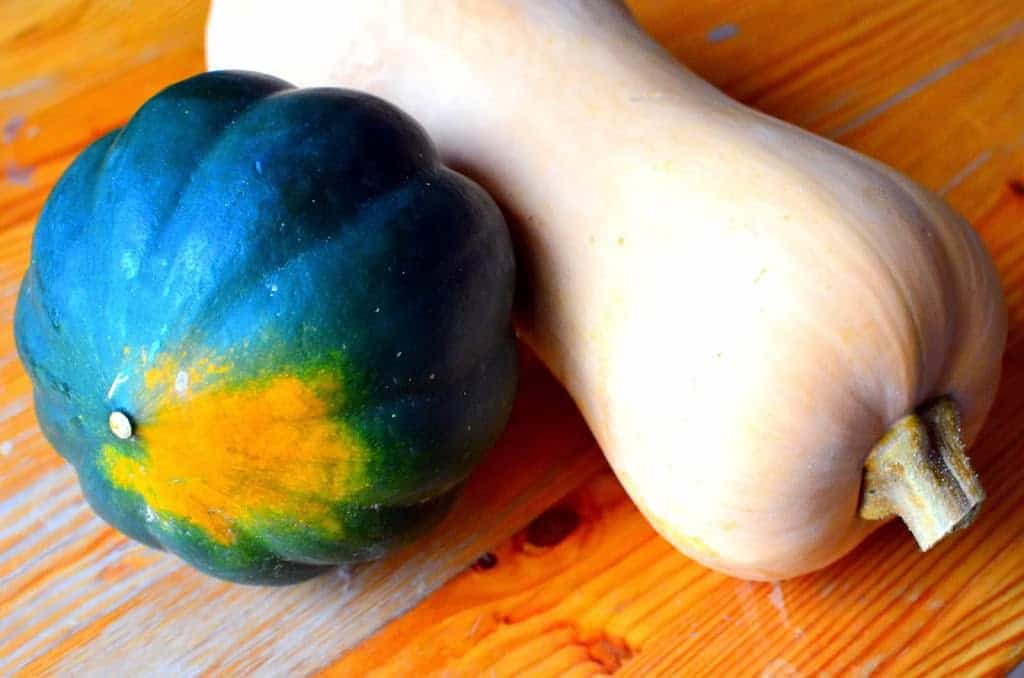
Grilled Sous Vide Filet Mignon with Sous Vide Egg and Fresh Herb Salad

August 1, 2013 by Mike Vrobel 2 Comments

I didn’t win the Sous Vide BBQ contest - bummer - but they said I can keep the SousVide Supreme if I send them $100, or write four more sous vide recipes over the next six months. Guess which one the cheapskate chose…

[This] is the stance of a man I met in eastern Africa. He was a reedy, white-blond Berliner named Gregor. Gregor had spent five years driving trucks up and down the coast from Mombasa to Capetown. He had seen a lot of backcountry meals over that time, and whenever he was served one, he reacted in one of two ways. If the plate of food he was handed included an egg, he would look happy and eat. If it didn't, he'd look mournfully up at whoever had delivered it and ask, always as though for the first time: "What about egg?"
Tamar Adler, An Everlasting Meal

Put an egg on top is my new motto.

I’m home alone this week, cooking for one. I also had some important stuff to do (hey, those cookbooks don’t read themselves), so I used the SousVide cooker to do all the hard work:

  • 4:30 PM - Put eggs in sous vide at 62°C. Salt and vacuum seal filet mignon. Go out and mow the lawn
  • 5:30 PM - Drop temp to 54.5°C by adding ice and the filet mignon pouches. Read book, drink tasty beverage
  • 6:15 PM - Preheat grill on high.
  • 6:30 PM - Toss the salad, sear steak on grill, slice, crack an egg on top. Eat! (With another tasty beverage, of course.)

Dinner was on the table with 15 minutes of active time and minimal cleanup. And, in spite of how much laying around I did, it was a feast, not a “food is fuel, dump a salad and throw in some salami.” Um…not like I ate that the day before or anything…
I apologize for repeating myself with put an egg on top. And filet mignon with a salad. And sous vide. I was hungry, and it seemed like a good time to put them all together.

Recipe: Grilled Sous Vide Filet Mignon with Sous Vide Egg and Fresh Herb Salad

Cooking time: 2 hours

Equipment

  • Sous Vide water bath (I used a SousVide Supreme Demi, but you can improvise one with a beer cooler)
  • Vacuum sealer
  • Grill (I use a Weber Summit. Here is the current version of my grill.)

Ingredients

  • 4 large eggs
  • 4 thick cut (8 ounce) filet mignon steaks
  • 2 teaspoons kosher salt (or bonfire smoked sea salt)
  • 16 sprigs thyme (a small handful)
  • 5 ounces fresh herb salad mix (or spring mix, or other salad blend)

Vinaigrette

  • pinch of salt
  • ½ teaspoon fresh ground black pepper
  • 2 tablespoons rose wine vinegar (or sherry vinegar)
  • 1 tablespoon Dijon mustard
  • ¼ cup olive oil

Directions

1. Sous vide the eggs

Set the sous vide for 62°C/143°F, add the eggs, and cook for 1 hour.

2. Sous vide the steak

Drop the sous vide temperature to 54.5°C/130°F (I added 2 cups of ice to help cool it down). Sprinkle the filet mignons with the salt, lay the thyme sprigs on top, then vacuum seal the filets, 2 to a bag. Drop the bags in the sous vide and cook for 1 hour. (Leave the eggs in the sous vide - they’ll be fine.)

3. Set the grill up for direct high heat

After the steaks have been in the sous vide for 45 minutes, set the grill up for cooking on direct high heat. I preheat my Weber Summit with all burners on high for 15 minutes, then brush the grate clean with a grill brush.

4. Prepare the salad

While the grill is preheating: in a large bowl, whisk the vinaigrette ingredients until they emulsify. Dump the fresh herb salad mix on top. (Don’t toss the salad yet - wait until the steaks are cooked.)

How did that picture of a tasty beverage get in here?

5. Sear the steaks

Take the filet mignon bags out of the sous vide, cut the bag open, discard the thyme, and pat the steaks dry with paper towels. Put the steaks on the grill over direct high heat and sear until browned, 1 to 2 minutes, rotating 90 degrees halfway through. Flip the steaks and brown the other side, another 1 to 2 minutes, rotating halfway through. Move the steak to a platter to rest for 5 minutes.

6. Serve

Toss salad with vinaigrette, and split between 4 plates. Slice the filet mignons into ½ inch slices, and fan each steak out on top of a salad. Crack an egg onto the top of each steak and serve immediately.

Notes:

  • I cooked this recipe for one, but wrote it up for four. The extra eggs were for breakfast the next day.
  • Lucky Peach magazine suggested poaching sous vide eggs. I cracked the 62°C egg into a slotted spoon, then dipped it into boiling water to "poach" the loose, outer white. The outer white broke away once it solidified, instead of sticking to the yolk. It wasn't worth the effort. Just crack the 62°C egg right onto the steak. The white will still be runny, but it will mingle with the steak juices and salad dressing.
I need a refill on the tasty beverage, to go with this tasty salad.

What do you think?

Questions? Other ideas? Requests for a recipe that isn't beef on a greens? Leave them in the comments section below. (Requests to skip the egg will be ignored.)

Related Posts:

Grilled Pizza with Egg and Pepperoni.
Plank Grilled Filet Mignon with Blue Cheese Salad
Sous Vide Grilled New York Strip Steaks

*Enjoyed this post? Want to help out DadCooksDinner? Subscribe to DadCooksDinner using the RSS or Email options on the right, recommend DadCooksDinner to your friends, buy something from Amazon.com through the links on this site, or donate through my tip jar. Thank you.
Bonfire Smoked Sea Salt

July 30, 2013 by Mike Vrobel 2 Comments

My vacation is over, and I miss it. It doesn’t help that my wife and kids are still on vacation this week, out at my family’s cottage on Lake Erie, splashing around in the water and toasting marshmallows over a bonfire on the beach.
*Sigh.

That bonfire is what I’m sharing today. I bought a package of Bonfire Smoked Sea Salt from Urban Herbs at the West Side Market in Cleveland. It sat in my pantry until this week. I pulled it out, took a sniff, and was instantly back on the beach, with an imaginary stick and a marshmallow in my hand.

I sprinkled it liberally on a steak. It tasted like it was cooked it over that bonfire on the beach, while the kids toasted marshmallows next to me. It was amazing - the wood smoke shone through.

Next, I tried it on my morning eggs - backing off on the amount, because I didn’t want to over-smoke them - and the results were excellent.

I can’t wait to use bonfire salt with gas grilling. A little sprinkle will stand in for that charcoal flavor.
Or, when I want to remind myself about beach vacations, I take the container out and take a big sniff.

Just watch out - this is heavily smoked salt. Start with a little, taste, and add more as needed. You want a hint of smoke, not a taste like you dropped it in the ashes.

Bonfire salt is available online at SaltWorks. Check your local gourmet cooking stores first, though. You might get lucky and find it without paying for shipping, like I did. If you’re in the Cleveland area, stop by Urban Herbs at the West Side Market. (You have been to the West Side Market, haven’t you?)

What do you think?

Questions? Other ideas? Favorite gourmet salts? Leave them in the comments section below.

Related Posts:

Road Trip: West Side Market
Sichuan Roasted Pepper Salt

*Enjoyed this post? Want to help out DadCooksDinner? Subscribe to DadCooksDinner using the RSS or Email options on the right, recommend DadCooksDinner to your friends, buy something from Amazon.com through the links on this site, or donate through my tip jar. Thank you.
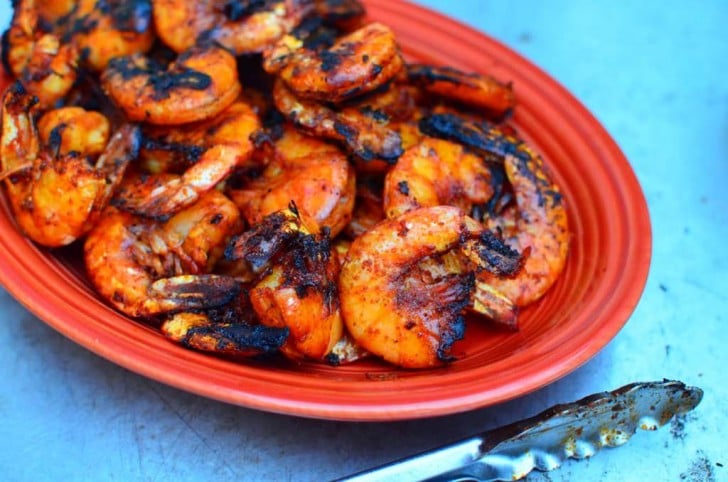
Grilled Skirt Steak Tacos with Jalapenos and Onions

July 25, 2013 by Mike Vrobel 2 Comments

When I can’t think of what to cook, my fallback position is tacos. That’s good, because today’s blog post feels like a fallback position. I just got back from vacation, and I’m hurrying to get a post finished. The pictures and recipe are from a month ago, sitting in my “to finish” pile, but this headnote is a rush job.

Skirt steak makes great tacos, as long as you slice it thin, on the bias, and against the grain. (Don’t worry if that doesn’t make sense - I’ve got pictures below.)
Technically, these are fajitas - fajita means skirt steak in Spanish - but I’m so used to the Tex-Mex definition including grilled green and bell peppers that I can’t bring myself to call them that.

Tacos are best with fresh corn tortillas, from a local tortilleria or homemade. On a busy weeknights I cheat, and use store bought flour tortillas, wrapped in foil and warmed up on the grill.
Don’t buy corn tortillas at your grocery store unless there is a lot of turnover. Corn tortillas don’t age well, and get mealy if they’re not used the day they’re made.

Recipe: Grilled Skirt Steak Tacos with Jalapenos and Onions

Cooking time: 12 minutes

Equipment:

  • Grill (I use a Weber Summit. Here is the current version of my grill.)
  • Grilling skewer (for the onions)

Ingredients

  • 2 (¾ pound) skirt steaks
  • 6 jalapeno peppers (larger is better)
  • 1 medium onion, cut into ½ inch rings
  • 20 flour tortillas, wrapped in heavy duty aluminum foil

Marinade (really a brinerade)

  • ¼ cup pineapple juice
  • 1 clove garlic, minced or pressed through a garlic press
  • 1 tablespoon ancho chile powder (or a chili powder blend)
  • 1 tablespoon kosher salt
  • ¼ cup vegetable oil

Directions

1. Marinate (brinerate) the steaks

Put the steaks in a gallon zip-top bag. In a small bowl, stir the marinade ingredients until the salt dissolves, then pour over the steaks. Seal the bag most of the way closed, squeeze as much air out as possible, then finish sealing the bag. Squish the marinade around through the plastic to make sure it coats the beef. Refrigerate for at least 30 minutes and up to 2 hours. Turn the bag occasionally to redistribute the marinade.

2. Prepare the grill

Set the grill up for cooking with direct medium heat. I preheat my Weber Summit with all the burners on high for 15 minutes, brush the grill grate clean, then turn the burners down to medium.

3. Skewer the onions

After the onions are cut into rings, run a skewer through the middle of the onions to hold them together on the grill.

4. Cook the steaks, peppers, and onions

Quick summary:
Grill the steaks, peppers, onions, and foil wrapped package of tortillas over direct medium heat for 10 to 12 minutes, flipping every three minutes, and rotating the steaks 90 degrees halfway through cooking to give them a diamond pattern of grill marks.

Details:
Remove the steaks from the marinade, letting the excess drip off, and put the steaks on the grill over direct medium heat. Put the peppers, onions, and foil wrapped tortillas on the grill over direct medium heat. Grill with the lid closed as much as possible.

Cook until the steaks have a browned sear marks on the bottom, about 3 minutes, then flip the steaks, the foil pack of tortillas, the onions, and rotate the jalapenos a quarter turn.

Cook the steaks on the second side until they have browned sear marks, another 3 minutes. Flip the steaks, rotating them 90 degrees, to start a diamond pattern; flip the pack of tortillas, the onions, and rotate the jalapenos another quarter turn.

Cook the steaks until they have a browned diamond pattern on the bottom, another three minutes. If you like your skirt steak rare, it should be finished, with an internal temperature of 115°F to 120°F - remove it from the grill. Otherwise, flip the steaks one last time, flip the tortillas, the onions, and turn the jalapenos to their last non-blackened side.

Cook the steaks for another minute (for medium-rare), to 3 minutes (for medium). Remove the steaks and jalapenos to a platter, and the tortillas to a separate plate.

5. Prep for serving

Unwrap the tortillas from the foil, and re-wrap them in a clean kitchen towel. Let everything rest for ten minutes, or until the jalapenos are cool enough to handle. Over the sink, pull the stem and seeds out of the jalapenos, then peel away the blackened skin. (It’s OK if some of the skin sticks; blackened bits of skin add character.) Chop the peeled jalapenos into thin strips.

Cut the skirt steaks into thin strips against the grain. Unfortunately, on skirt steaks, the grain runs across the width of the steak, so you can’t just start slicing on the end. I cut the steak crosswise into 3 or 4 pieces, turn the pieces 90 degrees, and slice them into thin strips. Serve, letting your diners make their own tacos.

Notes:

  • Skirt steak can be hard to find in my neck of the woods - flank steak is much more common in the grocery store. Both work for tacos. If you can't find skirt steaks, here is my recipe for flank steak fajitas.
  • Since the grill is already lit, I warm the tortillas on it - about 30 seconds a side, or until they start to puff up like balloons.
  • Accompaniments: Shredded cabbage or lettuce, shredded or crumbled cheese, and salsa, of course.
  • Fire roasting the jalapenos will cut their heat...but not all the way. Expect them to still have heat.


What do you think? Questions? Other ideas? Leave them in the comments section below.

Related Posts:

Grilled Steak Fajitas
Grilled Mahi-Mahi Tacos with Cabbage Slaw
Grilled Salsa - great if you have extra room on the grill

*Enjoyed this post? Want to help out DadCooksDinner? Subscribe to DadCooksDinner using the RSS or Email options on the right, recommend DadCooksDinner to your friends, buy something from Amazon.com through the links on this site, or donate through my tip jar. Thank you.
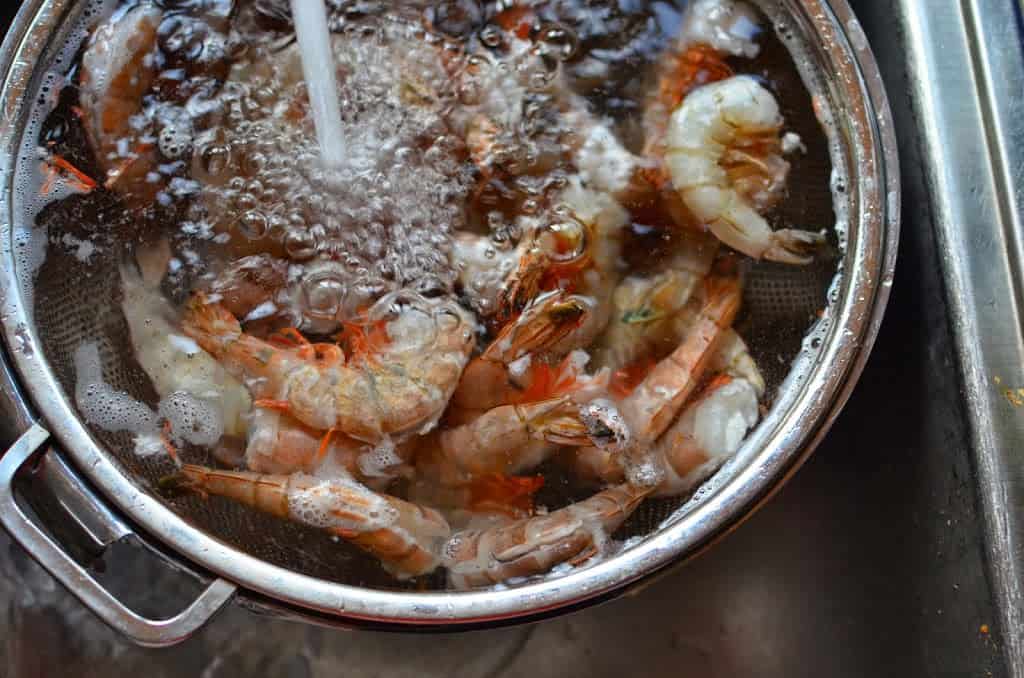
Review: Ceramic Knives

July 23, 2013 by Mike Vrobel 5 Comments

It's sweet when people are in their "I just fell in LOVE w the mandoline" phase, before "MY GOD THIS THING TRIED TO KILL ME."
@Francis_Lam, twitter.

I told my kids that quote as I set my new Kyocera mini mandoline in the sink. They were washing the dishes, and I wanted them to be careful with the ceramic blade.

A few hours later, the mandoline was still in the sink where I left it, untouched and definitely not cleaned. Muttering to myself about how hard it was to find good help these days, I grabbed a dish rag and started cleaning the mandoline. I wiped across the blade…and it cut through the dishcloth and into the tip of my index finger. I looked at my finger in disbelief. The cut was a half inch deep. But that didn’t hurt as much as my pride - I felt like such an idiot.
*Blogging with a butterfly bandage on the tip of your index finger is an adventure. Words with an “I” or a “K” were suddenly a challenge, and I wrote short sentences to avoid commas.

That's the deadly slicer on the bottom left. When it's not going to work
on my fingers, it does a great job...

Before the bleeding stopped, the thought popped into my head. “Wow - that is one sharp blade. Maybe it’s time to try a ceramic knife?”

That’s right, I use injuries as an excuse to buy a new knife.

I read up a bit on ceramic knives, and bought a Kyocera Revolution santoku and paring knife set. I’ve used the santoku as my primary kitchen knife for the last couple of months to test it out.

Ceramic knives are sharp

…and stay sharp. Ceramics are much harder than metal; the edge doesn’t roll over, like a metal knife does, so there is no need to hone a ceramic blade. A ceramic knife will hold its edge for years. But not forever. The hardness of the blade eventually becomes its downfall; microscopic chips break off of the edge of the blade, and the knife dulls as it chips more and more. After a few years of use, the knife needs to be sent back to the manufacturer to be re-ground.
Now, I was a little surprised - the santoku was sharp, but no more than a recently sharpened metal knife. Its advantage is it stays that sharp - it has not dulled in the couple of months I’ve been using it.

Ceramic knives are easy to clean

I was surprised how non-stick the knife surface is. Usually a quick rinse will clean the knife. At most it needs a wipe with a dishcloth (being careful of the blade, of course. I do learn, eventually).

Ceramic knives are lightweight

Now we get to the “could be good, could be bad” part of the review. Ceramic knives are remarkably lightweight. How a knife feels in your hand is a very personal experience - I may like it and you might not. I like my chef’s knife on the light side, but the ceramic blade is so light that it doesn’t feel right. It feels fragile…and that’s where we get to the limitations of ceramic knives.

Ceramic knives are fragile

There’s a downside to ceramic being harder than metal. Metal will flex and bend; ceramics break. Ceramic knives are great for straight line slicing. But there is a substantial list of things you shouldn’t do with a ceramic knife:

  • Prying, carving, boning - anything with bones is trouble
  • Cutting foods with heavy rinds - cheese, melons, pineapple (whoops - I did the last one)
  • Cutting frozen food
  • Smashing (garlic) with the side of the blade
  • Dropping on a hard surface

In other words, ceramic knives are hard, sharp…and brittle. Don’t flex them, or they may crack; don’t cut into hard objects, or they may chip. I was a little surprised by “heavy rinds” on the list, until I thought it through, and remembered my steel knives flexing as they tried to cut through a hard cheese.

No tip

This is related to the “fragile” point, above. Rounded tips are harder to break off.  I occasionally use the tip of my chef's knife for fine work, like slicing shallots, and I missed having that fine point on the end.

Ceramic knives are short

The 5 ½" santoku I’m using is noticeably smaller than my 8 inch chef’s knife. I can slice a flank steak with one pull of an 8 inch knife; 5 ½ inches requires a sawing motion. The longest ceramic blades I could find were 7 inch chef’s knives, and it feels like I’ll miss that extra inch.

Summary: Ceramic Knives are a useful, but specialized, tool

I use a chef’s knife as a multi-purpose kitchen tool. It’s primary use is slicing, of course. But I am not gentle with my chef’s knives. I smash cloves of garlic with the flat of the blade, lean on it to add extra force to cut through squash. My chef’s knife gets use as a cleaver to cut through chicken bones, and occasionally I treat it like a hammer, smashing lobster claws with the spine to crack them open.
The only thing a ceramic knife can do is the first thing - slicing. But it does that job extremely well, with minimal maintenance. I find myself reaching for it if I have a quick cutting job - when all I need is one sliced onion, or a diced pepper, and I’m done. The ceramic santoku has earned its spot in my knife block.
But now I’m wondering if I really want the 7 inch chef’s knife version, to get some extra reach. Or maybe the squared off Japanese vegetable cleaver for fine slicing…

As for the treacherous mandoline? I’m keeping it, too. I just need to practice what I preach, and respect a sharp blade.

Bonus: how do you pronounce Kyocera?

This has bothered me for years…until I found out it’s a shortened version of Kyoto Ceramics, and is pronounced by mashing those two words together: Key-Oh-Sarah.
Ceramic knife care and use instructions [KyoceraAdvancedCeramics.com, PDF]

Grilled Pizza with Egg and Pepperoni

July 18, 2013 by Mike Vrobel 3 Comments

My wife is the baker in the family. Dad may cook dinner, but Mom does the baking. Grilled pizza is a team effort - we get everyone involved. Mom makes the dough while I make the sauce and dice the toppings, then the kids top the pizzas while I grill them.

My wife is at a conference this week, and the kids are asking for pizza. It’s time to face my baking fears and figure out pizza dough.
Of course, I have to tinker with the dough while work on it. Shhh…Don’t tell Diane.

My dough is based on Michael Ruhlman’s 5:3 flour/water ratio, kneaded in the food processor. The food processor makes quick work of pizza dough - 30 seconds and the dough is formed into a rough ball. The dough gets a little hand kneading, then rests for an hour. I prefer working with smaller pizzas on the grill - about 8 inches across - so I divide the dough into eight mini pizzas, and roll them out. Or, should I say, try to roll them out. This is where my weakness as a baker shows; I get flour over everything, and the pizzas come out shaped like amoebas. That’s OK - they’ll taste fine.

Some of you are saying “Wait, wait, wait. Pizza? On the grill? How? Why?” The trick is to bake one side of the pizza round over direct heat, to firm it up. Then, the pizzas come off the grill, get topped with whatever toppings you like, and go back on the grill over indirect heat to finish cooking and melt the cheese.

Why? The crust comes out crispy and golden, the kids love having their own pizzas, topped the way they want them, and I get to cook on the grill. Everybody wins.

The pizza goes right on the grate?

Yes, the pizzas go straight on the grill grate. You have to lay them on carefully, and they’ll probably get (more) amoeba like as you do, but once they bake on the first side they firm up, lift off the grill easily with a spatula, and are easy to work with.

What about (fill in fancy pizza insert here)

I have Weber’s pizza stone, but I don’t like it - I’d rather work on the bare grill grate. The stone heats up, but the air in the grill cools down whenever you open the lid. And, I can only cook one pizza at a time; I can do two at a time on my kettle grill, or four at a time on my massive Weber Summit. I’ve read about the fancy add-ons for kettle grills that turn them into wood fired pizza ovens - see this one from Kenji Alt at Serious Eats, and this one from Charlie at the Cooking Animal. These rigs look fabulous, but they are duplicating a pizza oven, not grilled pizza. They are two different styles of pizza, and I like grilled pizza just fine.

Recipe: Grilled Pizza with Egg and Pepperoni


Adapted from:
Mark Bittman: Pizza on the grill
Michael Ruhlman: Pizza dough ratio

Cooking time: 120 minutes, including dough rising and shaping.

Equipment:

  • Grill (I love the extra space on my Weber Summit for pizza, but you can cook pizzas on anything Weber Kettle sized or larger.)
  • Food Processor (11 cup or larger)

Ingredients

Pizza Dough

  • 4 ½ cups ( 20 ounces / 567 grams) bread flour (or all purpose flour), plus extra for sprinkling
  • 1 envelope (2 ¼ teaspoons / ¼ ounce / 7 grams) instant yeast
  • 1 ½ teaspoons ( ⅓ ounce / 9 grams ) table salt
  • 2 tablespoons (1 ounce / 30 ml) olive oil
  • 1 ½ cups ( 12 ounces / 340 ml ) water

Pizza Sauce

  • 1 tablespoon olive oil
  • 1 clove garlic, minced
  • 14.5 ounce can tomato sauce
  • 1 sprig fresh oregano (or ½ teaspoon dried oregano)
  • 1 sprig fresh basil (or ½ teaspoon dried basil)

Toppings

  • Olive oil for brushing the dough
  • Pepperoni
  • 12 ounces shredded mozzarella
  • 2 ounces shredded Parmesan
  • Eggs (each egg cracked into a teacup - it should go on the pizza after it's on the grill), optional

Directions

1. Knead the pizza dough in the food processor

Put the flour, yeast, and salt in the food processor, and pulse a couple of times to mix them. Turn the food processor on, and slowly pour the olive oil and water through the feed tube. Process until the dough forms a wet ball, about 30 seconds.

2. Form a dough ball and rest the dough

Sprinkle flour on the counter, turn the dough ball on to the counter, and knead until the ball is smooth and stretchy. Put the dough ball in a large bowl and cover with a piece of plastic wrap. Let the ball sit at at room temperature until it doubles in size, about an hour.

Done kneading
An hour later, after resting

3. Set the grill up for 2 zone cooking on medium heat

Set the grill up so half the grill is set for medium heat, and the other half has no heat. For my gas grill, I preheat with all the burners on high, brush the grate clean, then turn half the burners down to medium and the other half off. For my charcoal grill, I light a ¾ full chimney of charcoal, wait for it to be covered with gray ash, then pour it in a single layer of coals over half the grill.

4. Make the sauce

While the grill is preheating: heat the olive oil over medium heat in a medium sauce pan. Once the oil is shimmering, add the garlic. Let the garlic sizzle for 30 seconds, then add the tomato sauce, oregano, an basil. Bring the sauce to a simmer, then reduce the heat and simmer for ten minutes, or until the sauce thickens. (If you have a splatter guard that fits your pan, now is a good time to use it.) Discard the oregano and basil sprigs.

4. Shape the pizzas

Sprinkle more flour on the counter, and then turn the dough ball onto the counter. Divide the ball into eight pieces, and roll each piece into a ball. Roll each ball into a thin 8 inch pizza round, flouring the counter, the dough, and the rolling pin as needed. Transfer the pizzas to cookie sheets as you finish rolling them.

5. Grill one side of the pizzas

Brush the top side of the pizzas with a little olive oil. Work in batches, 2 to 4 pizzas at a time, depending on the size of the grill. Carefully lay each pizza onto the direct medium heat side of the grill, oiled side down. Grill until bubbles form on the top of the dough, and the bottom is toasted brown, about 2 minutes. If the grill has hot spots, especially with charcoal, rotate the dough halfway through cooking to get the other side facing the fire. Move the rounds back to the cookie sheets, toasted side facing up. Repeat until all the pizzas are grilled on one side.

Right after laying it on the grill grate
Two minutes later - nice and bubbly
Toasted on the bottom, ready for toppings

6. Top the pizzas

Spread a thin coat of the pizza sauce over each pizza, about 2 tablespoons per pizza. Add the toppings, except for the eggs, then sprinkle with cheese (mostly mozzarella, just a pinch of Parmesan). If you are topping a pizza with an egg, make a divot in the middle of the pizza by pressing down on the cheese and toppings with the back of a tablespoon.

7. Finish grilling the pizzas

Work in batches, 2 to 4 pizzas at a time, depending on the size of the grill. Gently transfer the pizzas from the cookie sheet to the unlit side of the grill. If you are topping a pizza with an egg, pour the egg into the divot in the middle of the pizza. Close the lid and cook until the cheese melts and the pizzas are toasted around the edges, about 10 minutes, rotating the pizzas every five minutes. (It will take a few extra minutes - about 15 - for the egg to set on an egg pizza. Be patient with them.) Repeat until all the pizzas are cooked.

8. Serve

Once the first batch of pizzas has cooled for a few minutes, cut into quarters and serve while you finish cooking the rest of the pizzas. (Or, wait until all the pizzas are cooked - they’re OK if they cool down for a while - but I’m not that patient.)

What do you think?

Questions? Other ideas? Favorite pizza toppings? Leave them in the comments section below.

Notes

  • Go crazy with the toppings. We've used sausage (pre-cooked), green peppers, pickled banana peppers, onions, slivered asparagus, mushrooms, olives...let your imagination be your guide.
  • No food processor? Knead the dough by hand (it will take about 20 minutes), or use a stand mixer.
  • I have the best luck rolling the dough out with a rolling pin, always working away from me, and rotating the dough about a quarter turn after every roll.
  • Making the dough may seem like too much work, but it's worth it. That said, if you don't have the time, you can buy pre-made pizza dough from the freezer section of your local grocery store. Put the lump of frozen dough in a bowl, and let it thaw overnight in the refrigerator.
  • If you have a gas grill, you can cheat in step 5, and set the entire grill up for direct medium heat. Cook the first side of the pizzas, then turn half the burners off and set the grill up for indirect medium heat while topping the pizzas. Finish the pizzas in batches using indirect heat.
  • How do you cut an egg pizza? Don't cut right through the middle if you want to pass out slices - the yolk will spill everywhere. Cut in a tic-tac-toe pattern around the edge of the yolk. Dip into the yolk using the outside pieces, and finish with the center piece.

*Enjoyed this post? Want to help out DadCooksDinner? Subscribe to DadCooksDinner using the RSS or Email options on the right, recommend DadCooksDinner to your friends, buy something from Amazon.com through the links on this site, or donate through my tip jar. Thank you.
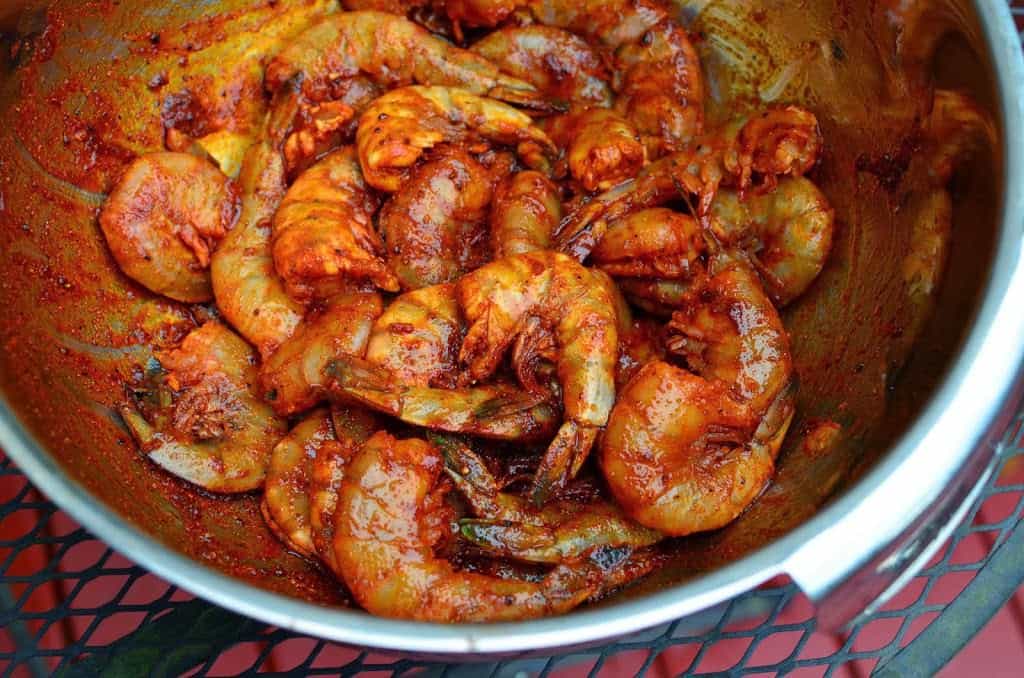
On Vacation

July 16, 2013 by Mike Vrobel Leave a Comment

On vacation - back later this week.
(Photo from last year's vacation - False Klamath Cove, California.)

Plank Grilled Filet Mignon with Blue Cheese Salad

July 11, 2013 by Mike Vrobel 2 Comments

Filet mignon is all about texture. It comes from the tenderloin, a muscle deep in the ribcage of the cow, that doesn’t see much work. The result is smooth and tender meat.

The downside of being all about texture? Tenderloin is bland. It doesn’t have the big, beefy flavor of other, more active muscles. I’m fixing that with an oak plank and blue cheese.

I serve the beef on top of a spring mix salad with blue cheese dressing - I love the bitter greens with beef - and topped the steaks with some of the blue cheese as a finishing touch.

The plank smokes the beef while it protects the thick steaks from the heat of the grill. My kids, who aren’t steak fans, were all over this one. I think the wood smoke sold it - tastes like bacon, they said. I tried to explain that it wasn't really a bacon flavor, and the difference between hickory and oak smoke.  They stopped paying attention, like they always do when I start rambling on about cooking.
What’s that? You already stopped paying attention too? Sorry. I’m done. Here’s the recipe.

Recipe: Plank Grilled Filet Mignon with Blue Cheese Salad

Cooking time: 30 minutes

Equipment

  • Oak Grilling Plank (roughly 1" by 8" by 16")
  • Grill (I use a Weber Kettle, like this one.)

Ingredients

  • 4 (1 ½ inch to 2 inch thick) filet mignons (beef tenderloin steak)
  • 2 teaspoons kosher salt
  • 1 teaspoon fresh ground black pepper
  • 4 ounces crumbled blue cheese

Salad

  • 1 tablespoon sherry vinegar
  • ½ teaspoon fresh ground black pepper
  • ¼ cup olive oil
  • 4 ounces crumbled blue cheese
  • 3 ounces dried cranberries
  • 5 ounces spring mix salad blend

Directions

1. Soak the plank

Put the plank in a large container, weigh it down, and cover with water. Soak for at least one hour, or up to overnight.

2. Season the beef

Sprinkle the filet mignons evenly with the salt and pepper. Let rest at room temperature for one hour, or up to overnight, refrigerated.

3. Set the grill up for indirect high heat

Set the grill up with two heat zones - one zone set to high heat, one zone set to no heat. For my Weber kettle, I light a chimney starter full of charcoal, wait for it to be covered with ash, then pour it in a thick pile covering half of the charcoal grate, leaving the other half of the charcoal grate empty.

4. Prep the salad

While the grill is preheating: in a large bowl, whisk the sherry vinegar, ground black pepper, and olive oil until they emulsify. Add the blue cheese and cranberries, then dump the spring mix on top. (Don’t toss the salad yet - wait until the steaks are cooked.)

5. Plank cook the steaks

When the grill is ready, remove the plank from the water, letting excess water drip off. Put the plank directly over the lit part of the grill, and leave it until it just starts to smoke. Move the plank to the unlit side of the grill, flip the plank over so the smoking side is facing up, and put the tenderloins on the plank. Cook with the lid closed until the tenderloins reach an 120°F internal temperature for medium-rare, about 20 minutes. (For rare, cook to 115°F; for medium, cook to 125°F)

6. Sear the steaks

Move the steaks from the plank to the direct heat side of the grill, with the undercooked side that was touching the plank facing up. Sear the steaks over direct high heat until browned on one side, about 2 minutes, rotating (but not flipping) after a minute to get a diamond pattern of grill marks. Remove the steaks to a platter, and immediately top with the blue cheese.

7. Serve

Let the steaks rest for 10 minutes. Toss the salad, slice the steaks, then serve by putting a big pile of salad on a plate, and topping with the sliced steak.

Notes

  • A probe thermometer makes this recipe easy - stick the probe in the tenderloins on the plank, close the lid, and come back when the alarm goes off. I used a Thermoworks ChefAlarm - it's a probe version of my beloved Thermapen, with an armored probe that has a better chance of surviving direct heat from charcoal. If you use a regular Polder style thermometer, the probe is only heat safe to 480°F or so. Above that the probe will burn out. The armored probe on the dual channel will keep it safe at higher temperatures, up to 650°F or so. (That said, it still shouldn't sit over direct charcoal heat - charcoal can get up to 800°F.)
  • I thought the plank would also give me a reverse searing effect, protecting the beef from the charcoal's heat, and keeping it perfectly pink all the way through. That didn't work out - the grill was too hot, and there was a small ring of overcooked beef around the outside of the steak. I may try this with indirect medium heat next time, about ¾ a chimney of charcoal, and rotate the plank after ten minutes to make sure one side of the beef doesn't overcook. But these were delicious tenderloins - I'm not sure I'll go to the extra effort.


What do you think? Questions? Other ideas? Leave them in the comments section below.

Related Posts:

Cedar Plank Salmon
Plank Grilled Brie with Honey and Thyme

*Enjoyed this post? Want to help out DadCooksDinner? Subscribe to DadCooksDinner using the RSS or Email options on the right, recommend DadCooksDinner to your friends, buy something from Amazon.com through the links on this site, or donate through my tip jar. Thank you.
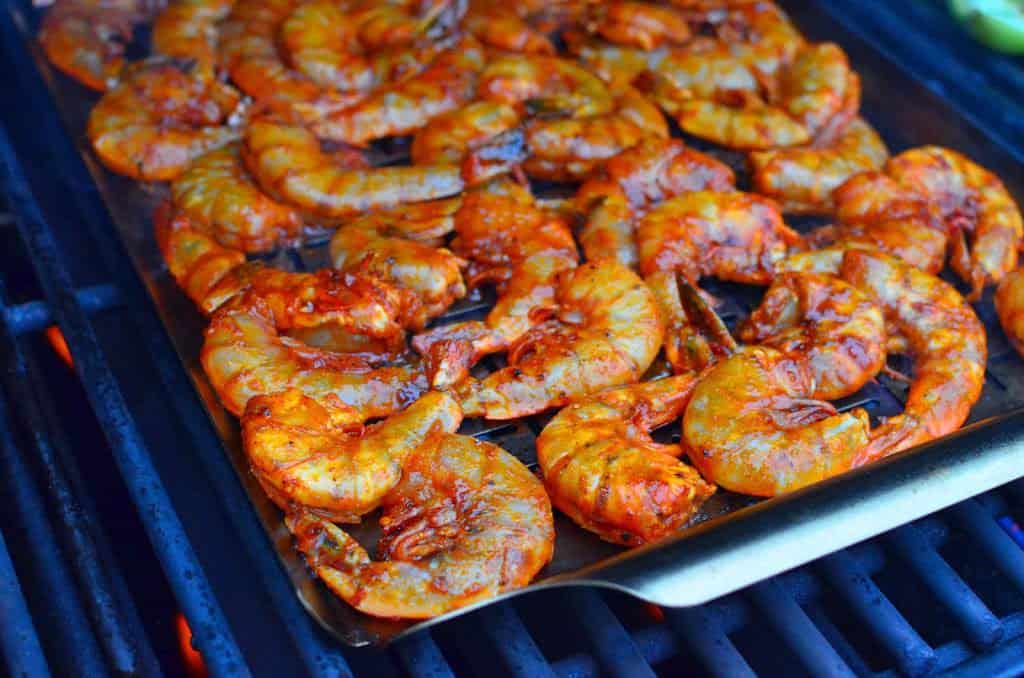
Fun Food Finds: Cooking Graphic Novels

July 9, 2013 by Mike Vrobel 1 Comment

I was a comic book geek when I was a teenager, and worked in a comic book store for a few years. I cut my teeth on Frank Miller's Daredevil, and Alan Moore's Watchmen and Scott McCloud's Zot! still move me.
*Just...don't ask me about the movies. I'm trying to pretend they don't exist.

I love storytelling that combines pictures and words, and I'm excited to share these graphic novels with cooking themes.

Relish: My Life In the Kitchen by Lucy Knisley

Ms. Knisley's autobiography is a full of the joy of growing up in a foodie family, with illustrated recipes after every chapter.

Also by Lucy Knisley: French Milk. If you love Paris as much as I love Paris, this book is for you. It's less cooking centered - a travelogue about a trip in her early 20's to Paris with her mother. If you enjoy Relish, you'll enjoy French Milk, and seeing the characters through Lucy's younger eyes.

In the Kitchen with Alain Passard: Inside the World (and Mind) of a Master Chef by Christophe Blain

An artist spends three years shadowing the chef of a Michelin three star restaurant. This book is a view inside a high end professional kitchen, showing how the chef thinks about food.

Oishinbo by Tetsu Kariya and Akira Hanasaki

Japanese manga about a gifted food lover and his quest to promote traditional Japanese cuisine. Each story is a lesson about a different element of Japanese cooking - how to cut sushi, how to make dashi, how to find good sake. It's ethnocentric, cheesy, and beats you over the head at times...but I'm through volume 3, and can't wait to get the rest of the series.
[Special thanks to Pretty Good Number One: An American Family Eats Tokyo by Matthew Amster-Burton, for turning me on to this series.]

ICYMI: Graphic novels I've mentioned before

  • Get Jiro! is Tony Bourdain's rewrites A Fistful of Dollars as a food novel. Ultra-violent and wickedly funny.
  • Drops of God by Tadashi Agi and Shu Okimoto. Another Manga series, this one about wine. Unfortunately, the American translation only has the first four episodes, then jumps ahead to New World wines.

What do you think? 

Any graphic novels about food that I missed? Let us know in the comments section, below.

*Enjoyed this post? Want to help out DadCooksDinner? Subscribe to DadCooksDinner using the RSS or Email options on the right, recommend DadCooksDinner to your friends, buy something from Amazon.com through the links on this site, or donate through my tip jar. Thank you.
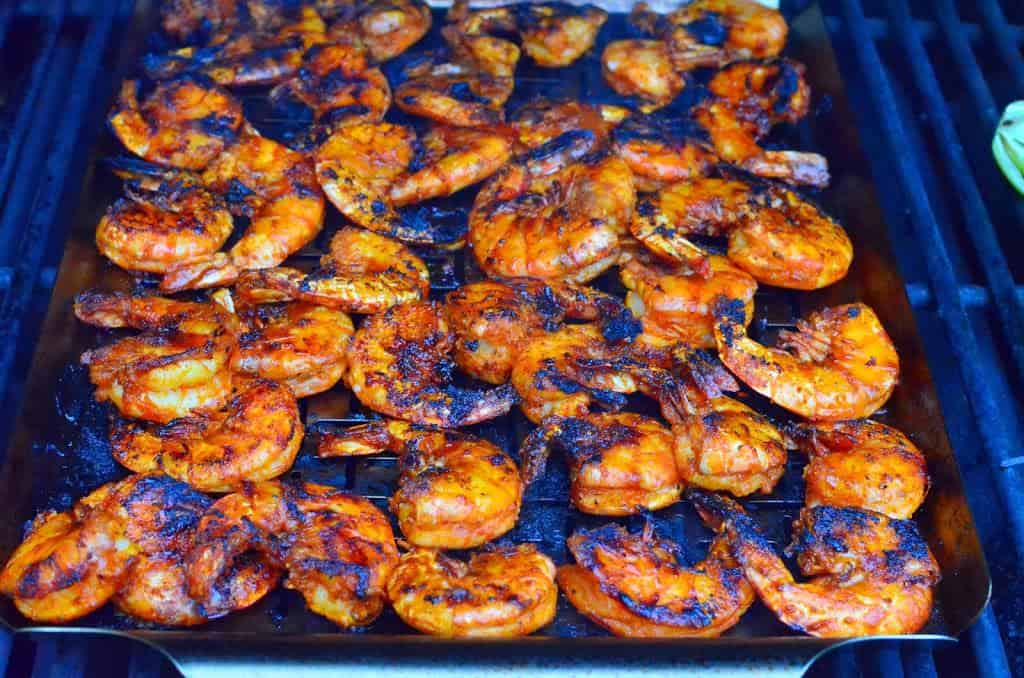
Grilled Pork Chops with Knob Creek Lemon Glaze

July 4, 2013 by Mike Vrobel 1 Comment

A grilled pork chop on a plate with sauteed spinach, and a glass of Knob Creek bourbon

Grilled Pork Chops with Knob Creek Lemon Glaze. The flavors of a whiskey sour make a great grilled pork chop.

Pork loin chops can be dry and bland. Today we're fixing that, taking the flavors of a Knob Creek Sour and building them into the chops. I start with thick-cut, bone in pork chops. The mass of the bone slows down cooking, and the thick chop gives us time to build a browned crust on the outside of the chop without overcooking the inside. I don't cook pork loin past medium doneness; chops are so lean they dry out when cooked past 145°F to 150°F internal temperature. And, best of all, bone in pork chops give me a bone to nibble on as part of dinner.
If you can find Berkshire pork, a heritage breed that isn't as lean as modern pigs, buy it! It's worth the extra money to get a little fat in the meat - fat means flavor.

Grilled Pork Chops with Lemon Bourbon Glaze

This recipe is sponsored by Knob Creek Bourbon - they kindly sent me some bottles of their product, and are featuring this recipe on the Brothers of Bourbon site. Give them a visit, and tell them DadCooksDinner sent you!


[feast_advanced_jump_to]

The first layer of flavor is the marinade - lemon, bourbon, salt, and sugar. This marinade has a lot of salt in it, resulting in a marinade that also works as a brine. While the marinade flavors the outside of the meat, the salt works its way into the meat, seasoning it down to the bone. That brining effect helps the pork hang onto liquid while it cooks, so it doesn't dry out on the grill.
Don't worry, the pork chops won't come out salty - the extra salt is discarded with the excess marinade.

The next layer of flavor is from the grill. Sear the chops directly over the coals to start a beautiful browned crust. Then, move the chops away from the heat, so they can finish gently over indirect heat. We'll add some wood chips, adding a hint of smoke to the pork.

The last layer of flavor is a lemon, bourbon, and brown sugar glaze. This gives the chops sweet-sour crust, with the tart lemon playing off the sweet bourbon and brown sugar.

Bland pork chops? I don't think so.


Pork chops ready to marinate

Thick pork chops marinating in a baking dish with a bottle of Knob Creek bourbon and a lemon in the background
Marinating the pork chops
Pork chops on the grill over indirect heat
Finishing the pork chops over indirect heat
Checking the temperature of pork chops on the grill with a probe thermometer
Pork chops up to temp, ready to come off the grill

What do you think? Questions? Other ideas? Leave them in the comments section below.

Related Posts

Grilled Pork Chops with Bourbon Brine and Baste
Grilled Thin Pork Chops, Quick Brinerated
Grilled Shrimp Skewers with Knob Creek Pineapple Glaze

Enjoyed this post? Want to help out DadCooksDinner? Subscribe to DadCooksDinner using the RSS or Email options on the right, recommend DadCooksDinner to your friends, buy something from Amazon.com through the links on this site, or donate through my tip jar. Thank you.
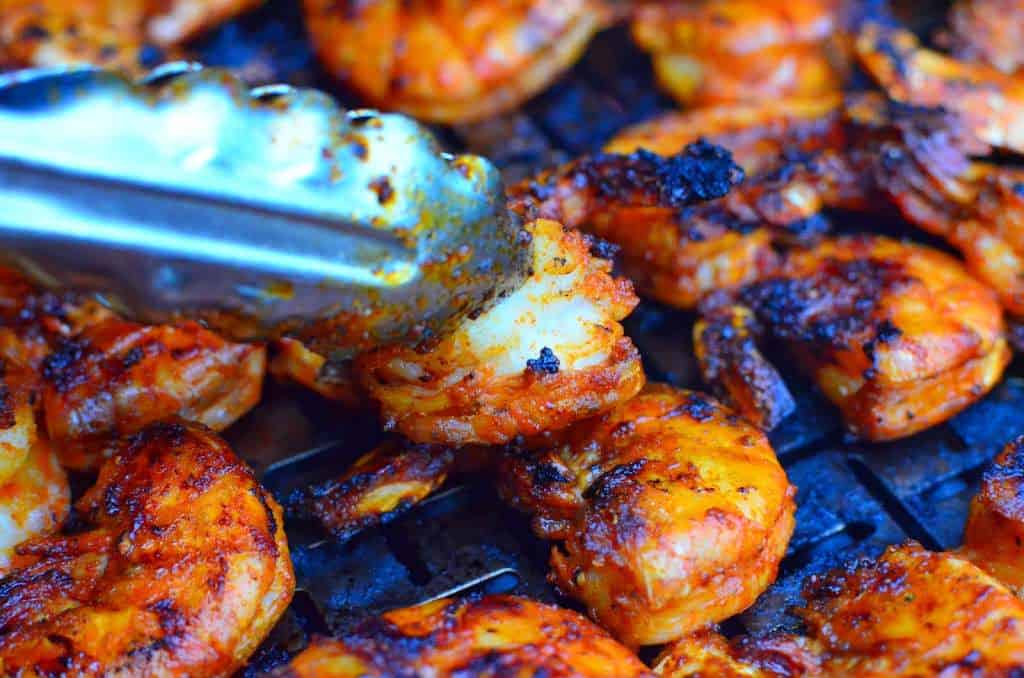
Sous Vide Grilled Lamb T-Bones with Provencal Tian

July 1, 2013 by Mike Vrobel 7 Comments

Sous Vide Lamb and Tian Provencal - plated


Shameless plug alert: This recipe is my entry in the SousVide Supreme Summer Blogger BBQ Challenge. Please go vote for me - if I win the fan favorite voting, I get to keep the SousVide Supreme. Otherwise, I'll have to send it back, and I'll be sad to see it go. There's something in it for you, too, (beyond not listening to me whine: "I could have been a contender.") If you vote, you're entered in a drawing for a $200 gift certificate from SousVide Supreme. So, get over there and vote!
...UPDATE: Whoops. They linked to my 48 hour short ribs recipe, not this one. My fault, and they're trying to fix it. Until they do, please vote for my 48 hour short ribs. Thanks!
Lamb on the grill takes me back to Provence. I spent a week, taking cooking classes and exploring hill towns, the rolling vineyards, the heat of a Provencal summer…

…oh, wait, my memory's getting carried away. I was there in March. A chilly wind was blowing, and I spent most of the time with my jacket zipped up to my neck. But I was at a cooking school in France, drinking Rosé for lunch. How bad could it be?

This recipe takes the flavors from Provence - lamb and herbs, squash and tomatoes, onions, lots of garlic - and cooks them in the SousVide Supreme. Patrick, my Provencal chef, would be appalled by sous vide. He was a traditionalist. Whenever I tried something new, his response was "Louis XIV is rolling over in his grave!" So, my apologies to Le Roi, but I love playing with new cooking techniques.

I sous vide the lamb to a perfect Medium, 140°F, and then sear it on the grill. I didn't believe in vacuum marinating before I started this contest. Now I'm a believer. Vacuum sealing forces the garlic and herb flavors deep into the lamb.

My side dish is Tian Provencal, a stack of thin sliced squash, tomatoes, onions, and basil. I slide the stacks into a vacuum bag, and I seal them with one hand on the cancel button - these are juicy vegetables, and I don't want to flood the vacuum sealer. After fifteen minutes of sous vide cooking, the Tian is tender-crisp and bursting with the flavors of summer produce.

I hope you try this taste of Provence, and then (shameless plug alert #2) go vote for me!!

Recipe: Sous Vide Grilled Lamb T-Bones with Provencal Tian

Cooking time: 64 minutes

Equipment

  • SousVide Supreme Demi
  • Vacuum sealer
  • Grill

Ingredients

Lamb chops

  • 8 (1 inch thick) lamb loin chops (aka lamb t-bones)
  • 4 teaspoons kosher salt
  • 1 teaspoon fresh ground peppercorn mix
  • 8 springs thyme
  • 4 sprigs rosemary, cut in half to make eight pieces
  • 2 cloves garlic, slivered

Tian Provencal

  • 2 medium (3 inch thick) zucchini, sliced into thin rounds
  • 6 Roma tomatoes, cored, sliced into thin rounds
  • 2 medium red onions, halved, then sliced as thin as possible
  • 2 teaspoons kosher salt
  • 5 basil leaves, rolled and cut into ribbons
  • Coarse salt for sprinkling
  • Olive oil for drizzling

Directions

1. Sous Vide the lamb chops

Sprinkle the lamb chops with salt and pepper. Split the lamb chops between 2 small (quart/0.9 liter) vacuum pouches, 4 chops to a bag. Top each chop with a sprig of thyme, a spring of rosemary, and a few slivers of the garlic. Seal the bags and sous vide at 140°F/60°C for at least 1 hour, up to 6 hours.
(140°F is for medium doneness - that's how I like my lamb. For medium-rare, cook at 130°F/54.5°C; for rare, cook at 120°F/49°C)
Vacuum Sealed Lamb with herbs and garlic

2. Assemble and Sous Vide the Tian Provencal

Make an alternating stack of zucchini, onion, and tomato, one slice after another, overlapping them like a fanned out deck of cards. Keep stacking until the row is about 6 inches long - as wide as a small sous vide bag - and finish with a piece of zucchini. Sprinkle the stacks with the kosher salt and basil ribbons. (You should end up with about 8 rows of vegetables, depending on the thickness of size of your slices) Using a thin spatula, carefully pick up the rows of vegetables and transfer them to a small sous vide pouch (quart/0.9 liter). Vacuum seal the bag, canceling the vacuum and sealing the bag as soon as you see liquid start to move from the tomatoes up to the vacuum. Sous vide at 140°F/60°C for 20 minutes. Immediately remove the bag from the water oven, and let it sit while you sear the chops.
Assembling the Tian Provencal Vacuum Sealed Tian Provencal

3. Set the grill for direct high heat

Set the grill up for cooking on direct high heat, and clean the grill grate. For my gas grill, I preheat with all the burners on high for 15 minutes, then brush the grate clean with my grill brush. If you have a sear burner or infrared burner, this is the time to use it - you want the grill as hot as possible.

4. Sear the lamb over direct high heat

Remove the lamb from the bags, remove the herbs and garlic from the lamb, and pat the lamb dry with paper towels. Put the lamb on the grill over direct high heat. Sear, flipping every minute, until the lamb is well browned on both sides, about 4 minutes total. Move the lamb to a platter.
Searing the lamb

5. Serve

Lay the bags of vegetables on a cutting board, cut the sides away from the bags, and carefully lift off the top of the bag. Using a thin spatula, transfer each row of vegetables to a separate plate. Add two lamb chops to the plate, sprinkle the lamb and vegetables with a pinch of the coarse salt, then drizzle the lamb and vegetables with olive oil. Serve.

Notes

  • When buying the vegetables, try to get zucchini and tomatoes that are about the same thickness, so they stack properly. Get an onion that's a little less than twice as thick as the zucchini.
  • The easiest way to thin slice the vegetables is with a mandoline or v-slicer, but the blade has to be dangerously sharp to cut tomatoes. I use a hand-held mandoline with a ceramic blade.
  • Transferring the stacks of vegetables into the sous vide bag is the tricky part. I used my spatula to get the first row as far back in the bag as I could, then used it to push the row against the back of the bag. Then I did the same thing with the next row, pushing it up against the first row; I repeated this process with the other two rows.
  • The other tricky part? Vacuum sealing the bags of vegetables. There is a lot of liquid in tomatoes, so as soon as the liquid starts to move towards the vacuum sealer, cancel the vacuum and hit the sealing button.
  • If you don't feel like carefully stacking the vegetables, toss all the Tian ingredients together in a bowl. Split the vegetables between the two sous vide bags and arrange the vegetables into a flat layer. Or, at least a flattish layer. Then vacuum seal the bags.
  • I think two lamb chops is reasonable serving size for an adult - unless I'm hungry. Then I want three, or maybe four. Scale up the lamb as much as you want.

Sous Vide Lamb and Tian Provencal - plated 2

What do you think? Questions? Other ideas? Leave them in the comments section below.

Related Posts:

Sous Vide Grilled New York Strip Steaks with HerbsSous Vide Grilled Chicken Breasts with Japanese Glaze and Dipping SauceClick here for my other sous vide recipes.

*Enjoyed this post? Want to help out DadCooksDinner? Subscribe to DadCooksDinner using the RSS or Email options on the right, recommend DadCooksDinner to your friends, buy something from Amazon.com through the links on this site, or donate through my tip jar. Thank you.
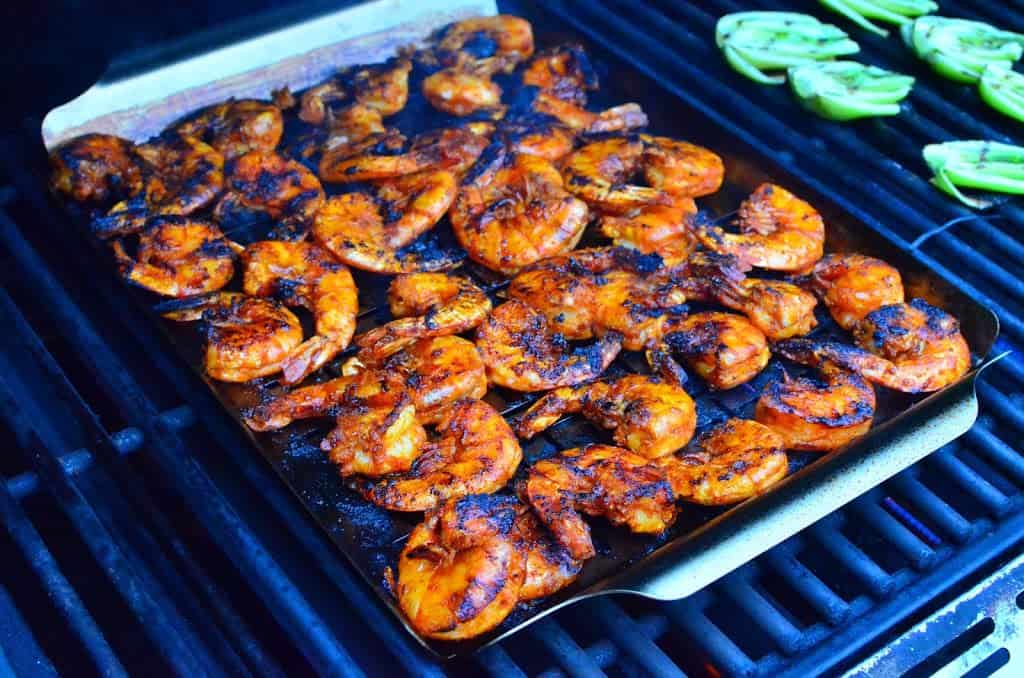
Grilled Chinese Chicken Wings (Chuan’r Chicken Wings)

June 27, 2013 by Mike Vrobel 5 Comments

Grilled Chinese Chicken Wings (Chaunr Chicken Wings) | DadCooksDinner.com
Grilled Chinese Chicken Wings (Chaunr Chicken Wings)

I use a lot of Chinese flavors in my grilling recipes, but I can’t find out much about actual Chinese grilling. Allegedly, the 1.3 billion people in China won’t use a grill. Grilling is low class food, “not fit for the emperor”, so they won’t do it. Now, I know that’s not true - cooking over an open fire is universal, something that happens in every culture, everywhere. But finding examples of Chinese grilling are few and far between.

That’s why I loved this Lillian Chou’s article in Saveur about Chuan’r - grilling in Beijing. It turns out, grilling is alive an well in China. It may not be fine dining, but it is popular street food. Chuan means “threaded”, and Chuan’r (or Chuanr) has come to mean food grilled on skewers. Chuan’r started as lamb skewers - a specialty of the Uighurs, Muslim descendants of the Turks in Western China - and has spread to all sorts of food on skewers.

Ms. Chou’s says Chuan’r cooking “…is heavy handed and the seasonings are over the top.” Sounds perfect to me. Her favorite is chicken wings. Here’s my version, chicken wings, grilled on skewers, Chinese style.

Recipe: Grilled Chinese Chicken Wings (Chuan'r Chicken Wings)

Inspired by Beijing Chicken Wings, Lillian Chou, Saveur magazine June/July 2013.

Equipment:

  • Grill (I love my Weber kettle grill)
  • Skewers (I used 10 inch bamboo skewers)
  • Blender or food processor (for the sauce)

Grilled Chinese Chicken Wings (Chaunr Chicken Wings) | DadCooksDinner.com
Ready for the grill

Grilled Chinese Chicken Wings (Chaunr Chicken Wings) | DadCooksDinner.com
Set up grill for indirect heat

Grilled Chinese Chicken Wings (Chaunr Chicken Wings) | DadCooksDinner.com
Close to done - need a little more time

Grilled Chinese Chicken Wings (Chaunr Chicken Wings) | DadCooksDinner.com
Glazed and finished

Notes:

  • For hot wings, add 1 tablespoon chili paste to the sauce
  • Chicken wings have a lot of fat in them - if at all possible, use a drip pan under the wings during the indirect heat roasting part of the recipe.
  • The sugar in the sauce will burn over direct heat - when you are searing the wings, keep them moving, and get them off the grill the moment the sauce starts to tighten up, or you see a hint of charring.
  • Skewering is authentic...but not absolutely necessary. It makes it easier to flip the wings, especially while they're being seared, but I skip it if it feels like too much work.

What do you think? Questions? Other ideas? Leave them in the comments section below.

Related Posts:

Grilled Miso BBQ Chicken Wings
Grilled Buffalo Chicken Wings
Grilled Korean BBQ Chicken Wings
Instant Pot Chicken Wings
Click here for my other grilling recipes.

*Enjoyed this post? Want to help out DadCooksDinner? Subscribe to DadCooksDinner using the RSS or Email options on the right, recommend DadCooksDinner to your friends, buy something from Amazon.com through the links on this site, or donate through my tip jar. Thank you.

What Do I Do With: The Kohlrabi Issue

June 25, 2013 by Mike Vrobel 7 Comments

I’m digging through my CSA box, seeing what I got this week. Swiss chard - sweet! First bunch of the year! Big head of romaine lettuce - that’s a Greek salad. Snap peas - stir fry, here we come.

Then I see it. Kohlrabi. Two bulbs, one red, one green. My stomach sinks. Darn it, what am I going to do with two bulbs of Kohlrabi?

I’m going to ask my readers, that’s what I’m going to do.

My only recipe takes advantage of Kohlrabi's crunch and turns it into a slaw. I peel it, grate it or slice it thin, and toss it with a vinaigrette dressing.

What do you do with Kohlrabi? How do you cook and serve it? Please leave your ideas in the comments section at the bottom of my blog.

*Enjoyed this post? Want to help out DadCooksDinner? Subscribe to DadCooksDinner using the RSS or Email options on the right, recommend DadCooksDinner to your friends, buy something from Amazon.com through the links on this site, or donate through my tip jar. Thank you.

Pollo a la Brasa (Rotisserie Peruvian Chicken) with Drip Pan Purple Potatoes

June 13, 2013 by Mike Vrobel 26 Comments

Pollo a la Brasa (Rotisserie Peruvian Chicken) with Drip Pan Purple Potatoes. A taste of Peru cooked on the grill in your own back yard.

I heard rumors of Peruvian rotisserie chicken dish, Pollo a la Brasa, but didn't get a chance to try it until a vacation in Sonoma valley. When I saw the restauraunt Sazon Peruvian Cuisine, I dragged everyone there, promising my wife a Pisco Sour and the kids all the french fries they could eat. (Peru is the birthplace of potatoes. I figured I was safe with that promise.) I finally ate my Pollo a la Brasa, and it was as good as advertised. Spicy, crispy chicken skin over juicy roast chicken.

Pollo a la Brasa, Peruvian Rotisserie Chicken, grilling on a rotisserie, with a drip pan full of potatoes underneath
Pollo a la Brasa (Rotisserie Peruvian Chicken)
[feast_advanced_jump_to]

What is Pollo a la Brasa?

Pollo a la Brasa is Peruvian rotisserie chicken. (a la Brasa means grilled in Spanish - literally "to the embers".) In Peru, a whole chicken is seasoned with a spice paste made of aji amarillo peppers, coriander, cumin, paprika, lime juice, and soy sauce. Then it is cooked on the rotisserie until it is browned, crispy, and delicious.

What are Aji Amarillo peppers?

Aji amarillo peppers are Peruvian yellow chili peppers, native to the Andes mountains. Our host at the Peruvian restaurant said the key to Pollo a la Brasa is the Aji Amarillo peppers. (The famous Peruvian dish Aji Verde also depends on Aji amarillo peppers; it gets its green color from the other ingredients.

That's where I hit my only stumbling block in making this recipe at home. Aji peppers are hard to find in Northeastern Ohio. Eventually, I broke down and ordered a (very expensive) jar of Aji Amarillo pepper paste on the Internet.

A jar of Aji Amarillo paste
My jar of Aji Amarillo paste

Of course, I had to make this with Peruvian purple potatoes in the rotisserie drip pan. OK, purple, red and white potatoes. But the purple potatoes were the hit of the show. The kids kept asking - Purple potatoes? Really?

Equipment

  • Grill with rotisserie attachment (I use a Weber Summit)
  • 9 by 13 aluminum foil drip pan (or an enameled steel roasting pan)
  • Butcher's twine
  • Blender or food processor (I use a Vitamix) to make the Peruvian Paste)

How to Make Pollo a la Brasa

  1. Marinate a 4-pound whole chicken in Peruvian Paste, made by blending Aji Amarillo, garlic, ginger, coriander, cumin, paprika, salt, pepper, soy sauce, and lime juice. Marinate the chicken for at least 2 hours, preferably overnight.
  2. An hour before cooking, truss the chicken with kitchen twine, and secure it on the rotisserie spit. (Here's my video on how to truss and spit chickens.) Let the chicken rest at room temperature to take the chill off.
  3. Set the grill up for indirect high heat, with a drip pan in the center of the grill, under where the chicken will sit on the rotisserie spit.
  4. Put the spit on the grill, start the rotisserie spinning, close the lid, and rotisserie grill roast the chicken until it reaches 160°F internal temperature in the deepest part of the breast, measured with an instant-read thermometer. This will take about an hour.
  5. Remove the spit from the grill, remove the chicken from the spit, remove the trussing twine from the chicken, carve the chicken, and serve.

Scaling the recipe

This recipe scales up easily - you can make as many chickens as you can fit on your rotisserie spit. (As you can see in the pictures, I doubled the recipe.) The cooking time doesn't change, because the cooking time is determined by how long it takes each chicken to cook through, not how many chickens there are.

Tips and Tricks

  • If you can't find Aji Amarillo paste (or aren't willing to spend $10 to have a jar shipped, which is what I had to do), substitute a stemmed and seeded jalapeno. It won't have the same taste, but it will give some pepper and heat flavors to the sauce.
  • As you can see in the pictures, I doubled the chicken part of the recipe. I love having leftover chicken later in the week. Two chickens cook for the same time as one chicken.
  • Cook chicken to temperature, not by time! Outdoor cooking is not very precise, some days the grill runs hotter, other days cooler. You'll get the best results by checking the chicken. Use an instant-read thermometer to check the deepest part of the breast meat. Start checking about 10 minutes before the chicken should be done, and pull the chicken off of the grill as soon as it reaches 160°F internal temperature.
  • Don't have a rotisserie? You can use these ingredients to make a grilled chicken. Set the grill up for indirect high heat, with a drip pan under the grill grate. Cook the chicken, breast side up, on the grill grate over indirect heat until it reaches 160°F in the center, about 1 hour. Grilled chicken won't have the same crisp skin as a rotisserie chicken, but it is still quite good. I skip the drip pan potatoes when grilling chicken; the grill grate gets in the way.
A plate with a cooked leg of Pollo a la Brasa, with purple, red, and yellow potatoes
A plate of Pollo a la Brasa with potatoes

What do you think? Questions? Other ideas? Leave them in the comments section below.

Related Posts:

Click here for my other rotisserie recipes.

Check out my Rotisserie Grilling Cookbook:

*Enjoyed this post? Want to help out DadCooksDinner? Subscribe to DadCooksDinner using the RSS or Email options on the right, recommend DadCooksDinner to your friends, buy something from Amazon.com through the links on this site, or donate through my tip jar. Thank you.
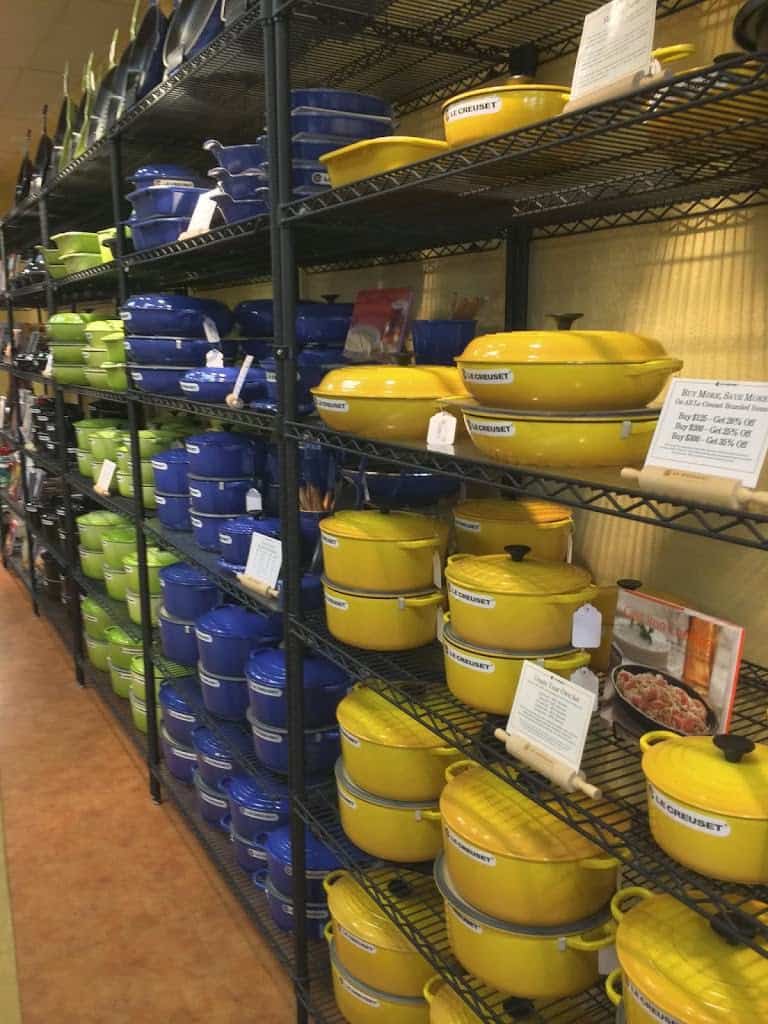
Grilling Accessories From the Hardware Store

June 11, 2013 by Mike Vrobel Leave a Comment

I can’t wait to visit the hardware store in spring. The new grills are in stock, bags of charcoal are stacked to the ceiling, and the grilling accessories take up an entire aisle. I’m like a kid in a toy store.

The grilling aisle isn’t the only place I look. There are grilling accessories hidden in the rest of the hardware store. Here are a few of my favorites.

Note: I have Amazon links to all of these items so you can see what I’m talking about. And, I do get a commission if you buy anything after going through those links. (Thank you!) But, please compare prices: these things tend to be cheaper at the hardware store.

Steel Mesh Side Table

I need extra space around my grill, a staging area where I can put platters, supplies, and a tasty beverage. I lust after the Weber Summit Grill Center with Social Area. But there’s nothing wrong with my 7 year old Summit 650 - it keeps chugging along. So I picked up a steel mesh side table. Now, it doesn’t have to be steel mesh - I have a cheap folding plastic table next to my charcoal grill - but powder coated steel mesh is heat safe, won’t rust, and is cleaned by mother nature every time it rains.

Galvanized Ash Bucket

Charcoal grillers need an ash bucket. I keep mine on a paving stone, to shield the grass from the heat; coals can burn for a surprisingly long time.
Note: Charcoal ashes are corrosive. Galvanized steel will hold up for years, but eventually it rusts through. I consider this the price of grilling, and go buy a new bucket.

Welding Gloves

I’ve mentioned this before - don’t get grilling gloves, get welding gloves. They’re cheaper, and usually more heatproof.

Cedar Planks (or oak, or maple…)

This suggestion is going to get me in trouble, I just know it. But… back when dinosaurs roamed the earth, I was just a novice griller. I wanted to make cedar plank salmon, so I went with the only cedar available to me - a 8 foot long 1 by 8 untreated cedar board from the hardware store. I pulled out my circular saw, cut it into 16 inch lengths, and started to grill.

The key to this is UNTREATED wood. Pressure treated wood is poisonous, so please be careful. I don’t want to lose any of my readers.

Nowadays, it’s easy to find grilling planks, made of all sorts of different wood. (My favorites are oak, alder, and sugar maple, btw.) You don’t have to worry about pre-cut grilling planks being stacked in the back underneath the pressure treated pine. But…my goodness, twenty dollars for 4 feet of cedar? I’m torn on this one. It might be time to get out the circular saw.

LED Headlight

This one is a tip for year round grillers, and a trick I learned from campers - get a LED headlight, strap it to your forehead, and you have a light that shines wherever you look. Sure, you look like an escapee from the Borg, but I’m used to looking like a dork I’d rather not juggle a flashlight, tongs, and a platter of hot food.

What do you think?

Questions? Other ideas? Dire warnings about the danger of pressure treated wood? Leave them in the comments section.

*Enjoyed this post? Want to help out DadCooksDinner? Subscribe to DadCooksDinner using the RSS or Email options on the right, recommend DadCooksDinner to your friends, buy something from Amazon.com through the links on this site, or donate through my tip jar. Thank you.

  • « Previous Page
  • 1
  • …
  • 21
  • 22
  • 23
  • 24
  • 25
  • …
  • 37
  • Next Page »

Welcome to Dad Cooks Dinner!

I'm Mike Vrobel, a dad who cooks dinner every night. I'm an enthusiastic home cook, and I write about pressure cooking, rotisserie grilling, and other food topics that grab my attention.
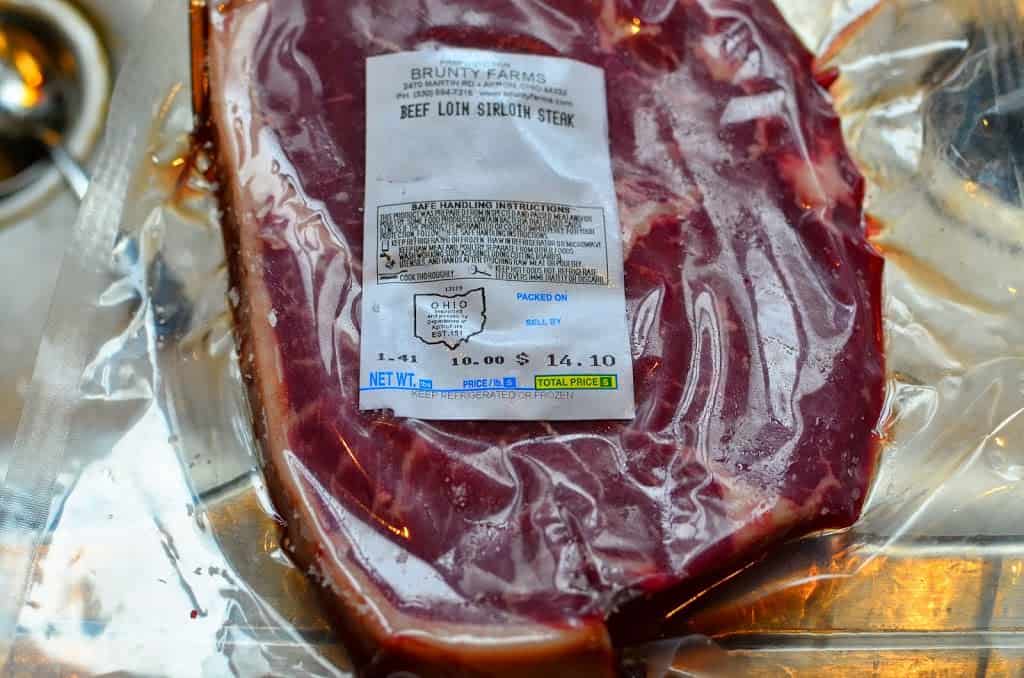
More About Me →

Popular

  • Three bowls of cooked Pinto Beans on a wood table
    Instant Pot Pinto Beans (No Soaking)
  • Pressure Cooker Beef Shank (Osso Bucco)
  • Pressure Cooker 7 Hour Leg of Lamb (in 90 minutes)
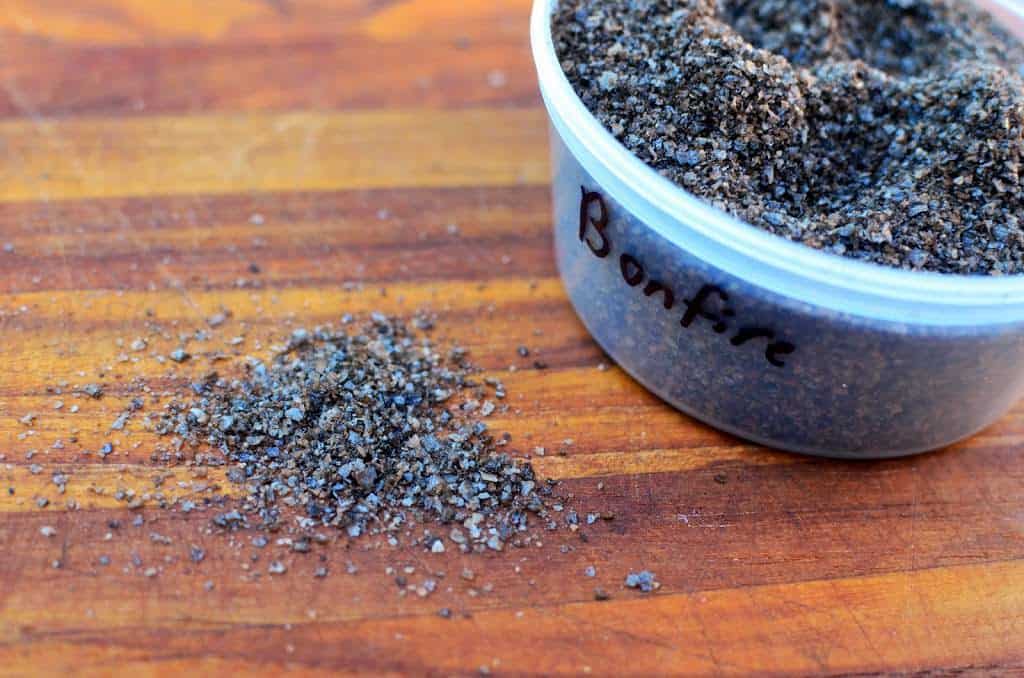
    Pressure Cooker 7 Hour Leg of Lamb (in 90 minutes)
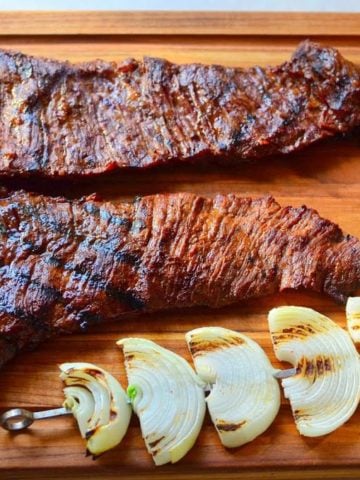
  • Pressure Cooker Brown Jasmine Rice
  • Grilled Tomahawk Steak (Long Bone Ribeye, Reverse Seared)
    Grilled Tomahawk Steak (Long Bone Ribeye, Reverse Seared)
  • A green bowl full of chicken noodle soup
    Instant Pot Rotisserie Chicken Noodle Soup

Seasonal

  • A bowl of asparagus risotto
    Instant Pot Asparagus Risotto (Pressure Cooker Recipe)
  • Grilled Butterflied Chicken with Garlic Butter
  • Sous Vide rack of lamb sliced into chops
    Sous Vide Rack of Lamb with Dijon Bread Crumb Crust
  • A bowl of beef stew with asparagus, carrots, and radishes.
    Instant Pot Spring Vegetable Beef Stew
  • A Rotisserie Chicken (Pollo Asado)on a platter of shredded cabbage
    Rotisserie Chicken Pollo Asado
  • Rotisserie Pork Shoulder Roast with Carolina Mustard BBQ Sauce
    Rotisserie Pork Shoulder with South Carolina Mustard Barbecue Sauce

Footer

↑ back to top

About

  • Privacy Policy

Newsletter

  • Sign Up! for emails and updates

Contact

  • Contact

Copyright © 2025 Dad Cooks Dinner