DadCooksDinner

  • Home
  • Rotisserie
  • Recipes
  • Tools
  • Books
  • Merch
menu icon
go to homepage
  • Recipes
  • Books
  • Tools
  • Merch
  • About
subscribe
search icon
Homepage link
  • Recipes
  • Books
  • Tools
  • Merch
  • About
×
Home » Recipes

Things I Love: Cuisinart Electric Pressure Cooker

March 13, 2012 by Mike Vrobel 52 Comments

[Update 2015-02-08]: While I still like the Cuisinart, I have a new favorite pressure cooker. See my post: What Pressure Cooker Should I Buy?

I found out that Marcus, my guy at the local Apple store, follows this blog. A few months ago I stopped in to pick up an iPod touch for my oldest son. Marcus made my day by pulling me aside and thanking me for my osso bucco recipe. He told me how much he loved his new electric pressure cooker, and I confessed that I didn't have an electric PC yet.

"What? You have to get one. I already want another one." He turned to Diane: "Will you go get him an electric pressure cooker? Right now. He needs it."

Buy a new cooking gadget? Why yes, I can do that.

I did some research; the Cuisinart 6 quart Electric Pressure Cooker was the best reviewed electric PC on Amazon. I bought it, and now I know why Marcus is such a fan.
 

Why get an electric pressure cooker?

The Cuisinart electric pressure cooker is great for weeknight, set it and forget it cooking. I put it on the counter behind my cutting board and start feeding in ingredients - brown the meat, saute the vegetables, add some stock, lock the lid, and set the timer. At that point, I can walk away and help the kids with homework. The PC comes up to high pressure, levels off the heat, and starts the countdown timer. When the cooking time is done, the cooker beeps, cuts the heat, and enters a warming mode to start the the natural pressure release. I don't have to mess with watching the pressure valve, adjusting burners, or watching timers. Once the lid is locked, I'm done. I can sit on the couch, ignore the kids fighting over who's turn it is to put silverware on the table, and relax until it is time to serve. I love cooking with self-aware equipment.
Yes, I know, self aware machines are the first step in Skynet's plan for world domination. It can't be bargained with. It can't be reasoned with. It doesn't feel pity, or remorse, or fear. And it absolutely will not stop, ever...until dinner is ready.

The electric PC is perfect for my favorite multitasking trick, making a batch of stock while I clean the kitchen. Before starting the dishes, I put a leftover roast chicken carcass in the pot with a halved onion and a bay leaf. I fill it with water, set the timer, then start filling the dishwasher. An hour later, the dishes are done, I've relaxed with a beverage, and my stock is ready to strain. Easy peasy.

The other great thing is how quiet it is. There is about thirty seconds of escaping steam between boiling and the pressure seal popping up; other than that, it is silent. After years of using pressure cookers that were only under pressure when they were venting steam, I love the peace and quiet.
Also, you get the benefits of no flavors escaping the cooker - read my post on Heston Blumenthal and sealed pressure cookers.
 

There are some downsides:

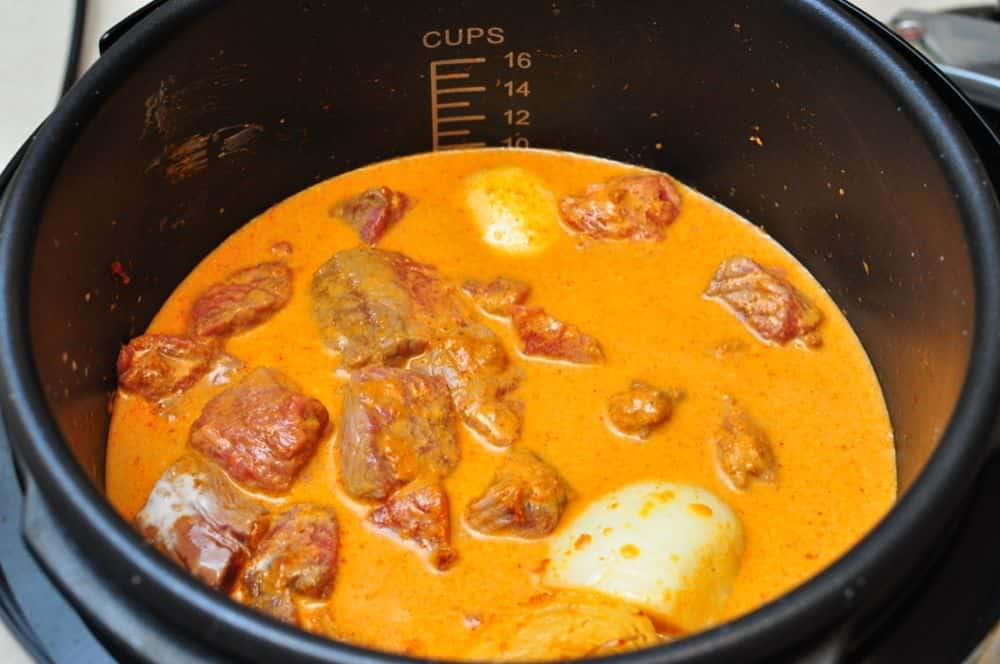
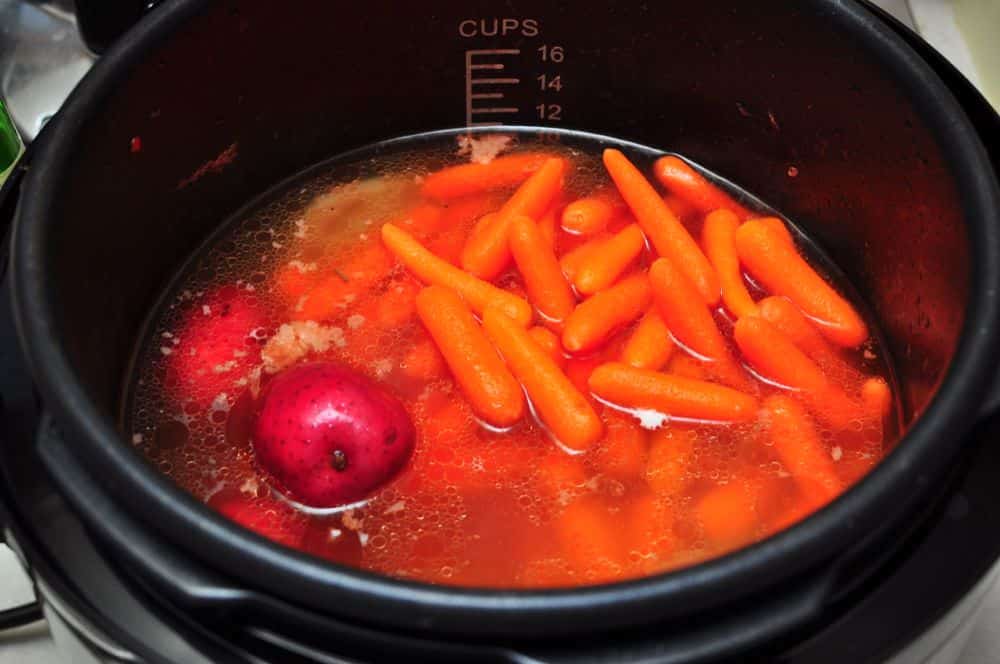
My biggest complaint about the cooker is the size. Most electric pressure cookers top out at six quarts. For most recipes, that's not a big deal, but feeding a family of five I always bump up against the max fill line. (Which is conveniently printed on the pot, another nice feature.)
There is one 8 ½ quart electric pressure cooker, but the reviews on Amazon are not encouraging.

I've had a couple of times where I want to make stock, and the carcass wouldn't fit in the cooker. One was a frozen duck carcass, another was the bone from a leg of lamb. Both of these stocks wound up in my larger Kuhn Rikon pressure cooker, which swallowed them without any problems.
And turkey stock? I'm not even going to try. I don't think I could break a turkey carcass down into small enough pieces without a hacksaw.

Another problem is heating time. The electric PC is slower to heat up and cool down than my stovetop PC by about 50%. I did a head to head test between my stovetop and Electric PCs to compare the differences. Two quarts of cold water from my tap took 8 minutes to come to high pressure in the stovetop PC, but 12 minutes in the electric. And, when I turned them off and let the pressure release naturally, the stovetop PC was depressurized after 13 minutes, while the electric took 20 minutes.

Surprisingly, quick release of pressure was equal, even when I cheated and put the stovetop in the sink to use a cold water release. Both depressurized in two minutes.
This matches my cooking experience; with the electric PC I keep saying "The pressure's not released yet?" while flipping the valve to quick release the remaining pressure so I can get dinner on the table.

My other big concern was the lower "high pressure" in the electric PC. Stovetop PCs usually have a high pressure setting of 15 PSI; electric PCs, including my Cuisinart, consider 10 PSI to be high pressure. Now, the manual for the Cuisinart has cooking times that are about 20% slower, on average, than my usual stovetop timings. Unfortunately, I keep forgetting to add that 20 percent. What can I say, I'm used to my normal timings. I haven't noticed any difference in my results. I think the longer heat up and natural pressure release add some extra cooking time under pressure, and the results even out.
See my pressure cooker corned beef recipe, coming Thursday, for a notable exception. It evens out for shorter cooking times and a natural pressure release, say a half an hour or less. If the cooking time is longer than that, don't forget to add that 20% to the cooking time.

Summary:

I crave soups and stews in the winter. With my stovetop PC, I made one stew a week. I cook two or three soups a week with the electric PC. I know they are quicker with the stovetop PC, but the electric PC is so convenient… They just seem easier to turn out on a busy weeknight.

Highly recommended. (Of course, I also recommend a large stovetop pressure cooker, for bigger meals.)

What do you think? Questions? Other ideas? Experiences with another electric pressure cooker? Leave them in the comments section below.

FTC disclosure: All my "Things I Love" posts are about products I use and purchased myself. I did not receive any form of compensation to write this. If you buy something through one of my Amazon links, I do get a small commission. So, put that coffee down. Coffee's for closers only.

Related Posts:

Pressure Cooker Osso Bucco
Pressure Cooker Chicken Stock
Things I Love: Pressure Cookers
My other Pressure Cooker Recipes

Inspired by:

Cuisinart 6 Quart Electric Pressure Cooker

*Enjoyed this post? Want to help out DadCooksDinner? Subscribe using your RSS reader or by Email, recommend DadCooksDinner to your friends, or buy something from Amazon.com through the links on this site. Thank you!
Video: How to Truss and Spit a Beef Tenderloin for the Rotisserie

March 8, 2012 by Mike Vrobel 8 Comments

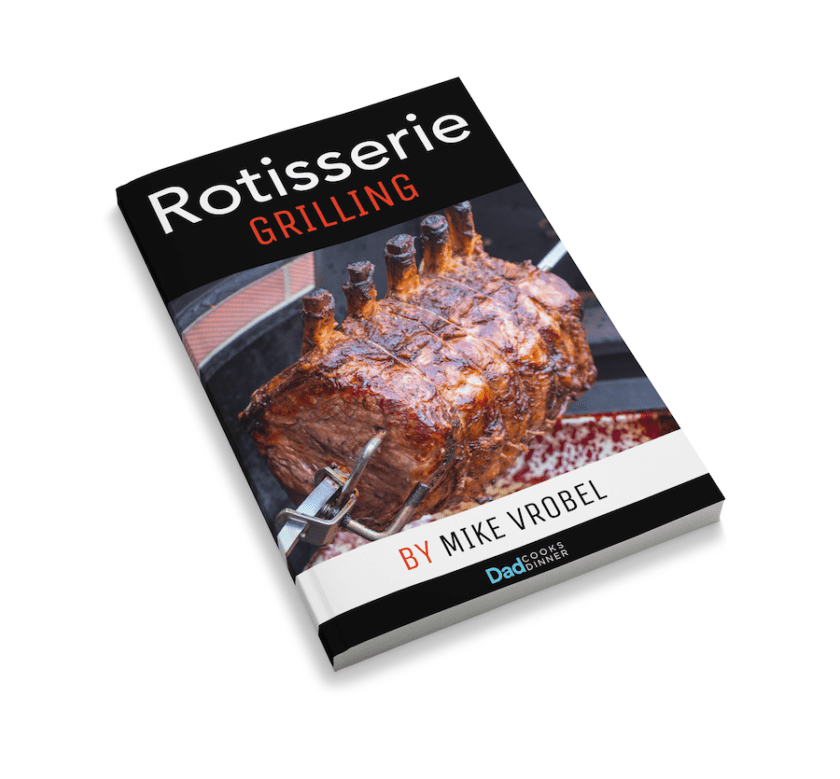
Last year, I told everyone I was working on a cookbook. I'm almost there. Rotisserie Grilling the DadCooksDinner Way* will be released as a Kindle e-book as soon as I have it formatted, hopefully late spring.
*Yes, I know…the title needs work.

The recipes are done; the book is mostly new content, not duplicated from the blog. Right now I'm finishing up - editing, proofreading, and making sure I have all the pictures I need.
*We've been having two or more rotisserie meals a week for months now, so I can test recipes. I think Diane and the kids are going to string me up on the spit if the book isn't done soon…

A big reason Rotisserie Grilling will be a Kindle e-book is so I can insert videos. Describing how to truss a roast with words is not easy; showing how to truss it in a video is simple. Last weekend was my video shoot - I filmed myself working on the recipes I was testing.
*Other reasons: It's an appliance cookbook for a very small niche. I can't imagine a publisher spending the money to publish it in full color, and I like color pictures. With an e-book, I can stuff it with all the pictures I want and still sell it cheap. Also, I keep most of the money it makes...assuming it makes any money at all. I just hope it earns enough to pay off the meat I bought for recipe testing.

To whet your appetite for Rotisserie Grilling: The Book, here is the beef tenderloin video from last weekend's shoot. I fold my tenderloin over to double up the thickness, giving it more time to develop a crispy crust before it cooks past medium-rare. Enjoy!

Video:

Recipe:

Looking for a rotisserie beef tenderloin recipe to use with this video? Try this one:
Rotisserie Beef Tenderloin with Shallot Herb Butter and Horseradish Sauce

Related Posts:

Video: How to Truss and Spit a Turkey for the Rotisserie
Video: Rotisserie Turkey Legs
Click here for my other rotisserie recipes.


Check out my cookbook, Rotisserie Grilling.

Everything you could ask about the rotisserie,
plus 50 (mostly) new recipes to get you cooking.

It's a Kindle e-book, so you can download it and start reading immediately!


*Enjoyed this post? Want to help out DadCooksDinner? Subscribe to DadCooksDinner using the RSS or Email options on the right, link to this post from your blog, recommend DadCooksDinner to your friends, or buy something from Amazon.com through the links on this site. (Like my Rotisserie Grilling cookbook...)

Spare Forks for a Weber Charcoal Kettle Rotisserie

March 6, 2012 by Mike Vrobel 6 Comments

Also known as Why Weber, part two. They stand behind their products, even after the sale.

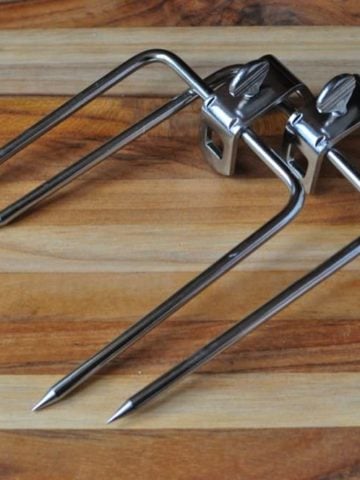
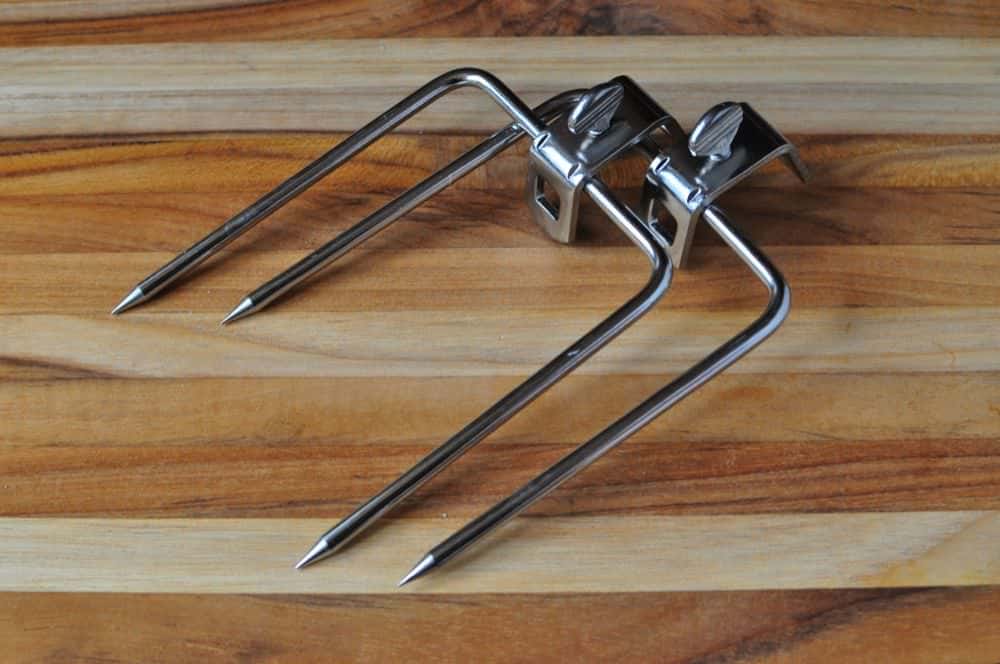
You can get away with a rotisserie with only two spit forks, but I've had an extra set for years. Securing two chickens on a rotisserie spit is much easier with an extra set of forks. The Weber Charcoal Kettle Rotisserie only comes with one set of two forks, but I have a second set from my Weber Genesis Rotisserie that are the same diameter.

Crammed together with two forks
Separated and secure with four forks

When I upgraded to the Weber Summit, the Genesis went to my sister-in-law. But...I forgot to include the rotisserie set that was in my basement. Which meant I got to keep my extra set of forks. I've been promising to give her the rotisserie set for years, but I kept forgetting.

What's worse, she reads this blog, where I spend a lot of time raving about rotisserie cooking. She can't try any of the recipes without that rotisserie set, which means I'm going to lose my extra set of forks.
*Sorry, Jackie!

I did what I should have done years ago. I called the Weber customer service number at 1-800-446-1071, and gave them the model number of the Charcoal Kettle Rotisserie (2290). An extra set of forks cost $15, plus shipping, and arrived a few days later. Quick and painless.

Once again, thank you Weber!

FTC disclosure: I bought all of the rotisseries and grills I mention in this post with my own money. I do get a small commission if you buy them (or anything, really) through the Amazon.com links on my site. Or a large commission if you buy the $2500 Weber Summit. You know you want one...

Oh, and I don't get anything if you call Weber customer service. You should do it anyhow. They're good people.

What do you think? Questions? Other ideas? Leave them in the comments section below.

Weber 2290 22-½-Inch Charcoal Kettle Rotisserie


Check out my cookbook, Rotisserie Grilling.Everything you could ask about the rotisserie,
plus 50 (mostly) new recipes to get you cooking.It's a Kindle e-book, so you can download it and start reading immediately!

*Enjoyed this post? Want to help out DadCooksDinner? Subscribe to DadCooksDinner using the RSS or Email options on the right, link to this post from your blog, recommend DadCooksDinner to your friends, or buy something from Amazon.com through the links on this site. (Like my Rotisserie Grilling cookbook...)

Beer Cooler Sous Vide Salmon with Fennel Salad

March 1, 2012 by Mike Vrobel 3 Comments

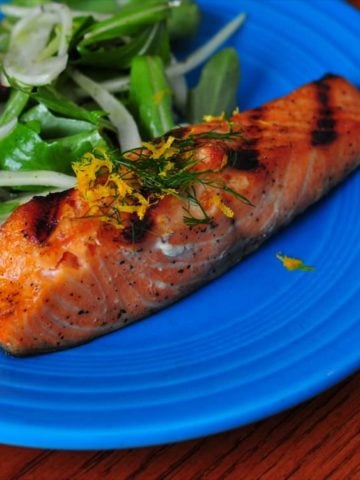
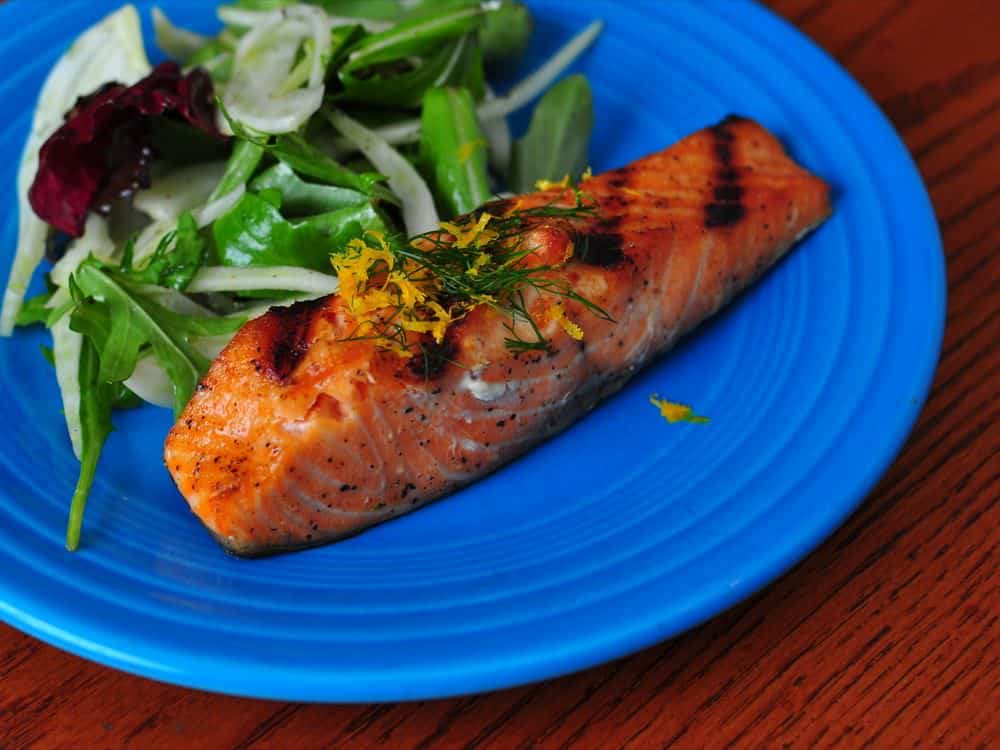
Beer Cooler Sous Vide Salmon with Fennel Salad. How to sous vide salmon, even if you don't have a sous vide circulator. (Though it is easier with a dedicated sous vide machine.)

I saw this video of Nathan Myhrvold and Melissa Clark making sous vide salmon, and I knew what I was making for dinner. Beer Cooler Salmon, here I come!
*Someday I'll get my own copy of Modernist Cuisine...someday...

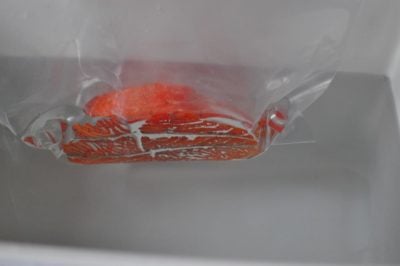
In the original, Mr. Myhrvold didn't even bother with a beer cooler. He uses a regular pot and adds hot water to keep the temperature at 116*F as necessary. I went with my beer cooler because (1) I'm used to it, and (2) my wife told me she was going to be late getting home, and I had to hold the salmon for an hour and a half instead of the suggested 30 minutes. The cooler's insulation kept the water exactly where I needed it.

Beer Cooler Sous Vide Salmon with Fennel Salad

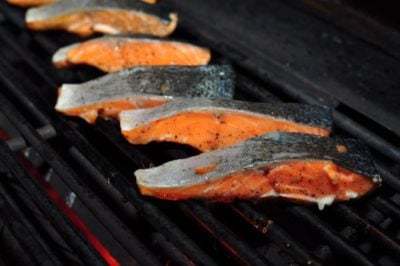
Grilling cooked salmon is delicate work - it wants to flake apart. Be gentle, and assume at least one filet will have a big wedge of salmon slide loose.

Another key to this recipe is a diligently cleaned grill. Brush the grates until all the carbonized remains are gone, and all that is left is the grill grates. Wipe the grates with a paper towel dipped in oil, to season them. Oil the top of the salmon as well. When you're taking the filets off the grill, use tongs in one hand and a spatula in the other. Use the tongs to wiggle the salmon until it comes loose, then slide the spatula underneath, gently working any sticking salmon off the grill grate. Lift the filet to your serving plate, breathe a sigh of relief, then go to work on the next piece of fish.

Is it worth all this work? Absolutely - this is buttery salmon at its best.

Recipe: Sous Vide Salmon with Fennel Salad

Adapted From: Nathan Myhrvold and Melissa Clark, Sorcerer's Apprentice Hosts a Dinner [nytimes.com]

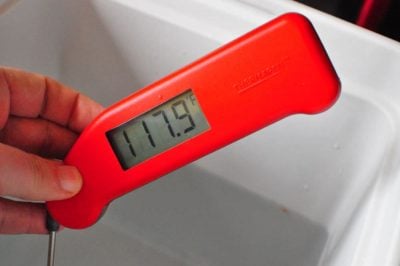
Thermometer reading of 117.9°F in the beer cooler
Checking the water temp in the cooler
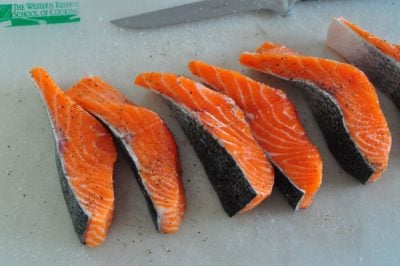
Salmon filets on a cutting board, sprinkled with salt and pepper
Salmon, seasoned and ready to cook
Lowering a zip top bag of salmon into a beer cooler full of hot water
Slowly lowering the salmon into the hot water
Salmon filets on the grill, flesh side down
Searing quickly on the grill

What do you think?

Questions? Other ideas? Leave them in the comments section below.

Related Posts

Beer Cooler Sous Vide New York Strip Steak
Grilled Salmon with Coriander Fennel Spice Rub
How to Cook Cedar Plank Salmon
Sous Vide Salmon

Adapted from:

Nathan Myhrvold and Melissa Clark, Sorcerer's Apprentice Hosts a Dinner [nytimes.com]
Modernist Cuisine: The Art and Science of Cooking

*Enjoyed this post? Want to help out DadCooksDinner? Subscribe using your RSS reader or by Email, recommend DadCooksDinner to your friends, or buy something from Amazon.com through the links on this site. Thank you!

Salt by Weight

February 28, 2012 by Mike Vrobel 17 Comments

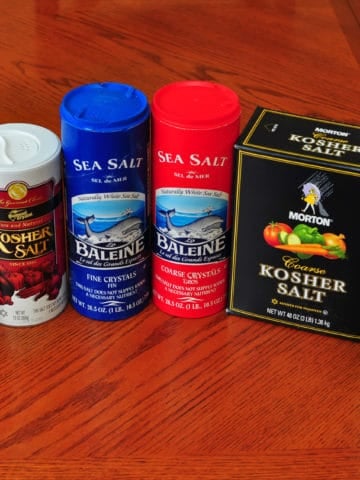
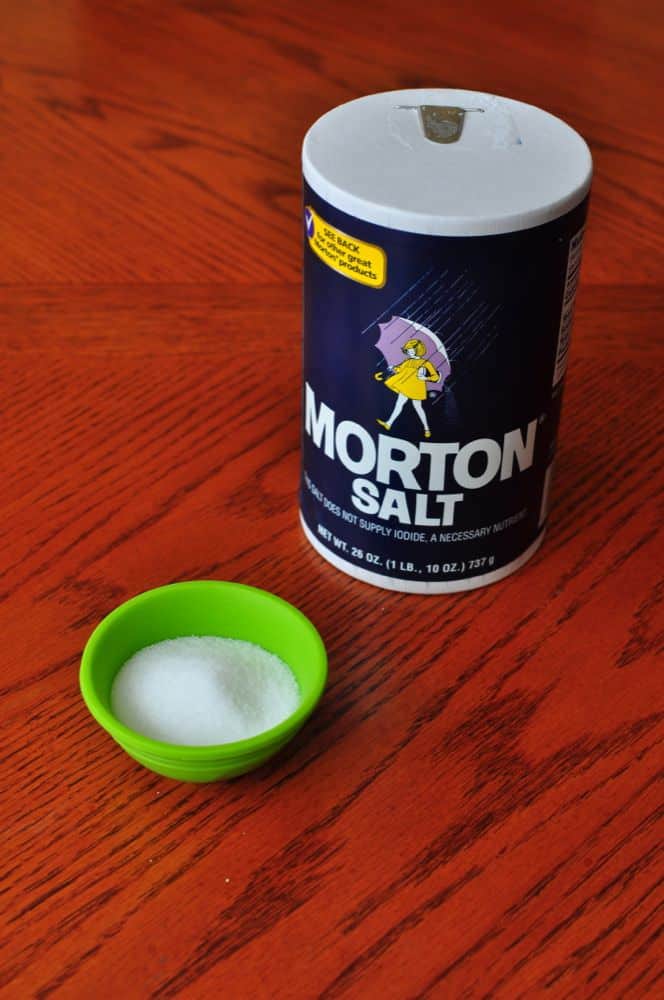
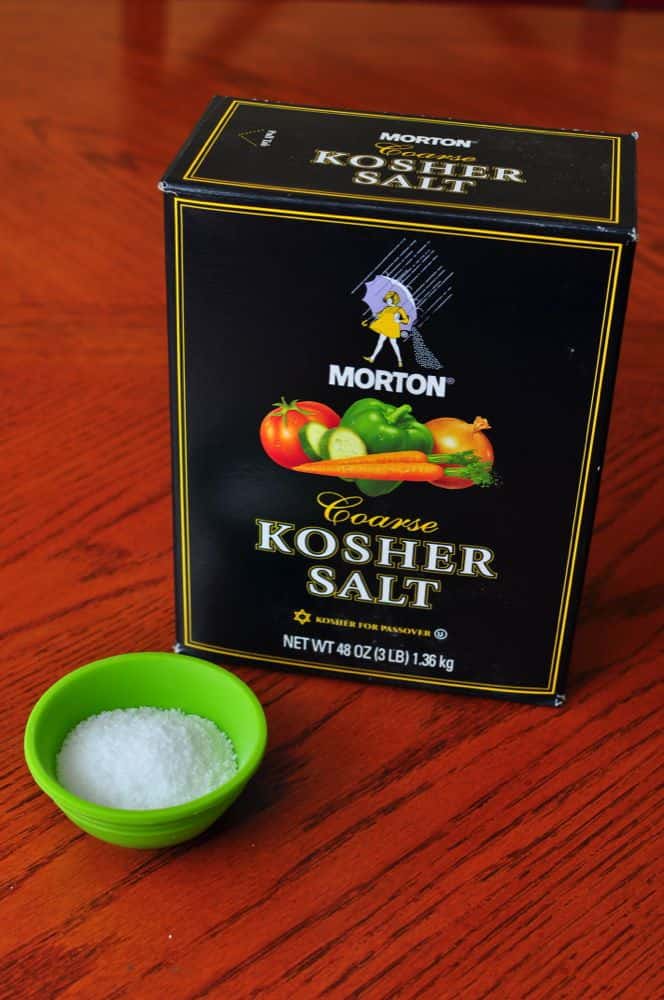
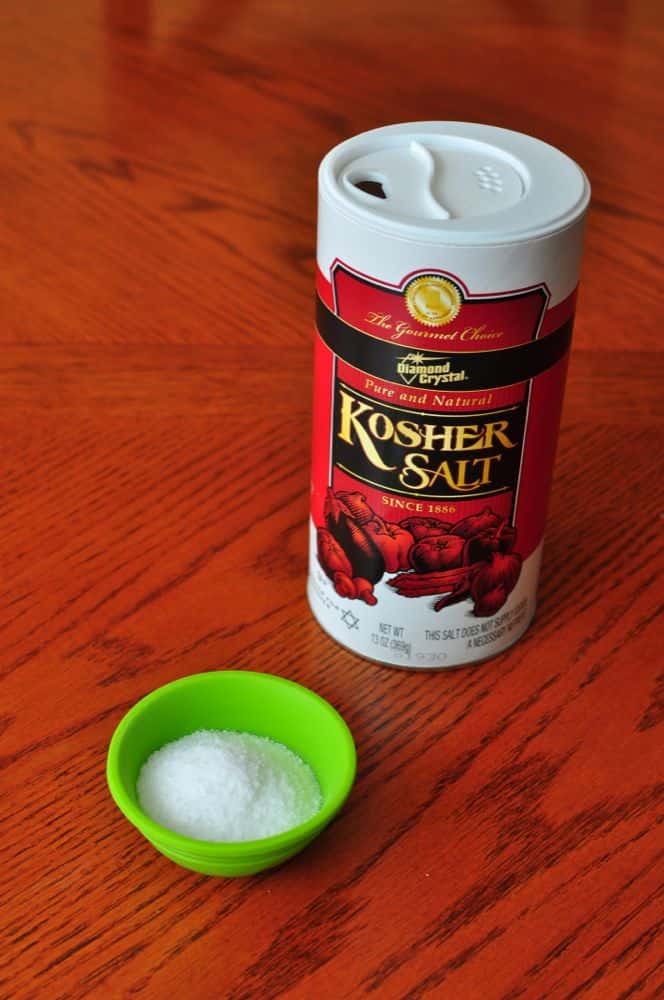
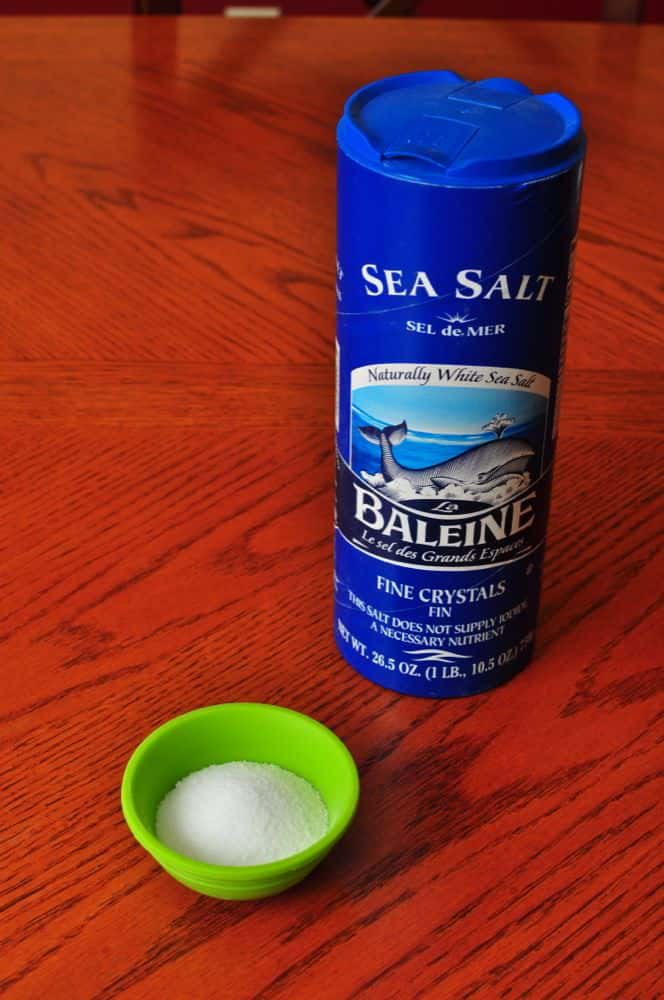
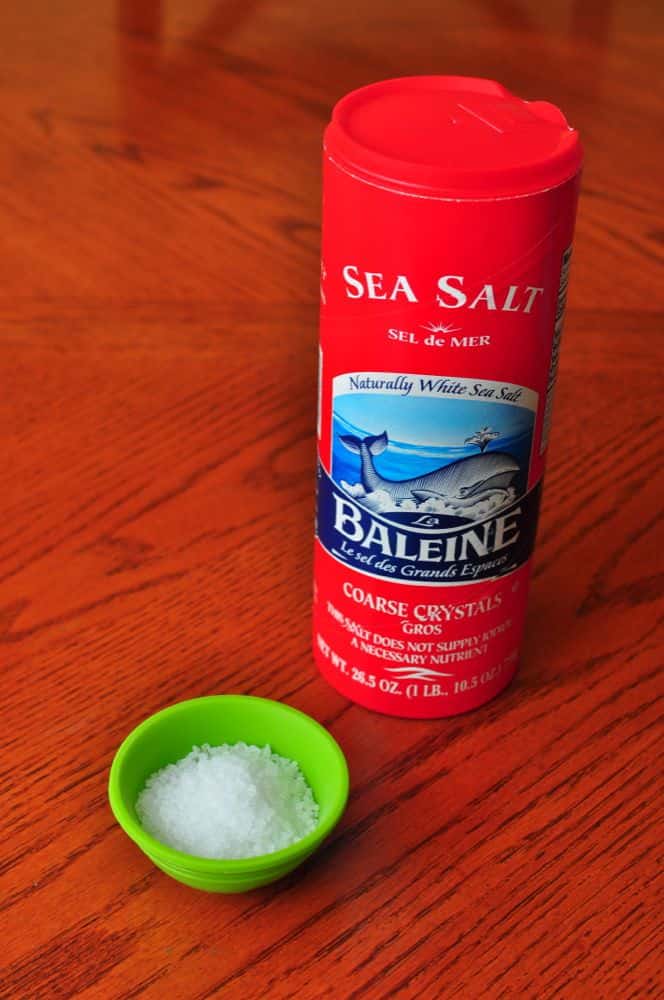
Salt by Weight - the lineup

I keep running into a roadblock with my recipes. Salting is the key element to seasoning food, and I don't know how much salt to tell people to use.

I use Diamond Crystal Kosher salt because I salt by hand. The big crystals of Kosher salt are easy to grab and sprinkle, unlike table salt, which has such tiny crystals that I can't get hold of it. I know that a two finger pinch of Diamond Crystal Kosher gives me a half teaspoon of salt. (Yes, I measured.) I've been using it for a while, and I have a good feel for how it works.

But when someone takes that into their own kitchen, with their own fingers and a different brand of salt, what does it mean?

With salt, density matters*. I've read that Diamond Crystal Kosher salt, with its large flakes, weighs half as much by volume as table salt, with its tiny grains. In other words, a half cup of table salt packs in as much salt as a whole cup of Diamond Crystal. (Morton's Kosher supposedly weighs in between the two, at ¾ cup).
*Salt...it is your density.

I should take this information at face value. It's from Cooks Illustrated, so I'm sure they did their research. But I am borderline obsessive-compulsive thorough. I decided to measure all the different types of salt I use, from ultra-fine grained pickling salt to Maldon sea salt with its huge flakes.

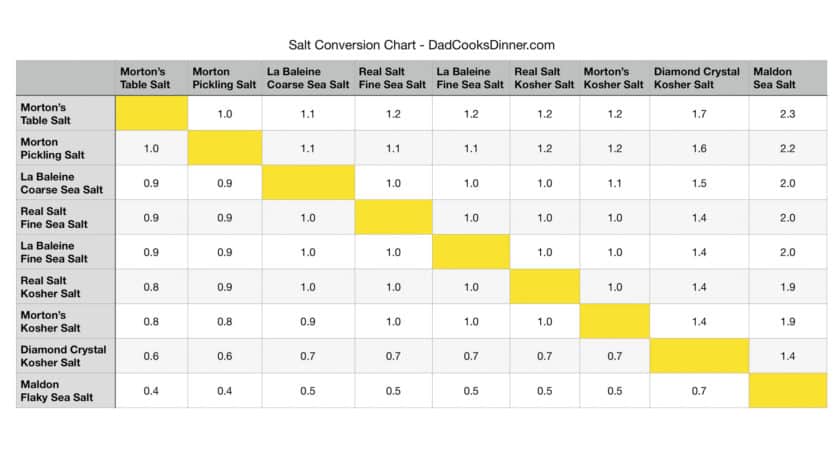
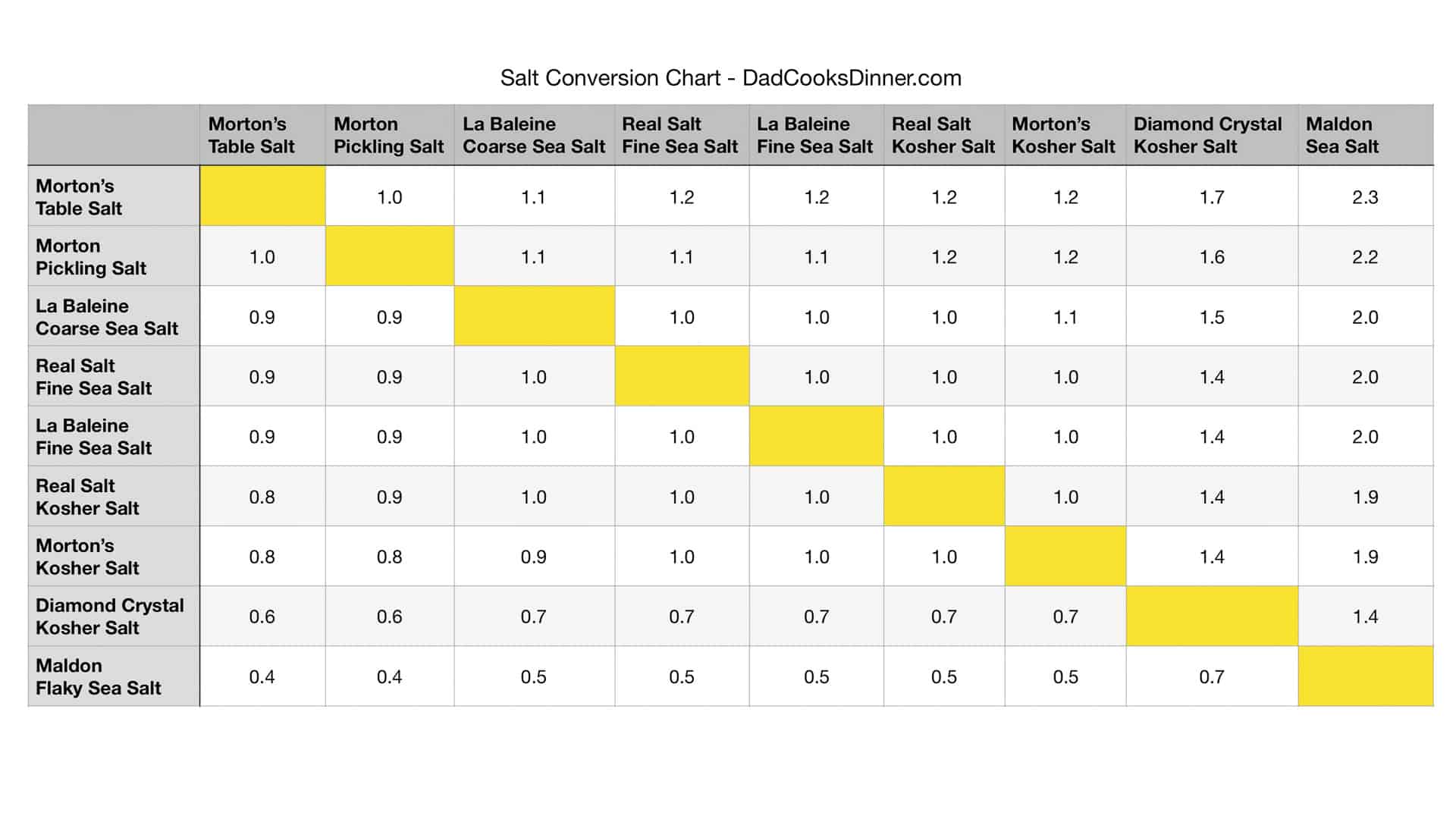
Conversion Chart

To convert from one salt to another: The row is the salt the recipe calls for, and the column is the salt you want. Find the row for the recipe's salt, then move to the right until you get to the column of the salt you have, and multiply the amount in the recipe by that number. (Then I cheat a little, and round to the nearest number that matches my measuring spoons.)

Example 1: A recipe calls for 1 tablespoon of Diamond Crystal Kosher Salt, and you have Mortons Kosher salt. Find the Diamond Crystal row, go across until you get to the Mortons Kosher column, 0.7. The multiplication is easy: you want 1 x 0.7 = 0.7 tablespoons. (Since I know a tablespoon is 3 teaspoons, and 3*0.7 = 2.1 teaspoons, I round down a little and use 2 teaspoons of Mortons.)

Example 2: A recipe calls for 1 teaspoon table salt, and you have RealSalt fine sea salt. Find the Mortons table salt row (1st row), then go across until you get the RealSalt fine sea salt column, 1.2. You need 1.2 teaspoons of fine sea salt. (And I would round up to 1.25 teaspoons to make for easy measuring).

Data

Here are the raw numbers:

Salt TypeWeight of
¼ cup (grams)
Weight of
¼ cup (ounces)
Replacement Percent
Diamond Crystal Kosher
Morton’s Table Salt76.02.6859%
Morton Pickling Salt74.02.6161%
La Baleine Coarse Sea Salt66.82.3668%
Real Salt Fine Sea Salt65.02.2970%
La Baleine Fine Sea Salt64.82.2970%
Real Salt Kosher Salt64.02.2671%
Morton’s Kosher Salt62.02.1973%
Diamond Crystal Kosher Salt45.21.59100%
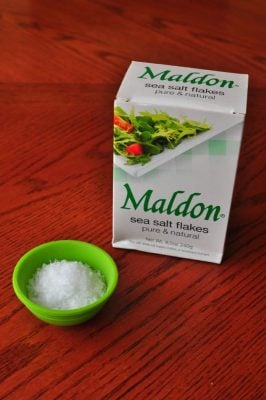
Maldon Sea Salt33.21.17136%

What did I learn from this?

  • Cooks Illustrated was right. A half cup of table salt equals ¾ cup of Mortons Kosher equals 1 cup of Diamond Crystal. Roughly - it slightly over weights table salt and under weights Morton's Kosher, but it's close enough.
  • Fine sea salt is not a 1:1 replacement for table salt. I buy fine sea salt from the bulk bin at my local health food store at $0.69/lb, and use it as table salt in my baking recipes. I assumed fine sea salt has the same crystal size as table salt. Oops. Turns out, fine sea salt is closer by weight to Morton's Kosher than it is to table salt. Sea salt must have a crystal with more air in it than table salt. If you'll excuse me, I have to go fix a few of the recipes in my archives…
  • Fine sea salt and coarse sea salt have the same density: I assumed coarse sea salt would be lighter than fine sea salt. Nope, wrong again. They are basically identical; in my tests they were within a couple grams of each other, with the coarse sea salt weighing a tiny bit more than the fine sea salt.
  • Morton's Kosher salt is not quite weight specific. I read that Morton's Kosher was designed so that its weight would match water, for use in sausage making. Since a pint (of water) is a pound the world around, a pint of Morton's Kosher should also be a pound. Close, but not quite. By my measurements, two cups of Morton's Kosher weigh one pound, one and a half ounces.
  • Pickling salt has the same weight as table salt: I expected pickling salt to be heavier than table salt; I heard it had even smaller grains, to help it dissolve faster. It turns out the two are almost exactly the same weight. Table salt is ever so slightly heavier. So, why use pickling salt when pickling? Table salt has added ingredients to keep the salt pourable in humid environments. (Like the ad says, "When it rains, it pours.") Those extra ingredients make pickle brines cloudy. Other than that, pickling salt and table salt are the same thing.

Oh, and the Maldon salt? It is amazing. The flakes are huge and airy. It is a great finishing salt, sprinkled on just before serving. It adds a hit of salty crunch without over-salting the food. Don't use it any sooner in cooking, though, or it will dissolve. There is no difference between dissolved Maldon, Kosher, or table salt - they're just salt at that point. Maldon is very expensive to be "just salt".

What do you think? Questions? Other ideas? Leave them in the comments section below.

Related Posts:

Ingredient questions that I get asked a lot:
A Stalk of Celery vs a Rib of Celery?
Onion Size, or How Big is a Large Onion?
What does Season To Taste mean, exactly?
Things I Love: Diamond Crystal Kosher Salt

*Enjoyed this post? Want to help out DadCooksDinner? Subscribe using your RSS reader or by Email, recommend DadCooksDinner to your friends, or buy something from Amazon.com through the links on this site. Thank you!

Sauteed Chicken Liver

February 23, 2012 by Mike Vrobel 6 Comments

I roast whole chickens a couple of times a month, usually on my rotisserie. I like to dry brine chicken, so the first thing I do when I get home is salt the chicken and put it in the refrigerator to rest.

This leaves me with the envelope of giblets. You know the one; a paper pouch with the neck, gizzard, and liver. The neck and giblets I put in the freezer for later.
*I have a zip-top bag, full of necks and wingtips and other trimmings, waiting for my next batch of pressure cooker stock.

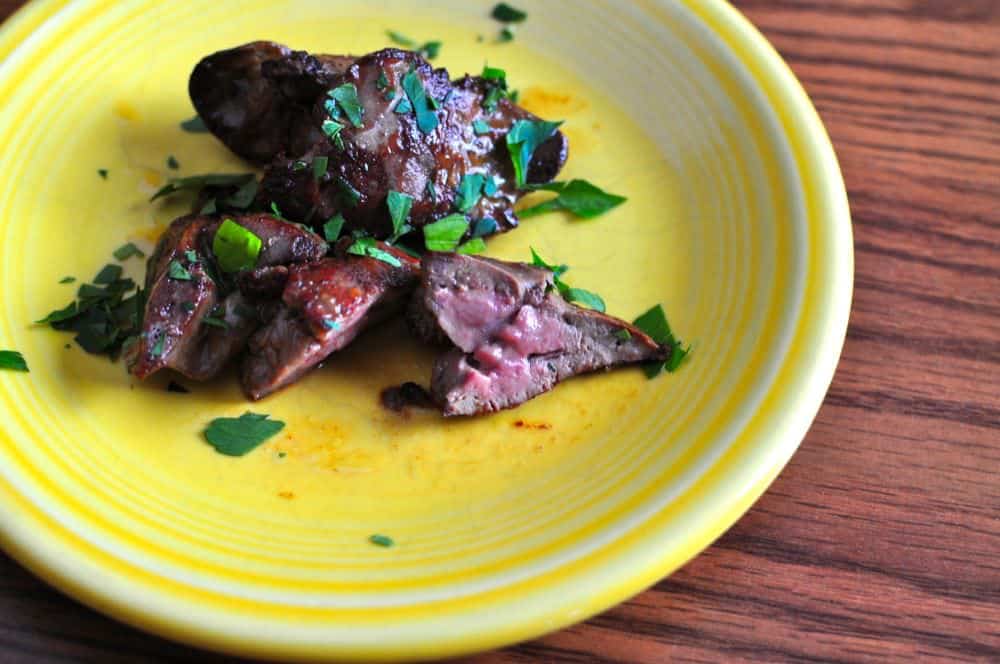
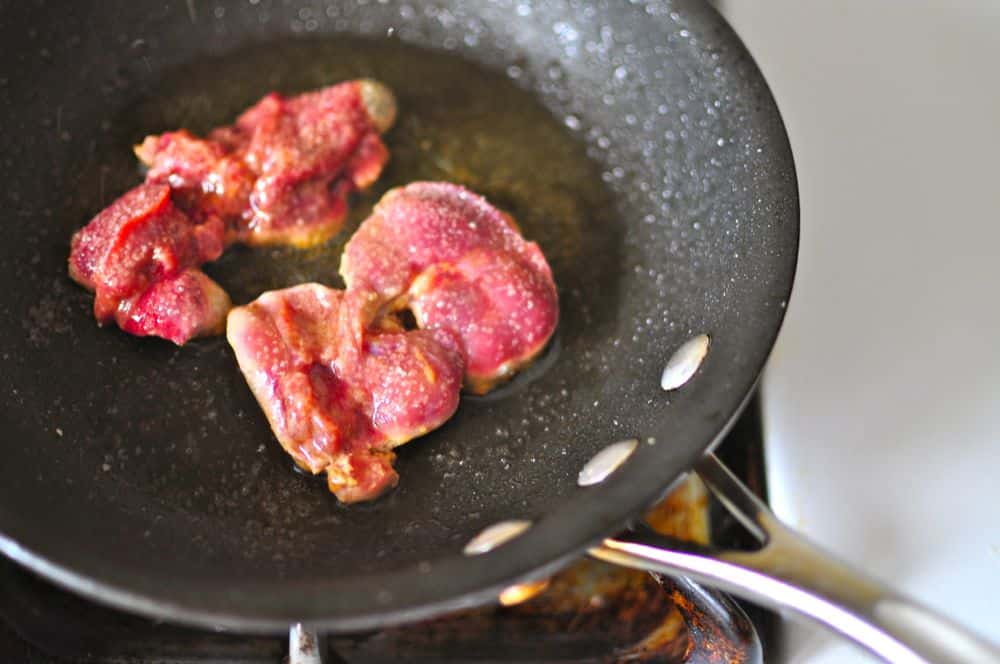
The liver is my treat. I eat it right away, sprinkled with salt, seared in a little olive oil.

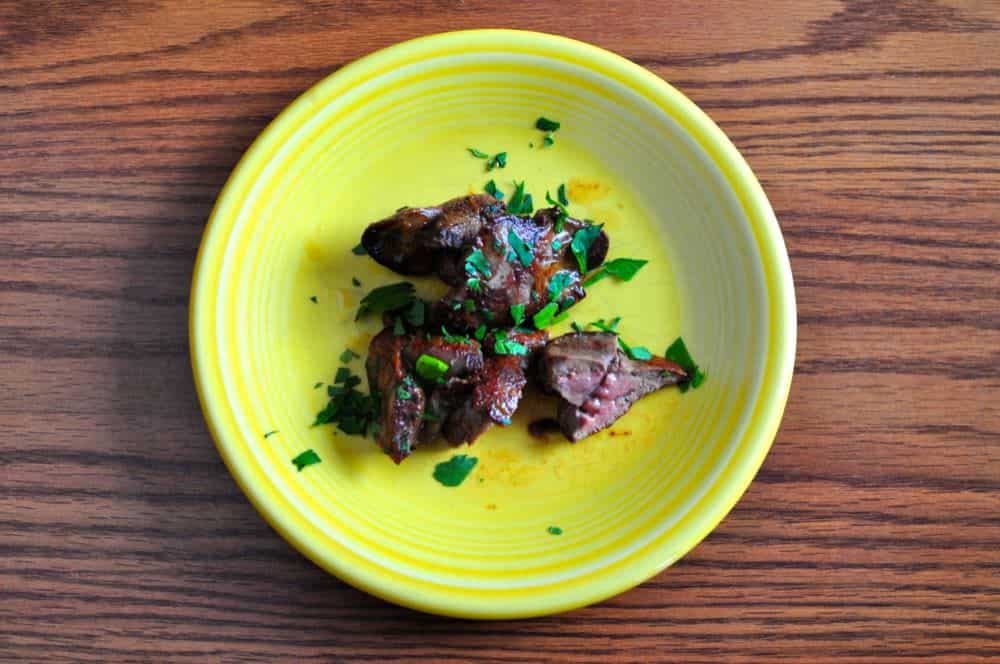
If I'm feeling fancy, I make an open-faced sandwich, toast with the liver on top, maybe a little grainy mustard. But that's rare. Most of the time I eat the liver straight from the pan, fat and juices dripping down my chin. I lean over the stove, trying to keep my shirt clean and saying "ouch" a lot. The liver is still hot when I pop them in my mouth.

Recipe: Sauteed Chicken Liver


Inspired by: Tamar Adler, An Everlasting Meal

Cooking time: 6 minutes

Ingredients:

  • 4 chicken livers (remove the tough tendons if you're finicky)
  • 1 tablespoon olive oil
  • Kosher salt

Directions:

1. Cook the chicken livers:
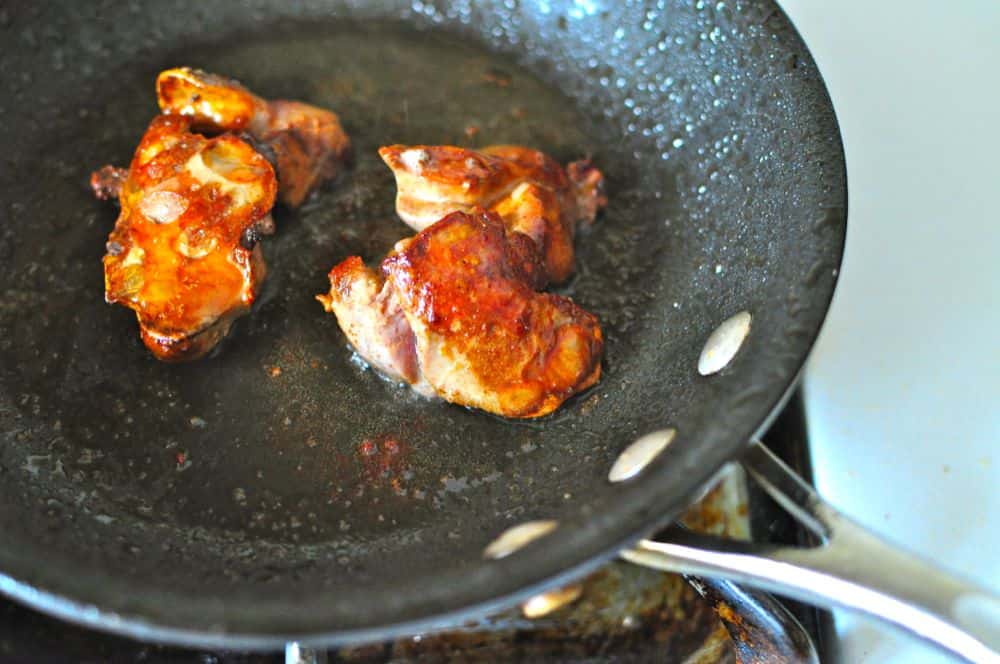
Heat the oil in a small fry pan over medium-high heat until shimmering. Add the livers and sprinkle with a three finger pinch of salt. Cook until well browned on the bottom, about three minutes. Flip the livers, an cook until well browned on the second side and the pink color is entirely gone in the middle, about three more minutes. If the livers are browning too quickly, turn off the heat and let them finish cooking in the residual heat of the pan. Remove from the pan with your fingers and eat standing over the stove with tongs or a slotted spoon, and serve.

Variations:

Other poultry: This works with all poultry livers, from cornish hens up to turkeys. Turkey liver fortifies me for the big push on the day before Thanksgiving, while I make my giblet gravy. Duck livers are probably my favorite, but chicken livers are a close second, and much easier to find.

Notes:

  • Do as I say, not as I do: In the opening picture, you can see some pink in the middle of the liver. I love chicken liver with a creamy, pink center. Don't do this. Salmonella's going to get you. (I have local chicken sources that I trust. Even then, if I ever get salmonella, it's my fault, not theirs.) Cook your liver all the way through, please. Cut into the largest lobe of liver; all the pink should be gone. Or, use the press test. Push down on the liver. If it is still soft in the middle, keep cooking. Once it feels firm, it is cooked through.
  • Apologies to Tamar; I think I was infected by her writing style.

What do you think? Questions? Other ideas? Special treats you make with things others throw away? Leave them in the comments section below.

Related Posts:

Pressure Cooker Chicken Stock

Inspired by:

Tamar Adler, An Everlasting Meal

*Enjoyed this post? Want to help out DadCooksDinner? Subscribe using your RSS reader or by Email, recommend DadCooksDinner to your friends, or buy something from Amazon.com through the links on this site. Thank you!

Review: Tamar Adler, An Everlasting Meal

February 21, 2012 by Mike Vrobel Leave a Comment

An Everlasting Meal by Tamar Adler is the best food book I've read in a long while. It isn't a cookbook, though there are recipes. It is a narrative about a cooking centered life. Tamar talks about simple food as a source of joy and sustenance. It is a friendly, rambling story about ingredients. The book is full of hints, tips, asides and suggestions about how to use food to its fullest.

I'm the kind of person who saves bones from a roast chicken to make chicken stock. This book felt finding a friend. Tamar writes about the best part of dried beans (the extra broth), the best part of oranges (the zest), and how she won't buy meat unless it makes more than one meal (again, my roast chicken gives me a Sunday dinner, plus leftovers, plus bones for stock).

My only problem with the book is how distracting it is. I've been dipping into it for a month; I'm still trying to finish it. I'm almost done. But I read it for five minutes and see an idea that makes me sit up straight. "Ooh! I need to do that!", I say. Twenty minutes later I'm busily scribbling notes, looking up recipes, or cooking…and I realize that I put the book down again.
*Maybe I'll get back to the pickles chapter after I finish this jar of pickled peppers…

Is this a book for a novice cook to learn their way around the kitchen? I'm not sure. While I was learning how to cook, I wanted to know everything in great detail. I was scared to mess up. My left brained, logical side would have found it maddeningly vague.

And yet...An Everlasting Meal is welcoming, accepting mistakes as a natural part of cooking. Tamar even has a chapter on fixing mistakes - Chapter 16, How to Snatch Victory from the Jaws of Defeat. As Julia Child said, “Cooking is often one disaster after another. What you learn is the only thing you can’t fix is a souffle.” That message is important for novice cooks, and it is woven throughout the book. I sure could have used a reminder to loosen up.

Oh, all right, I still need a reminder to loosen up. That's the other great strength of this book. It has a strong streak of making do with what you have. I go all out on a lot of recipes. If I don't have Aleppo powder, Massaman curry paste, lemongrass stalks, or dried shitake mushrooms, I head off for the store. The central message of this book is making do with what you have. I don't need exotic ingredients to cook a dinner that nourishes my family, body and soul. I don't even need a trip to the grocery store; I have what I need on hand, if I open my mind to the possibilities. This book is a constant reminder of those possibilities.

Best of all, An Everlasting Meal is a fun read. Tamar has a gift with words. Everything is explained simply and perfectly.
Here's an example. She's talking about ingredients that can't be bought; they need time, and the only thing you can do is wait for them. Specifically, ribollita, the Italian soup made primarily of stale bread. "As a Tuscan friend witheringly explained to me once, ribollita does not contain any procurable ingredients. "You don't buy ingredients for ribollita. You have them.""

If you love cooking, get this book. Every page reminds me of why I love it so much.

PS: If I haven't convinced you yet, check out her book video on Amazon. Watching Tamar chat while she peels roasted beets explains the book perfectly.

Tamar Adler, An Everlasting Meal: Cooking with Economy and Grace

*Enjoyed this post? Want to help out DadCooksDinner? Subscribe using your RSS reader or by Email, recommend DadCooksDinner to your friends, or buy something from Amazon.com through the links on this site. Thank you!

Road Trip: Homer Laughlin Fiesta Retail Store and Seconds Warehouse

February 14, 2012 by Mike Vrobel 9 Comments

I love bright, vibrant colors. That's why I'm so attached to Fiesta ware. I buy new colors as soon as they're released, to add variety to my pictures.
*Yes, I'm an addict. I can quit any time I want. Wait, is that marigold? I must have it.

A friend who grew up in Pittsburgh saw my stack of multicolored plates and said "Is that Fiestaware? My mom would make special trips to their factory store…" What's that? Factory store? Only an hour and a half away? Road trip!

Homer Laughlin is in Newell, West Virginia, at the tip of the Northern panhandle, sandwiched between Ohio and Pennsylvania.
*If you are scared of heights and coming from Ohio, like me, ignore the directions that take you over the Newell Bridge. It is a historical landmark, a fine example of early 20th century steel suspension bridges, with a roadbed of open mesh steel. It felt like driving across a fine mesh strainer. All I could think of was how far down the Ohio river was…and what a great view of it I had through the road. I sang Bobby McFerrin's Don't Worry, Be Happy to avoid a panic attack.
**"Don't worry, be happy now. Oooh, ooooh ooo ooh…"

There are two sides to the store. The first is the Homer Laughlin Retail Store, with a beautiful display of all currently available Fiesta ware. The prices are roughly the same as in regular stores, except for some seasonal sales, and sales on discontinued pieces. The selction is impressive - every single piece in every available color. For a Fiesta fanatic like me, it felt like a candy shop. Looked like one too, with all the colors.
*I want…no, want is too soft. I need the limited edition marigold soup tureen. It's only $275. Would I ever use it? Maybe. But I need one!

The other side of the store is the Seconds Warehouse. It is full of boxes stacked with slightly flawed Fiesta ware. The flaws vary, and are usually related to the glazing. Some pieces are barely distinguishable from first quality; others have obvious flaws. The color selection and pieces were limited as well; some plates had more than one box, filled to overflowing; others were limited to a handful of pieces. The advantage to the seconds? The price. They are half off regular dishes. If you are flexible about the colors, can live with minor imperfections, and are patient enough to pick through things with major imperfections, you can get some great deals.

Homer Laughlin Fiesta Retail Outlet
800 Fiesta Drive
Newell, WV 26050
Open 7 days a week, except on major holidays (see website)
Monday through Saturday: 9:30am - 5:00pm
Sundays: 12:00pm - 5:00pm
Phone: 1-800-452-4462 Option #2
Website: HomerLaughlin.com

My Five favorite Fiesta pieces:


1. Luncheon plate: Our everday plates. They're 9 inch diameter plates, part of the mind games I play with myself to keep my weight under control.

2. Stacking cereal bowl: Our everyday bowls. They nest perfectly, and fit in one slot in our dishwasher without leaning on each other. I cherish things that fit well in the dishwasher - they keep us ahead of the endless wave of dishes the kids produce.

3. Large serving platter: Look familiar? It's my favorite display piece.

4. Rice bowl: I discovered this new addition to the Fiesta line at the retail store, and picked up five of them - one for each of us. I need to write an Asian soup post, just so I can show them off.

5. Square plate: Another purchase just for the blog - I wanted to add variety in my pictures.
*I got a great deal on them in the seconds warehouse. And I haven't used them since I got back from the Fiesta store. I forget about them in the rush to get dinner on the table. Whoops - I need to fix that.

Honorable mention: The jumbo cup, which holds my jumbo weekend latte.
*Three shots of espresso, steamed milk. And yes, my coffee mug is bigger than my bowls. 

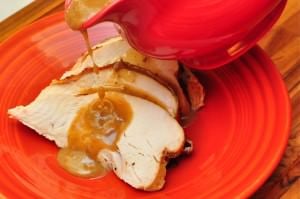
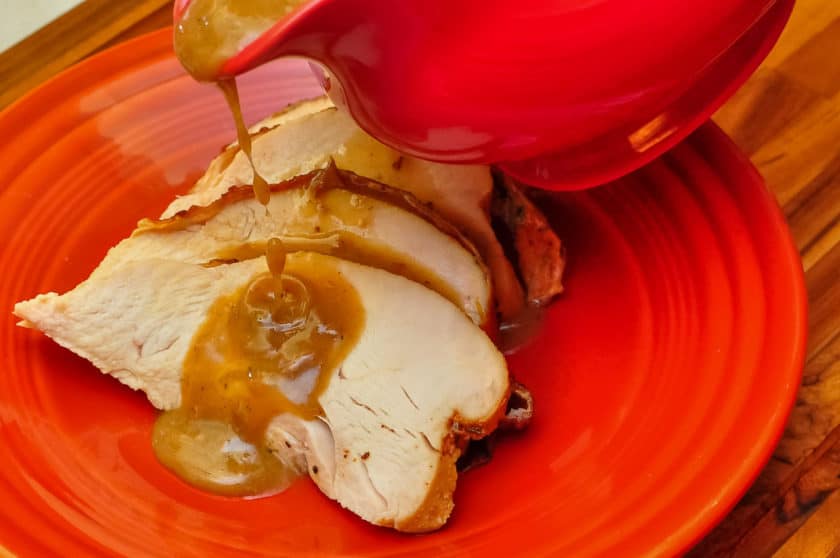
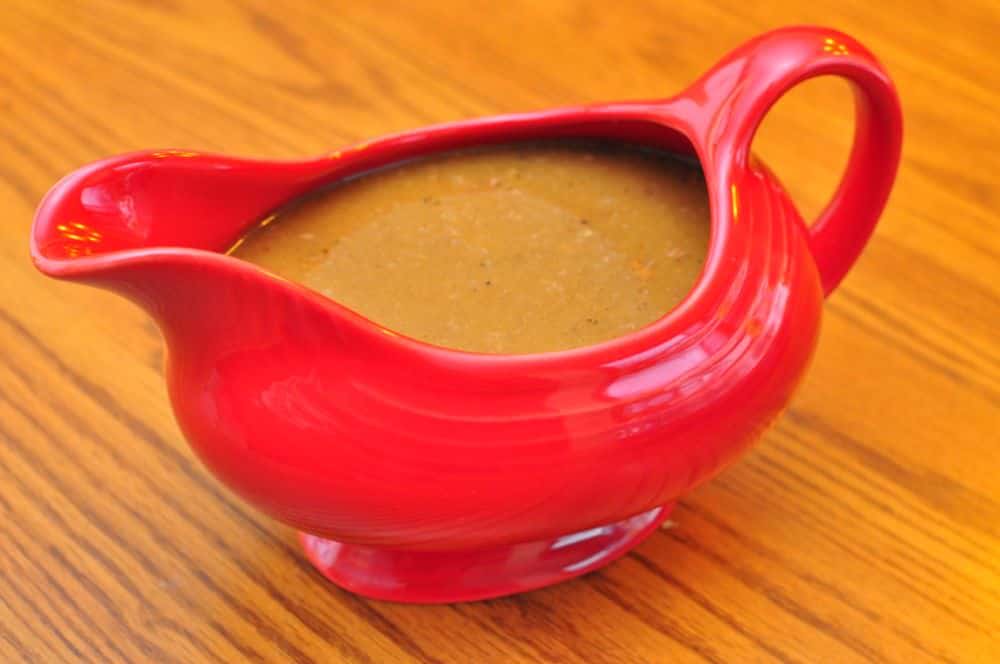
The sauceboat, which I bought just for the Thanksgiving gravy post.

And the disc pitcher, of course. It's an icon of American design.

*I also picked up a large canister in the seconds warehouse that was missing its lid; it is perfect as my new, jumbo utensil crock.

View Larger Map

Related posts:

My list of Ethnic and Gourmet stores in the Akron, OH area.

*Enjoyed this post? Want to help out DadCooksDinner? Subscribe using your RSS reader or by Email, recommend DadCooksDinner to your friends, or buy something from Amazon.com through the links on this site. Thank you!

Rotisserie Boneless Beef Ribeye Roast Stuffed with Beef Sticks, Cheese, and Peppers

February 9, 2012 by Mike Vrobel Leave a Comment

It's so crazy, it just might work.

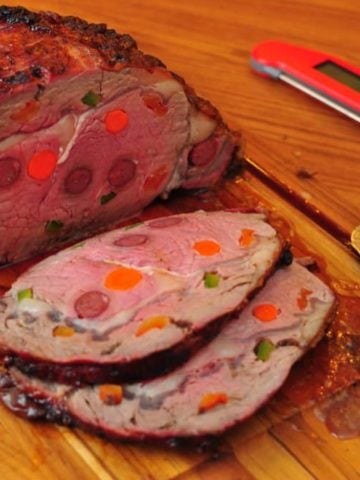
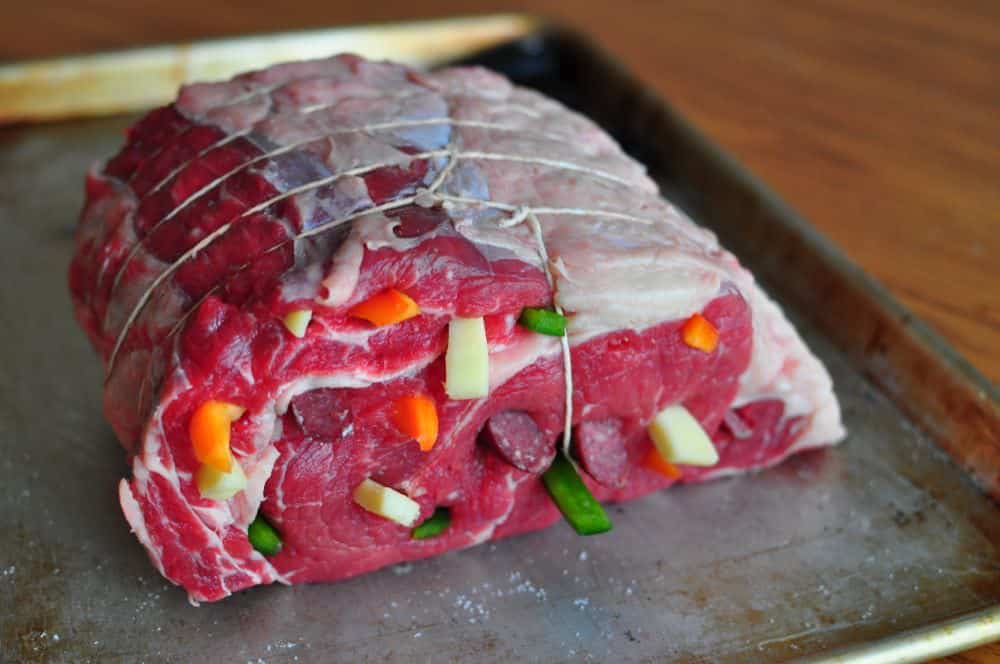
That's what ran through my head as I watched Steven Raichlen's Brazilian stuffed rib roast. It was wild - tunnels of sausage, cheese, and peppers were pushed through the roast, poking through the other side like a colorful porcupine.

Normally, I want straight up beef - salted, peppered, cooked medium rare. That's it. But this…this was something else. When Steven skewered it on a rotisserie spit, I knew I had to try it. How could I possibly resist?

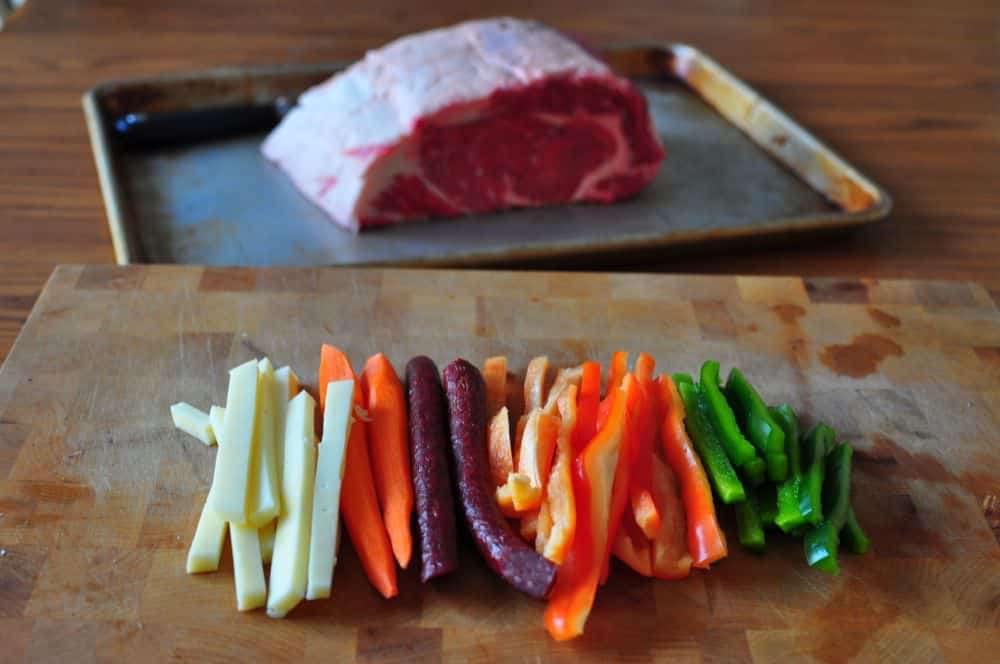
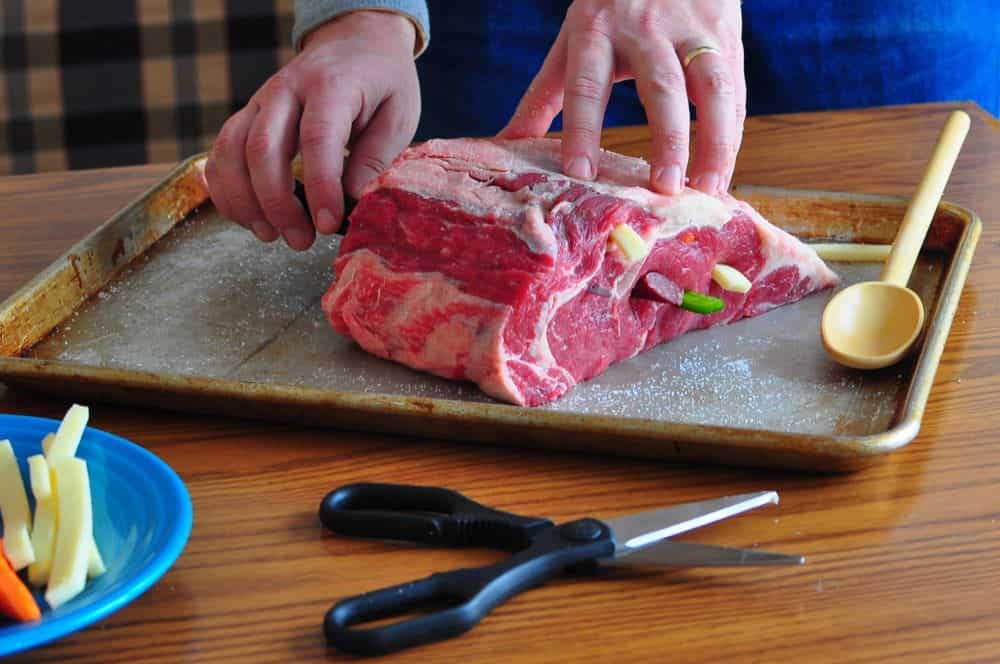
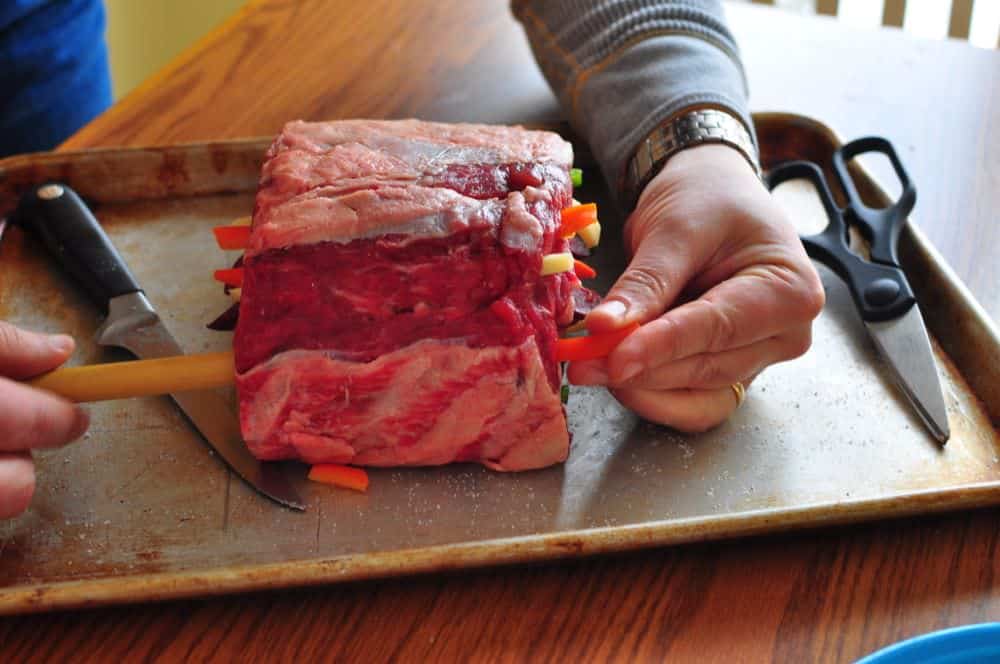
I cheated a bit - instead of slicing strips of pepperoni or ham, I used beef sticks from my local butcher. Stuffing the roast was tricky. The beef sticks and carrots were strong enough to push through the guide holes, but the softer ingredients weren't making it. I used the handle of a wooden spoon as a leader; I pushed the handle all the way through, then pulled it back while pushing a strip of cheese or pepper through from the other side. As the handle slid out, the cheese slid in. Mostly; I had to work a few extra peppers in from the other side of the roast to even things out.

The result? Do you like deluxe pizza, with all the toppings? That's how this roast tastes, if you replace the pizza crust with a big slice of beef. It sounds weird, but it tastes really, really good. I know this is a Brazilian recipe, but the final taste was very Italian. It was a lot of fun to carve and serve - the inside looks like the world's largest pimento loaf. If you're looking for a recipe that will shock and awe the neighbors, give this one a try.
*Or at least convince them that you've finally gone around the bend. Beefy olive loaf, that taste like pizza?

Recipe: Rotisserie Boneless Beef Ribeye Roast Stuffed with Beef Sticks, Cheese, and Peppers


Adapted From: Steven Raichlen, The Barbecue Bible

Cooking time: 60 minutes

Equipment:

  • Grill with Rotisserie attachment (I used a Weber Summit with an infrared rotisserie burner. Here is the current version of my grill.)
  • Aluminum foil drip pan (9"x12", or whatever fits your grill)
  • Butcher's twine

Ingredients:

  • 1 (4 pound) boneless beef ribeye roast
  • 1 tablespoon Kosher salt
  • 1 teaspoon fresh ground black pepper

Stuffing ingredients:

  • 12 inches of beef stick
  • ¼ inch thick slice of aged provolone cheese, cut into ¼ inch strips
  • 1 red bell pepper, cut into strips
  • 1 green bell pepper, cut into strips
  • 2 thin carrots, peeled and trimmed

Directions:

1. Dry brine the beef:
Two to twenty-four hours before cooking, season the ribeye roast with the salt and pepper. Put the roast on a rack over a roasting pan or baking sheet. If salting more than two hours ahead of time, store uncovered in the refrigerator.

2. Stuff the beef:
Two hours before cooking, remove the rib roast from the refrigerator. Stuff the roast with the beef stick, cheese, and vegetables: using a long, thin knife, poke a hole in the roast lengthwise, then gently push a strip of stuffing into the hole. Repeat, poking holes and pushing the stuffing through, until all the stuffing strips are used. Trim the stuffing about ¼ inch from the edges of the beef.

3. Truss and spit the beef:
Truss the roast, then skewer it on the rotisserie spit, securing it with the spit forks. Let the beef rest at room temperature until the grill is ready.

4. Prepare the grill:
Set the grill up for rotisserie cooking at high heat. For my Weber Summit, this means removing the grates, turning the two outer burners (burners 1 and 6) to high, turning the smoker burner to high, and turning the infrared burner to high. Then I put my drip pan in the middle, over the unlit burners, and let the grill preheat for ten to fifteen minutes. (See My Rotisserie Basic Technique Post for more rotisserie setup details.)

5. Rotisserie cook the beef:
Put the spit on the grill, and start the motor spinning. Make sure the drip pan is centered beneath the rib roast. Close the lid and cook the beef until it reaches 120*F in its thickest part for medium-rare, about 1 hour. (Cook to 115 *F for rare, 130 *F for medium.)

6. Serve:
Remove the rib roast from the rotisserie spit and transfer to a platter. Be careful - the spit and forks are blazing hot. Remove the twine trussing the beef. Trim off any burnt ends to the stuffing using kitchen scissors or a paring knife. Let the beef rest for 15 minutes, then carve into ½ inch slices and serve.

Notes:

*The only real problem was the provolone. There wasn't much left in the beef; I think it all melted out of the roast. I need to try the recipe again with a cheese that doesn't melt, like halloumi, to see if it makes a difference.

What do you think? Questions? Other ideas? Leave them in the comments section below.

Related Posts:

Rotisserie Boneless Ribeye Roast with Garlic Crust
Rotisserie Prime Rib Roast
Click here for my other rotisserie recipes.

Adapted from:

Steven Raichlen, The Barbecue Bible


Check out my cookbook, Rotisserie Grilling.

Everything you could ask about the rotisserie,
plus 50 (mostly) new recipes to get you cooking.

It's a Kindle e-book, so you can download it and start reading immediately!


*Enjoyed this post? Want to help out DadCooksDinner? Subscribe to DadCooksDinner using the RSS or Email options on the right, link to this post from your blog, recommend DadCooksDinner to your friends, or buy something from Amazon.com through the links on this site. (Like my Rotisserie Grilling cookbook...)
Things I Love: Calphalon Contemporary 4.5 Quart Nonstick Sauce Pan

February 7, 2012 by Mike Vrobel 2 Comments

"It is not necessary to send back the covers with the pans" they said...that's so sad.

A great philosopher once said: you don't know what you've got 'til it's gone.

I talk a lot about my love of All-Clad on this blog, but this nonstick sauce pan from Calphalon is the pan I use the most. It's my rice pot, the perfect size for steam sauteing vegetables, large enough to make a big pot of soup, or boil a pound of pasta. Oatmeal slides right off the non-stick surface. If dinner has a side dish, it cooks it in this pot.
*It is supposedly a steamer, but I lost the steamer basket years ago, in a brutal kitchen purge. I didn't notice it was missing until a few years after that.

My pot broke after ten years of almost daily use.

A few months ago, I lifted the full pot from the stove, and felt a slight wiggle. This made me nervous, so I emptied the pot and inspected it. I could feel the wiggle if I really torqued the handle, but it was solidly attached, so I ignored it.

Last week, I was making soup, and I filled the pot. Overfilled it, really; one of my favorite things is the 4.5 quart capacity. Sometimes that extra half quart is the difference between boiling…and boiling over. The soup was above the level of the rivets. I was helping the kids with their spelling.
*"Snowman" "S…N…O…M…A…N"

I heard a sizzling sound coming from the burner under the pot. I checked, and the side of the pot was wet. Soup was leaking out through the loose rivets.

I know Calphalon has a lifetime warranty, but this was the perfect excuse to buy a new kitchen toy. I went to the local cookware store with lust in my heart. I had my eye on Calphalon's Unison 4 quart soup pot, their new top of the line, which is even on sale. Just the thing to replace an old pot, right?

Well, no. It was all wrong. My old favorite has a wide, 10 inch top. The new soup pot is narrower, at 8 inches. The new pot is no taller; my old standby was on an nearby shelf, and it seemed like a much bigger pot, even though it is listed as only a half quart larger. I picked up my old favorite, to set it next to the new pot and compare sizes. The long handle just felt right in my hand. I walked out of the cookware store without buying anything.

I shipped my old friend back to Calphalon, saying goodbye at the UPS store. I'm waiting for the warranty replacement. It's been about three days now, and I still reach for that pot. Sure, I have other 4 quart sauce pots, but they don't feel…right.

I know some people feel this way about their Le Creuset. I bought this pot for its convenience; a nonstick pan is a great time saver. Like most great kitchen tools, though, this pot turned out to be more than just convenient. It is useful, graceful, and a pleasure to use. I can't wait for the new one to get here.
*10 to 15 days for a warranty replacement? I don't know if I can wait that long. Cooks Illustrated recommends the 2.5 quart version of my pot, maybe I should get that…no, it's on back order everywhere. I hate being patient!


Disclaimer: With all my "Things I Love" posts, I am not receiving anything from the manufacturer. I bought the items with my own money. I use these tools every day in the kitchen, and I would hate to live without them. If you buy something through the Amazon.com links on my site I get a small commission from the purchase. Thank you!
(OK, I'm good with the FCC now.)

What do you think? What pot would you miss the most? Talk about them in the comments section below.

Related Posts:

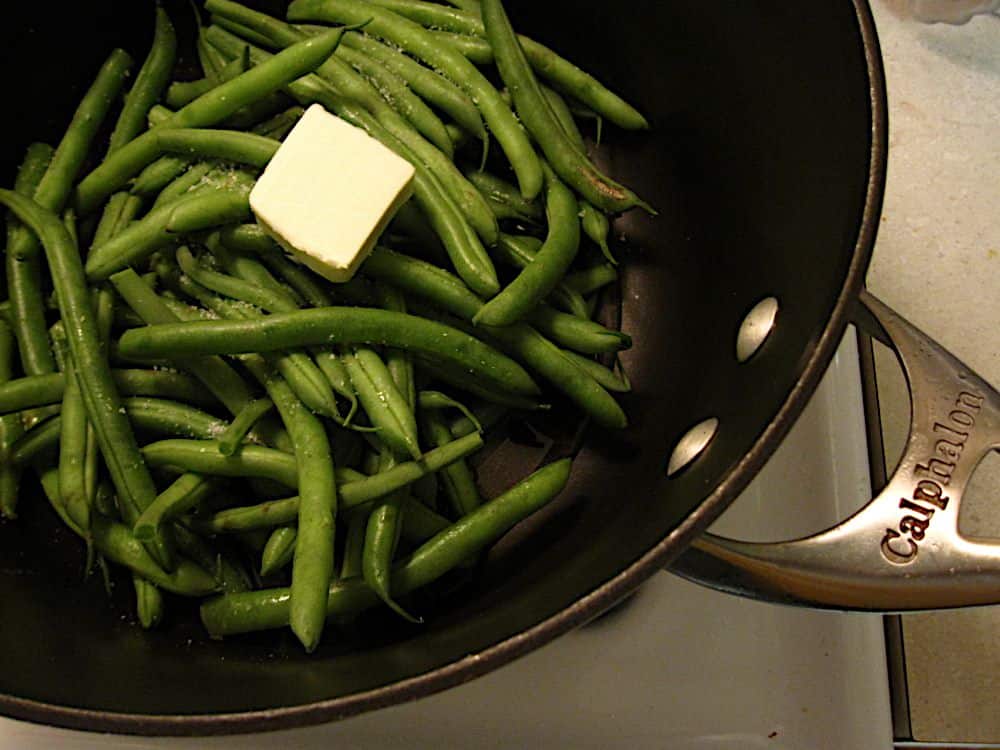
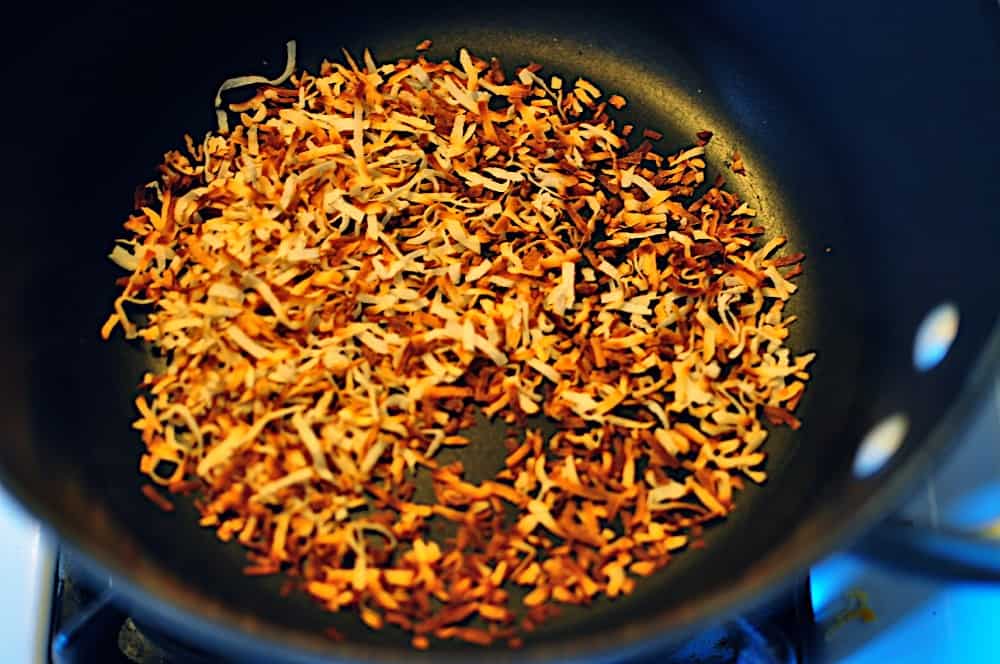
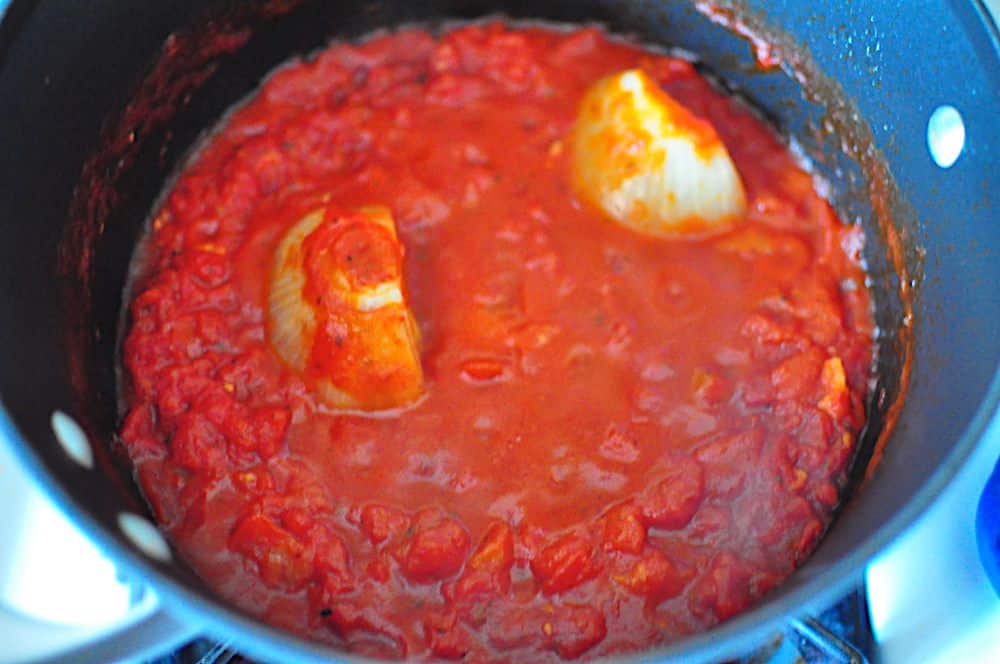
Steam Sauteed Green Beans (first picture)
Coconut Rice (second picture)
Weeknight Tomato Sauce (third picture)

Calphalon Contemporary Nonstick Simmer Down 4-½-Quart Saucepot with Steamer Insert and Glass Lid

*Enjoyed this post? Want to help out DadCooksDinner? Subscribe using your RSS reader or by Email, recommend DadCooksDinner to your friends, or buy something from Amazon.com through the links on this site. Thank you!

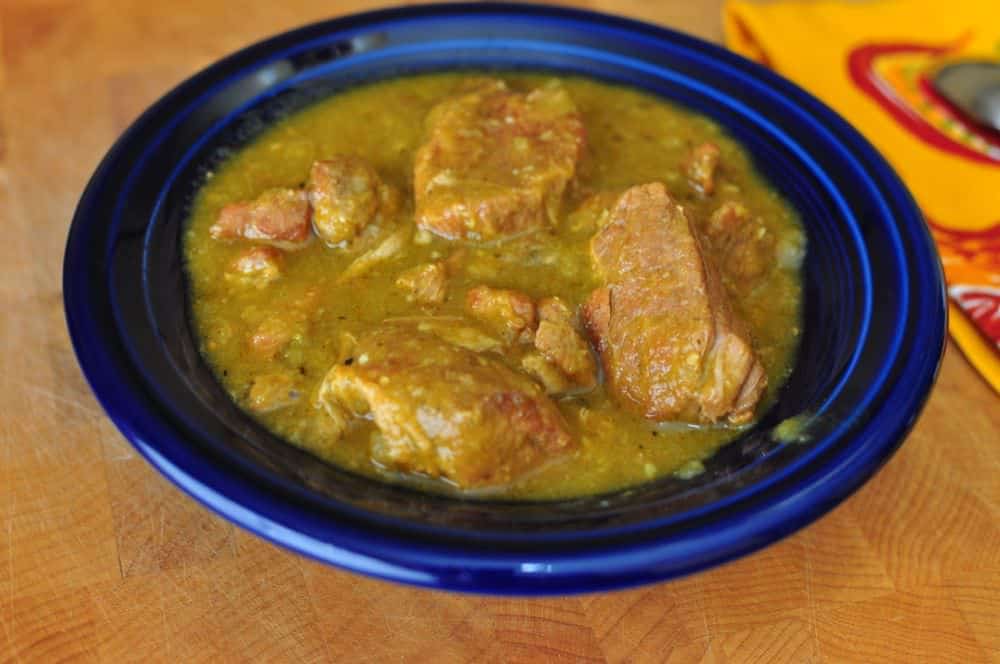
Slow Cooker Chili Verde (Green Pork Chili)

February 2, 2012 by Mike Vrobel 41 Comments

Slow Cooker Chili Verde (Green Pork Chili)

Slow Cooker Chili Verde (Green Pork Chili)

It's Super Bowl week! The Super Bowl is the fifth most important American food holiday. Time for recipes for your party!
*Thanksgiving, Christmas, Forth of July, Memorial Day, Super Bowl. Actually, I think the Super Bowl has passed the Forth of July and Memorial Day, and moved up to #3, right behind Christmas...

I had this post all planned out. My Super Bowl chili would be Chili Verde, green chili, to tie in with the Green Bay Packers. Then the Packers lost in their first playoff game. Oh well, the chili is still worth talking about.
*I live and die with the Cleveland Browns. Die, mostly. But my Dad grew up in Wisconsin and is a huge Packers fan, so I like seeing the Packers do well.

Chili Verde breaks the mold. Pork? Green sauce? Is this really chili? It is the only chili, other than Texas Red, that the International Chili Society recognizes. But, green chili? It sounds like it should be in a Doctor Seuss story.
*I would not eat it in a boat, I would not eat it with a goat. I will not eat it here or there, I will not eat it anywhere! I will not eat green chili, Sam I am...darn, lost the rhyme at the end.
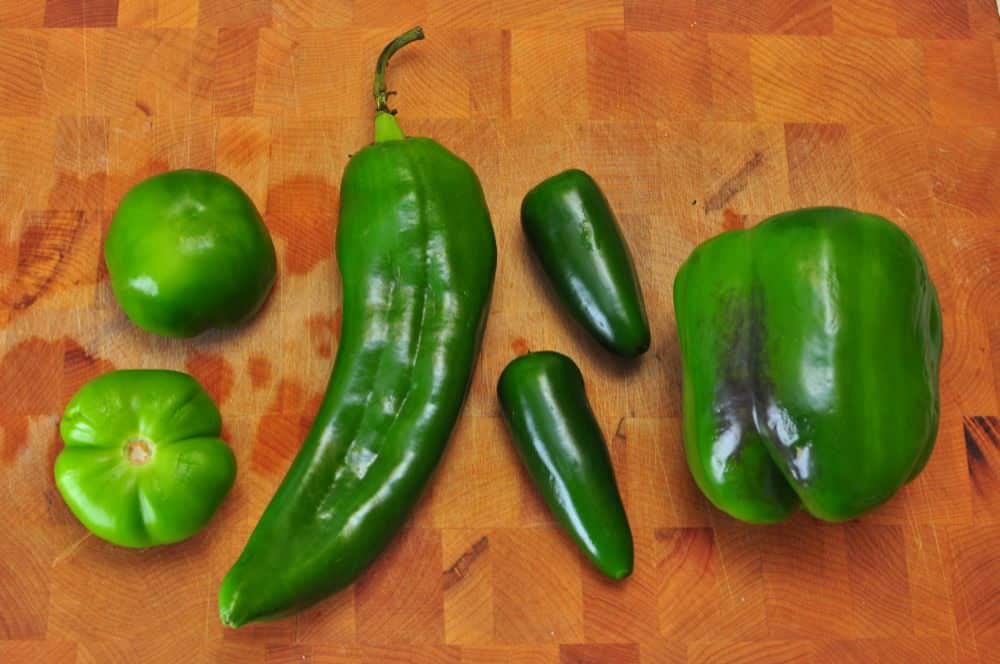
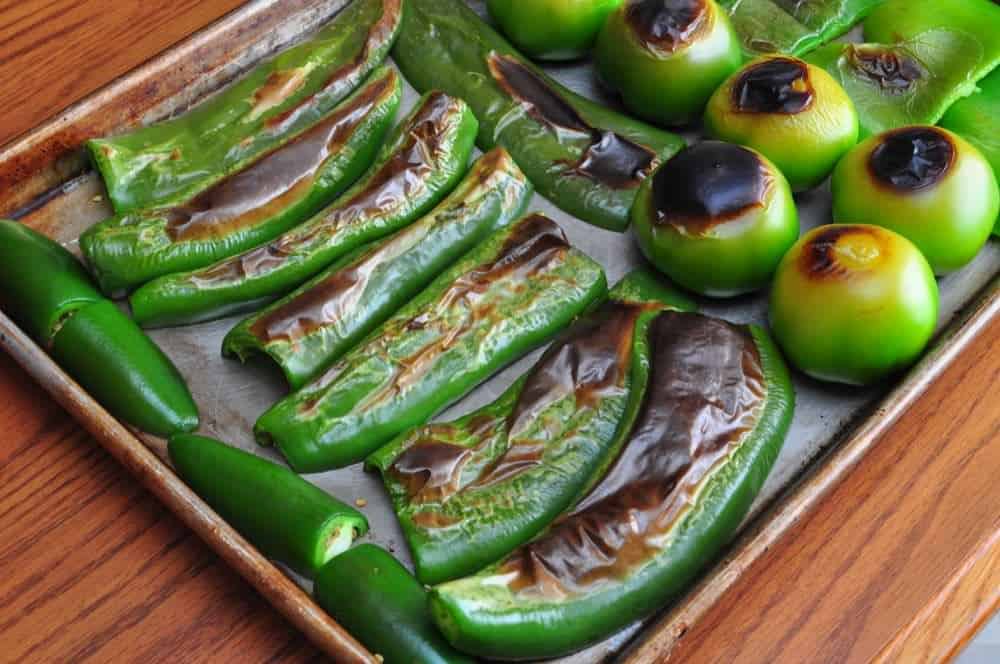
Chili Verde is more involved than most slow cooker recipes. Broiling peppers and tomatillos, then blending them into a green sauce is a little extra work.* If you time it right, though, the peppers are under the broiler while you brown the pork, and everything comes together at the same time. It's worth the extra work. The results are full of green chili flavor and big hunks of pork. Chili Verde is different from red chili, but every bit as delicious.
*And if you want to cheat, and dump things out of jars and cans, check out the variations at the end of the recipe...

Recipe: Slow Cooker Chili Verde (Green Pork Chili)

Adapted From: Elise Bauer, Chile Verde, SimplyRecipes.com

Equipment:

  • 6 quart or larger slow cooker (Crock Pot brand is fine, but I like my fancy one from All-Clad)

L to R: Tomatillo, Anaheim pepper, Jalapeno pepper, Green Bell Pepper

Blackening the peppers and tomatillos: most of the way there, but could still use a little more

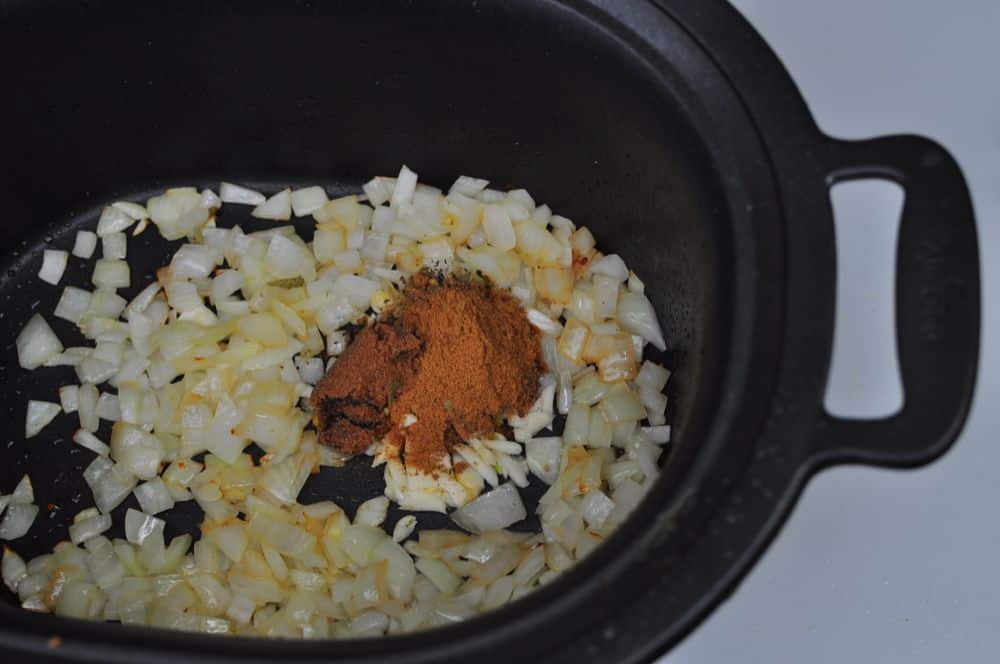
Sauteing the onions, toasting the spices

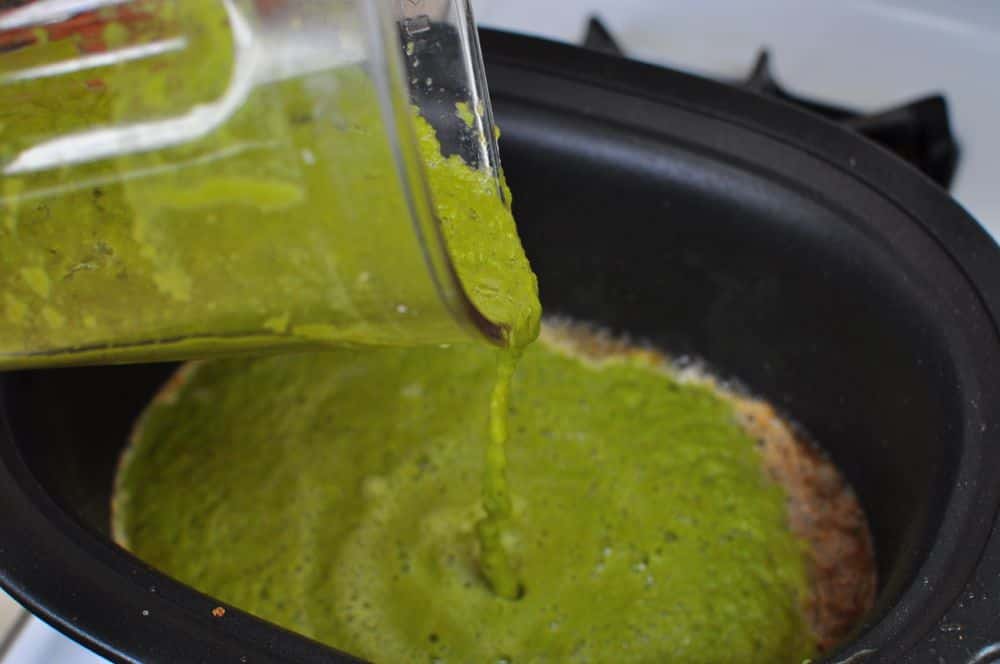
Green sauce into the pot


Variations

*Cheater version: Instead of making the green sauce, buy it in jars or cans. Use 28 ounces of tomatillo salsa, and 28 ounces of green enchilada sauce. Watch the heat level on the tomatillo salsa - you want mild to medium salsa; if it is a really hot salsa, it can overwhelm the rest of the chili.

*Beans: If you want beans in your chili, stir in 28 ounces of canned navy or cannelini beans with the pork and tortilla chips. Just don't tell the ICS - see rule #1.

Notes

*I save the dregs from tortilla chip bags for my chili recipes. The crushed chips dissolve and thicken the sauce, and add a little masa flour taste to the chili. Slow cooker recipes tend to be watery, so the extra thickening is a big help.

*Hot sauces: Depending on the heat level you're looking for:
Tabasco Jalapeño Sauce - medium heat
Dave's Hurtin' Jalapeno Sauce - hot
El Yucateco Green Chile Habanero Sauce - hot!
El Yucateco XXXtra Hot Habanero Sauce - oh, my

What do you think? Questions? Other ideas? Leave them in the comments section below.

Related Posts:

Texas Red Chili
Slow Cooker Ground Beef and Bean Chili
Click here for my other slow cooker recipes.

Adapted from:

Elise Bauer, Chile Verde, SimplyRecipes.com

*Enjoyed this post? Want to help out DadCooksDinner? Subscribe using your RSS reader or by Email, recommend DadCooksDinner to your friends, or buy something from Amazon.com through the links on this site. Thank you!


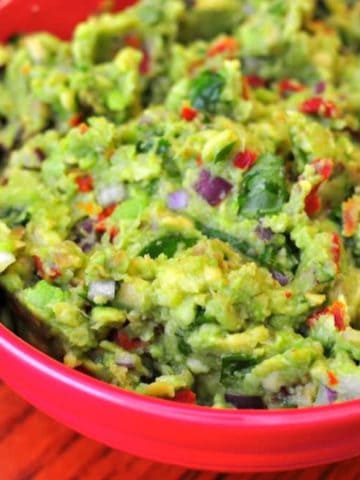
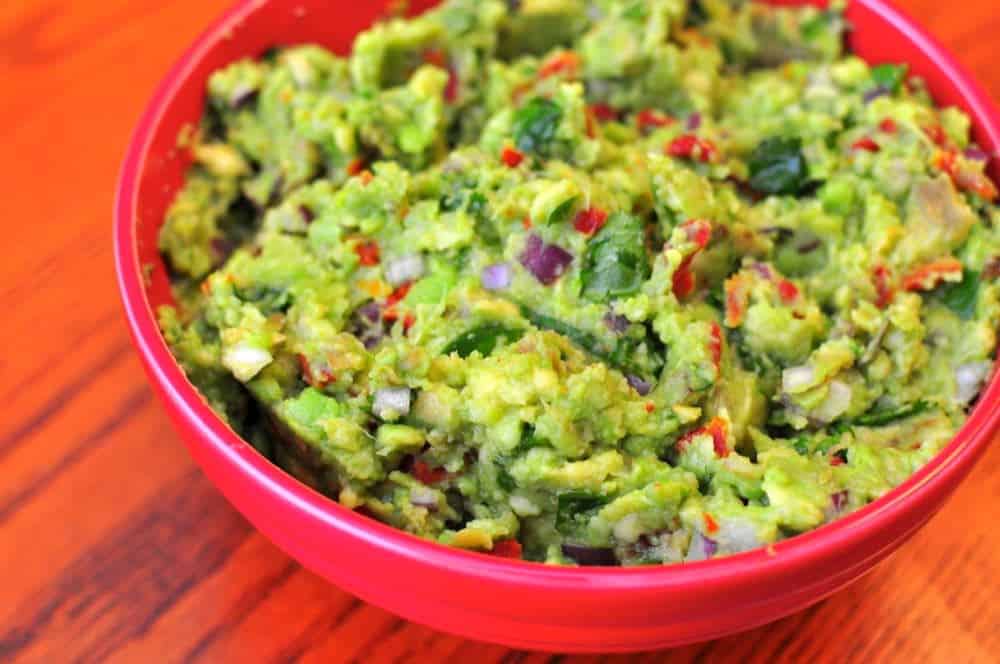
Grilled Guacamole with Sun Dried Tomatoes

January 31, 2012 by Mike Vrobel Leave a Comment

It's Super Bowl week! The Super Bowl is the fifth most important American food holiday. Time for recipes for your party!
*Thanksgiving, Christmas, Forth of July, Memorial Day, Super Bowl. Actually, I think the Super Bowl has passed the Forth of July and Memorial Day, and moved up to #3, right behind Christmas...

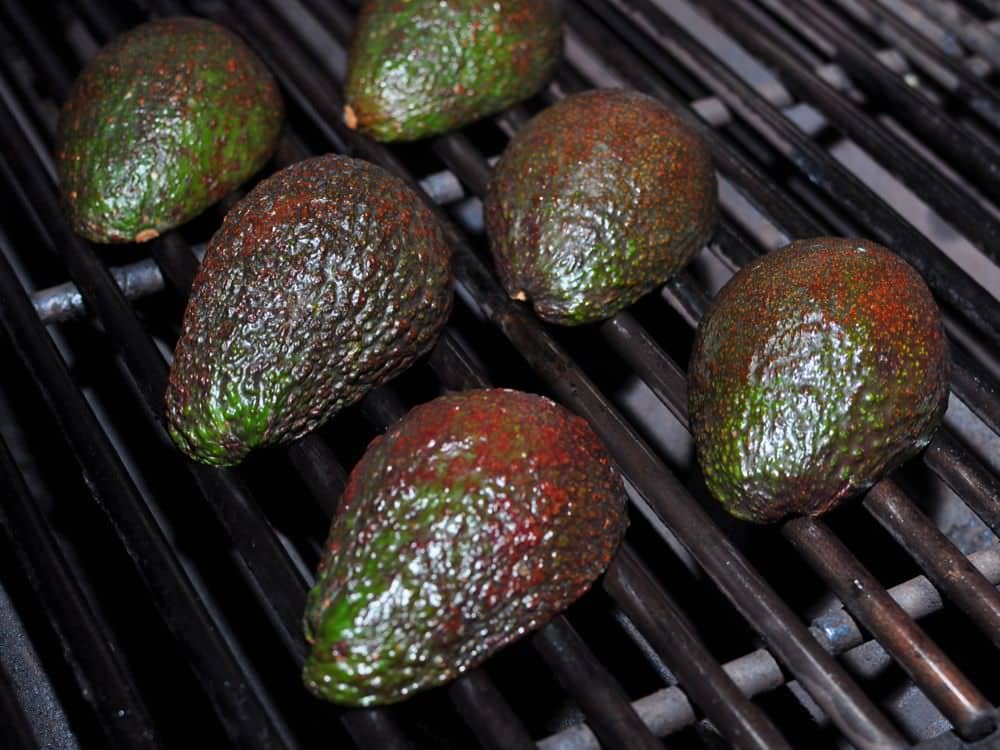
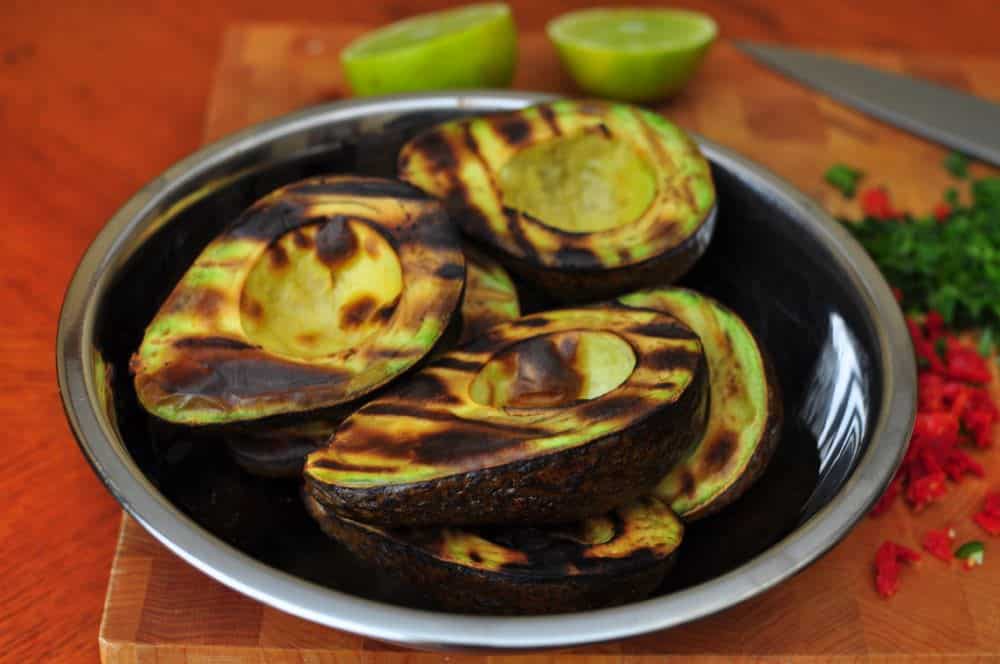
Guacamole is a Super Bowl* standby, but it has a couple of problems. The first is ripe avocados. Sometimes they are perfect; black on the outside, soft on the inside. Other times they're not ready yet - green with black on the bumps, or even worse, an entirely green peel. Green avocado peel translates to rock hard. I solve the "not ready yet" problem by grilling the avocados. This softens them up and adds a smoky flavor to the guacamole.
*I know I'm not supposed to use the copyrighted phrase "Super Bowl" if I haven't paid licensing rights to the NFL. I'm supposed to use a euphemism like "the big game". When their lawyers come to get me, you'll know why.
**Hopefully they don't send Terry Tate, Office Linebacker instead of the laywers…

The second issue is tomatoes. I add a little tomato to my guacamole; I like the color and flavor it adds. But early February is not tomato season. You cannot get farther from tomato season without falling off the calendar. The "tomatoes" they sell at the grocery store taste a little better than the plastic cartons they're packed in - but only because they're juicier. That's why Rick Bayless's suggestion to use sun dried tomatoes in guacamole was such a revelation. Why didn't I think of that? When I read the recipe last summer, my mind flashed to deep winter guacamole.
*Yes, I was thinking about February guacamole while reading a cookbook in July. Yes, I spend too much time thinking about cooking. I'd like to apologize for that…but right now I'm busy enjoying my guacamole.

Recipe: Grilled Guacamole with Sun Dried Tomatoes


Inspired by: Rick Bayless, Fiesta at Rick's

Cooking time: 5 minutes plus mincing and mashing time.

Equipment:

  • Grill (I use my monster Weber Summit. Sure it's overkill for a few avocados...but I love it. Here is the current version of my grill.)

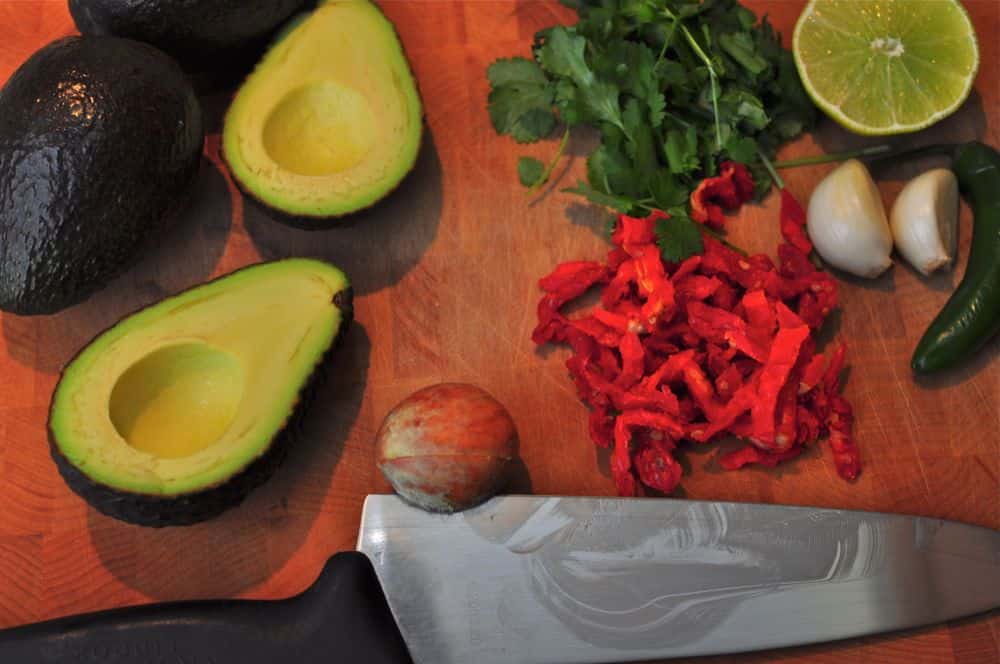
Ingredients:

  • 3 large avocados, sliced in half and pit removed, skin left on
  • ½ red onion, minced
  • 1 serrano or jalapeno pepper, minced (seeded if you want to decrease the heat)
  • ¼ cup minced sun dried tomatoes
  • ¼ cup minced cilantro
  • 2 cloves garlic, minced or pressed through a garlic press
  • Juice of ½ lime
  • 1 teaspoon Kosher salt

Directions:

1. Grill the avocado:
Preheat the grill to medium heat, brush the grill clean, and oil the grates with a folded paper towel dipped in vegetable oil. Put the avocado, cut side down, over direct medium heat and grill for 5 minutes. Remove from the grill and let cool for a few minutes.

2. Make the guacamole:
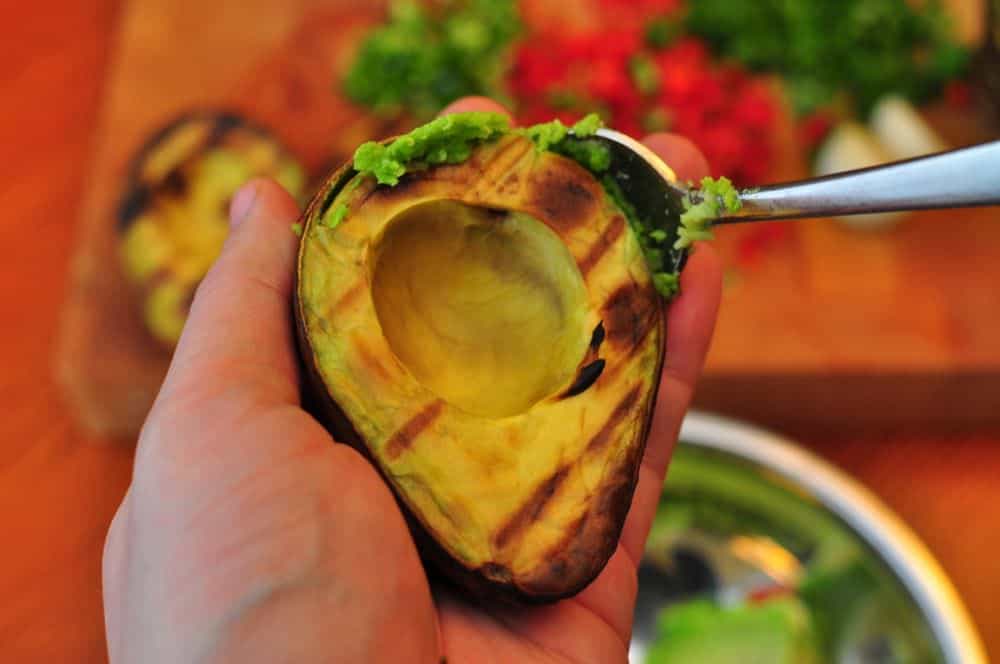
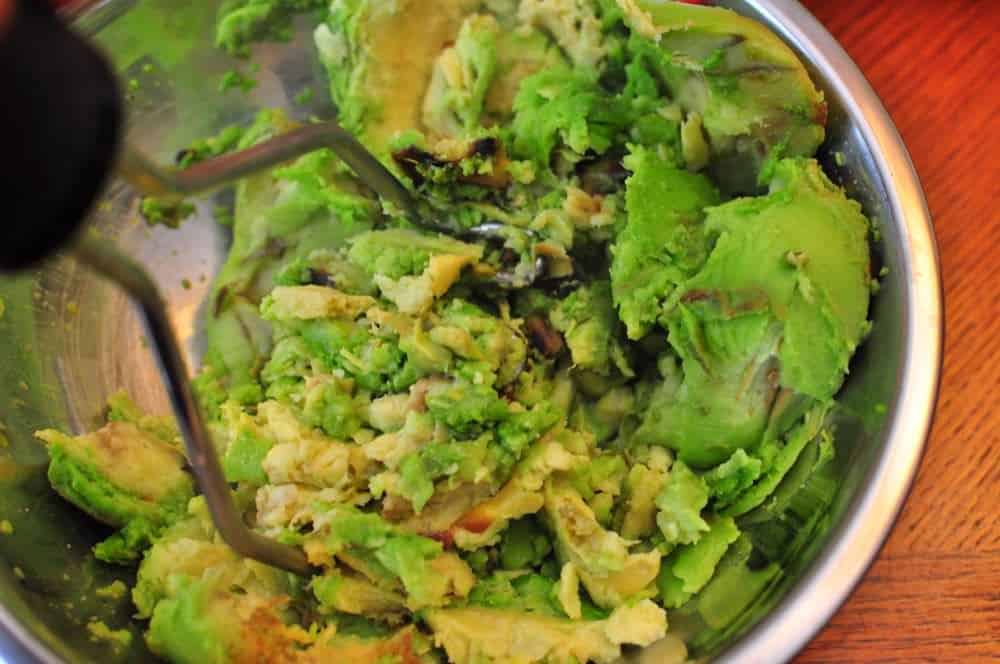
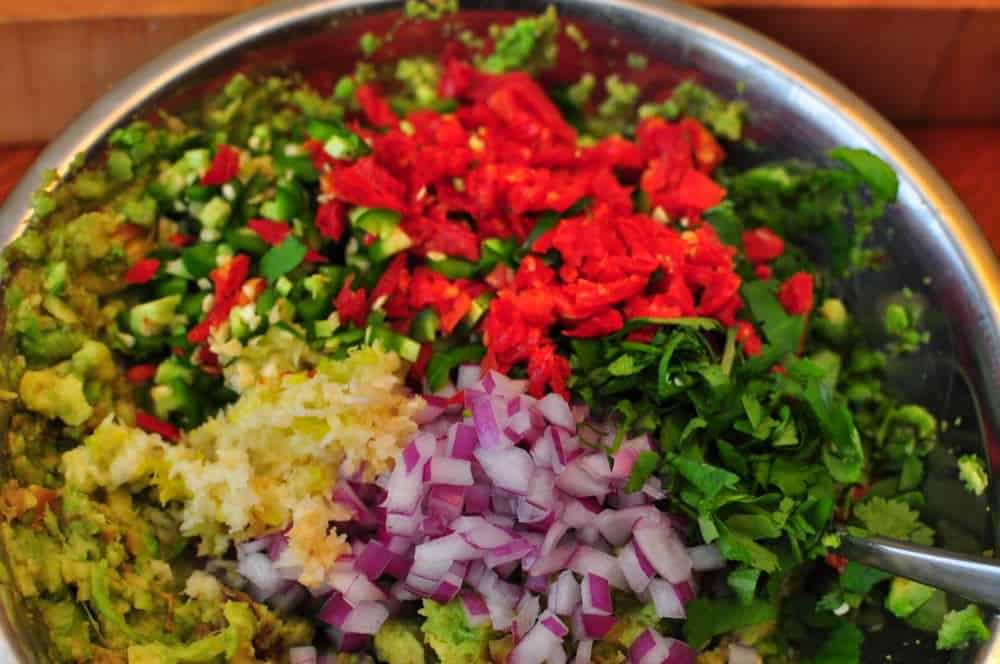
Scoop the avocado out of its skin and into a bowl. Mash the avocado with a fork or a potato masher, then stir in the rest of the ingredients until thoroughly mixed. Taste and add more salt and lime juice as necessary.

Variations:

*Not-So-Grilled Guacamole: If you have ripe avocados, you don't have to grill them. Start with step two, and make regular guacamole.

Notes:

*Be careful when removing the pit from the avocado. Alton Brown taught me how to do this safely [Video - start at 9:25]. Cut all the way around the long end of the avocado with a chef's knife, cutting all the way to the pit. Twist the two halves to separate them. The pit will stay in one half. Hold that half in the palm of your left hand and carefully whack the blade of the chef's knife into the pit. Twist the knife and the avocado pit will come out of the avocado, stuck to the knife. Now, reach around the spine of the chef's knife, with with your thumb and pointer finger, and pinch right where the seed meets the knife to push the seed off of the knife. This keeps your hand and fingers away from the sharp edge while you remove the slippery avocado pit.

What do you think? Questions? Other ideas? Leave them in the comments section below.

Related Posts:

You're going to make salsa to go with your guacamole, right?
Quick Red Salsa
Tomatillo Salsa
Grilled Tomato-Habanero Salsa

Adapted from:

Rick Bayless, Fiesta At Rick's

*Enjoyed this post? Want to help out DadCooksDinner? Subscribe using your RSS reader or by Email, recommend DadCooksDinner to your friends, or buy something from Amazon.com through the links on this site. Thank you!

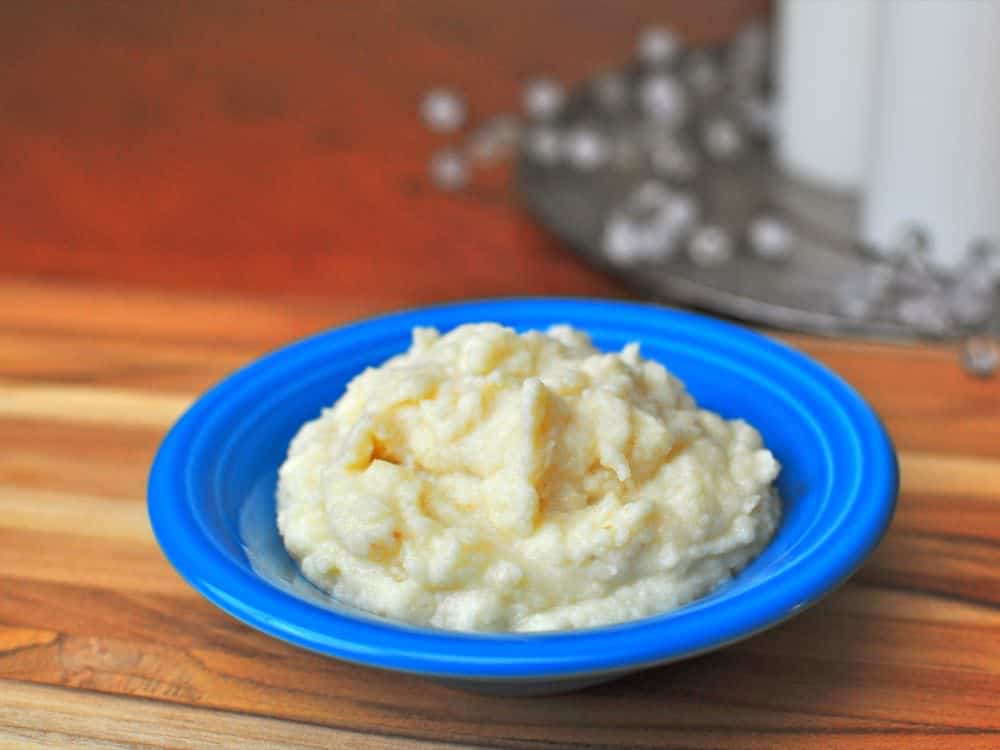
Celery Root Puree

January 26, 2012 by Mike Vrobel 2 Comments

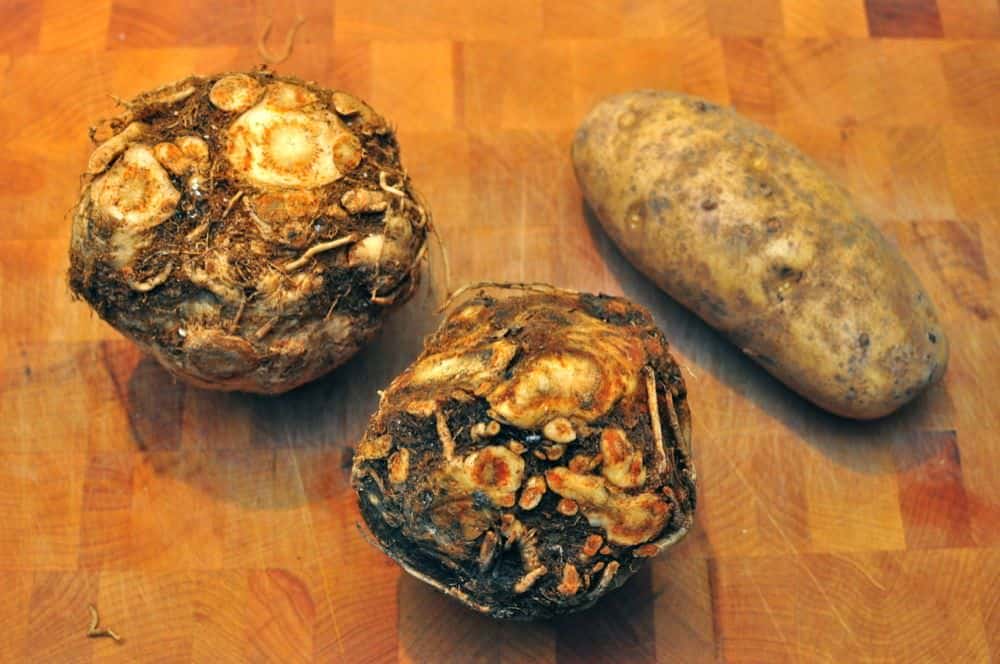
Celery root is a vegetable imagined by H.P. Lovecraft - a vegetable out of space and time, gnarled and twisted in ways that will drive men insane!

Um…sorry. I got carried away. Celery root isn't that bad. But it does drive me insane - I get it every year in my winter CSA box, and I never know what to do with it. It looks like a bundle of roots and dirt. I was too guilty to just toss it; I would wait for it to go bad so I could throw it away guilt free...but like most root vegetables, it keeps for a very long time in the refrigerator. Who knew there was something hidden in that ball of roots worth cooking?
*My readers knew, that's who. I asked for celery root suggestions last year, and you responded with a bunch of great ideas.

Celery root, or celeriac, is exactly what the name says - the root a celery plant. It's not the root of the green stalks I think of as celery; celeriac is a separate variety, grown just for the big bulb of a root.

Celery root puree is similar to mashed potatoes. It has a hint of green celery flavor to go with the creamy, buttery mash. All the recipes I saw include potato with the celery root, in about a 2 to 1 celeriac to potato ratio. I don't know why they add the potato; the starchy celery root seems to act like a potato on its own. But, I always get a pile of potatoes in my CSA along with the celery root. Using some of the potatoes up with the celery root is fine with me. I have a feeling that I'm not the only one, and that's why potatoes are in all the recipes...

Recipe: Celery Root Puree


Adapted From: Dorie Greenspan, Around My French Table

Cooking time: 40 minutes

Ingredients:

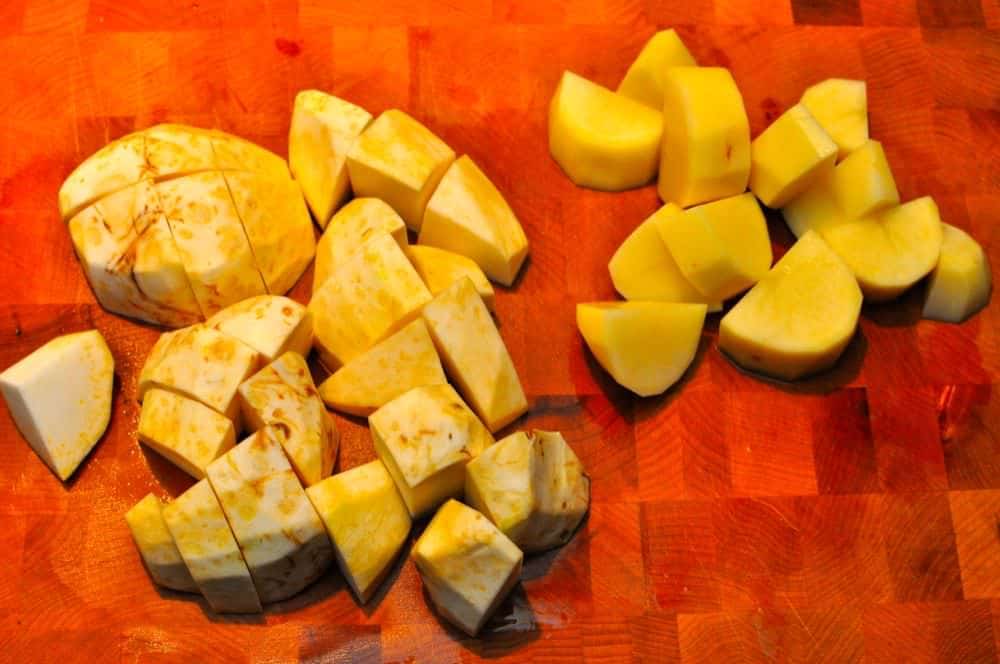
  • 2 pounds celery root, peeled and cut into 2 inch chunks
  • 1 (12 ounce) potato, peeled and cut into 2 inch chunks
  • 1 cup water
  • 1 cup milk
  • 1 teaspoon plus 2 teaspoons Kosher salt
  • 3 tablespoons butter, cut into 1 tablespoon pieces

Directions:

1. Boil the celery root and potatoes:
Put the celery root, potatoes, water, milk, and 1 teaspoon salt in a saucepan, cover, and bring to a boil over medium-high heat. Reduce the heat and simmer covered for 30 minutes, or until the celery root is tender.

2. Puree the celery root and potatoes:
Reserve 1 cup of the liquid from the pot, then drain the vegetables. Put the vegetables back into the pot, add the butter, remaining 2 teaspoons salt, and the cup of reserved cooking liquid, and puree with a stick blender. (Or, put everything in a blender or food processor and process until smooth.) Taste and add more salt if necessary.

Notes:

Boil-overs and milk: I use a nonstick sauce pan when I make this recipe; it helps with boil-overs. The milk bubbles have a hard time getting a grip on the sides of the nonstick pan, making it hard for them to build up enough to boil over onto the stove. If you use a regular pan, keep an eye on it while bringing it to a boil.

What do you think? Questions? Other ideas for celeriac? Leave them in the comments section below.

Related Posts:

For some other great side dishes, try my Patatas Bravas (Spanish Style Fried Potatoes), Zucchini and Summer Squash Salad, or Cast Iron Brussels Sprouts.
Beating the Winter Farmers Market Blues (What do I do with Celeriac? - Good suggestions in the comments).

Adapted from:

Dorie Greenspan, Around My French Table

*Enjoyed this post? Want to help out DadCooksDinner? Subscribe using your RSS reader or by Email, recommend DadCooksDinner to your friends, or buy something from Amazon.com through the links on this site. Thank you!

Men Behaving Badly in the Kitchen

January 24, 2012 by Mike Vrobel 2 Comments

Bwahahahahah!

A quick mac'n'cheese dinner for the kids? How about a macaroni-fennel gratin with chunks of La Quercia's Tamworth bacon that will be finished approximately three hours after the kids go to bed?
"Foodie" Men Are No Help in the Kitchen, Emily Matchar, Chow.com

This article brought back memories. And laughter - I laughed until I was crying.

I've talked about why men should cook…now it's time to talk about the dark side. Years ago, I decided to make dinner every night. How else could I really learn to cook?

Diane was supportive, but dubious. She had good reason to be dubious. I cooked elaborate meals on weeknights. The fire alarm would go off once or twice. When the roast beast on a bed of scalloped potatoes was done at 9PM, Diane would say "This is great, dear. Um...did you make anything green? A vegetable, perhaps?"
Then she'd remind me that potatoes are a starch, not a vegetable.

Weeknight cooking is a completely different skill set from special occasion cooking. It took a long time for this basic fact to work its way through my thick skull. Luckily, I stumbled across Pam Anderson's How to Cook Without a Book. Pam wrote it specifically for weeknight cooking, emphasizing basic techniques with simple flavor variations. As she says in the book, you don't have time on a weeknight to be looking at a recipe. Pam taught me the steam-saute technique. Quick green vegetable side dishes for Diane? Finally!
First Diane had to live through my "saute with pan sauce" phase. I tried every combination in Pam's book, dazzled by the variety you can get from a simple, basic technique. Diane wasn't quite as dazzled. I never caught her, but I suspect that she was feeding the cat sauteed chicken breast with mustard sauce when I wasn't looking. I don't blame her. That was the day after we had pork chop saute with orange sauce, two days after turkey saute with tomato sauce, three days after steak saute with red wine cream sauce…even the cat was sick of pan sauces.

Then the kids came along. Another shock to my system. What do you mean, they're picky? They don't want beef stew with polenta and broccoli rabe for dinner? They'd rather eat the bread, and nothing but the bread?

Eventually, I made it. I learned how to really cook for my family. How to plan out weeknight meals, pick meals that fit into the time available, stick to basic, comforting food, and save the elaborate stuff for the weekends.
Learning to use pressure cookers and slow cookers to bend time in the kitchen also helped a lot.

So, when I read that foodie men are no help in the kitchen, I laughed. "Thank God I'm past all that," I said to myself. "I'm an an evolved Male cook. I don't treat every meal as summit to be conquered, regardless of the consequences."

Then I realized…what do I post on this blog, nine times out of ten? Big, elaborate, production meals. When Diane and the kids see me in the kitchen with my camera, they moan in unison: "Oh, no, is this a blog meal?" Dinner won't be on the table for a while. When I say "five more minutes while I take a couple of pictures" they disappear into the basement to play the Wii. They know what "five more minutes" means.
Fifteen to thirty minutes.

I'm not as evolved as I hoped. I'm more of a recovering Male cook. I've learned my lessons, but I have to watch my step. Backsliding is so easy. There is always a new recipe I have to try, a new technique I just read about. On weeknights, I need to remind myself to keep it simple. Simple doesn't mean bland; I can whip up some pretty interesting meals in a hurry. But if I'm not careful, interesting turns into rolled, stuffed pork loin on the rotisserie with drip pan smashed potatoes. Which is a great meal…just not on a busy Wednesday.
Mark Bittman always impresses me with his ability to strip a recipe down to its weeknight essentials. My favorites involve a fancy restaurant starting point that Mark simplifies for the home kitchen.

What do you think?

What are your kitchen weaknesses? What's the most over the top recipe you tried to make on a Tuesday night? Leave them in the comments section below.

Related Posts:

Why Dad Should Cook
Family Dinners and Small Kids
Weekly Dinner Plans

Inspired by:

Pam Anderson, How to Cook Without a Book
Mark Bittman, Cooking Solves Everything

*Enjoyed this post? Want to help out DadCooksDinner? Subscribe using your RSS reader or by Email, recommend DadCooksDinner to your friends, or buy something from Amazon.com through the links on this site. Thank you!

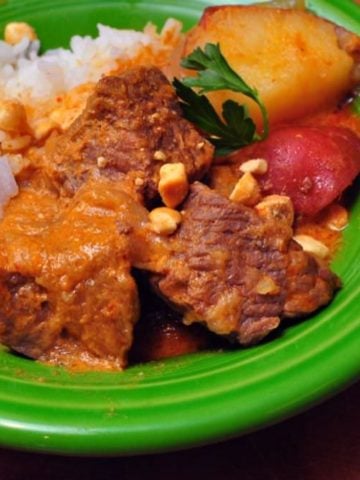
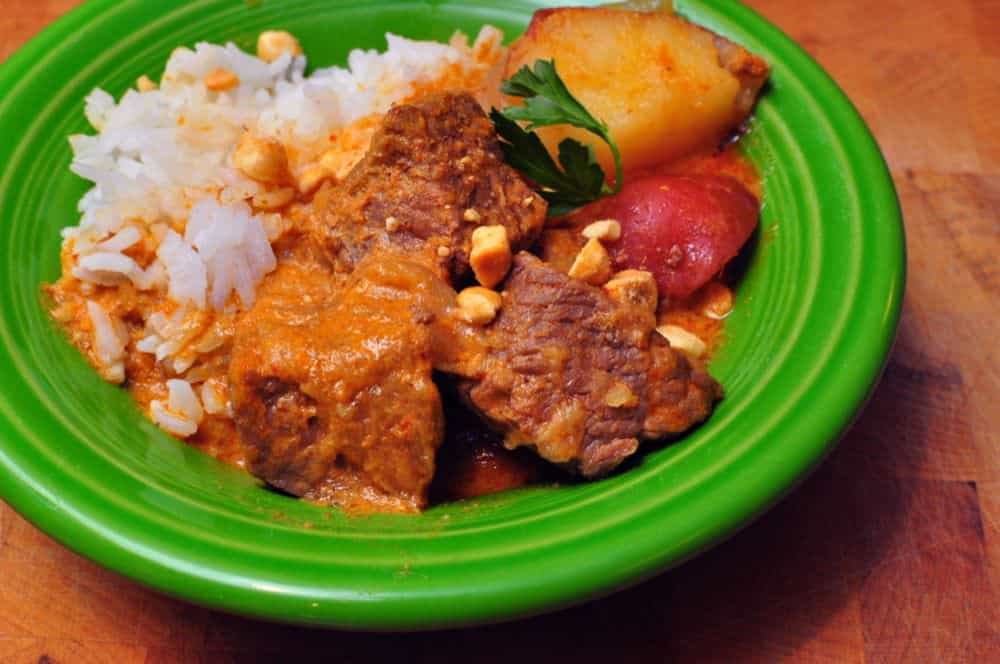
Pressure Cooker Massaman Beef Curry

January 19, 2012 by Mike Vrobel 28 Comments

Pressure Cooker Massaman Beef Curry

Pressure Cooker Massaman Beef Curry

I want to make Thai curries at home, but the ingredient list always scares me. I love shopping at local Asian markets, but…shrimp paste? Magroot skin? Galangal? I would only use them once. The few times I've made a curry, I've used jarred spice pastes....but that's cheating, right?

Then I had my lucky break. Leela at SheSimmers.com specializes in Thai cooking. She recommends spice paste over buying the individual ingredients, particularly if you're just starting out with Thai curries.

That was all I needed - I was off and running with my spice pastes. Well, I thought I was, until I had a Massaman curry at Madam Mam's, and chose that as my first curry to work on for the blog. Who knew jars of Massaman curry paste were hard to find? Luckily, I had the power of the internet on my side, and after a false start where Massaman curry paste magically turned into green curry paste while shipping, I was stocked and ready to go.
*Also, I broke Leela's rule #5 of Massaman curry - I used a pressure cooker. Sorry, Leela…but I followed all most of your other rules, OK? OK.

The results were amazing. Yes, even with the pressure cooker. Not sure what Leela has against them, but it sure worked for me. Massaman curry has a lot of spice flavor, but it isn't all that hot. It was a big hit with the kids. (At least the ones willing to taste it.) Looking for a delicious Thai curry in about an hour? Fire up the pressure cooker and give this one a try.
*No Pressure Cooker? No worries. See the Variations section for cooking instructions with a standard dutch oven.

Recipe: Pressure Cooker Massaman Beef Curry

Adapted from: Leela Punyaratabandhu Massaman Curry [SheSimmers.com]

Equipment:

  • Pressure cooker, at least 6 quarts (I tested out my new Cuisinart Electric Pressure Cooker with this recipe)

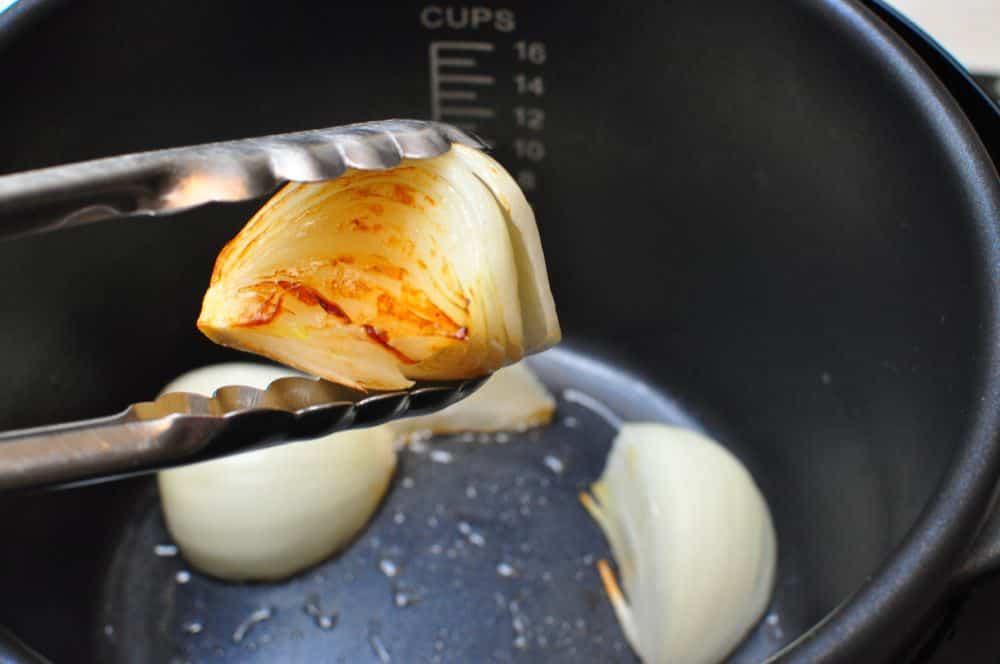
Browning the onions
Browning the onions

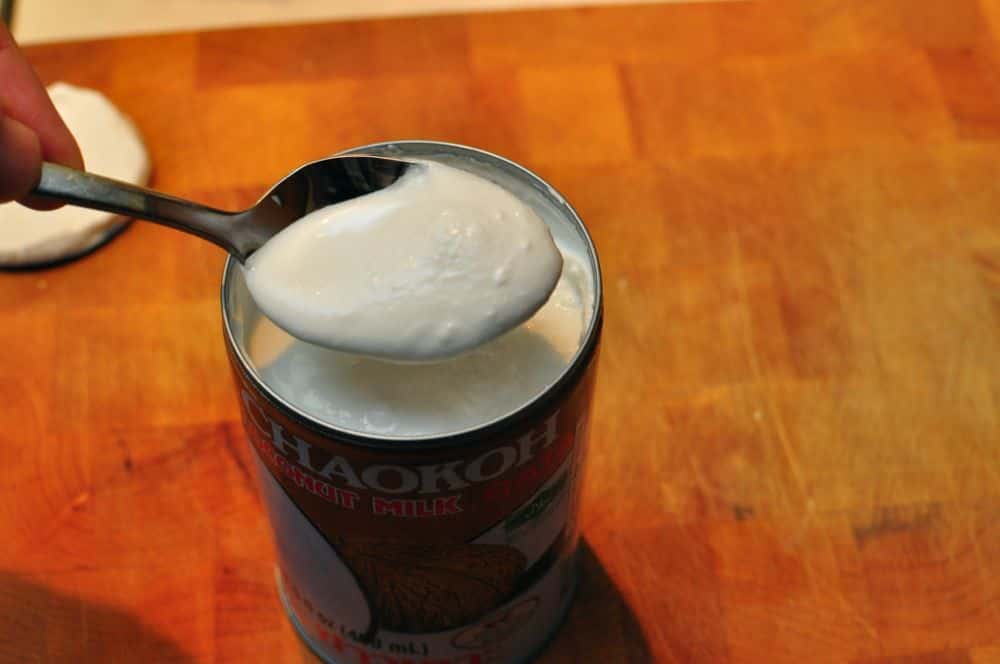
Skimming the coconut cream

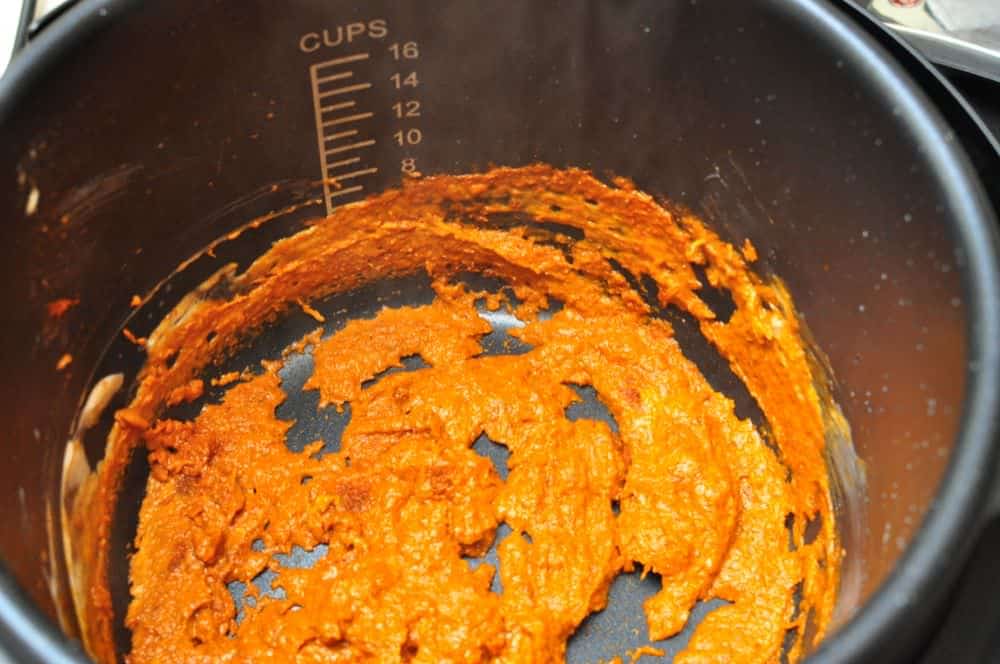
Frying the curry paste with the cream

Everything in the pot...

Notes

  • No pressure cooker? No worries. Use a heavy bottomed dutch oven with a lid, and increase the amount of chicken stock to 2 cups. Follow the instructions right up until "lock the lid". Then, instead of pressure cooking, bring the pot to a boil and cover with the lid. Move the pot to a preheated 350*F oven and bake for 3 hours, until the beef is tender. Continue with the serving step.
  • Don't use low fat coconut milk - you need the heavy cream for frying the curry paste. Also, don't shake the can, so the heavy cream is still on top and can be scraped out of the can.

Fish sauce, coconut milk, curry paste, tamarind
Back: Fish sauce, coconut milk, curry paste. Front: tamarind paste

  • The curry paste, coconut milk, tamarind paste and fish sauce are special ingredients. If your local grocery store has a well stocked international aisle, you may find them, but you probably have to make a trip to your local Asian market. (Or order them online.)

What do you think? Questions? Other ideas? Leave them in the comments section below.

Related Posts:

Looking for some similar recipes? For a Chinese restaurant staple, try my Pressure Cooker Chinese Pork with Dried Plum Sauce. If you're looking for a taste of India, try my Instant Pot Goat Curry (Indian Style). For a taste of Ireland, try Pressure Cooker Lamb and Barley Stew,.
Or, Click here for my other Instant Pot and pressure cooker recipes.

Adapted from:

Leela Punyaratabandhu Massaman Curry [SheSimmers.com]

*Enjoyed this post? Want to help out DadCooksDinner? Subscribe using your RSS reader or by Email, recommend DadCooksDinner to your friends, or buy something from Amazon.com through the links on this site. Thank you!

Weber 2012 Sneak Peek

January 17, 2012 by Mike Vrobel 7 Comments

I just stumbled across this Weber's 2012 Sneak Peek website...and my lust for grilling gadgets is already in high gear.

*h/t Mike at AnotherPintPlease for passing the link on...

I must have:

Extra Large drip pans. Sized to fit perfectly in my Weber kettle, between the charcoal baskets when I'm rotisserieing. Where have they been all my life?
*If rotisserieing isn't a word yet, I'm going to make it one. Watch out, Merriam-Webster...

Enameled plancha. A plancha is a flat, three-walled griddle from Argentina, designed for use on the grill. I was going to get the one from Williams-Sonoma; now I have to make a choice.

Summit Grill Center With Social Area. Oh my. Hang on, I have to wipe the drool off my keyboard. That's better. Yes, I know it probably costs more than my car. Yes, I'll have to reinforce my deck just to support it. Whatever it takes. I want it. No, I need it. My precious!

Interesting, but not essential:

Gourmet BBQ System Pizza Stone. I grill pizza all the time, but having the stone in the grill is something I've only read about. I may have to pick this up and give it a try.

Fish Baskets. Another grilling gadget that I've never purchased, but meant to. I'm not sure I cook enough fish to make it worth it, but I'll probably check these out as well.

Long Handled Pincer Tongs. Probably a useless gadget, destined to gather dust in the back of my cabinet...but I'm still going to buy a pair.

Curses, foiled again:

26.75-inch Charcoal Kettle Rotisserie. No, it's not there. Again. Every year they leave me hanging. When are they going to make a rotisserie for the larger kettle? I don't care what it costs, I'll pay...just make one already. Please?

Finally, some apologies:

I apologize for the lack of direct links - Weber has all this information in a slideshow, and I can't get the links to work. If you're interested, go to 2012SneakPeek.Weber.com and scroll around until you find what I'm talking about.

I also apologize if you're not a Weber fanatic. We'll continue with our non-Weber programming later in the week. And no, I wasn't paid to promote this in any way. I'm just a Weber fanboy.

What do you think? Anything you have to have for your grill this year? Leave them in the comments section below.

Related Posts:

Why Weber?
Weber Gourmet BBQ System Review

*Enjoyed this post? Want to help out DadCooksDinner? Subscribe using your RSS reader or by Email, recommend DadCooksDinner to your friends, or buy something from Amazon.com through the links on this site. Thank you!

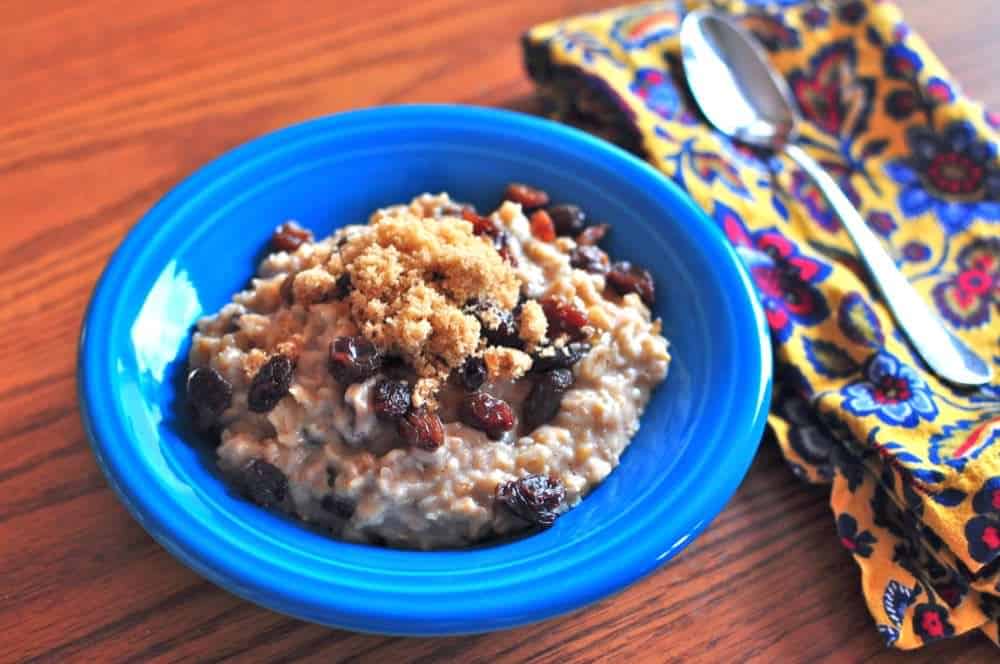
Weekday Oatmeal

January 12, 2012 by Mike Vrobel 7 Comments

Thursday is oatmeal morning in our house. For years that meant packages of instant oatmeal.
*Dinosaur eggs with brown sugar were the favorite.

Last year, I read Mark Bittman's diatribe about instant oatmeal. I started to make it myself. Mr. Bittman is right; oatmeal is quick and easy. It takes maybe fifteen minutes to make a batch. The problem is, the kids fought the change tooth and nail. "It doesn't taste right" was the rallying cry.
*This means it's not full of sugar pellets in the shape of dinosaurs.

After a while, I got tired of fighting every Thursday morning, and went back to instant oatmeal. I gave up on making my own oatmeal, and went back to instant. When school started in the fall, I made a second push to making our own oatmeal. I was losing the battle against instant oatmeal…until I read Oatmeal Worth Waking Up For in Pam Anderson's How To Cook Without a Book: Meatless Meals.

Pam's oatmeal is a basic technique with all sorts of options. At the core, Pam's recipe is the same as Bittman's. (As are all oatmeal recipes - how tricky can you get with a 2:1 ratio of water to oats?) So, why did Pam's recipe help so much? In Pam's own words, the options for oatmeal "read like a dessert menu rather than breakfast". I should seen it sooner - the way to my kids' stomach was through their sweet tooth.

What follows is my favorite oatmeal. I'm a traditionalist; I want oatmeal with raisins. As a nod to the kids, I added Pam's warming spice blend of cinnamon, ginger, and cloves. "This tastes like pumpkin pie" was the review from two out of three kids. If you need a quick breakfast to warm everyone up on a cold morning, reach for the oatmeal.
*Now, if I could just find a book of really terrible dinosaur jokes. That's what I miss from the instant oatmeal packets.

Recipe: Weekday Oatmeal


Adapted From: Oatmeal Worth Waking Up For, Pam Anderson, How to Cook Without A Book: Meatless Meals

Cooking time: 15 minutes

Ingredients:

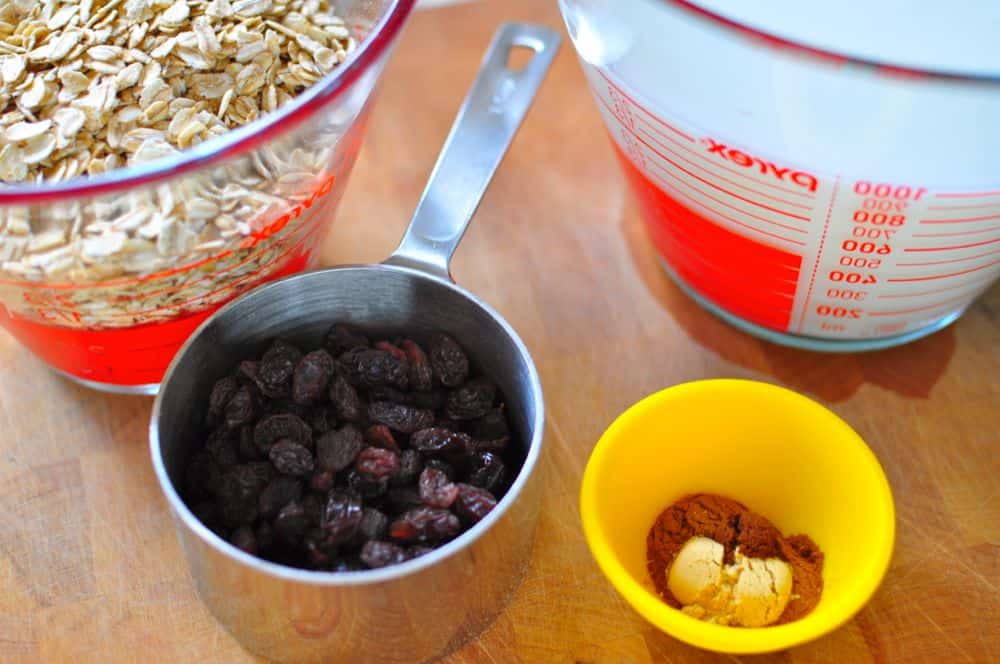
  • 2 cups rolled oats ("old fashioned" oats)
  • 2 cups water
  • 2 cups milk
  • pinch of salt
  • ⅔ cup raisins or other dried fruit
  • 1 tablespoon brown sugar
  • 1 teaspoon ground cinnamon
  • ½ teaspoon ground ginger
  • ⅛ teaspoon cloves

Directions:

1. Cook the oatmeal:
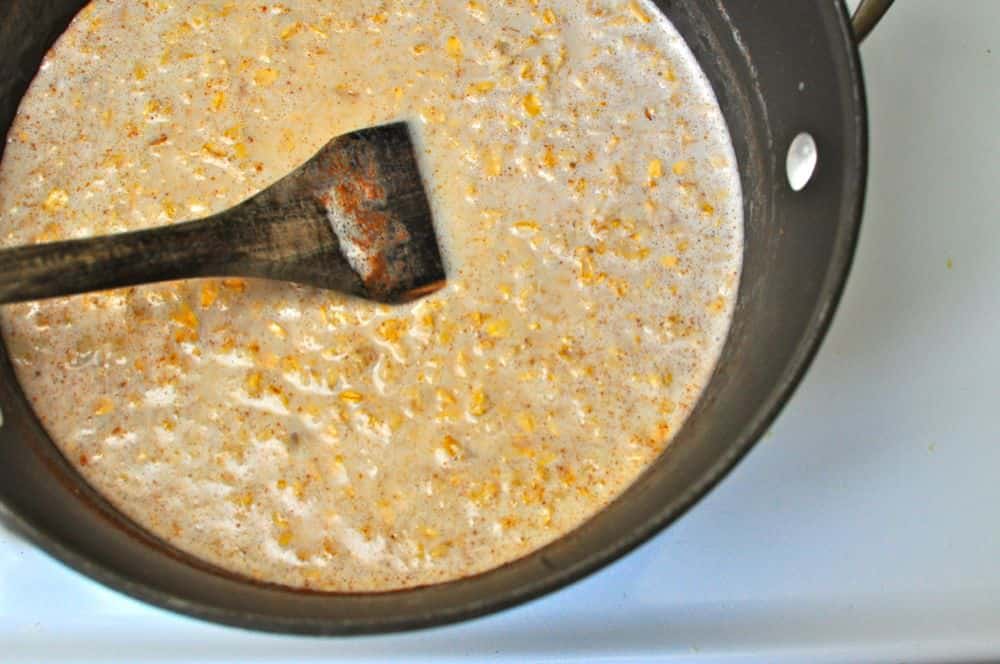
Mix all the ingredients in a large saucepan, then bring to a boil over medium-high heat. Decrease the heat to a simmer and cook, stirring occasionally, until the oatmeal thickens to your liking, about 5 minutes. Serve with more brown sugar and raisins to add at the table.

Variations:

*Easy: Oats, water, milk and salt. Pass brown sugar at the table. The rest of the ingredients are optional.

*Go Nuts: Crush some peanuts and sprinkle them on at the table.

*See Pam's book for an amazing variety of options, add ins, spices, and toppings.

Notes:

*I put the lid on the pot when I'm bringing it to a boil. This speeds up the boiling, but increases the chance of a boil-over. I use a large, nonstick pot with a glass lid, and keep an eye on it - the moment I see steam escaping from the side, I turn the heat down.
*Keeping an eye one it is not easy before I have my morning coffee.

*Why do I call this weekday oatmeal? Because I make longer cooking oatmeal with steel-cut oats on the weekend. I love that oatmeal, but it takes a half an hour, and the kids would much rather have this recipe. Sigh.

What do you think? Questions? Other ideas? Leave them in the comments section below.

Related Posts:

Review: Cook Without a Book: Meatless Meals by Pam Anderson

Adapted from:

Oatmeal Worth Waking Up For, Pam Anderson, How to Cook Without A Book: Meatless Meals

*Enjoyed this post? Want to help out DadCooksDinner? Subscribe using your RSS reader or by Email, recommend DadCooksDinner to your friends, or buy something from Amazon.com through the links on this site. Thank you!

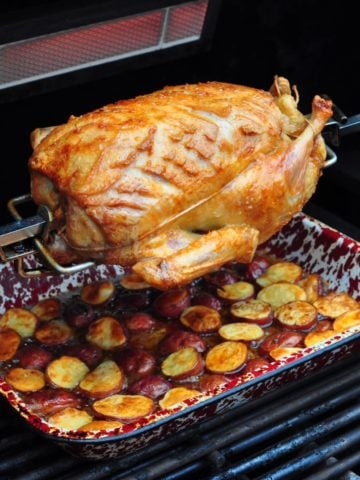
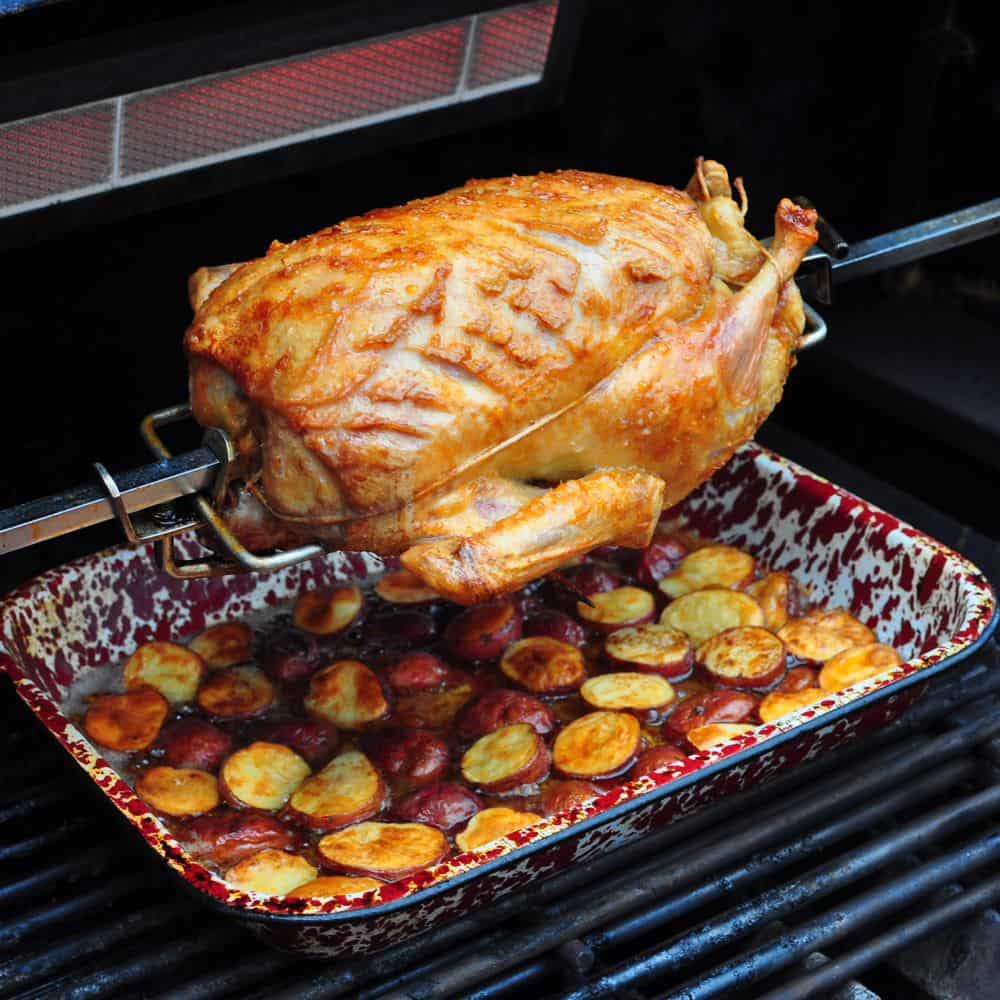
Rotisserie Duck with Honey Glaze and Drip Pan New Potatoes

January 5, 2012 by Mike Vrobel 31 Comments

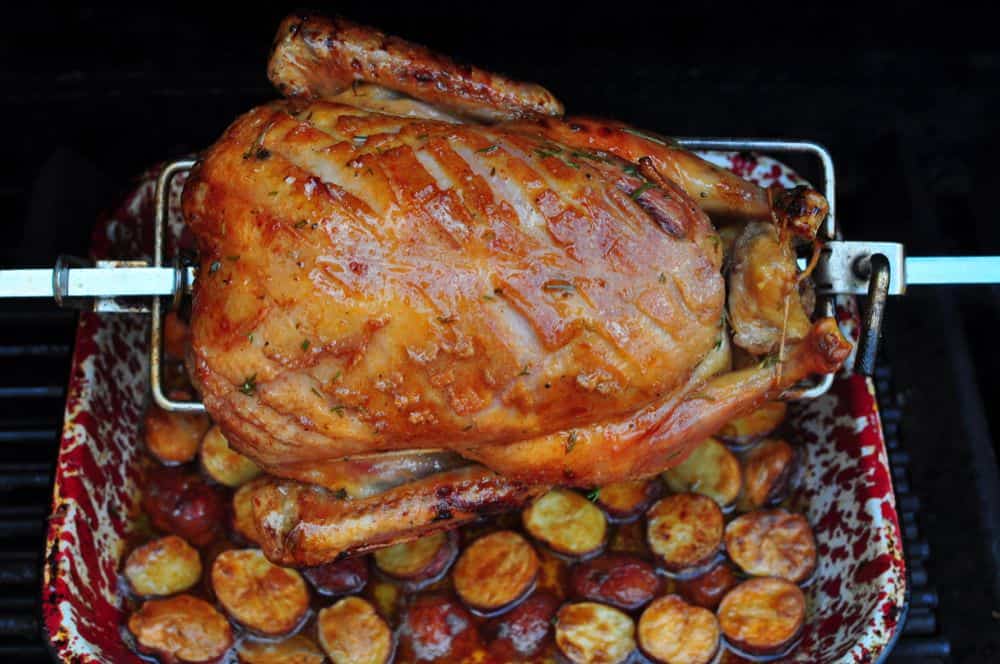
Duck on a gas grill rotisserie with drip pan potatoes

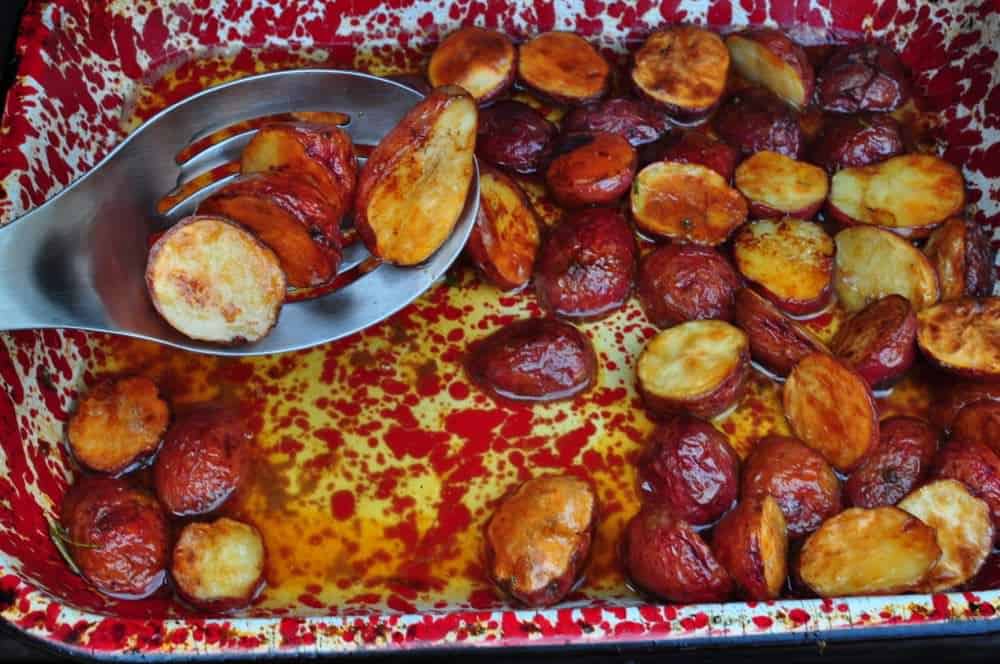
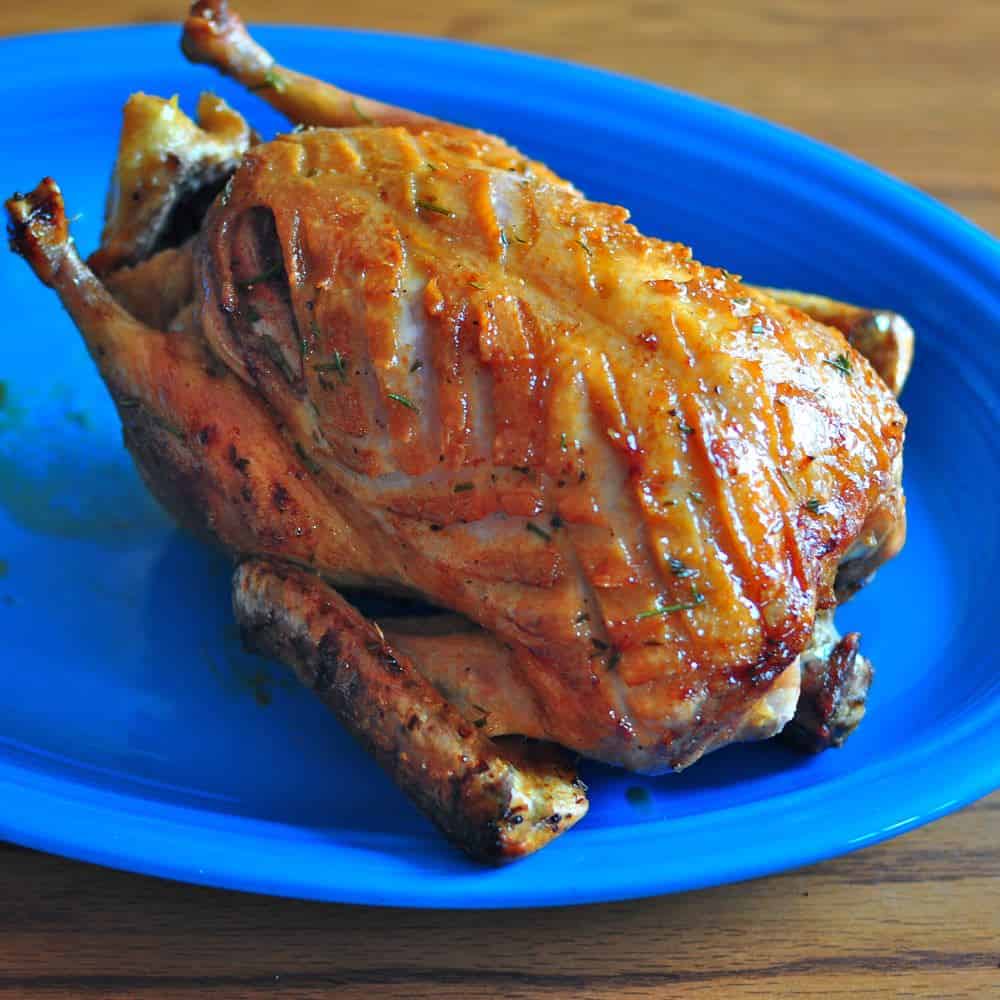
Rotisserie Duck with Honey Glaze and Drip Pan New Potatoes. Crisp skinned roast duck with duck fat potatoes. Doesn't that sound decadent? Oh, it is. This is a great recipe to show off your rotisserie grilling skills.

Duck on a gas grill rotisserie with drip pan potatoes
[feast_advanced_jump_to]

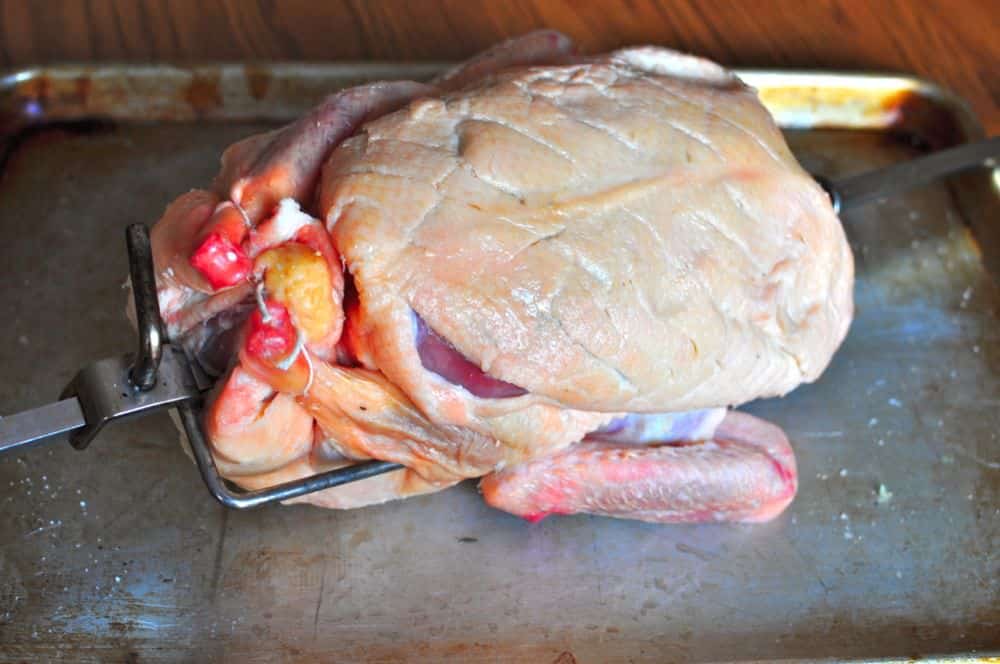
I tried a slightly different approach to my duck. Instead of poking the skin all over with a knife, I went with the slashed skin that I use when I'm searing individual duck breasts. Why? Two reasons. First, I hoped more duck fat would escape through the larger slashes. Second, diamond patterns look prettier in photos.
*Yes, I use some cooking techniques because they look good in pictures. I'm…I'm…food styling. I feel like I should be ashamed. But then I see the duck and potatoes picture, and I get over it.

DSC_3664

Did slashing the skin help? Yes, but not as much as I expected. There was a slight improvement over poked-skin duck, a little less fat under the crispy skin. And the diamond pattern sure looks nice in the pictures. (Whoops, there I go again.) I'm going to use the slashed skin approach in the future, but if you are more comfortable poking your duck, keep doing it. Frankly, I think dry brining for 24 hours in the refrigerator crisps the skin more than slashing vs poking.

DSC_3667

Special thanks to Jeff and Melanie at Brunty Farms for the wonderful duck I used for this recipe.

Equipment

  • Grill with Rotisserie attachment (I use a Weber Summit with an infrared rotisserie burner. Here is the current version of my grill.)
  • Aluminum foil drip pan (9"x13", or whatever fits your grill. I use an enameled steel roasting pan.)
  • Butchers twine
  • Instant Read Thermometer
Rotisserie Grilling by Mike Vrobel

I wrote a cookbook!

Rotisserie Grilling Cookbook

New to your rotisserie and need help with the basics? Love your rotisserie and looking for new ideas? Grab a copy of Rotisserie Grilling! You'll get 50 of my favorite rotisserie recipes and expert tips on how to set up and use your rotisserie.

Click here to buy →
Duck is browned and ready to glaze
Potatoes are cooked -remove from the pan with a slotted spoon.

Notes

  • One duck will feed 4 people, with the potatoes and another side dish. I slice the duck breast and the thighs, and serve the drumsticks and wings as crunchy snacks. If you have hearty eaters, assume they'll want half a duck - a breast and a leg. I think I can squeeze two ducks on the spit for my jumbo Weber Summit grill. What I'm trying to say is: this is a recipe for an intimate gathering, not for a crowd.
  • If you like your duck breast cooked pink - medium rare to medium - this is not the recipe for you. To cook the legs through and render enough fat to crisp the skin, you have to cook the breast to well done. I like well done duck breast; the crisp skin and fat keep it juicy. But if you really want medium-rare duck breast, it needs to cook separately from the rest of the duck.
Ready to carve
Ready to carve!

What do you think? Questions? Other ideas? Leave them in the comments section below.

Related Posts

Rotisserie Duck Peking Style
Rotisserie Duck with Pomegranate Glaze
Basic Rotisserie Duck
Smoked Duck Recipe
Click here for my other rotisserie recipes.


Check out my cookbook, Rotisserie Grilling.


Everything you could ask about the rotisserie,
plus 50 (mostly) new recipes to get you cooking.

It's available as a Kindle e-book, so you can download it and start reading immediately!


*Enjoyed this post? Want to help out DadCooksDinner? Subscribe to DadCooksDinner using the RSS or Email options on the right, link to this post from your blog, recommend DadCooksDinner to your friends, or buy something from Amazon.com through the links on this site. (Like my Rotisserie Grilling cookbook...)
Things I Can Never Have Enough Of In My Kitchen

January 3, 2012 by Mike Vrobel 3 Comments

What kitchen tools do I really need? I was thinking back to my minimalist kitchen list...while trying to cram a whisk into my overflowing utensil crock. Why do I have all this stuff? It dawned on me - there are kitchen tools where I can't just have one. What tools are so necessary that I keep buying extras, just in case one is in the dishwasher?

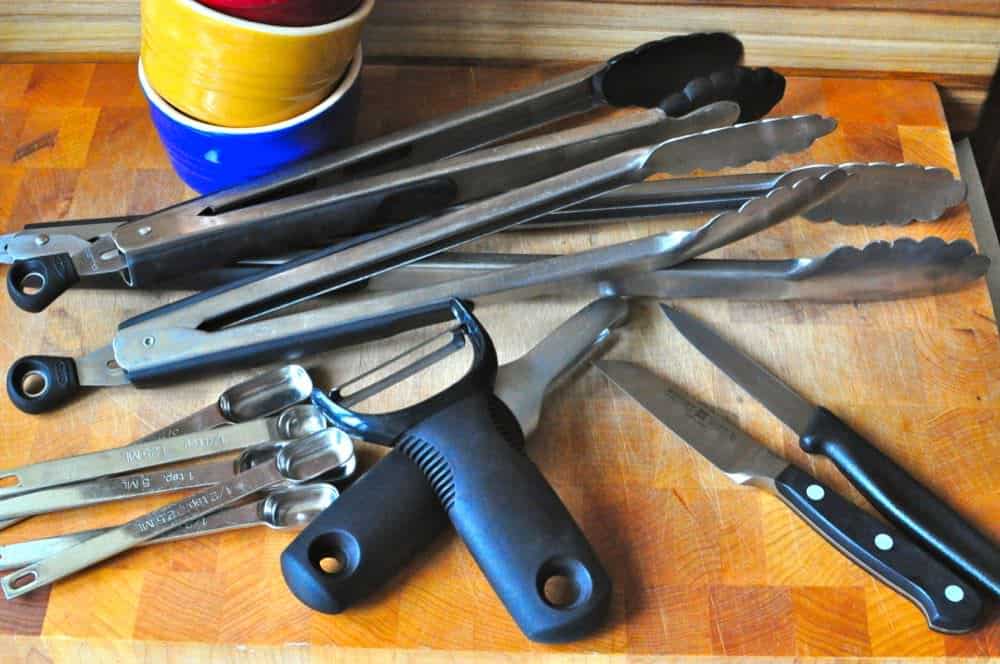
1. Tongs
Spring loaded tongs are my hands, at the stove and on the grill. I keep three different styles of tongs. 12 inch tongs for general kitchen usage; 12 inch tongs with nonstick-safe heads, to protect nonstick and enameled cast iron cookware; and 16 inch tongs for grilling, to give me a little extra reach before I get over the fire.

2. Paring Knives
I love knives. I have a lot of paring knives; too many, honestly, but when I see a new knife I have to have it. Setting aside my knife addiction, the paring knives I use every day fall into two general types. The first is my cheap Victorinox paring knives. I use these for rough work; anything where I would want to throw it in the dishwasher when I was done. I use them for everything from trimming fat to opening packages to coring apples. The second type of knife is my (expensive) sheep's foot granton edge paring knife. This one comes out when I need to do fine work, like mincing and dicing shallots or garlic.

3. Peelers
I'm in the middle of a peeling conversion. I started with straight peelers; the Oxo peeler was a revelation when it first came out. Now I've switched over to Y peelers. "Hold it like a pencil" was what I read, I tried it, and I'm a Y peeler convert.
Why Y? Y not?

Either type, it always helps to have an extra peelers. If someone wants to help peel potatoes, I don't  turn them down.

4. Measuring Spoons/Measuring Cups
There's nothing worse than needing a half-teaspoon of baking soda and finding out the half-teaspoon is in the sink and covered in batter. I have two sets of measuring spoons and measuring cups, which means I don't have to constantly wash them out when I'm baking.

5. Pinch bowls/Ramekins
Mise en place, "everything in its place", is the key to professional cooking. I'm a home cook, so I prep as I go, but I'm always reaching for my pinch bowls to hold a few ingredients for later.

Honorable mention:
Why is my utensil crock overflowing? Because of: flat edged wooden spoons, ladles, serving spoons, spatulas, turners, and whisks. How could I get by with only one of those?

What do you think? I'm sure I forgot something...what did I miss? Leave them in the comments section below.

Enjoyed this post? Want to help out DadCooksDinner? Subscribe using your RSS reader or by Email, recommend DadCooksDinner to your friends, or buy something from Amazon.com through the links on this site. Thank you!

Slow Cooker Chili with Ground Beef and Beans

December 29, 2011 by Mike Vrobel 6 Comments

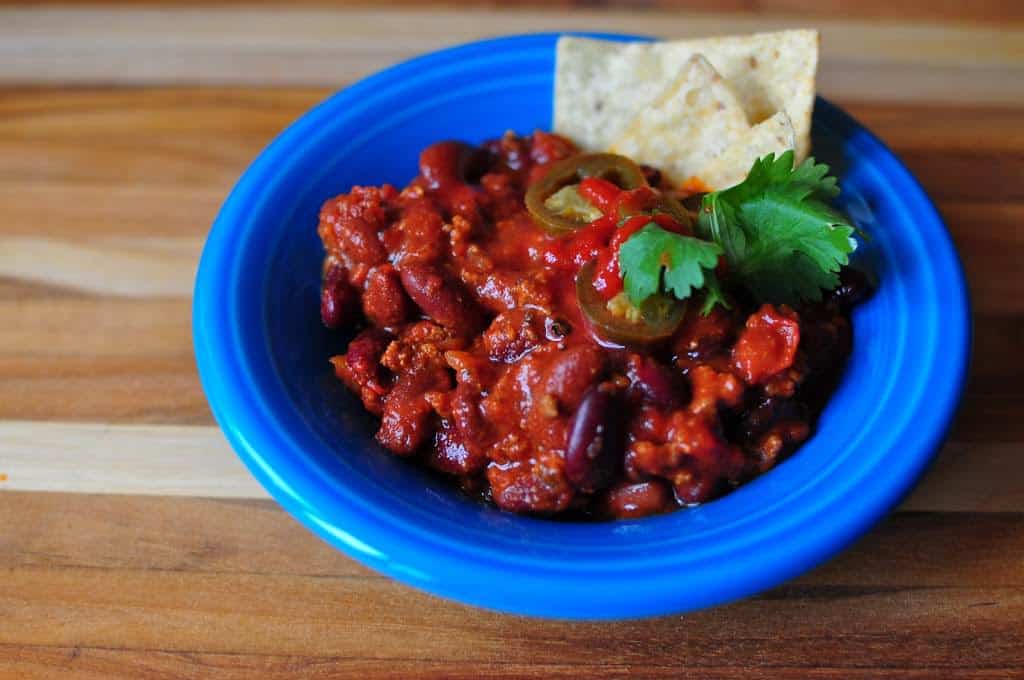
What do I make on a weeknight, when I need a quick, warming meal? Ground beef and bean chili. Sure, purists call this chili for sissies. As far as they're concerned, if there are beans and tomatoes in it, I might as well be wearing a dress when I make it. You know what? I don't care. Sissy or not, this is the chili I grew up with, the first one I learned to make on my own. Sure, it's not a bowl of Texas red. It doesn't have to be; it's a great style of chili all on its own.
*Sorry for the mental picture of me in a dress. I hope you're not scarred for life...

This is the chili that converted my kids. They flinch when served a meal with everything mixed together. The kids want to be able to identify all the ingredients, preferably separated by at least an inch on their plates, so they don't have any of the yucky stuff touching the good stuff. One pot meals are not popular around here....but I make this chili so often that it wore them down. First, they covered it with shredded cheese...and ate the cheese off the top. Then they started fishing out the kidney beans. Soon, the ground beef was acceptable as well. Now, two of the three get excited when I make chili.
*The third? He wants his chili made entirely from chunks of beef. Great. I'm raising a chili purist.

Recipe: Slow Cooker Chili with Ground Beef and Beans


Adapted From: Editors at America's Test Kitchen Slow Cooker Revolution

Cook time: 10 hours

Equipment:

  • 6 quart or larger slow cooker (Crock Pot brand is fine, but I like my fancy one from All-Clad)

Ingredients:

  • 2 tablespoons olive oil
  • 2 large onions, diced
  • ½ teaspoon kosher salt
  • 4 cloves garlic, crushed
  • ⅓ cup tomato paste (half of a 6 ounce can)
  • ¼ cup chili powder
  • 1 tablespoon ground cumin
  • 1 tablespoon ground coriander
  • 1 tablespoon dried oregano (preferably mexican oregano)
  • 1 tablespoon chipotle en adobo puree
  • 2 pounds ground beef (preferably 85% or leaner)
  • 1 teaspoon kosher salt
  • ½ teaspoon fresh ground black pepper
  • ½ cup water
  • 28 ounce can crushed tomatoes
  • 28 ounce can diced tomatoes
  • 4 (15 ounce) cans red kidney beans
  • 1 tablespoon soy sauce
  • 1 tablespoon brown sugar
  • 1 teaspoon cider vinegar

Directions:

1. Saute the meat and aromatics:
Heat the oil in a large pot over medium-high heat until shimmering. Add the onion and ½ teaspoon kosher salt, and saute until the onion is softened, about 4 minutes. Stir in the garlic, tomato paste, chili powder, cumin, coriander, oregano, and chipotle. Saute until the tomato paste darkens, about 2 minutes. Add the ground beef sprinkle with 1 teaspoon salt and ½ teaspoon pepper, and saute until the meat just loses its pink color. Increase the heat to high, add the water, and bring to a boil, scraping any browned bits from the bottom of the pan. Stir in the tomatoes, beans, soy sauce and brown sugar, and bring to a simmer.

2. Slow cook the chili:
Transfer the ingredients to the slow cooker, cover, and cook on low heat for 8 to 10 hours or high heat for 4 to 5 hours.

3. Serve: Stir in the teaspoon of cider vinegar, add more salt and pepper to taste, and serve.

Notes:

*Garnish with: diced onions, sour cream, shredded cheese, pickled jalapenos, minced cilantro, and tortilla chips.

*Soy sauce may seem strange in this recipe. It's a trick I learned from Cooks Illustrated; it adds meaty umami flavor to the chili.

*A number of readers have asked about my All-Clad slow cooker. It's not really worth three hundred dollars, is it? Well, if low cost is important…of course not. A decent slow cooker costs thirty dollars. But… If you can afford it, the All-Clad Deluxe Slow Cooker is a joy to use. If you can afford it, the stovetop safe insert is worth the cost. No extra pot to clean! Use the cast aluminum insert to saute and brown on the stovetop, add the other ingredients to the insert on the stove, bring to a simmer, and drop the whole thing in slow cooker base.

What do you think? Questions? Other ideas? Leave them in the comments section below.

Related Posts:

Slow Cooker Bolognese Sauce
Slow Cooker Mexican Shredded Pork Tinga
Slow Cooker Pot Roast, Tex Mex Style

Adapted from:

Editors at America's Test Kitchen Slow Cooker Revolution

*Enjoyed this post? Want to help out DadCooksDinner? Subscribe using your RSS reader or by Email, recommend DadCooksDinner to your friends, or buy something from Amazon.com through the links on this site. Thank you!

Quick Baked Potatoes (Start in Microwave, Finish in Oven)

December 27, 2011 by Mike Vrobel 21 Comments

A baked potato loaded with cheese, sour cream, and a jalapeno slice

Quick Baked Potatoes. An easy baked potatoes recipe for crisp, delicious baked potatoes. They take a half an hour to bake thanks to a jump start in the microwave.

A baked potato loaded with cheese, sour cream, and a jalapeno slice
Quick Baked Potatoes
[feast_advanced_jump_to]

Why Russets Make the Best Baked Potatoes

Russet potatoes make the best oven baked potato, with crisp skin and a fluffy interior. Now, I love red, white, and Yukon gold potatoes, but not for baking. Their thin skins and waxy interior don't work right as a baked potato. (Now, cut them up and toss them with olive oil and salt, and they make great crispy roasted potatoes - but that's a different recipe.)

How to Make Quick Baked Potatoes

  • Start heating the oven to 425°F
  • Wash the potatoes, poke them with a fork a few times, then microwave on high for 6 minutes.
  • When the oven is heated, move the potatoes from the microwave to the oven and bake for 20 minutes.
  • Remove the potatoes from the oven, and immediately cut the potatoes to let the steam escape. Serve with your favorite toppings and enjoy!

How to Clean Your Potatoes

Potatoes are tricky to clean - dirt clings to them like glue. I scrub my potatoes with a vegetable brush, while rinsing them under cold running water.

How Long Should I Bake My Potatoes?

With a quick start from the microwave, you only need to bake the potatoes for 20 minutes. They will be ready in 30 minutes, from start to finish, including pre-heating the oven while the potatoes get their microwave head start.

Serving Suggestions

There's a reason "meat and potatoes" is shorthand for a straightforward meal. These quick baked potatoes are a fantastic weeknight side dish, especially if the main course has a pan sauce or gravy.

Or serve them on their own, with your favorite baked potato toppings. As you can see in the picture, I like to split the potato, sprinkle it with salt and pepper, then add shredded cheddar cheese, sour cream, and a jalapeno for some kick.

How to Store and Reheat

If you have leftover baked potatoes, they can be refrigerated for a few days, then reheated in a 350° degree oven for 20 minutes or until they're heated through. (The FDA recommends reheating to an internal temperature of 165°F, measured with an instant-read thermometer.)

Adapted From: Jacques Pepin, Fast Food My Way

Notes

  • Salt and pepper the potatoes once they are split open. Garnish with one or more of: shredded cheese, sour cream, chives, bacon bits, jalapenos. Or a pat of butter. Or, my favorite, a pan sauce, like this one from sauteed pork chops.
  • Find good, clean potatoes for this recipe. Baked potatoes work best when they're whole. The skin traps the steam inside, making the inside fluffy and tender. If you have to remove bruises or eyes, then the steam will escape, and the potatoes won't bake as well.
  • If you want to cook the potatoes on a baking sheet, put it in the oven when you start preheating. I don't bother, though; I put the potatoes straight on the oven rack.

How Big Should the Potatoes Be?

This technique uses small russet potatoes, 6-8 ounces each. Larger potatoes work with this technique, but they take longer to cook. The goal of this recipe is baked potatoes in half an hour, so I stick with small potatoes.
That said, the technique will still work with larger potatoes:

  • Medium (10-ounce) potatoes: microwave for 8 minutes, and bake for 30 minutes.
  • Large (12-ounce) potatoes: microwave for 10 minutes, and bake for 40 minutes.

Thank you Jacqes Pepin

I love baked potatoes, but they take so long to cook. Potatoes need an hour (or more) to be tender in the middle with crisp, crackling potato skins. Weeknight baked potatoes? Out of the question.

Then I heard Jacques Pepin was on the radio, chatting about his new cookbook. He gave a tip that nearly ran me off the road. His baked potatoes are done in thirty minutes or less. Thirty minutes? How?

He microwaves the potatoes while his oven pre-heats, giving them a head start. The result is perfect baked potatoes in half the time they normally take. I have used the microwave technique ever since.

Now, I'm almost ashamed to share this; it's barely a recipe. One ingredient, two steps. And I'm stretching to make it two steps. But I'll get over my shame. This is too useful a technique not to share.

What do you think?

Questions? Other ideas? Leave them in the comments section below.

Related Posts

Basic White Rice
Orzo Pilaf
Instant Pot Rainbow Baby Potatoes with Rosemary and Garlic
Simple Instant Pot Potato Soup Recipe (With and Without Bacon)

Adapted from

Jacques Pepin, Fast Food My Way


*Enjoyed this post? Want to help out DadCooksDinner? Subscribe using your RSS reader or by Email, recommend DadCooksDinner to your friends, or buy something from Amazon.com through the links on this site. Thank you!

Merry Christmas! (2011 Edition)

December 25, 2011 by Mike Vrobel Leave a Comment

I never thought it was such a bad little tree. It's not bad at all, really.
Maybe it just needs a little love.

[Charles Schultz, A Charlie Brown Christmas]

Merry Christmas, Everyone!

Mike Vrobel
DadCooksDinner.com

Rotisserie Boneless Ribeye Roast with Garlic Crust

December 22, 2011 by Mike Vrobel 24 Comments

Christmas is here; time for the roast beast!

I'm trying something new with my Christmas roast - boneless Ribeye.

My favorite part of a beef roast is the bones. Unfortunately, my guests won't gnaw on rib bones at the Christmas table. This is awkward; I'm not letting something minor (like table manners) get between me and ribs. I'm hunched over my plate, elbows on the table, ripping hunks of meat from the bone…and they're looking at me like I'm Henry VIII reincarnated.1In my mind's eye, I'm wearing a floppy hat with a feather, have rings on every finger, and am talking with my mouth full while waving a bone around for emphasis. Maybe the Henry VII thing is just my imagination…but there sure are a lot of ribs left over for me to eat while the table is cleared.

I figured I'd try a boneless ribeye roast, to see if I could improve my manners and still get my favorite cut of beef. Ribeye roast is a prime rib with the bones cut off. I love the big, meaty flavor of ribeye, and I was curious how it would turn out without the bones.

The boneless ribeye has some advantages over the bone-in prime rib. The best part of a rotisserie roast is the perfect browned crust. With a bone-in roast, that crust only goes halfway around; cutting the bones off takes the crust with them. A boneless roast is ringed with a perfect crust. Carving is the second advantage; no bones to worry about, just slice and serve.

Now, don't get me wrong. I'm not giving up on rotisserie prime rib. There is something primeval about a roast with bones sticking out of it. It speaks to me. But boneless ribeye is another a good cut of meat for the rotisserie.

Recipe: Rotisserie Boneless Ribeye Roast with Garlic Crust

Equipment:

  • Grill with Rotisserie attachment (I use a Weber Summit with an infrared rotisserie burner. Here is the current version of my grill.)
  • Aluminum foil drip pan (9"x13", or whatever fits your grill. I use an enameled steel roasting pan.)
  • Butchers twine
  • Instant Read Thermometer

Notes:

*Use an instant read thermometer to tell if the roast is done. Otherwise, you'll have to cook it for an hour and hope for the best.

*Normally, I make horseradish sauce with rotisserie beef. I was out of prepared horseradish, so I whipped up this blue cheese and caper sauce. And, you know, it's as good as horseradish sauce on beef…and even better spread on baked potatoes.

*Cooking time depends on the width of the roast more than the weight. A larger ribeye roast is longer, not thicker. In other words, a bigger roast will only take a little longer to cook. I would guess an extra 15 to 30 minutes at most, but check it a little before the hour mark just to make sure it's not cooking too quickly, and every 15 minutes after that.

What do you think? Questions? Other ideas? Leave them in the comments section below.

Related Posts:

Rotisserie Prime Rib
Rotisserie Beef Tenderloin with Shallot Herb Butter and Horseradish Sauce
Rotisserie Strip Loin Roast
Click here for my other rotisserie recipes.


Check out my cookbook, Rotisserie Grilling.

Everything you could ask about the rotisserie,
plus 50 (mostly) new recipes to get you cooking.

It's a Kindle e-book, so you can download it and start reading immediately!


*Enjoyed this post? Want to help out DadCooksDinner? Subscribe to DadCooksDinner using the RSS or Email options on the right, link to this post from your blog, recommend DadCooksDinner to your friends, or buy something from Amazon.com through the links on this site. (Like my Rotisserie Grilling cookbook...)
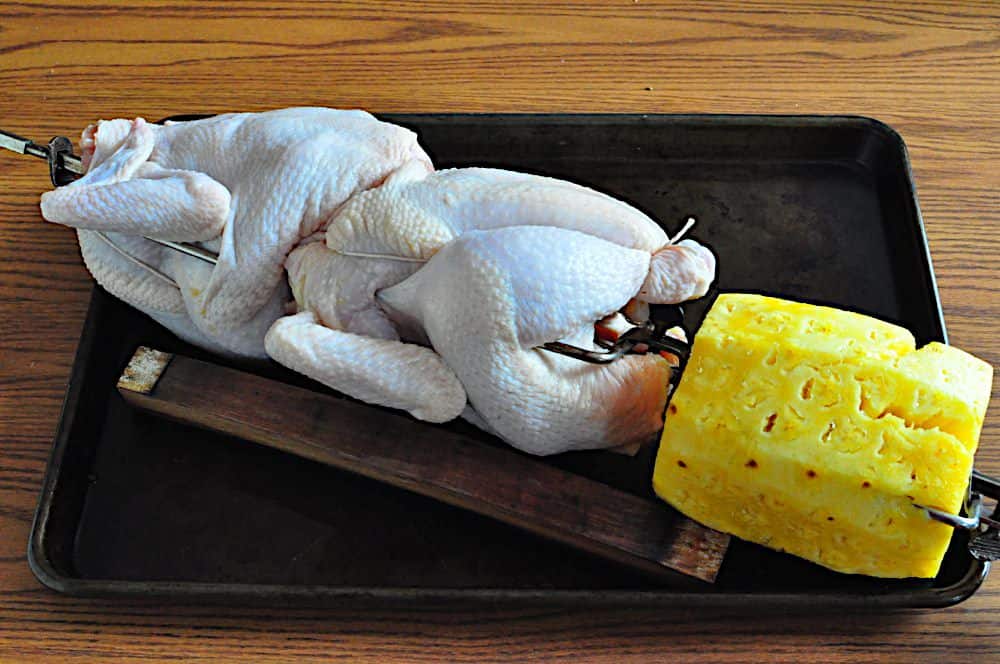
Plank Grilled Brie with Honey and Thyme

December 20, 2011 by Mike Vrobel 5 Comments

Ever have a favorite recipe…that you forget?

Years ago, my go to appetizer was cedar plank Camembert. I'd pull a smoking plank with a big round of cheese off of the grill, and amaze my guests. "What do you mean, you're grilling the cheese?"

I stopped making it. I don't know why; it just drifted out of my memory.

Last month Christopher Kimball talked about secret Thanksgiving recipes on NPR. His favorite appetizer? Brie with Honey and Thyme, microwaved until bubbling. A simple version of my old favorite.
*My favorite part of the show? Mr. Kimball made cornflake stuffing. Yes, stuffing made out of breakfast cereal. Why make cornbread just for stuffing, when you can substitute cornflakes?
That wasn't the favorite part. Asked if he'd confess, he said "I would lie, of course. The prerogative of the cook is, when someone asks what's in it, you don't have to tell the truth."

I know what my Christmas appetizer will be. And maybe New Year's as well. Sure, I could use the microwave, but you know me - the grill will already be fired up. I'm going back to my old standby, and plank grilling some cheese.

Recipe: Plank Grilled Brie with Honey and Thyme


Adapted From: Chris Kimball, Thanksgiving Secrets; Steven Raichlen Beer Can Chicken (and other offbeat recipes for the grill)

Cook time: 25 minutes

Equipment:

  • Grill (I use a Weber Summit Here is the current version of my grill.)
  • Maple Grilling Plank, roughly 6 inches by 6 inches

Ingredients:

  • 1 (8 ounce) brie round (5 inches in diameter)
  • 1 tablespoon honey
  • ½ teaspoon fresh thyme (1 large sprig)

Directions:

1. Soak the plank:
Soak the plank for at least one hour, up to overnight. Weigh down to keep it submerged; I use my honey bear.

2. Prepare the grill:
Set the grill for indirect high heat cooking. On my Weber Summit, I preheat the grill for 15 minutes with all the burners on high, then I turn off all the burners except 1 and 3, and put the plank over unlit burner #2 (This leaves burners 4-6 available to cook something else). I want an internal temperature of 450*F, higher if I can get it.

3. Prepare the cheese:
While the grill preheats, remove the plank from the water and pat dry. Carefully slice the rind from the top of the brie round. Leave the rind on the sides and bottom of the brie. Put the round on the plank, cut side up. Drizzle the honey on top of each round, then sprinkle with the thyme.

4. Cook the cheese:
Put the plank on the grill over indirect heat. Cook with the lid closed for 20 to 25 minutes, until the sides of the brie are softened and brown.

5. Serve:
Transfer the plank to a heat-proof platter and let it cool down for five minutes. Serve with crackers and a spoon for scooping.

Variations:

*If you have a larger plank, say 6 inches by 12 inches, cook two brie rounds.

*Brie and Camembert are interchangeable in this recipe.

*Different toppings: Top the honey with berries, or replace the honey with your favorite jam, jelly, or chutney. Steven Raichlen's original was for Camembert with peach chutney.

*Chris Kimball microwaved the brie in his version. Skip the plank and the grill - put the brie round on a plate and microwave for 1 to 2 minutes, until the cheese begins to bubble.

*Leave the rind. Slicing the top is optional; some consider the rind the best part of the brie, and don't want to lose the top piece. Slicing the top off makes it easy to scoop the gooey center of the brie onto crackers; if the top is still on it has to be sliced. Either way, make sure to eat the rind - it is delicious. (I eat the sliced top as a chef's treat while I'm preparing the cheese).

Notes:

*If you're having a problem finding maple planks, any fruit wood (apple, cherry) is a good substitute. Cedar planks work, and are easiest to find, but I like maple smoke with cheese.

*I put the plank on a heat-proof platter to contain the ashes on the bottom of the plank and protect the table from any heat.

*While grilling the plank you will occasionally hear a loud popping noise. This is normal.

*That said…keep an eye on the grill, watching for smoke. A little smoke is what you want; if you see smoke pouring out of the grill, the plank is on fire. Use tongs to move the plank away from direct flames on the grill, and the plank should extinguish itself.

*I had a runny honey problem; Winnie the Pooh would approve. My honey crystallized; I microwaved it to loosen it up. Unfortunately, I overdid it - my honey was so thin it rolled over the sides of the cheese and onto the plank. That's OK - this is one of those recipes where, even if it turns into a mess, still tastes and looks great.

What do you think?

Questions? Other ideas? Leave them in the comments section below.

Related Posts:

Cedar Plank Salmon
Click here for my other rotisserie recipes.

Adapted from:

Chris Kimball, Thanksgiving Secrets [NPR.org]
Steven Raichlen Beer Can Chicken (and other offbeat recipes for the grill)
aFire Mini Sugar Maple Grilling Planks


*Enjoyed this post? Want to help out DadCooksDinner? Subscribe using your RSS reader or by Email, recommend DadCooksDinner to your friends, or buy something from Amazon.com through the links on this site. Thank you!

Pressure Cooker Cannellini Beans, Bacon and Swiss Chard with Pasta

December 15, 2011 by Mike Vrobel 10 Comments

Here is my five dollar challenge meal. I fed my family of five for $16.24, with enough leftovers for a couple of lunches later in the week.

The only problem? The kids didn't like the green stuff - the Swiss chard. They gobbled down the bacon, then picked at the beans and pasta around the chard leaves.
*Someday my kids will love vegetables. This is like saying: someday the sun is going to burn out and become a dwarf star. Sure, it's going to happen, but I'm doubt I'll be around to see it.

A bowl of pasta and cannellini beans, topped with chard, bacon, and lemon zest
Pressure Cooker Cannellini Beans with Bacon, Swiss Chard and Pasta
[feast_advanced_jump_to]

Why cook a five dollar challenge meal in an expensive pressure cooker?

Pressure cookers are great for cooking beans. Instead of hours, the beans are cooked through and creamy in 30 minutes. When I want a weeknight meal, like this one, 30 minute beans are critical. You don't need an expensive pressure cooker; any six quart or larger pressure cooker will do the job.

🥫Ingredients

Swiss chard leaves and stems, chopped, with diced onions and a sprig of rosemary on a cutting board
  • Dried Cannellini beans
  • Pasta
  • Olive oil
  • Bacon
  • Swiss Chard
  • Garlic
  • Rosemary
  • Lemon

See recipe card for quantities.

🥘 Substitutions

If you can't find Cannellini beans, you can substitute great northern beans.

To make this a vegetarian recipe, skip the bacon. There's enough going on that you won't miss it.

Bacon is kind of cheating with this recipe; diced pancetta would be more authentic - but back when I wrote this recipe, it was harder to find in my local grocery stores.

Swiss chard is a tender, leafy green. Baby spinach is a good substitute.

You can substitute a teaspoon of dried Italian seasoning for the Rosemary sprig.

🛠 Equipment

A 6-quart pressure cooker. Pressure cooker dried beans are one of the key reasons I became a pressure cooker convert. I love my Instant Pot...but back when I wrote this recipe I used a massive 12-quart stovetop pressure cooker. (It's overkill, but it's what I had back then.)

📏Scaling

This recipe scales down easily - cut everything in half if you don't need as many beans, or have a 3-quart pressure cooker. Scaling up runs into space issues; if you have an 8-quart pressure cooker, you can double this recipe, but it's too much to fit in a 6-quart pressure cooker.

🤨 Soaking cannellini beans?

I get the "to soak, or not to soak?" question all the the time. I soaked my beans in this recipe, to brine them and get some salt into them. But you don't have to- they will cook to tenderness with 35 minutes at high pressure.

💡Tips and Tricks

  • If your beans are still tough when the cooking time is over, especially any "floaters" at the top of the pot, give the beans a stir, lock the lid, and pressure cook for another five minutes. Older beans take longer to cook, and if the beans have been sitting in the shelf at your store for a while, they may need extra time.
  • See my Instant Pot Cannellini Beans recipe for more bean cooking details.

Inspired by: Lorna Sass, Pressure Perfect

Pouring bean broth over the chopped chard leaves and beans in the pressure cooker

☃️ Storage

Leftovers: This recipe freezes well, in 2-cup containers, for up to 6 months. Put a layer of pasta in the bottom of the container, then top it with the beans, chard, and bacon.

🤝 Related Posts

Pressure Cooker Pinto Beans in Tex-Mex Broth
Basic Technique: Pressure Cooker Beans
Instant Pot Cannellini Beans
Click here for my other pressure cooker recipes.

Inspired by: Lorna Sass Pressure Perfect

Enjoyed this post? Want to help out DadCooksDinner? Subscribe to DadCooksDinner via email and share this post with your friends. Want to contribute directly? Donate to my Tip Jar, or buy something from Amazon.com through the links on this site. Thank you.

Five Dollar Challenge

December 13, 2011 by Mike Vrobel 6 Comments

Can I feed my family for one Lincoln a person?

I mean well. I really do.

Every year I pull a a few tags from our church's giving tree. I pick grocery store gift certificates. "Great lesson for the kids" I think to myself. "We eat cheap, and use the savings on someone who needs help."

Every year, when push comes to shove, we don't eat cheaper. I buy the gift certificates, of course; our savings takes the hit.

This year, I read about the Slow Food $5 challenge. The challenge: eat for less than a $5 value meal at a fast food restaurant. Aha! Money for the giving tree! At $5 a person, we'll have plenty to contribute.

I rushed to my organic grocery store, the one with the good bulk foods section. I wanted exact amounts on my receipt:

Bacon 4.99/8 oz $4.99
Cannellini Beans 1.08 lb @ 2.69/lb $2.69
Onion .76 lb @ 1.69/lb $1.28
Garlic .12 lb @ $5.99/lb $0.72
Chard $1.99/bunch $1.99
Sea Salt .7 lb @ $0.69/lb $0.48
Rosemary .25oz/$0.99 $0.99
Lemon .24 lb @ 3.69/lb $0.89
Pasta $1.09/lb $1.09
Total $16.24

*My reuseable bag got me a $0.05 discount, not included in the total.

Forget five dollars a person; I'm closer to three, even with the extra cost of buying organic. I have $8.76 left over from my $25. I'm on the road to savings!

So, how much am I saving?

Not much. Our weekly grocery budget is $200 for five people. If we cut back to five dollars a person, (times five people, times seven days) our budget would be $175. That is not hundreds of dollars to donate to charity.

That didn't seem right. I'm a food blogger. I shop at farmers markets, specialty stores, ethnic markets. I'm a member of a CSA. I eat well - just ask my bathroom scale. I spend a lot on food, don't I? What's going on?

I found answers at the USDA*. Turns out, I am a below average American. I spend less than the "low cost" average per week, and border on the "thrifty" average.
Source: Official USDA Food Plans: Cost of Food at Home at Four Levels, U.S. Average, January 2011. I'm cooking for a family of five; a 19-50 year old couple with a 9-10 year old and two 6-8 year olds. According to the data, for our family, low cost is $220/week; thrifty is $168/week. I would have to spend $330 a week to be on the high end of the scale.

Wait, what? Thrifty? Me? I just spent $4.99 on 8 ounces of organic bacon. How can I possibly be thrifty?

I don't give myself enough credit, apparently. Dried beans, even expensive organic dried beans, are still cheap. I love strange cuts of meat; sure, short ribs are getting expensive at $3.99 a pound, but compared to a $12.99 /lb ribeye? They're downright penny pinching. Yes, I shop at farmers markets and organic grocery stores, but I buy what is in season...which is usually a bargain. My side trips to ethnic markets uncover a lot of great deals.

I think of my splurges; extra virgin olive oil, real parmesan, a bottle of good wine. My kids have a different view. "Why does everything have to be on sale?" whines my ten year old.
After I told him to put down the full price Life cereal and pick up the generic Cheerios.

What does it all mean?

Cooking is a great way to save money. Because I cook with real ingredients, five dollars per person isn't much of a challenge. The global average of $2 a day, however...I have some work to do...

Related posts:
Weekly Dinner Plans
Cooking Authentic or Cooking Everyday?
Why Dad Should Cook

What do you think? Questions? Other ideas? Leave them in the comments section below.

*Enjoyed this post? Want to help out DadCooksDinner? Subscribe using your RSS reader or by Email, recommend DadCooksDinner to your friends, or buy something from Amazon.com through the links on this site. Thank you!

Fiery Mexican Martini

December 8, 2011 by Mike Vrobel 24 Comments

My day job took me to Austin a few times earlier this year. I spent as much time as I could sampling* the local cuisine - barbecue and Tex-Mex.
*Read: stuffing myself until I could barely move.

There are a lot of wonderful things to eat in Austin, but my favorite was the Mexican Martini. Or the Texas Martini - I saw both names used for what is essentially the same drink. Tequila, orange liqueur, simple syrup, and lime juice in a cocktail shaker full of ice, served in a martini glass with a salted rim. Drop in some olives stuffed with jalapenos, and the drink is ready to enjoy.

My favorite version was the spicy Texas martini served at Chuy's, where the tequila is infused with jalapenos, to give the drink a little extra kick. I came home determined to make it for myself.

A Mexican martini is a simple drink, with no place to hide low quality ingredients. Get 100% agave silver tequila. You don't want to infuse reposado or anejo tequila, and cover up all their subtleties with spicy jalapenos. Use orange liqueur, not a cheap triple-sec; I like Cointreau. Most important: you must use fresh lime juice and simple syrup. Please, for the love of all that is good and right, no sweet and sour mix!
*If you want a frozen margarita, then I'll let you use sweet and sour mix. But not in this drink. It needs fresh lime juice to make it work. And, actually, I buy frozen limeade for my frozen margaritas. I have no idea why anyone would voluntarily drink sweet and sour mix.

Yes, there are a lot of steps to this drink. Most of the work is done ahead of time; simple syrup keeps for weeks in the refrigerator, and the infused tequila lasts forever. Once the pre-work is done, you can serve Mexican martinis until your guests say "no mas".

Recipe: Fiery Mexican Martini


Cook time: 10 minutes

Makes 2 Mexican Martinis

Ingredients:

Jalapeno Infused Tequila:

  • 1 (750ml) bottle 100% agave silver tequila
  • 3 jalapeno or serrano peppers, stemmed and halved

Simple Syrup:

  • 1 cup water
  • 1 cup sugar

Martini Ingredients:

  • ½ cup (4 ounces) Jalapeno-Infused Tequila
  • ¼ cup (2 ounces) orange liqueur (Cointreau)
  • Juice of 2 limes (save the squeezed lime rinds for salting the rim)
  • 2 tablespoons (1 ounce) simple syrup
  • Ice
  • 4 jalapeno-stuffed olives
  • Kosher salt (or other coarse salt)

Directions:

1. Infuse the tequila:
Combine the tequila and jalapeno peppers in a quart container with a lid. Seal the container and steep the jalapenos in the tequila overnight, or up to 24 hours. Strain the jalapenos and any stray seeds out of the tequila, and pour the tequila back into the original bottle.

2. Make the simple syrup:
Heat 1 cup water in the microwave until boiling, about 2 minutes. Stir in 1 cup sugar, then stir occasionally until the sugar dissolves, about 5 minutes. (Simple syrup will keep up to a month in the refrigerator).

3. Prepare the glasses:
Spread kosher salt in a plate that is slightly larger than the diameter of a martini glass. Squeeze one of the limes, reserving the juice for later, and use the rind to wet the rims of two martini glasses. Twirl the glasses in the kosher salt. Skewer the olives on two toothpicks, and set in the glasses.

4. Make the martini:
Add the tequila, orange liqueur, simple syrup and lime juice to a cocktail shaker, then fill with ice. Cover and shake well. Pour into the prepared glasses and enjoy.

Variations:

*Not-so-fiery Mexican Martini: Skip the infusion step, and use 100% agave silver tequila.

Notes:

*I strongly suggest a good lime squeezer for this recipe.

*Why do I feel like I'm stepping into a holy war with this post? I expect a mob of angry Austinites*, carrying pitchforks and torches, to descend on my comments section.
*Austiners? Austinininans? I'm digging myself deeper, aren't I.

*So, If I've offended your culinary sensibilities, remember two things:

  1. That's Right, I'm Not From Texas
  2. If you leave a comment saying how horribly wrong I am, you must include a recipe. How else will I know where I went wrong?

What do you think? Questions? Other ideas? Leave them in the comments section below.

Related Posts:

Quick Red Salsa
Tomatillo Salsa

*Enjoyed this post? Want to help out DadCooksDinner? Subscribe using your RSS reader or by Email, recommend DadCooksDinner to your friends, or buy something from Amazon.com through the links on this site. Thank you!

Kindle Cookbooks vs Real Cookbooks

December 6, 2011 by Mike Vrobel 10 Comments

E-cookbooks would never replace REAL cookbooks. No way. I was sure of it. Not my beloved cookbooks, ink on paper, with a olive oil stain to give them character. I love reading, I love books, and I am addicted to cookbooks.* I would never going over to the dark side. Never!
Addict? Me? I can give up cookbooks any time I want. My cookbook habit doesn't control me, I control it… Hey, is that Michael Ruhlman's new cookbook? I must have it. Mine! My…precious!

Now, I'm not a Luddite; I went online with a 1200 baud modem back in the 80's. But books are my constant companions - ever since I snuck them under the covers with a flashlight as a kid. I held out against e-books as long as I could.

My wife, however, used a Kindle for a few weeks, and then had to give it up. After lots of requests, I bought her a Kindle of her own. After a few months, I borrowed it for a business trip. I was hooked - so much for my loyalty to ink and paper. I went out and bought myself an iPad not long afterwards, so I wouldn't have to fight for access to (her!) Kindle.

At first, I only bought novels. (Sci-Fi/Fantasy novels are my weakness. I'm sure you're shocked to learn this.) Novels are easy, I told myself; paragraph after paragraph of text, with no special formatting or pictures. E-books would still never replace my cookbooks.

Eventually, I cracked. Mark Bittman's What I Grill and Why, only available as an e-book, was on sale for $2.99. I couldn't pass it up. Then I was obsessed interested in making a Japanese Hot Pot for dinner…tonight. Even with overnight shipping, it would be too late. Ono and Salat's Japanese Hot Pots was just a download away.

Now I'm the proud owner of eight e-cookbooks. I want to buy more; my plan is to trade in my paper cookbooks and replace them with e-cookbooks. Why the sudden change of heart?

Advantages to Kindle Cookbooks:

Convenience:

I'm a blogger, in case you didn't notice. I have a screen in front of me, or within arm's reach, at all times. I spend the day in front of my iMac. I cook with my iPad on the island in my kitchen, recipe at the ready. I blog with my MacBook in my lap. I finish the day on my bed, pillows behind my back, reading from my iPad.* Having my cookbooks right there on the screen, no matter what I'm doing, is so darn easy. All my cookbooks at my fingertips? I don't have to go get them from the shelf, or, heaven forfend, walk downstairs to get one? And if I don't have a cookbook I want, I can download it under thirty seconds, including fumble-fingering my credit card once again? It is just so darned easy. I'm hooked.
And yes, I'm an Apple Fanboy, why do you ask?

Space (the final frontier):

I have a bookshelf dedicated to cookbooks. An Ikea Billy bookshelf, with a maximum load per shelf of 66 pounds. Only 66 pounds? Ha! That poor bookshelf is creaking and groaning under the weight of books I have stuffed in it. Every year I have to purge ruthlessly.*
Or, Ruthlessly, if I have to get rid of one of Mrs. Reichl's books.

I hate to purge cookbooks. It's like throwing away old friends. But after a year of cookbook binges carefully selected purchases, I'm squeezing books into every available nook and cranny, so tight the shelves bulge. After The Purge, my bookshelf is organized…for a while. I always want more cookbooks.
Like I said, I don't have a problem. I can quit any time I want.

An e-book reader solves all this. All the books are weightless, spaceless, hidden behind that thin screen. Done with that one? Delete it and it is stored in your archive. Need it back? It downloads in seconds.

Easy to bookmark favorite recipes, and search for text:

My favorite cookbooks are bristling with bookmarks. I use magazine subscription cards as bookmarks. I also use post-it notes, and random scraps of paper. There's another recipe I want to try - whatever small scrap of paper I can find becomes a bookmark. The bookmark feature of the Kindle reader is the digital equivalent of all those scraps of paper poking out of the top of the book. Looking for Julia Child's Leek and Potato soup? Open up Mastering The Art of French Cooking, click on the bookmarks tab, and there it is.

Text search is the other killer feature in digital cookbooks. I want to check out the pressure cooker recipes in Jaques Pepin's latest cookbook. They're a search away; no worries that they are not in the index. Also, cross-linked recipes can be real links, just like on the web. If the hot pot has ponzu sauce as an ingredient, I just click on the link, then the back button when I'm done.

Now, it's not all rainbows and unicorns. There are some drawbacks to e-cookbooks…

Disadvantages to Kindle Cookbooks:

Formatting and Indexing:

E-cookbooks are easier to navigate…usually. There is a big gotcha. Converting a cookbook to a digital version isn't easy. The care put into the digital conversion of the cookbook matters. A whole lot. Novels are simple; novels are paragraphs of text. You start with the introduction, and read until you get to "The End." Cookbooks are another story*; they use different formats and styles, arrange text in columns and sidebars, and embed pictures to show a technique. The digital conversion of a cookbook is trickier than a novel.
Get it…novels…story…oh, never mind.

My best (worst?) example is the digital conversion of Page and Dornenburg's The Flavor Bible. This is one of my go-to reference cookbooks. I use the hardcover version on a regular basis. When I saw they had a kindle version, I jumped on it - how convenient, being able to carry it with me! But wait...

The main part of the book is a dictionary of flavor combinations, hundreds of ingredients with a list of other ingredients they go with. As an example, Thyme is listed in bold caps, followed by an indented list of other ingredients that pair with it; particularly good matches are in bold caps, good matches are in bold, normal matches are in regular type. Finding an ingredient in the hardcover is tricky; I zero in on the section of the alphabet, like finding a word in a dictionary. "Let's see, Thyme. (Opens book to middle). Mangoes, (flip) Shiso, (flip) Trout, (page back) Tomatoes, (page back) Thyme…no wait, that's under the Tomatoes (page back) Thyme. There it is."

The e-book version of The Flavor Bible takes this from tricky to painful. All of the ingredient lists are in one chapter, with no sub-headings. I have to start at Achiote Seeds and work from there. Text search doesn't help - almost every ingredient goes with hundreds of other ingredients, so the "real" copy of the ingredient is lost in the flurry of matches. There is no good way to flip around in the e-book; dragging the scroll bar is the best way I've found, but does not work as easily as flipping pages in a book. Finally, there is no index of the ingredients with links to work from. And…in spite of these problems, I still use the e-book version more than the paper version. Like I said, I'm too lazy to go downstairs and get it off the shelf when it's right there. And it feels like I'm saving time, using the e-version…but it could be so much easier.
*If anyone has a good way of getting around in the Kindle version of The Flavor Bible, please let me know in the comments!

Another example is Ono and Salat's Japanese Hot Pots. In general, the conversion to an e-cookbook is well done. The table of contents has every recipe with a link, making it easy to get to the recipe you want. There are a lot of useful cross-links in the ingredients, referring to basic recipes earlier in the book. But there is one thing the digital conversion missed. The book has a lot of sidebars, next to the main flow of the text in the paper version. Usually, the e-book moves the sidebars to the end of the current section of text. Except when they don't. Ono and Salat are discussing a list of finishing options for hot pots, and in the middle of the list a sidebar paragraph suddenly appears. It looks like the finishing options are done…but there are a couple more coming after the sidebar. It's not a fatal flaw, but it is annoying.

Please note that I'm not blaming the authors for these problems. It feels like publishers are still working on how to format digital cookbooks. A great digital cookbook conversion is Jaques Pepin's Essential Pepin. The table of contents has a link to the first page of each major section: Soups, Salads, Poultry, Beef, and so on. The first page of each section lists all the recipes in that section, with a link to each recipe. Every recipe is three clicks away. Jump to Table of Contents, select Poultry, select Poulet-au-Pot from the recipe list…and there it is. Quick and easy.

Price:

Sometimes, the price of Kindle cookbooks feels like a ripoff. It seems like Kindle books should be significantly cheaper than paper books. You don't have to take a couple of pounds of paper and ink, wrap it in bubble wrap, put it in a cardboard box, fly it across the country, and pay for the nice UPS guy to walk it to my front door to drop it off. That's a lot of effort, right? The Kindle version saves all that effort, so it should be a lot less expensive, right? Yet a twenty-five dollar cookbook is available in the kindle version for...twenty two dollars. Seriously? All that extra effort is only worth three dollars?
*Jaques Pepin's Essential Pepin, again, is an example how they should handle this. It's a steal at $9.99 for the e-book version, compared to $26.99 for the hardcover.

Availability:

Of course, what's worse than feeling ripped off? No Kindle version of the book at all. I'm ready to complain about the expensive Kindle version, but I have my credit card out, and they won't even take my money? How dare they. How dare they not rip me off!
Wait, I need to be logically consistent? Shoot. Since when?

E-cookbooks are new, and digital conversions are few and far between. Finding an old favorite in the Kindle format is hit or miss - usually miss. And, even with newer cookbooks, the release of the e-version can be delayed. I wanted the e-version of Michael Ruhlman's Twenty, and I had to wait a month after the paper version was released. As I said above, one of the huge e-cookbook advantages is instant gratification. How does four weeks qualify as "instant"?

The Book Experience:

Michael Ruhlman's Twenty is a tribute to publishing. The book is a work of art. Hardbound, printed on substantial, glossy paper; loaded with Donna Ruhlman's gorgeous photography; it even has a ribbon bookmark, to help you mark the page you're reading. It belongs on a pedestal in a library, next to the Oxford English Dictionary.

We're all comfortable with books, and used to working with them. Books don't need batteries, they aren't ruined if you spill something on them, and you can instantly jump anywhere in the book by flipping to a page. Books are an old friend, and feel comfortable in my hands.

But then again…

This is where it gets interesting. Ruhlman's Twenty belongs in a museum, but it wound up buried on my bed stand. I read through chapter eight (Dough), found the book fascinating, put it down…and once it was covered up by a couple of other books and magazines, I never got back to it. Even though I knew I should. I bought the Kindle edition for this review (after that month long wait, darn it) for comparison.

Here was my perfect test case. How does a beautiful book compare to the e-book version? It's not the same experience; not the same feeling of holding a work of art in my hands. But the Kindle version is a very good digital conversion. Donna's gorgeous photography is in there; slightly smaller on my iPad, but still looking great. I don't have my ribbon bookmark…but I can drop bookmarks wherever I want to. I wanted to find the braised chicken leg recipe; a text search got me there instantly. And, most important, I finished reading Twenty in the Kindle version. The paper version is still hidden under a stack of magazines on my bed stand; once I had the e-book, I didn't feel the need to find it.

Summary:

I've gone digital, and I don't think I'm going back. In spite of the drawbacks, and there are quite a few, the electronic versions are just too convenient. I love the feel of a book in my hand…and I also love the feel of an e-reader. There's something about sitting under a blanket with my iPad, tapping the right side of the screen to flip pages. It feels effortless. And having every e-book I own at my fingertips, in a 1.33 pound package? I'm in love. I still buy cookbooks all the time, but I'm starting to get annoyed when there isn't a Kindle version available.

Notes:

Why Kindle? Why not Nook, or iBook (or some other format I don't know about?). Format wars are another downside to e-books. When my wife decided to get a Kindle, I was pretty much locked in. If I stick with Kindle, I can read all the books she buys, and vice versa. Kindle seems to have the best selection of books. Finally, Kindle reader software is available on almost every platform. I can take my e-books from my iPad to my desktop to my laptop.
The Nook format also looks good; they seem to have software that runs on all platforms, and a good selection of books. But, like I said, I was committed to Kindle before I really made a choice.

Why iPad? A couple reasons. One...It is so choice. If you have the means I highly recommend picking one up. (Again, I'm an Apple Fanboy.) Two, the big screen on the iPad is amazing. There's no comparison to my wife's (old, black and white) Kindle screen.

The Kindle Fire could give the iPad a run…but I don't want to give up the larger iPad screen, and extra processing power, even for a lower price. That said, I may have to pick a Fire up for my kids, to get them to stop playing Jetpack Joyride and give me back my iPad!
*Really, I want see how Apple responds to the Fire before I commit to yet another platform.

What do you think?

Questions? Other ideas? Leave them in the comments section below.

Essential Pepin: More Than 700 All-Time Favorites from My Life in Food
Ruhlman's Twenty: The Ideas and Techniques that Will Make You a Better Cook
Apple iPad 2 Tablet (16GB, Wifi,) NEWEST MODEL
Kindle Fire, Full Color 7" Multi-touch Display, Wi-Fi

*Enjoyed this post? Want to help out DadCooksDinner? Subscribe using your RSS reader or by Email, recommend DadCooksDinner to your friends, or buy something from Amazon.com through the links on this site. Thank you!

Turkey Lettuce Wraps, Thai Style

December 1, 2011 by Mike Vrobel 7 Comments

I have been looking for a Thai flavored variation of my turkey lettuce wraps. After a lot of trial and error,  I have one worth sharing.

Ground Turkey can be dry and lean; it needs a good sauce to help it out. I've been fascinated Larb*, the Thai/Laotian ground meat and toasted rice dish that is served with lettuce. I've been playing with the sauce, trying to find that balance of hot, sour, salty and sweet that is the backbone of Thai cooking.
*AKA Laap, or Laab, or Larp. Why so many names? Apparently, there is no standard way of transcribing Thai script into English.

I was struggling until I came across Leela Punyaratabandhu's blog, SheSimmers.com. After reading her posts, especially the one on Thai Three Flavored Sauce, the light bulb went on. I was making this more difficult than I needed to. Instead of trying to build all the flavors into my sauce, I layered them throughout the dish. I stripped the sauce down to sour (lime juice), salty (soy and fish sauce), and sweet (brown sugar). I moved the heat in the recipe into the pan, by toasting some red pepper flakes, and added cilantro at the very end of the cooking time.
*And I skipped the toasted rice. It never really worked for me, but that's why I can't call this dish Larb. Or Laap, Laab, or Larp. Oh, never mind. You know what I mean.

The result? Delicious. Even better, it is quick easy, and suitable for a weeknight. We have a winner!

Recipe: Turkey Lettuce Wraps, Thai Style

Inspired by: SheSimmers.com and Joanne Weir, Weir Cooking In the City

Cook time: 10 minutes

Ingredients:

  • 2 tablespoon peanut or vegetable oil
  • 1 large shallot or 1 small onion, minced
  • 2 cloves garlic, minced
  • ½ teaspoon red pepper flakes
  • 1 ½ pounds ground turkey
  • ¼ cup minced cilantro, leaves and stems (plus more for passing at the table)
  • 1 head bibb lettuce, separated into leaves

Sauce

  • Juice of 2 limes
  • 2 tablespoons brown sugar
  • 2 tablespoons soy sauce
  • 2 tablespoons fish sauce

Directions:
See my stir fry basic technique for an overview
1. Prep the ingredients and the pan: Combine the sauce ingredients, and whisk until the sugar dissolves. Put the peanut oil in a 12" to 14" fry pan or wok, and pre-heat over medium-high heat until just showing wisps of smoke.

2. Stir fry the aromatics: Add the shallot to the pan and cook, stirring often, for 2 minutes or until softened and starting to brown around the edges. Add the garlic and red pepper flakes and cook for 1 minute, or until fragrant.

3. Stir fry the turkey: Add the turkey to the pan. Stir-fry the turkey for 3 minutes or until it has just lost its pink color, breaking up the turkey as it cooks.

4. Finish with the sauce, then the cilantro: Stir the sauce into the pan and bring to a boil. Boil for 2 minutes, or until the sauce reduces a little. Turn off the heat and stir the minced cilantro into the turkey. Transfer to a bowl. Serve with the bibb lettuce leaves for wrapping, and extra minced cilantro to sprinkle on top.

Notes:
*Jasmine rice is the traditional side dish. Thai rice noodles, or coconut rice are also good accompaniments.

*I can't add as much heat to the recipe as I would like; I don't want to blast the kids. I add sriracha to my lettuce wraps at the table. When I'm not worried about the kids, I slice up a thai bird's eye pepper or a serrano and add it to the pan with the onions.

*As Leela says in her Three Flavored Sauce recipe, the key to the sauce is balancing sweet-sour-salty to your taste. When you try this recipe, whisk the sauce together, then take a taste. Is it the right balance of sweet, salty and sour? I loved these proportions, but maybe you like more sweet (add sugar), or more sour (add lime juice), or more salty (add fish sauce or soy sauce). Then you'll have your own balanced sauce.

What do you think? Questions? Other ideas? Leave them in the comments section below.

Related Posts:
Turkey Lettuce Wraps, Thai Style
Stir fry basic technique
Thai noodle and pork stir fry

Inspired by:
SheSimmers.com, and Joanne Weir, Weir Cooking in the City

*Enjoyed this post?  Want to help out DadCooksDinner?  Subscribe using your RSS reader or by Email, recommend DadCooksDinner to your friends, or buy something from Amazon.com through the links on this site.  Thank you!

Road Trip: Near East Market

November 29, 2011 by Mike Vrobel 3 Comments

*My Road Trip posts focus on stores that a home cook will enjoy in the Akron area, my home town.  If you don't live in Northeast Ohio, seek out your own local ethnic and gourmet markets. You can travel around the world without leaving your city!

The Near East Market in Cuyahoga Falls is an interesting mix of  Southern Mediterranean, Middle Eastern, and Indian ingredients. In this one small grocery store, you can travel from Marrakesh to Mumbai without leaving the aisle.

Looking to make hummus, kebabs, or a curry? Visit the Near East Market to stock up.

*Special thanks to the anonymous commenter who suggested I pay them a visit.

Near East Market
3461 Hudson Drive
Cuyahoga Falls, OH 44221
(330) 475-0538
Hours: Monday-Saturday 10AM to 8PM, Sunday: 10AM to 5PM

My Top 5 list of favorite things they sell:

1. Exotic spices: I love the spice section, from the familiar (ground coriander) to the exotic (sumac, zatar). They also have the most complete line of Patak's curry paste that I've seen in our area.

2. Dried beans: From the Eastern Mediterranean to India covers a lot of different beans. Kidney beans, chickpeas, lentils of every size and color.

3. Pita bread: I'm used to two varieties - white and whole wheat. Near East Market has pita bread in all different shapes and sizes.

4. Deli and meat: Need some cubed lamb for a tagine? The refrigerated and frozen meat section is small, but has a good selection for Middle Eastern cooking, with an emphasis on beef and lamb. How about some pre-made tabbouleh, or stuffed grape leaves? They have a deli counter filled with pre-made Middle Eastern specialties.

5. Real kebab skewers: These flat skewers are roughly two feet long and ½ inch wide, with wooden handles. They were practically swords! I have to have them. There's lamb that needs to be kebabed in my future.

View Larger Map

Related posts:

My list of Ethnic and Gourmet stores in the Akron, OH area.

*Enjoyed this post? Want to help out DadCooksDinner? Subscribe using your RSS reader or by Email, recommend DadCooksDinner to your friends, or buy something from Amazon.com through the links on this site. Thank you!

Happy Thanksgiving!

November 24, 2011 by Mike Vrobel Leave a Comment

The all-purpose toast: Here's to all those who weren't as lucky.
- Spider Robinson, Off the Wall at Callahan's

Thank you to my ravishing wife and charming kids, for the love and support. You mean more to me than I can put in words.
The kids are 90 percent charming, 8 percent rowdy, and 2 percent stubborn. That counts as charming, right?

Thank you to my family and friends, for all your encouragement.

Thank you to my loyal readers. I love writing this blog because you keep reading it.
Part of me still can't believe people read my blog. I'm grateful you keep coming back.

Happy Thanksgiving, everyone!

And, if you were as lucky as I was this year, please consider a donation to one of the worthy causes below. Thank you.

Heifer International

Turkey Ramen Soup

November 22, 2011 by Mike Vrobel 7 Comments

I say it every Thanksgiving: make stock with your turkey carcass!
*My friends roll their eyes when I ramble on about the glory of after-Thanksgiving turkey soup. 

I always make a traditional turkey noodle soup, but a turkey carcass makes a whole lot of stock. This year's soup is inspired by the ramen-centered first issue of Lucky Peach.Where are the best places to eat ramen? (in Japan, of course.)  What are the regional variations? How do you make Momofuku style ramen broth? (David Chang, chef-owner of Momofuku, created Lucky Peach.) Harold McGee explains the science behind alkaline noodles. John T Edge visits New Orleans for Seventh Ward Ramen. David Chang shares Momofuku's simple recipe for slow roast pork shoulder and pork belly.
*My favorite article was Ruth Reichl's taste testing of packaged ramen noodles. She confesses to serving tons of them when her teenage son and horde of friends descended on the kitchen. 

In spite of Harold McGee's article on how to make perfect alkaline noodles, I'm going with the old standby - packaged ramen noodles from the grocery store.
* I'm looking for a weeknight dinner for my own ravening horde here. Cut me some slack. Besides, Ruth called Nong Shim noodles "Decent." A ringing endorsement of packaged ramen if I've ever heard one…

I wanted a hearty, fall style ramen; the vegetables and eggs came from my winter farmers' market. The kids were dubious about hard boiled eggs in soup…until they tried them. Two out of three decided it was a great idea, and happily slurped down bowls full of noodles and eggs.
*The third kid? He daintily picked the egg off the top of the soup. And he wasn't happy about it.

If you have turkey stock on hand, frozen in quart containers in your freezer, the rest of the recipe comes together in a half an hour. Make stock after Thanksgiving this year, and you'll be ready for soup whenever the mood strikes you.
*When it runs out, and you go back to the store-bought stuff, you'll know why I make a batch of chicken stock every few weeks.

Looking for a more authentic soup? Try my chanko nabe recipe for an Instant Pot Japanese chicken meatball soup.

Recipe: Turkey Ramen Soup

Inspired By: Lucky Peach magazine, Issue #1 - Ramen

Cook time: 30 minutes

Ingredients:

  • 2 quarts turkey stock (or chicken stock, preferably homemade)
  • ¼ cup soy sauce
  • 2 tablespoons mirin
  • 2 tablespoons sake
  • 2 cloves garlic, crushed
  • 4 ounces mushrooms, sliced (preferably shitake, but any mushroom will do)
  • 2 medium carrots, sliced thin
  • ¼ head of Napa cabbage or green cabbage, sliced into bite sized pieces
  • 1 bunch scallions, white part cut into 2 inch lengths, green part sliced thin
  • 3 large eggs
  • 2 packages ramen noodles, roughly 8 ounces (throw away the evil spice packet)
  • 4 cups shredded cooked turkey
  • 2 cups spinach

Directions:
1. Simmer the broth: Bring turkey stock, soy sauce, mirin, sake, and garlic to a boil in a In a large, wide pot (4 quart saute pan or dutch oven) over medium-high heat.

2. Cook the soup: Decrease heat to medium and add the mushrooms, carrots, cabbage, scallion whites and the eggs. Simmer uncovered for 5 minutes. Add the noodles and turkey and simmer for another 5 minutes. Remove the eggs with a slotted spoon, turn off the heat, add the spinach, and cover the pot.

3. Peel the eggs: While the spinach cooks in the residual heat, peel the eggs under cold running water, then slice each egg in half.

4. Serve the soup: Use tongs and a ladle to divide the soup into 6 large bowls. Add a half an egg to each bowl, garnish with scallion greens, and serve.

Variations:
*Mirin substitution: Mirin adds a sweet and vinegar flavor to the soup. Substitute sweet vermouth, or rice wine vinegar plus 1 teaspoon sugar.

*Sake substitution: Sake adds a bright acid to the soup - substitute dry vermouth, white wine, or lemon or lime juice.

*Vegetables: empty out the vegetable tray. I used common fall vegetables from a November farmers market. Hard vegetables (cabbage, root vegetables) should be sliced thin and added right away. Regular vegetables (beans, peas, corn) should be added with the noodles and turkey. Tender greens (spinach, arugula) go in right at the end and cook in the residual heat of the pot. Toppings (scallion greens, bean sprouts) should be sprinkled on at the table.

*Soft cook the eggs: Simmer the eggs for six minutes, immediately plunge into cold water to stop the cooking. Cut in half with fishing line or unflavored dental floss, and immediately put in the bowl of soup before the yolk runs everywhere.

*Other protien: Replace the turkey with chicken, pork (particularly pork shoulder), or tofu cubes.

Notes:
* If you are planning ahead for this recipe, do NOT skim the fat from your Turkey stock. Good ramen broth has a layer of chicken fat floating on top.

* Ramen is traditionally built when serving. The broth, noodles, and other ingredients are cooked separately, and combined in the bowl. I went with a Japanese family style hot-pot approach. I put everything in a big, shallow pot and cooked it together. I kept the ingredients separated into their own zones in the pot, making it easier to build a bowl of soup.

* The drumsticks and wing drumettes from a twelve pound turkey yield just under 4 cups of shredded meat. How do I know this? The longest part of the prep was shredding turkey. I was wrestling legs and wings, which are mostly skin and tendons. If you have turkey breast, or even thighs, they are much easier to work with. Of course, I used them to make turkey salad the day before…because they were much easier to work with.

What do you think? Questions? Other ideas? Leave them in the comments section below.

Related Posts:
Pressure Cooker Turkey Stock
Turkey Stock
Turkey Noodle Soup
Turkey Soup with Chickpeas and Vegetables
Southwestern Turkey and Black Bean Soup

Inspired By:
Lucky Peach magazine, Issue #1 - Ramen

*Enjoyed this post? Want to help out DadCooksDinner? Subscribe using your RSS reader or by Email, recommend DadCooksDinner to your friends, or buy something from Amazon.com through the links on this site. Thank you!

Dad Cooks Thanksgiving Dinner 2011

November 21, 2011 by Mike Vrobel Leave a Comment

Cartoon © Randy Bish. Used with permission.

Cartoon © Randy Bish. Used with permission.

T-Day minus three and counting. Are you ready for Thanksgiving?

Last week, I shared this year's turkey recipe and how I make gravy ahead of time:

  • Rotisserie Turkey with Cajun Dry Brine on my Weber Summit
  • Pressure Cooker Giblet Gravy, though a pressure cooker isn't absolutely necessary.

Annual Thanksgiving Advice:

  • Grill your Thanksgiving Turkey
  • Even better: rotisserie your turkey on the grill. Rotisserie Turkey with Orange and Spice Dry Brine - Weber Kettle version
  • Save the carcass and make turkey stock for the best soup you've ever made.

Best Thanksgiving Question:
Now, for some rotisserie turkey details. My question of the year (so far) was from an observant, anonymous commenter:

It seems that your setup on you Summit varies. In a 2009 post on rotisserie turkey, you advised to set the two outer burners on medium and the infrared on medium. Here you say the two right hand burners on high and the infrared on medium. Why the changes?

I have changed my approach over the last couple of years. Long-time readers know I preach using an instant read thermometer to see if the bird is done. The problem is, turkey should be cooked to two different temperatures. White meat is safe to eat when it has been at 150F for ten minutes, and starts to overcook and dry out at 160F. Dark meat is safe at 150F, but very chewy because of fat and connective tissue. Those break down about 170F, so the dark meat is best at 170F to 180F. That's a big swing.
(See my Turkey Temperature - the 150 Question post for more details on cooking turkey.)

Now, the thickness of the breast slows down its cooking compared to the legs and thighs. Trussing also seems to help by pushing the drumsticks out from the bird. But I've adopted two tricks to help cook the legs faster, and slow down cooking the breast.

The first change is mentioned in the question. I don't use an even split of indirect heat with turkey. I use a "U of fire" in my Weber Kettle, or light two burners on one side of my Weber summit, and then point the legs of the turkey towards the hotter side of the grill. This gives the legs more direct heat than the breast.
[h/t the How to Barbecue a Turkey pamphlet from Weber grills for this idea]

The second change is to make the breast colder than the legs. I take the turkey out of the refrigerator an hour or two before cooking, fill a zip-top gallon bag with ice cubes, and set the bag of ice on the breast. That way, the legs come to room temperature, while the breast stays cold.
[h/t Harold McGee and Cooks Illustrated for this tip]


Best Thanksgiving Question(s) on the Web:
This year, everyone seemed to have a "ask any question, we'll answer it" series on their website. Here are my two favorites, because of the crazy range of questions they answered:

Kenji Alt - The Food Lab Answers Questions
Turkey, non-turkey mains, gravy
Sides and Desserts
Leftovers, Family Traditions, etc...
My favorites:

  • The turkey butt debate: disgusting, or the best part of the bird?
  • Fry your own fried onions for green bean casserole
  • Dropping the pumpkin pie in front of your mother-in-law
New York Times dining section:
Thanksgiving Help Line
My favorites:
  • Is it safe to cook a Regan era turkey?
  • Will I kill my family if I cook the stuffing inside the turkey?
  • How long should I cook my Turducken?
Good luck with Thanksgiving this year, everyone!

What do you think? Questions? Other ideas? Leave them in the comments section below.

*Enjoyed this post? Want to help out DadCooksDinner? Subscribe using your RSS reader or by Email, recommend DadCooksDinner to your friends, or buy something from Amazon.com through the links on this site. Thank you!

Rotisserie Turkey with Cajun Dry Brine

November 17, 2011 by Mike Vrobel 7 Comments

Rotisserie Turkey with Cajun Dry Brine | DadCooksDinner.com

Rotisserie Turkey with Cajun Dry Brine | DadCooksDinner.com
Rotisserie Turkey with Cajun Dry Brine

I want an easy Turkey this year. Maybe I'm growing up. Maybe I'm getting lazy. Maybe it's because Thanksgiving is at my Mom's house this time around. I just have to show up with a turkey and a grill*.
*Bringing a turkey, a Weber kettle, and a rotisserie ring to dinner is my version of easy. Doesn't everyone bring a grill to Thanksgiving at Mom's?

This recipe is as easy as I get with Thanksgiving turkey. My definition of easy makes some people flinch, but this is a recipe I can do in my sleep. What do I consider non-negotiable? I won't give up my rotisserie. I want a normal bird, not one "enhanced with a 10% saline solution." This bird is dry brined with Cajun rub and salt - and the Cajun rub is already in my pantry. I love Harold McGee's "bag of ice on the breast" idea, which keeps the white meat down in the 155*F range where it is nice and juicy, while the dark meat gets up to 180*F where it is well done and tenderized. And that's it. Simple, right?
*Really, the Cajun rub is optional. Salt and pepper dry brine is simple and fabulous. But…Thanksgiving is the Super Bowl of home cooking. I'd lose my food fanatic membership card if I didn't get fancy.

Recipe: Rotisserie Turkey with Cajun Dry Rub

Inspired by: John Madden's eight-legged Cajun deep fried turkey

Cook time: 150 minutes

Equipment:

  • Grill with Rotisserie attachment (I used a Weber kettle with the Rotisserie attachment. Kettle is this Weber Grill, and rotisserie is this Weber charcoal kettle rotisserie)
  • Aluminum foil drip pan (11"x13", "turkey pan", or whatever fits your grill)
  • Cotton twine
  • Gallon zip-top bag full of ice (optional)
  • Instant Read Thermometer

Rotisserie Turkey with Cajun Dry Brine | DadCooksDinner.com
Cajun spice rub (I make extra for use in other recipes)

Rotisserie Turkey with Cajun Dry Brine | DadCooksDinner.com
Turkey with ice on breast

Rotisserie Turkey with Cajun Dry Brine | DadCooksDinner.com
Light the burners on the leg side, and the infrared rotisserie burner

Notes

  • Store bought cajun rub: Cajun rub is easy to make on your own, but you can use a store-bought Cajun rub. If you do, watch out for the salt content. Check the label - If salt is the first or second ingredient listed, there is a lot of salt in the rub. Cut the Kosher salt in half - 2 tablespoons Diamond Crystal, or 1 ½ tablespoons Morton's.
  • Fresh vs Frozen Turkey: Fresh turkey has two advantages. First, they are rarely "enhanced". That is, pumped full of a saline solution. Dry brining an enhanced bird is redundant. Watch out for the words "enhanced with a X% solution" or "pre-basted" on the package.
  • The second fresh turkey advantage - no thawing! If a frozen bird is the only option, thaw it in the refrigerator for three days before dry brining. (In other words, start thawing a week before thanksgiving.) If you have an "enhanced" bird of 8% or 10% saline solution, just use the cajun rub - cut the salt out of the dry brine.
  • I used Cajun Injector on a few Turkeys and other birds. I don't think it was worth the effort. The injected marinade would concentrate in thin veins where I shot it; most of the meat was unaffected. I eventually lost my injector needle...and didn't notice it was missing for a few years. When I started dry brining, I tossed the giant syringe, and never looked back.
  • Weber Summit note: With my rotisserie burner on medium, smoker burner on high and burner #1 on high, I had an internal temperature of 375*F. That's the temperature range you want - 350*F to 375*F. My 12 pound bird finished in exactly two hours; I expect a 14 pound bird to be closer to 2 ½ hours.

Rotisserie Turkey with Cajun Dry Brine | DadCooksDinner.com
Rotisserie Turkey with Cajun Dry Brine

What do you think?

Questions? Other ideas? Leave them in the comments section below.

Related Posts:
Basic Rotisserie Turkey
Rotisserie Turkey, Dry Brined with Orange and Spices
Rotisserie Turkey Breast
Click here for my other rotisserie recipes.


Check out my cookbook, Rotisserie Grilling.Everything you could ask about the rotisserie,
plus 50 (mostly) new recipes to get you cooking.

It's a Kindle e-book, so you can download it and start reading immediately!


*Enjoyed this post? Want to help out DadCooksDinner? Subscribe to DadCooksDinner using the RSS or Email options on the right, link to this post from your blog, recommend DadCooksDinner to your friends, or buy something from Amazon.com through the links on this site. (Like my Rotisserie Grilling cookbook...)
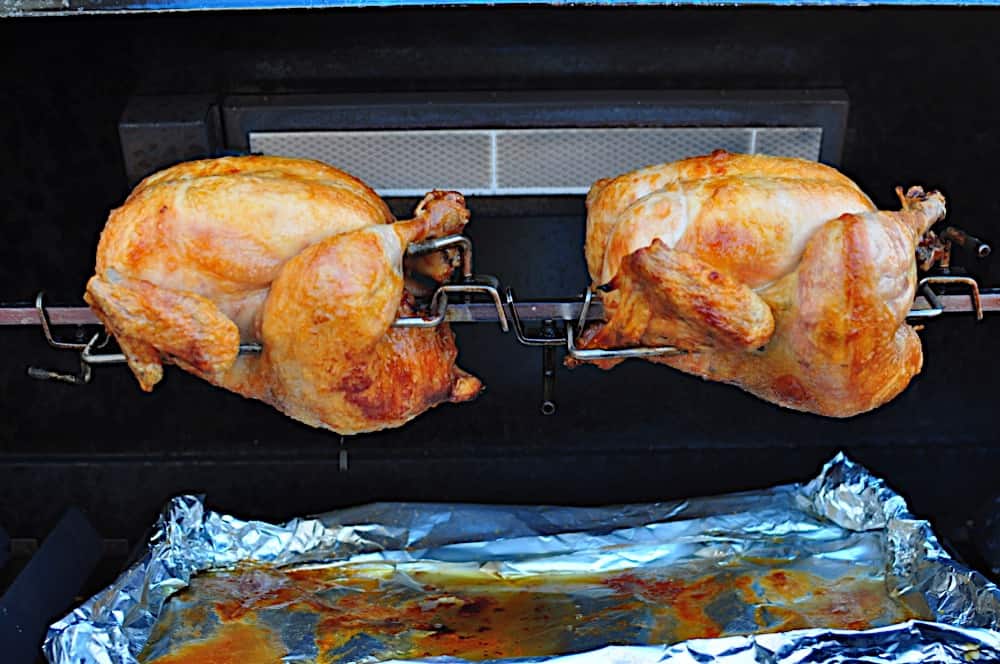
Winter Farmers Market in the Cuyahoga Valley 2011-2012

November 16, 2011 by Mike Vrobel Leave a Comment

The Countryside Farmers Market in Cuyahoga Valley National Park switched to their winter schedule, and the next market is this Saturday.  Time to stock up on local produce for Thanksgiving!

The market will be held at Old Trail School this year, right around the corner from the summer Howe Meadow site.  The market will be open on Saturday mornings, from 9AM to Noon.

*If you don't live in Northeastern Ohio, make sure to find your own local farmers market.  Yes, they usually run through the winter!

The schedule is:

  • November 5
  • November 19
  • December 17
  • January 14
  • February 4
  • February 18
  • March 3
  • March 17
  • April 7
  • April 28


Here's the address:
Countryside Farmers' Market at Old Trail School
2315 Ira Road
Akron, OH 44333
(330) 666-1118

More information is available at their website:
Cuyahoga Valley Countryside Conservancy

View Larger Map

Related posts:
My list of Ethnic and Gourmet stores near Akron, Ohio.

*Enjoyed this post?  Want to help out DadCooksDinner?  Subscribe using your RSS reader or by Email, recommend DadCooksDinner to your friends, or buy something from Amazon.com through the links on this site.  Thank you!

Pressure Cooker Turkey Giblet Gravy

November 15, 2011 by Mike Vrobel 36 Comments

Pressure Cooker Giblet Gravy
Gravy pouring on to slices of turkey on a red plate
Pressure Cooker Giblet Gravy

Pressure cooker giblet gravy solves Thanksgiving problems.

First: The Thanksgiving Time Crunch. Thanksgiving dinner is a logistical problem. Instead of a party of eight to ten people, I'm cooking for twenty to thirty. There is only so much space in the oven, so many burners available, and the clock is always ticking. Giblet gravy can be made days ahead, using the bits of turkey that are stuffed in the cavity. One less thing to worry about on T-Day.

Second: My two favorite Thanksgiving dishes are grilled turkey and mashed potatoes smothered in gravy. Grilled turkey and pan drippings don't go together; if I based my gravy on pan drippings alone, I might have a gravy-less Thanksgiving. That would be a disaster.
* I've lost pan drippings to charcoal ash, burning from the high heat of the grill, and flimsy aluminum foil pans I use under my turkey. Also, I'm addicted to drip pan sweet potatoes, and they soak up all the drippings. This recipe is my workaround for those missing drippings.

Why use the pressure cooker to make giblet gravy? It's not absolutely necessary, but I like the results; the PC seems to extract more flavor from the giblets. Also, it is fast - I can make gravy in an hour, end-to-end, with half that being hands-off time. Quick, delicious, make-ahead, using the bag of turkey pieces that I used to pull out of the cavity and throw away. What more could I want from a recipe?
*If you don't have a PC, you should still make giblet gravy. Check the notes section for instructions using standard cookware.

Recipe: Pressure Cooker Giblet Gravy

Inspired By: Giblet Pan Gravy, Cook's Illustrated [November/December 2000]

Know Your Giblets

Brown the turkey and aromatics:

Pressure cook the broth:

Make the roux:

Make the gravy:

What do you think? Questions? Other ideas? Leave them in the comments section below.

Related Posts:
Pressure Cooker Turkey Stock Revisited
Click here for my other pressure cooker recipes.

*Enjoyed this post? Want to help out DadCooksDinner? Subscribe using your RSS reader or by Email, recommend DadCooksDinner to your friends, or buy something from Amazon.com through the links on this site. Thank you!

Grilled Pork Souvlaki

November 10, 2011 by Mike Vrobel 8 Comments

I'm grilling under a clear, blue sky, with a wispy cloud that looks like a paintbrush dragged across the sky. Most of the trees are bare; one slowpoke is covered with blazing red leaves.

It is warm in the sun. Here on the deck, in the shadow of my house, I'm glad I'm wearing a sweatshirt. The wind has a brisk edge. I take a deep breath, enjoying the feel of the cold down in my lungs, the smell of smoke from the grill.

Why do people stop grilling after memorial labor day? I know I'm a fanatic. I will grill when ice and snow cover my deck. But today? Today is fifty-five degrees Fahrenheit, and the sun is shining. It's a perfect, crisp fall day, and I can't fathom why someone would not fire up the grill.

Pork Souvlaki is ideal for fall grilling. Pork shoulder, my favorite, is cut into cubes and marinated in a classic Greek combination of lemon, onion, garlic and and spices. Skewer it and cook it long. Pork shoulder is almost impossible to overcook; cook it long enough, and the results are tender and shreddable on the inside, with a crispy, bacony crust.

I have two tricks in this recipe. The first is to brinerate instead of marinate - there is a lot of salt in the marinade, to give it a brining effect and pull flavor inside of the meat. (Normal marinades only affect the outside of the meat; a brinerade helps season the meat all the way through.) Second, I cook over medium heat, stretching out the cooking time, so the pork shoulder can cook to well done before the outside is burnt. If pork shoulder is cooked quickly, there is a good crust, but the inside is tough. Longer, slower cooking breaks down all the interior fat and connective tissue, making the pork shoulder moist and juicy.

Recipe: Grilled Pork Souvlaki

Adapted From: Peter Minakis - Souvlaki [kalofagas.ca]

Cook time: 16 minutes

Equipment:

  • Grill (I use a Weber Summit. Here is the current version of my grill.)
  • Skewers (Metal or bamboo - soak bamboo skewers for an hour before using)

Ingredients:

  • 3 pounds pork shoulder, fat trimmed and cut into 1" cubes

Marinade

  • Juice and zest of ½ lemon
  • 1 onion, grated or minced
  • 2 cloves garlic, grated or minced
  • 2 tablespoons Kosher salt
  • 1 teaspoon fresh ground black pepper
  • 1 teaspoon dried oregano
  • ¼ cup extra virgin olive oil

Directions:
1. Marinate the pork: Combine all the marinade ingredients in a gallon zip-top bag, add the cubed pork shoulder, and massage until the pork is evenly covered with marinade. Squeeze all the air out of the bag and seal. Marinate, refrigerated, for 2 to 4 hours.

2. Prepare the grill: Prepare the grill for cooking on direct medium heat. On a gas grill, preheat the grill with all burners on high for 15 minutes, then clean the grill grate with a grill brush. Turn the burners down to medium, and the grill is ready.

3. Skewer and grill the pork: While the grill is pre-heating, remove the pork from the marinade, wiping off as much marinade as possible. Thread the pork onto skewers. Once the grill is preheated, put the pork skewers over the direct medium heat and grill for 4 minutes, or until browned. Turn the kebab a quarter turn and grill for 4 more minutes. Repeat until all four sides are well browned, about 16 minutes total.

4. Serve:Put the skewers on a platter and rest for ten minutes, then serve with lemon wedges, pita bread and tzatziki sauce.


Notes:*Do not marinate the pork for more than four hours. Beyond that, the acid in the lemon juice will start to cook the outside of the pork, and the high concentration of salt will make the pork too salty. If you want to marinate overnight, skip the lemon juice, and cut the salt back to 1 tablespoon of Kosher salt.

What do you think? Questions? Other ideas? Leave them in the comments section below.

Related Posts:
Grilled Beef Kebabs with Tomato, Onion and Thyme Marinade
Zucchini and Summer Squash Kebabs

Adapted from:
Peter Minakis - Souvlaki [kalofagas.ca]

*Enjoyed this post? Want to help out DadCooksDinner? Subscribe using your RSS reader or by Email, recommend DadCooksDinner to your friends, or buy something from Amazon.com through the links on this site. Thank you!

Review: Splash-Proof Thermapen

November 8, 2011 by Mike Vrobel 2 Comments

Review: Splash-Proof Thermapen

A few years ago I reviewed the original Thermapen Instant Read Thermometer. Here's what I said:

The Thermapen Instant Read Thermometer by Thermoworks is the best instant read thermometer out there.  Many thermometers call themselves instant read, but the Thermapen is the only one that really is instant read. You get the temperature in four seconds, instead of the 30 seconds or so that other "instant read" thermometers take.

After I wrote that review, the original Thermapen was replaced by a new, Splash-Proof model. Thermapen was kind enough to send me a new Splash-Proof Thermapen for review.

I've been using it for about a month now, and here are my impressions.
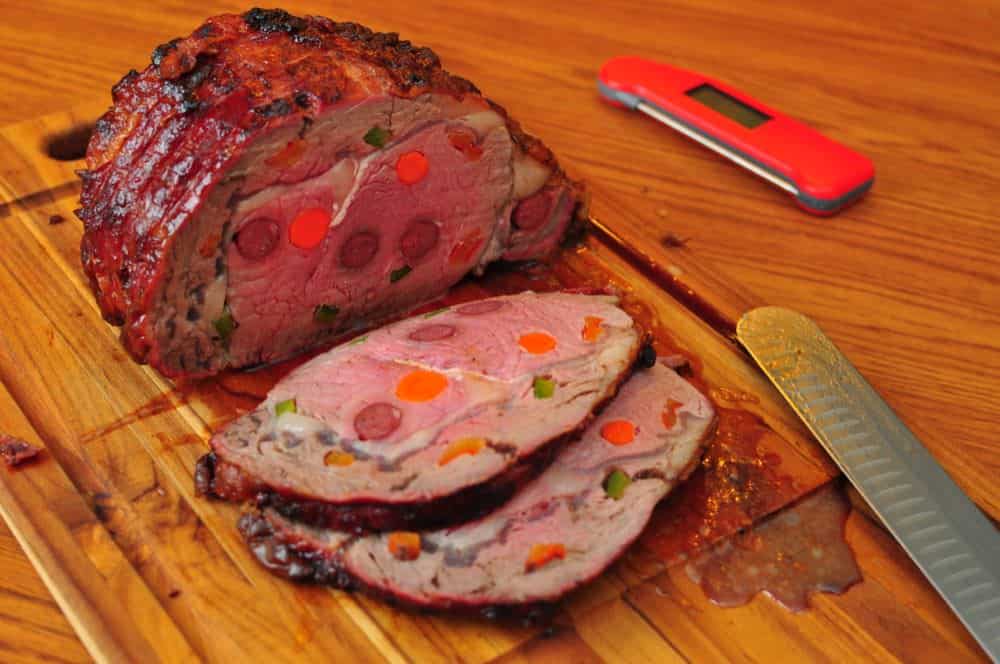
New Splash-Proof in red, old one in gray

Same as the old Thermapen: 

  • Fast: It takes a 4-Mississippi count for both the old and new thermometers to find a temperature in my testing. That's about 25 seconds faster than any other thermometer I've used.
  • Probe: It has a needle-sharp probe, which leaves a very small entrance hole in whatever you're testing. And, because it uses a thermocouple, the temperature sensor is right at the tip of the probe, making it easier to use.
  • Expensive: The thermocouple is why this thermometer is so expensive compared to other kitchen models; they use thermistors, which are cheaper, slower, and less accurate. You get what you pay for.

Improvements from the old Thermapen: 

  • Doesn't shut off until you close it: The original Thermapen would shut off after a minute or so to save batteries. This always happened at the exact moment I needed it again, forcing me to close and open the thermometer to reset it. The new Thermapen doesn't shut off until you close it.
  • Sharper display: The old display was great, with big numbers. The new display even better - bigger numbers, sharper, and easier to read, especially in low light.
  • Higher degree of accuracy: The splash-proof Thermapen now has accuracy down to a tenth of a degree. Instead of 160*F, you get 160.4*F. This makes it easier to see which way the thermometer is trending in the few seconds it takes to get to the final temperature.
  • Splash proof: The new Thermapen is more water resistant than the old one - it's right there in the "splash-proof" name. I never had an issue with this, but in a wet environment like a kitchen,  extra protection can't hurt.

Worse than the old Thermapen: 

  • Higher degree of accuracy…leads to slower results: That tenth of a degree? It may be too accurate. Comparing them head to head, the older thermometer looked like it was finding temperatures faster, because it would rise to a temperature (say, 212*F), and stick to it. The new one has a tendency to bounce around: 212.9, 212.8, 212.9…leaving me watching it for a few extra seconds to see if it has settled on a temperature. I don't think I would have noticed it as much if I wasn't testing them side by side. The splash-proof is still as fast and accurate as the old Thermapen; even with that slight lag caused by tenth of a degree fluctuations, it reads faster than any other thermometer I've used.

Conclusion:
$96 $93 is a lot of money for a thermometer. The splash-proof Thermapen is still worth every penny. As I said in my original review: if my Thermapen broke, I'd order a new one immediately, and pay extra for overnight shipping. I consider my Thermapen an essential cooking tool. Highly recommended.

Notes: 

In the picture, you can see the old and new Thermapen side by side. What's wrong? The old Thermapen registers 213F, and the new one 209F. In the same pot of boiling water. This worried me - was the new Thermapen off by four degrees?

I should have known the old Thermapen was incorrect. I live at (slight) altitude, 1140 feet above sea level. I have to adjust the timing in canning recipes; it always takes a few extra minutes to process food safely.  Water boils at roughly 209.9F at my altitude, with a little fluctuation due to barometric pressure. The splash-proof was reading perfectly - and my old standby was a few degrees off!
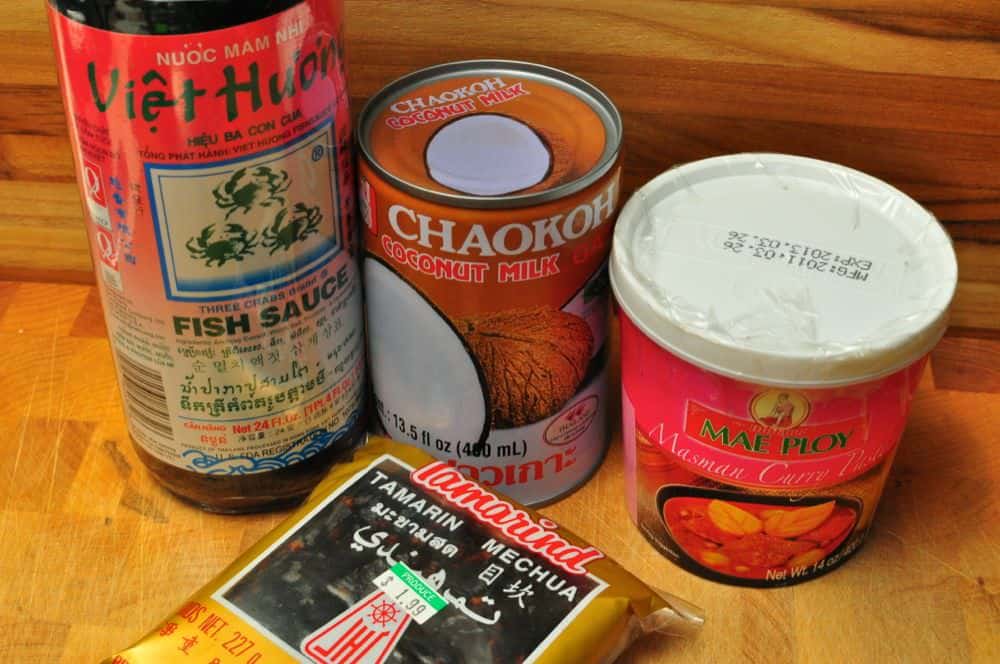
PS: I'm publishing this review just in time for thanksgiving. The key to a turkey with moist white meat? Pulling it out of the oven at 160F. You don't have to spend $96 on one, but make sure you have a thermometer to test your turkey!

Disclaimer: Thermapen sent me a free thermometer for this test. I bought my old one with my own money, and the new model is every bit as good. Also, while I'm disclaiming: If you buy something through the Amazon.com links on my site I get a small commission from the purchase. Thank you!
(OK, I'm good with the FCC now.)

Splash-Proof Thermapen Instant Read Thermometer


*Enjoyed this post? Want to help out DadCooksDinner? Subscribe using your RSS reader or by Email, recommend DadCooksDinner to your friends, or buy something from Amazon.com through the links on this site. Thank you!

Weeknight Fried Rice

November 3, 2011 by Mike Vrobel Leave a Comment

Fried rice is occasionally acceptable to my little rice monsters. They eat white rice without hesitation, which leaves me a lot of leftover rice. Fried rice is the perfect way to use those leftovers…but kids are fickle. Sometimes the bowl is scraped clean; other times they won't go near it.
*Now, when we go to our local Hibachi restaurant, they insist on having fried rice. Do I need a floor show? Flipping spatulas in the air, juggling eggs, causing large sake flare-ups in my wok? No way that can end badly, right?

Pam Anderson's fried rice formula in Cook Without a Book: Meatless Meals jumped out at me. It's a great refrigerator velcro technique - I had rice, eggs, some Asian pantry items, and a bunch of fall vegetables from my CSA. Fennel and Carrot fried rice, here we come!

Pam had an interesting technique in the recipe. Chinese restaurants keep a large pot of boiling water on the stove right next to their wok, to par-boil firm vegetables before finishing them in the wok. Pam's insight was to pre-steam those firm vegetables - carrots, broccoli, asparagus - in ⅓ cup of water as the first step in the recipe. This is a great idea for a home cook making a weeknight stir-fry, and a technique I'll be using often.

Recipe: Weeknight Fried Rice

Adapted From: Pam Anderson Cook Without a Book: Meatless Meals

Cook time: 20 minutes

Ingredients:

  • 4 medium carrots, peeled and sliced thin
  • ⅓ cup water
  • ½ teaspoon plus ½ teaspoon kosher salt
  • 1 tablespoon plus 1 tablespoon plus 1 teaspoon plus 3 tablespoons peanut oil or vegetable oil
  • 6 eggs
  • 1 medium onion, halved, each half cut into 8 wedges
  • 1 large bulb fennel, stalks and fronds removed, sliced thin
  • 3 scallions, white part cut into 1 inch pieces, green part sliced thin
  • 1 large clove garlic, smashed
  • 1" piece ginger, smashed
  • 4 cups cooked rice
  • ¼ cup soy sauce
  • 1 tablespoon toasted sesame oil

Directions:
1. Prep the vegetables and eggs: Prep the vegetables - slice the carrots, onion, fennel, and scallions; smash the garlic and ginger. Whisk the eggs with ½ teaspoon of the kosher salt until scrambled.

2. Pre-steam the carrots: Combine the carrots, ⅓ cup water, and ½ teaspoon kosher salt in a 14 inch wok or 12 inch nonstick fry pan. Cover the wok and heat over medium-high heat until steam starts escaping around the edge of the lid. Steam the carrots for three minutes, then transfer to a bowl.

3. Scramble the eggs: Wipe the wok out with a paper towel. Swirl 1 tablespoon of the peanut oil into the wok, then add the eggs. Cook, scrambling and flipping, until the eggs are just set, about 2 minutes. Use a spatula to cut the eggs into bite sized pieces, then transfer to a plate.

4. Stir fry the vegetables: Increase the heat to high, and let the wok heat up for 1 minute. Swirl 1 tablespoon of the peanut oil into the wok. Add the onion, and stir fry until spotty brown and tender at the edges (crisp-tender), about 2 minutes. Transfer the onions to the bowl with the carrots. Swirl in 1 teaspoon of the peanut oil and add the white part of the scallions, garlic and ginger. Fry until you smell garlic, about 10 seconds. Immediately add the fennel and stir fry until crisp-tender, about 3 minutes. Add the carrots and onions back to the wok, and stir fry until crisp-tender, about 3 minutes. Transfer the vegetables back to the bowl.

5. Fry the rice: Let the pan reheat for about 1 minute, then swirl in the remaining 3 tablespoons of peanut oil. Add the rice and stir fry, breaking up clumps of rice, until all the rice looks glossy and is heated through, about 3 minutes. Add the eggs and vegetables to the rice and stir to combine. Add the remaining scallions, drizzle in the soy sauce and sesame oil, and stir and toss the rice until it is evenly coated with soy sauce. Serve.

Variations:
* Change up the vegetables. The original technique is designed to use a pound of whatever vegetables are on hand. I used carrots and fennel; almost any vegetable can replace them. Bell pepper strips, green beans, cabbage, asparagus, broccoli, radishes… The recipe is best with two different add-in vegetables, about 8 ounces of each, cut into thin slices or diced. If it's a firm vegetable, treat it like the carrots and pre-steam it. If not, treat it like the fennel and add it after the onions.

Notes:
* In the original, Pam stir-fries an 8 ounce block of tofu, diced and marinated in soy sauce. I didn't have any tofu on hand, so I skipped that step, and upped the number of eggs. If you want to add tofu, stir-fry it after the scrambled eggs, reserve on a plate, and add it back in with the eggs.

* If you didn't want a vegetarian recipe, you could substitute 8 ounces of any protein for the tofu. I like to use up a leftover pork chop this way - dice it up, stir fry it to give it a crisp crust, then stir it in at the end.

* Another change from the original - Pam didn't scramble the eggs separately - she stirred them into the rice after it was heated through to cook them. My kids like big chunks of egg, so I always scramble them first.
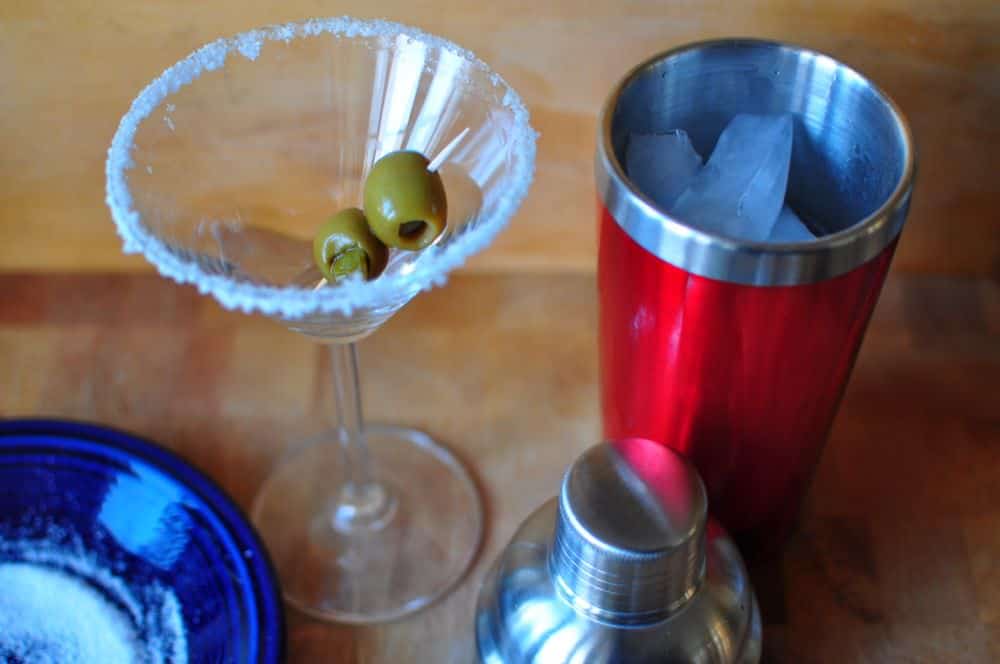
* Unfortunately, this was one of those times the kids didn't eat much of the fried rice. I think I cut the onions too thick - something about the big hunks of onion turned them off. They picked the egg and rice out of the bowl, and pushed the vegetables to the side. My oldest watched me stir everything into the wok. Then he asked if we could do "build your own fried rice" next time, where he gets to pick and choose what he wants (rice, eggs) and leave everything else (all the vegetables, except maybe for a scallion slice).

What do you think? Questions? Other ideas? Leave them in the comments section below.

Related Posts:
Ginger Fried Rice
Stir Fry Basic Technique

Adapted from:
Pam Anderson Cook Without a Book: Meatless Meals

*Enjoyed this post? Want to help out DadCooksDinner? Subscribe using your RSS reader or by Email, recommend DadCooksDinner to your friends, or buy something from Amazon.com through the links on this site. Thank you!

Review: Cook Without A Book: Meatless Meals by Pam Anderson

November 1, 2011 by Mike Vrobel 2 Comments


Cook without a Book: Meatless Meals: Recipes and Techniques for Part-Time and Full-Time Vegetarians


*Disclaimer: Pam is a major influence on my cooking, and one of my blog buddies. Pam's How to Cook Without a Book taught me the difference between following recipes and knowing how to cook, a major step on the path that led to this blog. I can't be perfectly objective about her books. But this one is worth writing about...

When it comes to dinner, most of us open the fridge and see a daunting mass of isolated ingredients. Take away meat - the easy anchor on most plates - and it's even more difficult to build an appealing meal…This book is set up to help you learn the skills and techniques you need to create fun, satisfying vegetarian dishes that feature the flavors and ingredients you like best.
-Pam Anderson, Cook Without A Book: Meatless Meals

I have been trying to eat one meatless dinner a week for a couple of years now. I have no plans to become a vegetarian; I enjoy meat too much. What I do want is to eat healthier. I'm an enthusiastic (if scattershot) locavore who loves to shop at the farmers market, and I believe in eating less meat so I can spend more on ethically raised meat. One meatless dinner a week seems like a perfect fit for me.

But I have problems.

The first problem is: "lentils for dinner, again?" I love beans and rice. Black beans and rice, red beans and rice, lentils and rice…I'm there. Beyond that, I don't have any vegetarian main dishes in my cooking toolbox.

The second problem is picky eaters. Sure, I can serve them vegetarian food - as long as it is nothing but pasta and cheese. Or tortillas and cheese. Or bread and cheese. They're happy eating vegetarian...as long as there aren't any vegetables. My kids are StarchAndCheeseitarians.
*"Mac and Cheese Mondays" may be vegetarian, but it makes me feel like fried chicken is a step up the nutrition ladder.

I've been waiting impatiently for Pam Anderson's Cook Without a Book: Meatless Meals. Pam's classic How to Cook Without a Book was my key to unlock home cooking. I hoped Meatless Meals could do the same thing for me.

I love recipes - I'm in the recipe business - but for everyday cooking, I believe recipes can often be a hindrance.
-Pam Anderson, Cook Without A Book: Meatless Meals

The book was everything I hoped for. There are great recipes, of course. Want a vegetarian Pad Thai? Meatless Muffalettas? French Onion Soup? If you're looking for a vegetarian main dish for a party, Sunday dinner, or other celebratory meal, they are in here.

But there are a lot of vegetarian cookbooks with great recipes. The strength of Meatless Meals is its focus on weekday cooking. The heart of the book is a set of basic techniques - Pam calls them master formulas -  showing how to cook (vegetarian) without needing a cookbook.

In each section, Pam explains a master formula. She follows it with variations on ingredients and flavor profiles, turning the master formula into dozens of potential recipes. Bean burgers for almost any bean, frittatas that will empty out the vegetable crisper, stews you can build in your skillet. Memorize the master formula, keep some basic pantry staples on hand, and you can open the refrigerator and just start cooking. Or, in my case, I can adapt the meal to whatever's left over from my latest CSA box.
*Let's see…I have a bunch of carrots, some fennel bulbs, eggs, and a tub of leftover rice. Looks like fried rice tonight!

One technique I use with my picky eaters is "build your own" dinners. For example - Taco night. I put all the fixings in individual bowls, warm up some tortillas, and the kids assemble their tacos from their favorite ingredients. Pam has some great ideas for meatless versions of this type of meal. Of course she covers taco night, but I really want to try her "build your own soup" section - put out Mexican or Asian  filings, let everyone pile what they want in their bowl, then top it with hot broth.

*And, try ignore it when they skip the vegetables for a bowl of noodles and broth.

Now, this was a challenging book for me. I could feel myself resisting it. I'm a dedicated carnivore. While I was reading it, there were a few times I caught myself thinking "but I don't want to be a vegetarian!"
*Usually when the recipe involved soy milk. Apparently, soy milk is a bridge to far for me. Who knew?

Pam helped me through the resistance with her practical, no-nonsense approach to cooking real food. This isn't a militant vegan book.* There are no tofurkey recipes, no chicken breast substitutes made with seitan. Pam's not afraid to use cheese and eggs when they help the dish out. Also, she obviously enjoys these meals, and it shines through in her writing. I found myself saying "I don't want to be a vegetaria…ah, that looks good, I have to try that."
*Not that there's anything wrong with militant vegans. Tofurkey, however, is just wrong.

Do you want to eat less meat? Are you looking for a great introduction to weeknight vegetarian cooking? Cook Without a Book: Meatless Meals is the book for you. Highly Recommended!

PS: Visit Pam and her daughters, Maggy and Sharon, at ThreeManyCooks.com
Disclaimer 2: I did not receive any promotional consideration for this review; I bought the book with my own money. If you buy something through the Amazon.com links on my site I get a small commission from the purchase. Thank you!
(OK, I'm good with the FCC now.)

Pam Anderson: Cook without a Book: Meatless Meals: Recipes and Techniques for Part-Time and Full-Time Vegetarians

*Enjoyed this post? Want to help out DadCooksDinner? Subscribe using your RSS reader or by Email, recommend DadCooksDinner to your friends, or buy something from Amazon.com through the links on this site. Thank you!

  • « Previous Page
  • 1
  • …
  • 25
  • 26
  • 27
  • 28
  • 29
  • …
  • 37
  • Next Page »

Welcome to Dad Cooks Dinner!

I'm Mike Vrobel, a dad who cooks dinner every night. I'm an enthusiastic home cook, and I write about pressure cooking, rotisserie grilling, and other food topics that grab my attention.

More About Me →

Popular

  • Three bowls of cooked Pinto Beans on a wood table
    Instant Pot Pinto Beans (No Soaking)
  • Pressure Cooker Beef Shank (Osso Bucco)
  • Pressure Cooker 7 Hour Leg of Lamb (in 90 minutes)
    Pressure Cooker 7 Hour Leg of Lamb (in 90 minutes)
  • Pressure Cooker Brown Jasmine Rice
  • Grilled Tomahawk Steak (Long Bone Ribeye, Reverse Seared)
    Grilled Tomahawk Steak (Long Bone Ribeye, Reverse Seared)
  • A green bowl full of chicken noodle soup
    Instant Pot Rotisserie Chicken Noodle Soup

Seasonal

  • A bowl of asparagus risotto
    Instant Pot Asparagus Risotto (Pressure Cooker Recipe)
  • Grilled Butterflied Chicken with Garlic Butter
  • Sous Vide rack of lamb sliced into chops
    Sous Vide Rack of Lamb with Dijon Bread Crumb Crust
  • A bowl of beef stew with asparagus, carrots, and radishes.
    Instant Pot Spring Vegetable Beef Stew
  • A Rotisserie Chicken (Pollo Asado)on a platter of shredded cabbage
    Rotisserie Chicken Pollo Asado
  • Rotisserie Pork Shoulder Roast with Carolina Mustard BBQ Sauce
    Rotisserie Pork Shoulder with South Carolina Mustard Barbecue Sauce

Footer

↑ back to top

About

  • Privacy Policy

Newsletter

  • Sign Up! for emails and updates

Contact

  • Contact

Copyright © 2025 Dad Cooks Dinner